
In the rapidly evolving landscape of personalized medicine, diagnostic technologies are continually reshaping our approach to disease management. Among the most significant advancements in oncology is the emergence of liquid biopsies, and at its forefront stands Signatera. Developed by Natera, Signatera represents a groundbreaking application of genomic technology to detect and monitor cancer, offering insights far beyond traditional methods. Understanding “what is a high Signatera result” is not merely about interpreting a number; it’s about grasping a critical piece of information that can profoundly influence a patient’s treatment trajectory and prognosis, representing a technological leap in precision oncology.
Signatera: A Deep Dive into Personalized Cancer Monitoring Technology
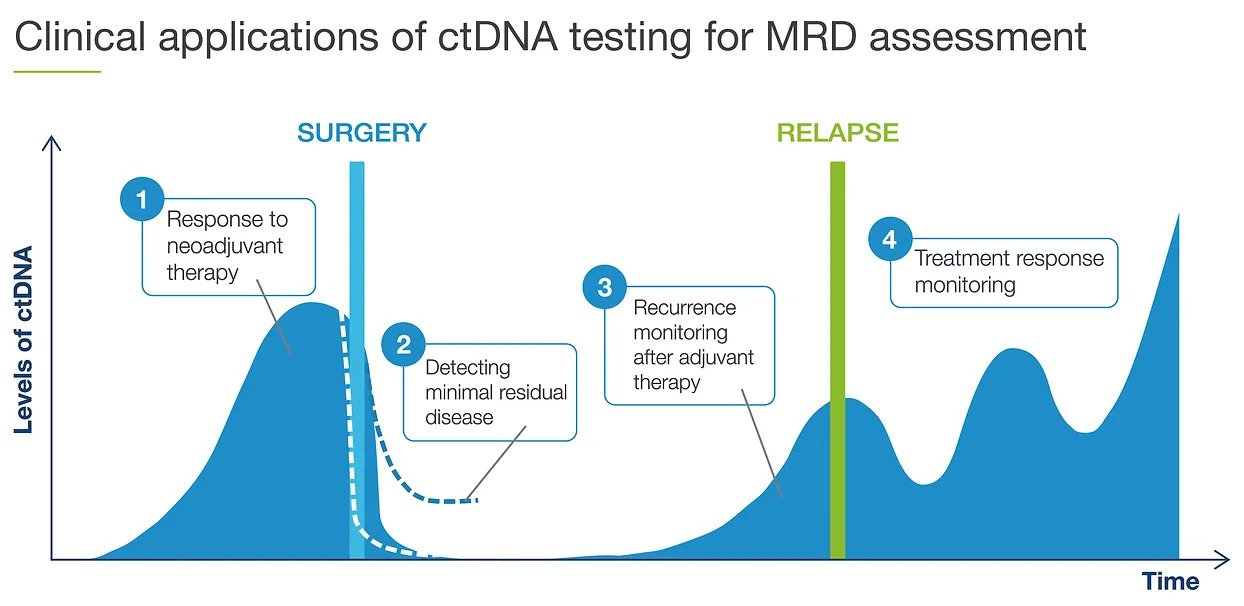
Signatera is a custom-built, tumor-informed molecular residual disease (MRD) test designed to detect circulating tumor DNA (ctDNA) in a patient’s blood. Its technological sophistication lies in its ability to create a personalized genomic fingerprint of an individual’s cancer, then relentlessly search for traces of that specific signature in their bloodstream. This approach has revolutionized the way clinicians monitor for cancer recurrence and assess treatment efficacy, offering unparalleled sensitivity and specificity.
The Science of Molecular Residual Disease (MRD)
Molecular residual disease refers to the presence of cancer cells or their genetic material that remain in the body after primary treatment (like surgery or chemotherapy) but are undetectable by conventional imaging techniques or standard biomarker tests. The persistence of MRD is a strong indicator of an increased risk of disease recurrence. Historically, detecting MRD has been a significant challenge, often relying on retrospective analysis once a recurrence became clinically evident. Signatera’s technology aims to bridge this gap, offering proactive detection.
Genomic Profiling and ctDNA Detection
The core innovation of Signatera lies in its advanced genomic profiling capabilities. When cancer cells die, they release fragments of their DNA into the bloodstream. These fragments, known as cell-free DNA (cfDNA), can include circulating tumor DNA (ctDNA) – DNA that originates specifically from the tumor. What sets Signatera apart is its personalized approach:
- Tumor Tissue Analysis: Initial analysis involves sequencing a sample of the patient’s primary tumor tissue (e.g., from a biopsy or surgical resection). This identifies unique somatic mutations present in that specific patient’s cancer, creating a bespoke “tumor signature.”
- Blood Sample Analysis: Subsequently, peripheral blood samples are drawn from the patient over time. Using highly sensitive next-generation sequencing (NGS) technology, Signatera scans the cfDNA in these blood samples specifically for the personalized tumor signature identified earlier.
This bespoke targeting dramatically enhances the test’s sensitivity, allowing it to detect even minute quantities of ctDNA that generic cancer biomarker tests might miss. It’s an example of highly targeted bioinformatics and genomics working in concert to identify a needle in a haystack.
The Analytical Process: From Sample to Signature
The journey from a patient’s sample to a clinically actionable Signatera result is a testament to modern biotechnological prowess. It involves several intricate steps: DNA extraction from both tumor tissue and plasma, library preparation, targeted NGS for hundreds of somatic variants identified in the tumor, and sophisticated bioinformatics algorithms that sift through millions of DNA fragments. These algorithms are trained to differentiate tumor-derived mutations from germline variations and background noise, ultimately quantifying the presence and abundance of ctDNA. The output is a highly precise measurement of tumor burden, even at levels far below the detection limit of traditional methods.
Decoding a “High” Signatera Result: What It Means for Patients
A “high” Signatera result is a critical piece of information that demands careful attention. It is not an arbitrary threshold but a quantitative measure with profound clinical implications, indicating the presence of detectable circulating tumor DNA in the patient’s bloodstream.
Quantitative Measurement: Tumor Fraction (TF) and Variants Detected
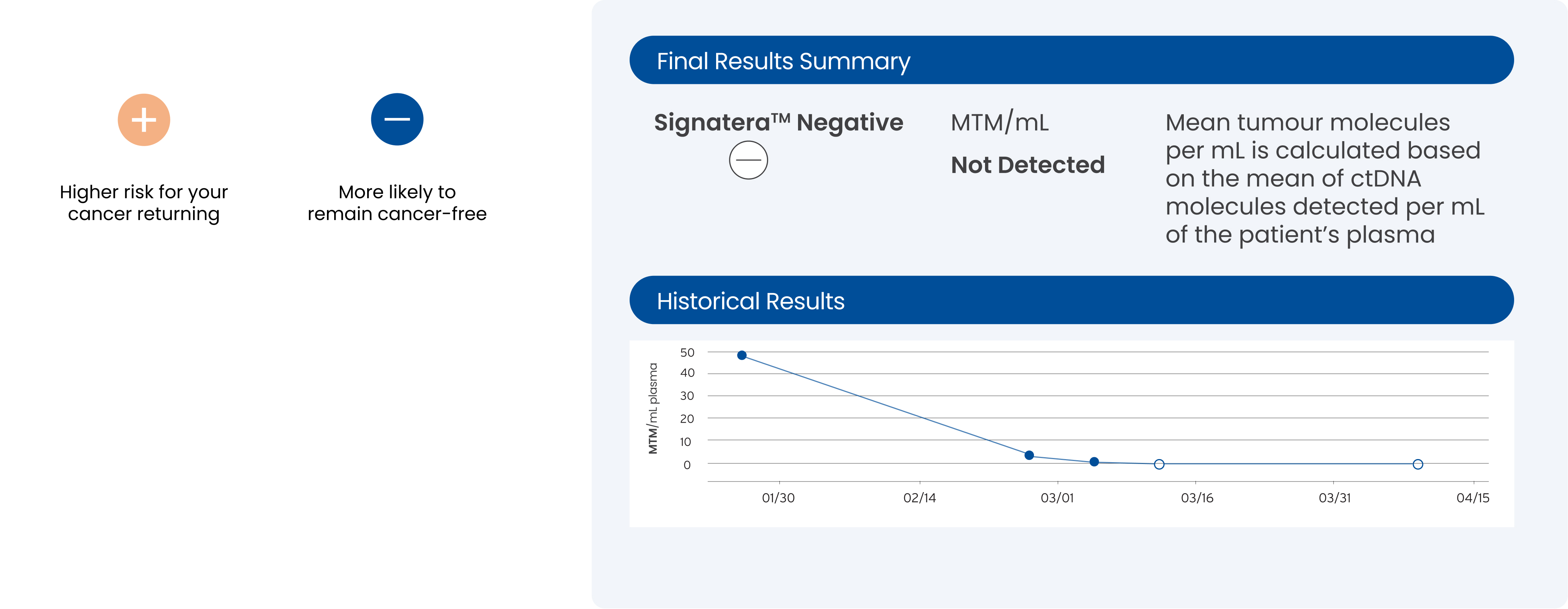
Signatera results are often reported as a quantitative measure, such as the number of tumor-specific variants detected or a metric reflecting the tumor fraction (the proportion of cfDNA that is tumor-derived). A “high” result indicates a greater abundance of ctDNA. For instance, detecting multiple tumor-specific variants or a rising tumor fraction over time signifies a more substantial presence of residual disease. The technology provides precise numerical data, allowing for longitudinal tracking and trend analysis. This quantitative aspect is crucial for assessing disease activity and potential progression.
Clinical Significance: Increased Risk of Recurrence
The most significant implication of a high Signatera result is its strong correlation with an elevated risk of cancer recurrence or progression. Multiple clinical studies across various cancer types (e.g., colorectal, breast, lung, bladder) have consistently demonstrated that patients with detectable ctDNA post-treatment have a significantly higher likelihood of relapse compared to those with undetectable ctDNA. The “high” signal acts as an early warning system, often preceding radiological or clinical signs of recurrence by months or even years. This early detection window is a paradigm shift, enabling proactive rather than reactive intervention.
Actionable Insights: Guiding Treatment Decisions
A high Signatera result transforms uncertainty into actionable insight for clinicians. Faced with such a finding, oncologists can consider several strategic adjustments to a patient’s management plan:
- Intensified Surveillance: More frequent follow-up appointments, imaging scans, or additional blood tests.
- Adjuvant Therapy: Initiating or escalating adjuvant systemic therapies (e.g., chemotherapy, targeted therapy, immunotherapy) to eradicate the residual disease before it becomes macroscopic.
- Clinical Trial Enrollment: For some patients, participation in clinical trials exploring novel agents or treatment strategies might be an option.
- Earlier Intervention: The ability to detect relapse much earlier allows for interventions at a stage where the tumor burden is minimal, potentially leading to more effective outcomes.
This technological capability empowers clinicians to personalize treatment, moving away from a one-size-fits-all approach to one informed by real-time molecular insights into a patient’s specific disease state.
Contextual Interpretation: Beyond the Number
While a high Signatera result is a powerful indicator, it is never interpreted in isolation. Oncologists integrate these molecular findings with a comprehensive understanding of the patient’s clinical history, pathological reports, imaging results, and other conventional biomarkers. Factors such as the primary tumor stage, specific genetic mutations (beyond those tracked by Signatera), response to initial therapy, and overall patient health all contribute to the final clinical decision-making process. The technology serves as a vital piece of the diagnostic puzzle, enhancing rather than replacing the holistic clinical assessment.
The Technological Impact of Signatera on Oncology Practice
Signatera represents a significant technological leap in oncology, reshaping established practices and opening new avenues for patient care. Its impact is felt across various stages of cancer management, from post-treatment monitoring to therapeutic guidance.
Precision and Sensitivity: Surpassing Traditional Methods
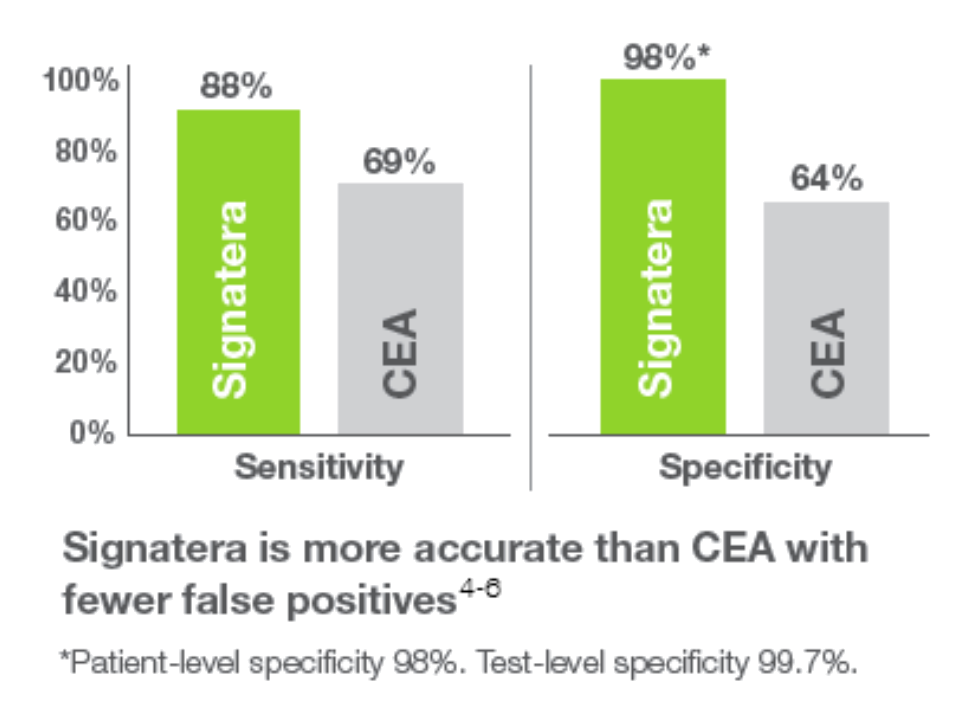
One of Signatera’s most profound impacts is its unparalleled precision and sensitivity. Traditional surveillance methods, such as CT scans and PET scans, can only detect macroscopic tumors (typically millimeters to centimeters in size). Similarly, protein-based tumor markers (e.g., CEA, CA-125) often lack the sensitivity and specificity to detect early recurrence. Signatera, by contrast, can detect ctDNA at picogram levels, identifying disease burden far below the resolution of imaging. This technological advantage means it can often identify impending recurrence months, even years, before it would become evident through conventional means, providing a critical window for early intervention.
Dynamic Monitoring and Treatment Response Assessment
Beyond initial post-treatment surveillance, Signatera’s technology enables dynamic, longitudinal monitoring. Repeated testing allows clinicians to track changes in ctDNA levels over time. A decrease in ctDNA levels might indicate a positive response to ongoing therapy, while a rise in ctDNA (a high result) could signal treatment resistance or disease progression. This dynamic feedback loop empowers clinicians to modify treatment strategies in real-time, optimizing therapeutic regimens and avoiding ineffective therapies sooner. This application extends to various settings, including monitoring patients on adjuvant therapy, assessing response to neoadjuvant treatments, and even tracking patients with advanced metastatic disease.
Expanding Horizons: New Applications and Clinical Trials
The success of Signatera has spurred extensive research and expansion into new applications. It is being investigated for use in detecting MRD across a broader spectrum of cancer types and stages. Clinical trials are exploring its utility in guiding de-escalation of therapy for low-risk patients, identifying optimal candidates for immunotherapy, and predicting response to specific targeted agents. This continuous innovation underscores the vibrant technological frontier that liquid biopsies represent, promising even more refined and personalized cancer management strategies in the future.
Navigating the Future: Challenges and Opportunities in Liquid Biopsy Technology
While Signatera exemplifies the transformative power of liquid biopsy technology, its widespread adoption and future evolution come with inherent challenges and opportunities. Addressing these will be crucial for fully realizing the potential of this advanced diagnostic tool.
Data Interpretation Complexity and Standardization
The wealth of genomic data generated by tests like Signatera is both a strength and a challenge. Interpreting complex ctDNA results, especially in varied clinical contexts, requires specialized knowledge. There is an ongoing need for standardized reporting guidelines, clear clinical pathways, and robust bioinformatics tools to ensure consistent and accurate interpretation across different institutions and practitioners. Educating the broader oncology community on the nuances of this technology is paramount.
Accessibility and Cost Considerations
As with many cutting-edge technologies, accessibility and cost remain significant considerations. The advanced nature of Signatera involves sophisticated laboratory processes and bioinformatics, which can lead to higher costs compared to traditional tests. Ensuring equitable access to this life-changing technology across diverse healthcare systems and patient populations will require innovative reimbursement models and continued efforts to make the technology more cost-efficient without compromising quality.
Integration into Clinical Workflow
Integrating a highly sensitive, data-rich diagnostic tool like Signatera into existing clinical workflows requires careful planning and infrastructure. This includes processes for sample collection, timely turnaround of results, and seamless integration with electronic health records. Healthcare providers need robust systems to manage and act upon the complex insights provided by these tests effectively.
The Promise of Multi-omic Integration
Looking ahead, the future of liquid biopsy technology, including Signatera, lies in multi-omic integration. This involves combining ctDNA analysis with other circulating biomarkers such as cell-free RNA, circulating proteins, epigenomic markers, and even circulating tumor cells. The confluence of these diverse data streams, processed by advanced AI and machine learning algorithms, promises an even more comprehensive and predictive understanding of cancer biology, enabling ultra-personalized precision medicine.
In conclusion, a “high” Signatera result signifies the detectable presence of circulating tumor DNA, serving as a powerful, early indicator of molecular residual disease and a heightened risk of cancer recurrence. This technological marvel, rooted in advanced genomics and bioinformatics, empowers oncologists with unprecedented precision and foresight. It allows for timely, personalized interventions that can profoundly alter patient outcomes, shifting cancer management from reactive responses to proactive, data-driven strategies. As liquid biopsy technology continues to advance, Signatera stands as a testament to the transformative potential of precision diagnostics in the fight against cancer, continually pushing the boundaries of what is possible in tech-driven healthcare.
aViewFromTheCave is a participant in the Amazon Services LLC Associates Program, an affiliate advertising program designed to provide a means for sites to earn advertising fees by advertising and linking to Amazon.com. Amazon, the Amazon logo, AmazonSupply, and the AmazonSupply logo are trademarks of Amazon.com, Inc. or its affiliates. As an Amazon Associate we earn affiliate commissions from qualifying purchases.