
A golf driving range, at its core, is a designated facility where golfers can practice and refine their swing by hitting golf balls. Traditionally, it comprised a hitting area, a vast open field, and often a bucket of balls and a mat. It was a place for raw, repetitive practice, an essential but often solitary and unmeasured aspect of a golfer’s journey. However, in the 21st century, the definition of a golf driving range has expanded dramatically, evolving from a simple practice ground into a sophisticated technological hub. Today’s driving ranges are vibrant ecosystems leveraging cutting-edge technology to offer immersive experiences, data-driven insights, and social entertainment, fundamentally transforming how golfers interact with the sport.
The Core Concept: A Timeless Practice Ground Meets Digital Evolution
Before delving into the technological revolution, it’s crucial to understand the fundamental purpose of a driving range. It serves as an accessible environment for golfers of all skill levels to hone their technique without the pressure or time constraints of a full golf course. What began as a rudimentary setup has now been significantly enhanced by digital integration, making the practice more efficient, engaging, and measurable.
Basic Components and Traditional Function
Historically, a driving range typically featured a long, narrow strip of artificial turf or grass tees from which golfers would hit. Directly in front would be a vast expanse of grass, often marked with distance markers (e.g., 50, 100, 150, 200, 250 yards) to provide a rough gauge of shot distance. Ball dispensers, often coin-operated, would provide buckets of golf balls. The primary function was straightforward: hit balls, practice different clubs, and work on swing mechanics. Feedback was largely self-assessed, relying on the golfer’s eye and feel, or the occasional input from a golf professional. This simple, functional design was effective for its purpose but lacked the depth of analysis and entertainment that modern technology now affords.
Why Golfers Seek Driving Ranges
Golfers utilize driving ranges for a multitude of reasons, many of which have been amplified by technological advancements. Beginners find them less intimidating than a course, offering a safe space to learn the basics. Experienced players use them to warm up before a round, test new equipment, or meticulously work on specific aspects of their game like slice correction or improving accuracy. For many, it’s also a stress reliever, a chance to unleash frustration and enjoy the simple pleasure of striking a golf ball. With the advent of technology, these core reasons are now augmented by the ability to receive instant, objective feedback, track progress over time, and engage in interactive games, making the experience far more rewarding and motivating.
Embracing the Digital Age: Technology at the Forefront
The most significant transformation of the golf driving range has been its embrace of technology. What was once a low-tech facility is now often a showcase of advanced sensors, software, and connectivity, creating a dynamic environment that caters to serious training and casual entertainment alike. This technological infusion has redefined the golfer’s experience, turning practice sessions into data-rich learning opportunities and social gatherings into competitive, game-driven events.
Launch Monitors and Ball Tracking Systems
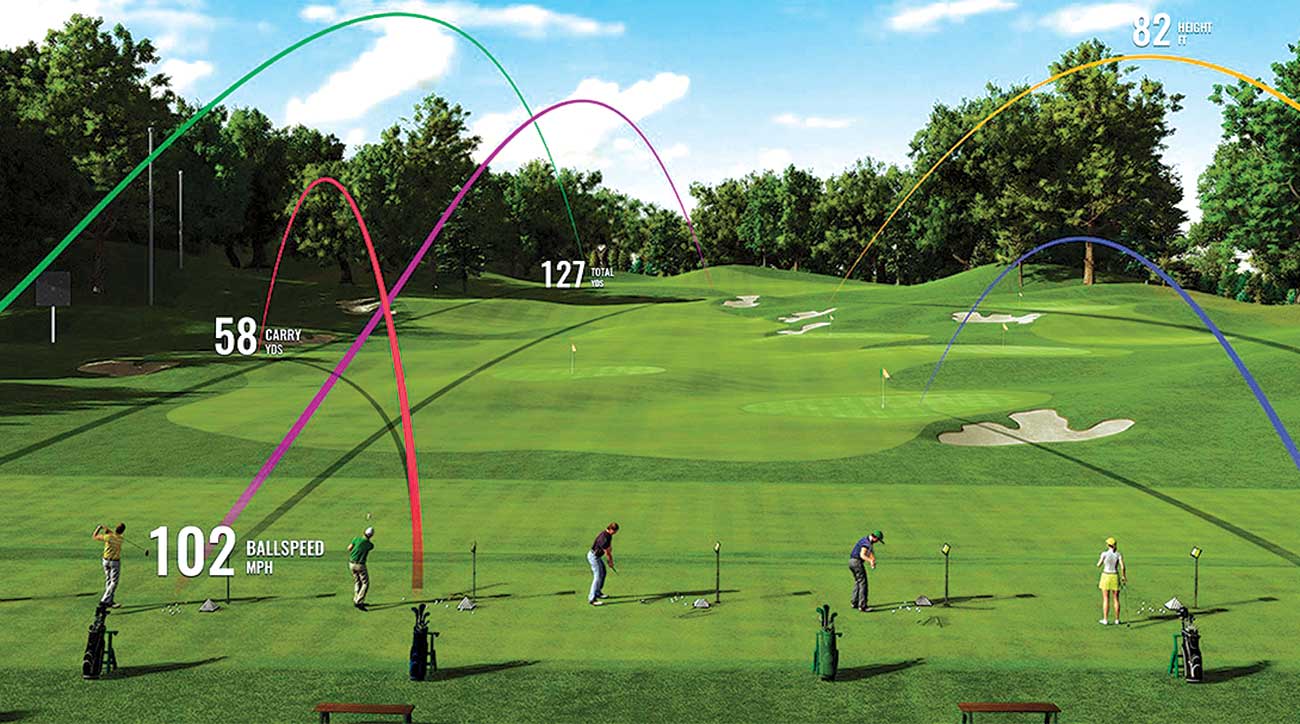
The cornerstone of modern driving range technology is the integration of launch monitors and sophisticated ball tracking systems. Devices like TrackMan, FlightScope, and especially Toptracer Range have revolutionized how golfers perceive and analyze their shots. These systems employ radar or high-speed cameras to capture a myriad of data points from each swing:
- Ball Speed: How fast the ball leaves the clubface.
- Launch Angle: The vertical angle at which the ball takes off.
- Spin Rate: How fast the ball rotates in the air (backspin, sidespin).
- Carry Distance: How far the ball travels in the air.
- Total Distance: Carry distance plus roll.
- Clubhead Speed: How fast the club is moving at impact.
- Smash Factor: Efficiency of impact (ball speed / clubhead speed).
Toptracer Range, in particular, has become a ubiquitous presence, using cameras mounted at the range to track every shot and display its trajectory and data on screens in each hitting bay. This instant, accurate feedback empowers golfers to understand the physics of their swing in real-time, making adjustments based on objective measurements rather than subjective feel. It transforms a simple hit into a data-driven experiment.
Interactive Bays and Gamification
Beyond raw data, technology has brought an unprecedented level of interaction and entertainment to the driving range. Concepts pioneered by companies like Topgolf have demonstrated the immense potential of gamification. Modern interactive bays feature large digital screens that display live shot tracking, allowing golfers to play virtual games, simulated courses, or competitive challenges.
- Target Games: Similar to bowling or darts, these games involve hitting balls at designated targets on the range to score points, often with varying point values based on distance and accuracy.
- Virtual Golf Courses: Golfers can “play” famous courses from around the world without leaving their bay, with the system accurately simulating ball flight and lie based on real-world terrain data.
- Skill Challenges: These might include closest-to-the-pin contests, long drive competitions, or specific shot challenges designed to improve accuracy or distance with certain clubs.
- Social Connectivity: Many systems allow players to link their accounts, track their scores against friends, and even participate in global leaderboards, fostering a sense of community and competition.
This integration of gaming elements has broadened the appeal of driving ranges beyond dedicated golfers, attracting families, groups of friends, and corporate events seeking a fun, interactive, and tech-forward entertainment experience.
Smart Practice: Data-Driven Improvement
The technological evolution of driving ranges is not just about entertainment; it’s profoundly about enhancing the learning and improvement process for golfers. By providing comprehensive data and advanced analytical tools, modern ranges enable a “smart practice” approach previously only accessible to elite professionals.

Performance Analytics and AI Coaching Aids
The data collected by launch monitors and tracking systems is invaluable for performance analysis. Golfers can review session summaries, identify trends in their ball striking, and pinpoint specific areas for improvement. Advanced platforms go a step further, offering AI-powered coaching aids. These tools can analyze swing videos, compare them against professional models, and provide actionable recommendations for posture, swing path, clubface angle, and more. This personalized, data-driven feedback loop accelerates learning, making practice sessions significantly more productive. Rather than guessing, golfers can work on specific metrics to achieve desired outcomes, such as increasing carry distance by improving launch angle or reducing a slice by adjusting spin.
Virtual Golf and Simulator Technology
While outdoor ranges leverage tracking technology to enhance the real hitting experience, indoor golf simulators represent another significant technological advancement. These enclosed bays use high-speed cameras and projectors to create highly realistic virtual golf environments. Golfers hit real balls into a screen, and the simulator instantly calculates ball flight characteristics, projecting the virtual shot onto the course displayed on the screen.
- Weather Independence: Simulators allow practice and play regardless of weather conditions, a boon for golfers in regions with harsh climates.
- Precision Data: Simulators often capture even more granular data than outdoor systems, including club path, clubface angle, and attack angle, providing deep insights into swing mechanics.
- Global Course Access: Players can access thousands of world-renowned golf courses, offering variety and the chance to “play” iconic layouts they might never visit in person.
- Focused Training: The controlled environment of a simulator is ideal for focused practice, allowing golfers to hit repetitive shots with consistent conditions and immediate feedback.
This technology has transformed indoor facilities into year-round training centers, blurring the lines between practice and play, and making golf more accessible and convenient.
Enhancing the User Experience: Beyond the Swing
Technology at a modern driving range extends beyond just tracking shots; it encompasses the entire customer journey, from booking a bay to ordering food and engaging with a community. The goal is to create a seamless, integrated, and highly enjoyable experience.
Integrated Apps and Digital Connectivity
Many contemporary driving ranges offer dedicated mobile applications that serve as the central hub for the golfer’s experience. These apps allow users to:
- Book Bays: Reserve hitting bays in advance, often choosing specific types of bays or time slots.
- Track Progress: Access their historical shot data, session summaries, and performance analytics from anywhere.
- Connect with Friends: See who else is at the range, challenge friends to games, and share achievements on social media.
- Order Food and Drinks: Place orders directly from their bay, with delivery straight to them, enhancing the entertainment aspect.
- Receive Coaching Tips: Access personalized tips or connect with golf professionals for virtual lessons.
This digital connectivity creates a personalized ecosystem around the driving range, making it more than just a place to hit balls but a comprehensive leisure and learning destination.
Automated Ball Dispensing and Smart Booking Systems
Efficiency and convenience are paramount in the modern service industry, and driving ranges are no exception. Automated ball dispensing systems eliminate the need for manual handling, often integrated with the booking system or payment app. Golfers can simply check in, and a set number of balls is automatically dispensed to their bay. Smart booking systems, accessible online or via mobile apps, allow for easy reservation management, payment processing, and even dynamic pricing based on demand, optimizing range utilization and enhancing customer convenience. These systems reduce wait times, streamline operations, and provide a smoother, more upscale experience for the user.
The Future of Golf Practice: Continuous Innovation
The technological evolution of the golf driving range is an ongoing process. As new technologies emerge and consumer expectations shift, ranges will continue to innovate, pushing the boundaries of what a practice facility can offer.
Augmented Reality and Immersive Environments
The next frontier likely involves even more immersive experiences through augmented reality (AR) and advanced projection mapping. Imagine an AR overlay on the physical driving range, where virtual targets appear on the grass, or environmental effects react to your shots in real-time. This could transform the physical range into a dynamic, interactive playground limited only by imagination. Future ranges might also incorporate multi-sensory experiences, with haptic feedback in clubs or wind simulation to mimic course conditions more accurately.

Accessibility and Global Reach through Tech
Technology will continue to make golf more accessible to a wider audience. Virtual reality (VR) golf experiences, while distinct from traditional ranges, benefit from similar underlying simulation technologies and can introduce the game to individuals who might never set foot on a physical course. Furthermore, the data generated at modern ranges can contribute to global communities, allowing golfers from different countries to compare skills, participate in virtual tournaments, and share their passion for the game, all facilitated by robust digital platforms.
In conclusion, “what is a golf driving range?” is a question no longer answered by a simple description of a field and some balls. It is a vibrant, technologically advanced space where radar, cameras, software, and artificial intelligence converge to offer unparalleled insights, engaging entertainment, and a deeply satisfying golf experience. From basic practice to sophisticated data analysis and social gamification, the modern golf driving range stands as a testament to how technology can transform and elevate a traditional sporting activity.
aViewFromTheCave is a participant in the Amazon Services LLC Associates Program, an affiliate advertising program designed to provide a means for sites to earn advertising fees by advertising and linking to Amazon.com. Amazon, the Amazon logo, AmazonSupply, and the AmazonSupply logo are trademarks of Amazon.com, Inc. or its affiliates. As an Amazon Associate we earn affiliate commissions from qualifying purchases.