
In the vast and intricate world of numismatics, the humble penny often sparks curiosity, especially when tied to a specific historical year. The 1942 Lincoln Cent, minted amidst the tumultuous backdrop of World War II, holds a particular fascination for collectors and the general public alike. While most 1942 pennies might only be worth a few cents over their face value, certain conditions, mint marks, and rare varieties can transform them into surprisingly valuable treasures. Understanding the factors that determine a 1942 penny’s worth requires delving into its historical context, metallurgical composition, and the nuanced art of coin grading. For anyone holding one of these copper relics, the potential for a significant financial discovery — or simply a fascinating journey into history — is a compelling prospect.
The Historical Context of the 1942 Lincoln Cent
The year 1942 was a pivotal moment in American and world history, with the United States fully engaged in World War II. This global conflict profoundly impacted all aspects of American life, including the production of its coinage. The materials used for everyday items, including coins, became strategic resources, leading to significant changes in their composition.
Wartime Production and Material Scarcity
Prior to and during 1942, the standard composition for the Lincoln Cent was primarily copper, specifically 95% copper and 5% tin or zinc. This formula had been largely consistent since the penny’s introduction in 1909. However, as the war effort intensified, copper became a critical material for ammunition, wiring, and other military applications. The demand for copper skyrocketed, leading to discussions and eventual decisions to conserve this vital metal.
The 1942 penny represents the last full year of mass production for the copper cent before a dramatic shift in material. In 1943, due to the critical need for copper, the U.S. Mint famously switched to producing pennies made of zinc-coated steel. This radical change made the 1943 steel cent a unique anomaly in American coinage history. While the 1942 cent retained its copper composition, it stands as a testament to the looming material shortages and the nation’s readiness to adapt to wartime exigencies. Understanding this context helps to appreciate the “standard” 1942 copper penny as a transitional piece, sandwiched between decades of consistent copper production and the abrupt, short-lived steel experiment.
Design and Mint Marks
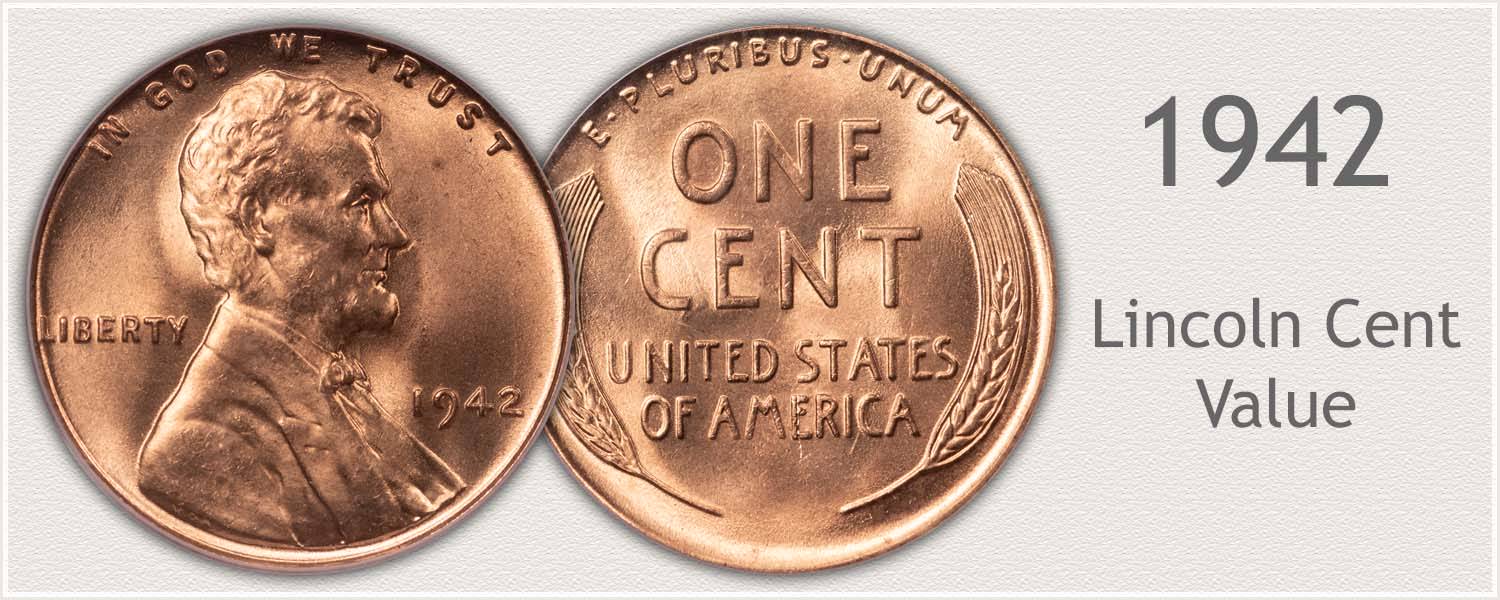
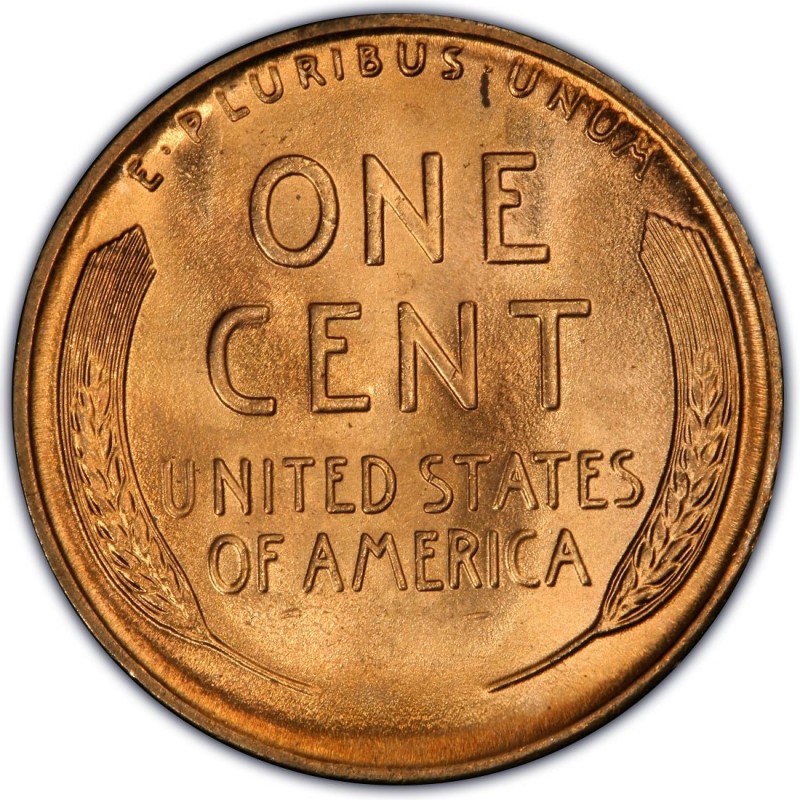
The design of the 1942 penny is that of the classic Lincoln Wheat Cent, which was first introduced in 1909. The obverse (front) features a portrait of Abraham Lincoln, designed by Victor David Brenner. The reverse (back) displays two stalks of wheat flanking the words “ONE CENT” and “UNITED STATES OF AMERICA,” along with the motto “E PLURIBUS UNUM.” This iconic design remained largely unchanged until 1959 when the reverse was updated to feature the Lincoln Memorial.
Crucially, the 1942 Lincoln Cents were produced at three different U.S. Mint facilities:
- Philadelphia (P): Coins minted in Philadelphia typically do not carry a mint mark.
- Denver (D): Coins minted in Denver have a small “D” below the date on the obverse.
- San Francisco (S): Coins minted in San Francisco have a small “S” below the date on the obverse.
The specific mint where a coin was produced can significantly influence its rarity and, consequently, its value, especially when combined with its condition. Each mint had varying mintage figures for 1942, which directly impacts the supply of these coins in the collector’s market.
Factors Determining a 1942 Penny’s Value
The value of any collectible coin, including the 1942 penny, is not static. It is a dynamic figure influenced by a confluence of factors, with condition, rarity, and the presence of errors or varieties being the most prominent.
Condition (Grading)
Condition is arguably the most critical determinant of a coin’s worth. Coins are graded on the Sheldon scale, which ranges from 1 (Poor) to 70 (Perfect Uncirculated). Even a slight difference in wear can translate into a substantial difference in value.
- Good (G-4) to Fine (F-12): These coins show significant wear, with details flattened. Most 1942 pennies found in circulation fall into this category. Their value is typically minimal, often just a few cents to perhaps a dollar.
- Very Fine (VF-20) to Extremely Fine (EF-40): These coins exhibit moderate to light wear, with most major details still visible. Their value starts to climb, potentially reaching a few dollars.
- About Uncirculated (AU-50 to AU-58): These coins have only slight traces of wear on the highest points of the design, indicating they spent very little time in circulation. Value increases significantly here.
- Uncirculated (MS-60 to MS-70): These coins show no wear at all and retain their original mint luster. Within this category, grades like MS-63, MS-65, and MS-67 command much higher prices. Furthermore, uncirculated copper coins are often categorized by the amount of original red luster they retain:
- Brown (BN): The coin has lost most of its original red color due to toning or environmental exposure.
- Red-Brown (RB): A mix of red and brown tones.
- Full Red (RD): The coin retains nearly all of its original copper-red luster. Full Red coins, especially in higher MS grades, are significantly more valuable.
For serious collectors, professional grading services like the Professional Coin Grading Service (PCGS) and the Numismatic Guaranty Corporation (NGC) are indispensable. These services authenticate coins, assign a precise grade, and encapsulate them in protective holders, providing assurance of their condition and authenticity.
Rarity and Mint Mark
While condition dictates much, rarity plays an equally crucial role. The mintage figures for 1942 cents varied by mint:
- 1942 (Philadelphia): 630,576,000 minted. This is the most common variety.
- 1942-D (Denver): 206,684,000 minted. Less common than Philadelphia.
- 1942-S (San Francisco): 185,730,000 minted. The least common of the three standard issues.
Generally, the 1942-S penny tends to be slightly more valuable than the 1942-D, and both are more valuable than the Philadelphia issue, especially in higher uncirculated grades. However, it’s vital to remember that “rarity” is relative. While the 1942-S is the least common of the regular issues, nearly 186 million were still produced, meaning it’s not truly “rare” in circulated grades. Its rarity value only truly manifests in exceptional conditions (e.g., MS-66 Full Red or higher).
Errors and Varieties
Beyond standard production, certain anomalies can transform a relatively common coin into a highly coveted rarity. These are known as errors or varieties:
- Double Die Obverse (DDO): This is perhaps the most famous and valuable type of error. It occurs when the coin die is struck twice by the hub at slightly different angles, resulting in a doubled image of elements like the date, lettering, or Lincoln’s features. While many forms of minor doubling exist, a significant and easily discernible 1942 DDO can be extremely valuable. The 1942 penny has known DDO varieties, some of which are very subtle, others more prominent.
- Repunched Mint Marks (RPMs): Similar to DDOs, an RPM occurs when the mint mark (D or S) is punched more than once onto the die, resulting in a slightly offset or overlapping appearance. Some RPMs are minor, while others are distinct and sought after by collectors.
- Off-Center Strikes: When the coin planchet (blank disc) is not perfectly centered in the coining chamber, resulting in a portion of the design being missing and a blank area of the planchet remaining.
- Planchet Errors: These include issues with the blank disc itself, such as lamination errors (peeling layers of metal) or clipped planchets (a portion of the blank missing before striking).
While genuinely significant and visually dramatic errors are rare for the 1942 cent, they represent the peak of value within this specific coin type. Authenticating such errors is paramount, as fakes and misidentifications are common.
Current Market Value and Investment Potential
The value of a 1942 penny can range dramatically, from negligible to thousands of dollars, reflecting the intricate interplay of condition, rarity, and unique characteristics. For most individuals, understanding the general market ranges is key to assessing their own coin.
Value Ranges for Standard 1942 Pennies

For circulated 1942 pennies, the monetary value is modest:
- Good (G-4) to Fine (F-12): Most 1942 pennies in this condition are worth anywhere from 5 cents to $1. Their value primarily lies in their copper content, which is typically higher than their face value, or as a simple collectible for beginners.
- Very Fine (VF-20) to Extremely Fine (EF-40): Coins in this better-circulated state might fetch anywhere from $1 to $5, especially for the Denver or San Francisco mint marks.
- About Uncirculated (AU-50 to AU-58): These coins start to show some collectible premium, typically ranging from $5 to $20, depending on the mint mark and eye appeal.
The real value appreciation begins with uncirculated examples:
- Uncirculated (MS-60 to MS-64): Standard 1942 P, D, or S cents in this lower uncirculated range (MS-60 to MS-64 Brown or Red-Brown) can command $10 to $50.
- High-Grade Uncirculated (MS-65+): This is where values escalate significantly. A 1942-P in MS-65 Red might be worth $50-$100. A 1942-D in MS-65 Red could be $100-$200. The 1942-S, being scarcer in high grades, can reach $200-$400+ for an MS-65 Red.
- Premium Grades (MS-66 and above): For exceptional examples that are truly rare at these levels, values can climb into the hundreds to even thousands of dollars. For instance, a 1942-S in MS-67 Red might be valued at over $1,000, while a perfect MS-68 would be an extremely rare and highly prized specimen.
Value of Key Varieties and Errors
It’s in the realm of prominent errors and varieties that a 1942 penny can genuinely transform into a five-figure asset. While most 1942 errors are minor, a significant Double Die Obverse (DDO) variety, if properly authenticated and graded, could potentially be worth hundreds to several thousand dollars, depending on the prominence of the doubling and the coin’s overall condition. For example, some dramatic 1942 DDO varieties, particularly in higher uncirculated grades, could reach into the high four-figures or even low five-figures. However, it is crucial to emphasize the rarity and stringent authentication required for such pieces. False identifications of errors are common, so expert verification is paramount.
Numismatics as an Investment
For many, collecting coins like the 1942 penny is a hobby driven by historical interest and aesthetic appreciation. However, for a segment of collectors, numismatics is also viewed as an alternative investment. Rare coins, particularly those in high grades or with significant errors, have shown appreciation over the long term, sometimes outperforming traditional investments.
Investing in coins requires considerable knowledge, research, and capital. Factors that influence investment potential include:
- Rarity and Demand: Truly rare coins with consistent collector demand tend to appreciate.
- Condition: Only coins in top-tier, professionally graded condition are typically considered investment-grade.
- Market Trends: The coin market can fluctuate based on economic conditions, collector demographics, and new discoveries.
While most 1942 pennies will not be significant investments, exceptional pieces can offer diversification and potential for capital growth. However, prospective investors should approach numismatics with caution, recognizing the need for expertise, careful authentication, and understanding that liquidity can be lower than for publicly traded assets. It’s often recommended to collect what you enjoy, with any financial returns being a bonus.
How to Assess and Sell Your 1942 Penny
If you believe you have a valuable 1942 penny, a systematic approach to assessment and potential sale is essential to maximize its worth and ensure an honest transaction.
Initial Self-Assessment
Before seeking professional help, you can perform a basic self-assessment:
- Cleanliness: Never clean a coin. Cleaning can severely damage the surface and drastically reduce its value.
- Lighting: Use good, diffused lighting to examine the coin for details and luster. Avoid direct, harsh light that can create glare.
- Magnification: A jeweler’s loupe (10x magnification is ideal) can help you inspect fine details, check for wear, and identify mint marks or potential doubling.
- Identify the Mint Mark: Look for the “D” or “S” below the date. No mark means it’s from Philadelphia.
- Look for Wear: Observe the highest points of Lincoln’s hair, cheek, and shoulder, as well as the wheat ears on the reverse. Any flattening indicates wear.
- Check for Errors: Carefully scrutinize the date, lettering, and Lincoln’s profile for any signs of doubling. This often requires comparing your coin to known error examples found in numismatic guides or online databases.
Professional Valuation and Authentication
If your self-assessment suggests you might have something more than a common circulated coin, professional help is the next step:
- Consult a Reputable Numismatist/Coin Dealer: Local coin dealers can offer initial opinions, and many provide free verbal appraisals. They can help you identify varieties and assess general condition.
- Third-Party Grading (TPG) Services: For potentially valuable coins (especially those appearing to be uncirculated or having significant errors), submitting to services like PCGS or NGC is highly recommended. While there’s a fee, their authentication and impartial grading provide credibility, which is crucial for selling at a fair market price. They also encapsulate the coin in a tamper-proof holder, protecting its condition.
Selling Your Coin
Once you have a clear understanding of your coin’s value and condition (ideally professionally graded), you have several avenues for selling:
- Local Coin Dealers: Convenient for smaller transactions or if you need quick cash. Be aware that dealers need to buy below market value to make a profit.
- Coin Shows: Offer opportunities to get multiple offers from different dealers and network with collectors.
- Online Marketplaces: Platforms like eBay can reach a wide audience. For higher-value items, ensure you use clear photos, detailed descriptions, and secure shipping. Buyer and seller protections are important considerations.
- Specialized Online Forums and Auction Houses: For very rare or highly valuable coins, specialized numismatic auction houses (like Heritage Auctions or Stack’s Bowers) or dedicated online coin forums can provide access to serious collectors and potentially command higher prices. These services typically charge a commission.
When selling, always aim to get multiple offers or compare prices from recent sales of similar graded coins (known as “comps”) to ensure you are getting a fair price.
The Broader Appeal: Beyond Monetary Value
While the potential monetary worth of a 1942 penny can be captivating, its true appeal often extends far beyond its market price. These coins embody a piece of American history, offering a tangible connection to a pivotal era.
Historical Significance
Holding a 1942 penny is to touch a year deeply etched in global memory. It connects us to:
- World War II: The urgent need for copper reflected in the 1943 steel cent decision underscores the nation’s total commitment to the war effort. The 1942 penny, being one of the last copper cents before this change, acts as a subtle historical marker.
- American Resilience: The ingenuity and adaptability of the U.S. Mint in changing the composition of common currency speak to the broader national spirit during a time of great challenge.
- Everyday Life in the 1940s: This coin circulated in the pockets of soldiers heading off to war, factory workers building planes, and families rationing supplies. It’s a small window into the economic and social fabric of the time.
The Joy of Collecting
For many, the hobby of numismatics is a rewarding pursuit in itself. Collecting 1942 pennies, or Lincoln Cents in general, offers:
- Education: It encourages research into history, metallurgy, and economics.
- Discovery: The thrill of finding a rare mint mark or a subtle error is a significant draw.
- Preservation: Collectors play a vital role in preserving historical artifacts for future generations.
- Community: The numismatic world is rich with clubs, shows, and online forums where enthusiasts can share knowledge and passion.
Whether one is a seasoned numismatist or a curious individual who stumbled upon an old coin, the 1942 penny offers a compelling blend of financial potential and historical resonance.
In conclusion, while the vast majority of 1942 pennies hold only a modest value, exceptional examples — particularly those in high uncirculated grades (especially Full Red), or those exhibiting significant errors like a Double Die Obverse — can be worth hundreds, and in rare cases, even thousands of dollars. The journey from identifying a potentially valuable coin to understanding its market worth is a fascinating lesson in financial valuation, historical context, and the intricate world of numismatics. For anyone considering their own 1942 penny, an informed assessment, ideally backed by professional insight, is the key to unlocking its true financial and historical significance.
aViewFromTheCave is a participant in the Amazon Services LLC Associates Program, an affiliate advertising program designed to provide a means for sites to earn advertising fees by advertising and linking to Amazon.com. Amazon, the Amazon logo, AmazonSupply, and the AmazonSupply logo are trademarks of Amazon.com, Inc. or its affiliates. As an Amazon Associate we earn affiliate commissions from qualifying purchases.