
The intersection of chemistry and technology has long been a frontier for public safety, industrial hygiene, and law enforcement. One of the most distinctive and problematic olfactory markers in the world of illicit chemistry is the pungent, ammonia-like odor often described as “cat urine.” While a layperson might associate this smell with a household pet or a cleaning mishap, to a specialized sensor or a chemical engineer, it is a volatile organic compound (VOC) signature that signals the presence of specific synthetic drugs—most notably methamphetamine or mephedrone (often referred to as “bath salts”).

In the modern technological landscape, identifying these substances has moved far beyond the human nose. We are now entering an era of “digital olfaction,” where advanced hardware, artificial intelligence, and sophisticated sensor arrays can pinpoint chemical threats with surgical precision. This article explores the technology behind detecting these specific chemical anomalies, the evolution of electronic noses, and how data-driven systems are securing our environments.
The Science of Synthetic Odors: Why Modern Tech Targets Specific Chemical Markers
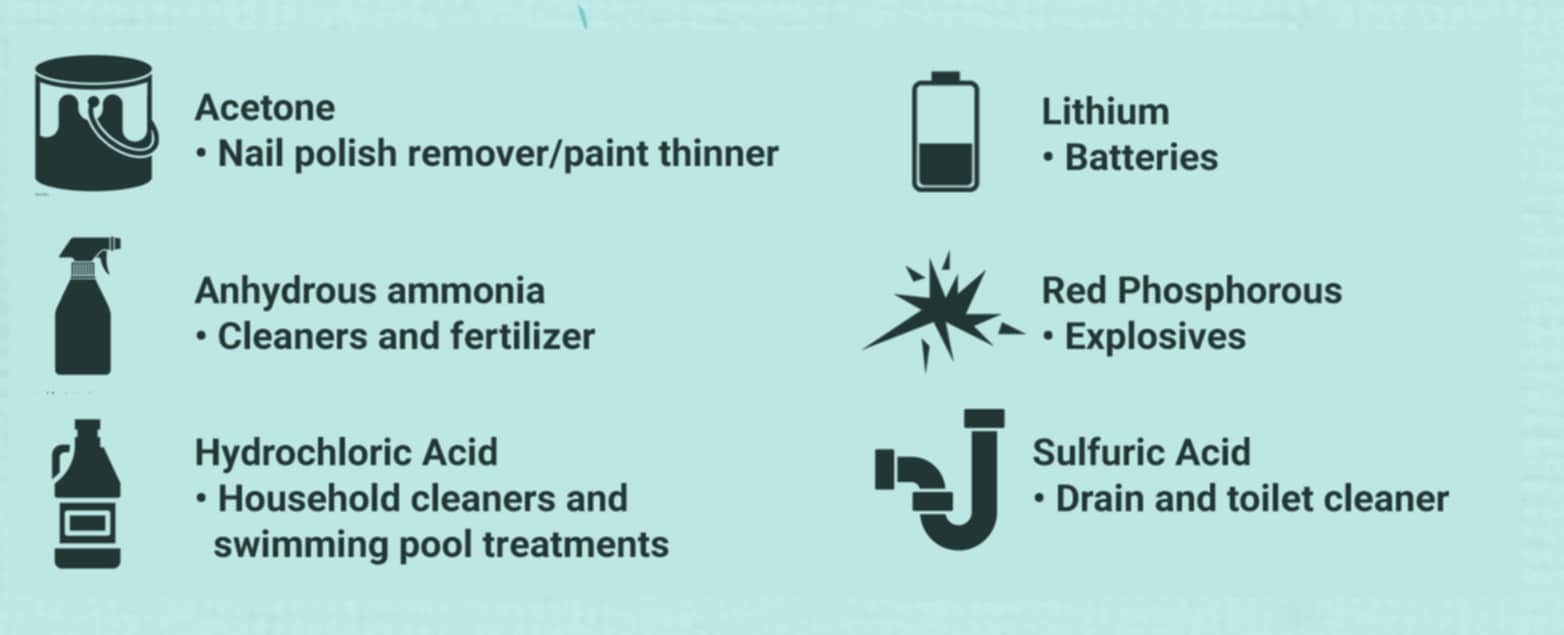
To understand how technology detects a drug that smells like cat urine, one must first understand the molecular origin of the scent. In the synthesis of methamphetamine, particularly when using the “Birch reduction” or “Red P” methods, ammonia and various phosphorus-based byproducts are common. Similarly, mephedrone, a synthetic stimulant, frequently retains a distinct odor during its degradation or due to leftover precursors like methylamine.
The Chemical Profile of Mephedrone and Methamphetamine
From a technological standpoint, the “cat urine” smell is a data point. It represents the presence of volatile amines. When software engineers and chemists collaborate to build detection tools, they focus on these specific molecules. For instance, methylamine is a key precursor. If a sensor can detect parts-per-billion (ppb) of methylamine, it can provide an early warning of synthetic drug production or storage.
Digitizing Scent: How AI Maps Molecular Structures
Digital olfaction is the process of capturing a scent and converting it into a digital signature. This is not a simple task, as odors are composed of hundreds of different molecules. Modern AI tools utilize deep learning to filter out “background noise”—such as actual cat urine, cleaning products, or decaying organic matter—to find the specific molecular fingerprint of a synthetic stimulant. By training neural networks on thousands of chemical samples, developers can create a library of digital “scent prints” that trigger alerts only when a high-probability match is found.
Advanced Detection Hardware: From Mass Spectrometry to Electronic Noses
The hardware used to identify substances with these specific odors has undergone a radical transformation. What once required a room-sized laboratory can now be accomplished with handheld devices or integrated building sensors.
Portable Mass Spectrometry in the Field
Mass spectrometry (MS) is the gold standard for chemical identification. It works by ionizing chemical species and sorting the ions based on their mass-to-charge ratio. Historically, this required high-vacuum environments and significant power. However, recent breakthroughs in miniaturization have led to the development of “Field-Portable Mass Spectrometers.”
These devices allow law enforcement and environmental investigators to take a sample of the air or a surface swipe and receive a definitive chemical breakdown in seconds. If the “cat urine” smell is present, the MS hardware can confirm if it is indeed 4-methylmethcathinone (mephedrone) or simply a benign environmental factor. This eliminates the guesswork and provides legally defensible data on the spot.
The Rise of the “Electronic Nose” (e-Nose)
An “Electronic Nose” is a device intended to mimic the mammalian olfactory system. Unlike mass spectrometry, which identifies every molecule, an e-Nose uses an array of electronic sensors that react to different classes of chemicals. When the sensors encounter a specific volatile compound, they produce a pattern of electrical signals.
The technology behind these sensors often involves metal-oxide semiconductors (MOS) or conducting polymers. When a chemical like methylamine (the “cat urine” culprit) hits the sensor, it changes the electrical conductivity of the material. A microprocessor then analyzes this change against a database of known threats. These units are increasingly being used in “smart buildings” to detect illicit activity or gas leaks in real-time.
AI and Machine Learning: Predicting Chemical Evolutions
Hardware can capture data, but artificial intelligence is what makes that data actionable. In the realm of chemical detection, the challenge is that illicit chemists are constantly altering their formulas to evade detection—a process known as creating “analogues.”
Algorithmic Identification of Precursor Chemicals
Synthetic drugs that smell like cat urine are often the result of clandestine “kitchen chemistry” where purity is low. AI-driven software can now analyze the “byproduct profile” of a substance. Even if the end product is a new, unknown analogue, the software can identify the precursors used. By focusing on the technology of the process rather than just the product, AI tools can flag suspicious chemical combinations that suggest a drug lab is in operation, even if the specific drug being produced is novel.
Real-time Data Analysis in Public Safety Tech
The integration of cloud computing and chemical sensors allows for “Sensing-as-a-Service.” In this model, distributed sensors across a facility or city district feed data into a centralized AI. This system can monitor for spikes in specific volatile compounds. For example, if a cluster of sensors in an industrial park detects a sudden increase in ammonia-based vapors, the AI can cross-reference this with local weather patterns (to account for wind dispersion) and chemical permit data to determine if the event is a legitimate industrial byproduct or a potential public health threat.
The Future of Environmental Sensors in Smart Cities
As we move toward more integrated urban environments, the technology used to detect specific odors like those associated with synthetic drugs will become a standard part of our infrastructure.
Integrating IoT Sensors for Public Health
The Internet of Things (IoT) is expanding to include “environmental intelligence.” Future smart cities will likely feature lampposts and HVAC systems equipped with low-cost, high-efficiency chemical sensors. These sensors serve a dual purpose: they monitor air quality and pollution while also acting as a silent sentry against the production of dangerous substances. By detecting the specific chemical signature of “cat urine” drugs at the street level, city officials can identify “hot zones” of production without intrusive physical searches, relying instead on the digital footprint of the chemistry itself.
Privacy and Ethical Considerations in Chemical Surveillance
With the rise of such powerful detection technology comes the need for robust digital security and ethical frameworks. The data collected by these sensors is highly sensitive. Tech firms are currently developing “Privacy-by-Design” protocols where the sensors only report a “positive” or “negative” for specific harmful substances, rather than recording a full chemical map of an individual’s private space.
Encryption is also a critical component of this tech stack. Since the data transmitted from a sensor to the cloud could potentially indicate the location of a high-value enforcement target, the communication channels must be hardened against interception. The use of blockchain technology to create an immutable, time-stamped log of chemical detections is one area of active research, ensuring that the evidence collected is tamper-proof.

Conclusion: The Digitalization of the Senses
The question of “what drug smells like cat urine” leads us down a path of incredible technological innovation. What begins as a sensory observation—a foul smell in a hallway or a suspicious odor in a shipping container—ends as a complex data problem that modern technology is uniquely equipped to solve.
Through the combination of portable mass spectrometry, electronic noses, and AI-driven pattern recognition, we have moved into an era where chemistry is transparent. These tools do more than just identify a single substance; they provide a comprehensive view of our chemical environment. As detection technology becomes more sensitive, portable, and intelligent, the ability for illicit substances to hide behind a “cat urine” scent or any other olfactory mask will continue to diminish. We are successfully translating the ancient, biological sense of smell into a digital toolset that enhances safety, security, and public health in the 21st century.
aViewFromTheCave is a participant in the Amazon Services LLC Associates Program, an affiliate advertising program designed to provide a means for sites to earn advertising fees by advertising and linking to Amazon.com. Amazon, the Amazon logo, AmazonSupply, and the AmazonSupply logo are trademarks of Amazon.com, Inc. or its affiliates. As an Amazon Associate we earn affiliate commissions from qualifying purchases.