
In the realm of scientific exploration and technological advancement, the microscope stands as an indispensable instrument, a gateway to worlds unseen by the naked eye. From the intricate dance of microorganisms to the complex architecture of cellular structures and the minute flaws in advanced materials, microscopes unlock a universe of detail. Yet, the power of a microscope isn’t solely in its magnification capabilities; it’s equally dependent on the user’s ability to bring these minuscule details into perfect, crisp focus. This crucial task is primarily facilitated by two seemingly simple controls: the coarse and fine adjustment knobs. While the coarse adjustment knob provides the initial broad focus, it is the fine adjustment knob that truly refines the image, making the difference between a blurry outline and a crystal-clear, insightful observation.
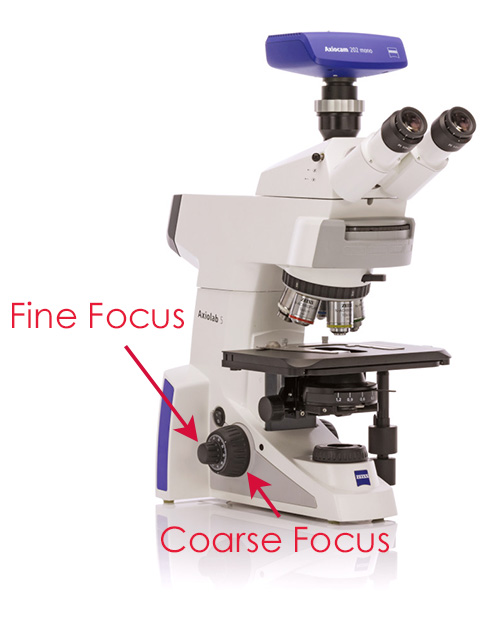
This article delves deep into the specific role of the fine adjustment knob, dissecting its mechanics, emphasizing its critical importance, and guiding users on how to master its operation for optimal clarity and groundbreaking discoveries. We will explore why this seemingly small dial holds such immense power in the hands of a skilled microscopist, transforming raw magnification into meaningful data and visual understanding across various scientific and industrial applications.
The Core Function: Precision Focusing
At its heart, the fine adjustment knob serves one paramount purpose: to achieve microscopic precision in focusing. While its counterpart, the coarse adjustment knob, allows for rapid changes in the distance between the objective lens and the specimen slide, these large movements are often too drastic for anything beyond initial focusing at low magnifications. The fine adjustment knob steps in where broad strokes fail, enabling the minute, almost imperceptible shifts required to bring the most intricate details into sharp relief.
Beyond the Coarse View: The Limits of Initial Focus
Imagine trying to thread a needle with a thick rope. The coarse adjustment knob operates with a similar lack of finesse. It moves the microscope stage (or the objective lens assembly, depending on the microscope design) up or down in relatively large increments. This quick travel is invaluable when you’re starting with a new slide or switching to a lower power objective, as it rapidly brings the specimen into a general field of view. You can quickly see the presence of a sample and its rough outline.
However, the moment you attempt to discern the internal structures of a cell, the arrangement of bacterial colonies, or the minute defects on a semiconductor wafer, the limitations of the coarse knob become glaringly obvious. Its movements are simply too large; a slight turn can send your specimen from slightly out of focus to completely blurry in an instant. At higher magnifications, where the depth of field is exceptionally shallow (meaning only a very thin plane of the specimen is in focus at any given time), using the coarse adjustment knob is not only ineffective but also dangerous. A single turn could potentially drive the high-power objective lens directly into the slide, causing damage to both the lens and the specimen. This is where the fine adjustment knob transitions from a helpful feature to an absolute necessity.
Achieving Optimal Clarity: Resolving Intricate Details
The fine adjustment knob is engineered for subtlety. It allows for incredibly small, incremental changes in the focal plane, moving the stage or objective lens by fractions of a millimeter with each turn. This allows the user to carefully “dial in” the perfect focus, pinpointing the exact plane within the specimen that offers the clearest image.
At higher magnifications (e.g., 40x, 100x, or even 1000x with oil immersion), the field of view becomes incredibly small, and the depth of field shrinks dramatically. Under these conditions, the ability to make minuscule adjustments is paramount for resolving fine details such as organelles within a cell, the delicate flagella of bacteria, or the crystal lattice of a mineral. Without the fine adjustment knob, achieving this level of resolution and clarity would be virtually impossible. It is the tool that transforms a magnified smudge into a discernible, informative image, enabling accurate observation, measurement, and analysis.
The Mechanics Behind the Precision
Understanding what the fine adjustment knob does is enhanced by understanding how it does it. Its precision isn’t magic; it’s a result of ingenious mechanical engineering designed to translate macroscopic hand movements into microscopic shifts of the optical system.
How It Differs from Coarse Adjustment: Gearing for Finesse
The fundamental difference between the coarse and fine adjustment knobs lies in their respective gearing mechanisms. Both knobs typically rotate a shaft that, through a system of gears, moves the stage or objective assembly vertically.
- Coarse Adjustment Knob: This knob is connected to a gear system with a relatively large gear ratio. This means that a single rotation of the knob results in a substantial vertical movement of the stage or objective. It’s designed for speed and range of motion, allowing for quick scanning and initial focusing.
- Fine Adjustment Knob: In contrast, the fine adjustment knob is linked to a much finer gear train. A single rotation of this knob translates into an extremely small vertical displacement – often just a few micrometers. This significantly reduced gear ratio provides the user with superior control, allowing them to make minute adjustments to the focal plane without overshooting the point of optimal clarity. This delicate mechanism is often sealed to protect it from dust and debris, ensuring its long-term precision. The smooth, often dampened feel of a fine adjustment knob is a testament to the precision engineering within.
Interplay with Objective Lenses: Magnification’s Demand for Detail
The utility and necessity of the fine adjustment knob become increasingly pronounced as you move up the magnification ladder. The relationship between the fine adjustment knob and different objective lenses is crucial for effective microscopy.
- Low Power Objectives (e.g., 4x, 10x): At these magnifications, the depth of field is relatively deep, meaning a larger portion of the specimen is in focus at once. While the fine adjustment knob can still be used to sharpen the image, the coarse adjustment knob does most of the heavy lifting. You can usually get a decent focus with the coarse knob, then make minor refinements with the fine adjustment. It’s a good practice to start with the fine knob once coarse focus is achieved, even at low power, to build good habits.
- High Power Objectives (e.g., 40x, 60x): When you switch to higher magnifications, the depth of field dramatically decreases, becoming incredibly shallow. At this point, the coarse adjustment knob must never be used for focusing. The slightest turn could cause the objective lens to collide with the slide, potentially scratching the lens, breaking the slide, or damaging the specimen. The fine adjustment knob becomes the sole instrument for focusing. Every subtle turn brings new layers or details within the specimen into focus, allowing for a precise exploration of its three-dimensional structure.
- Oil Immersion Objectives (e.g., 100x): These objectives provide the highest magnification and require a drop of immersion oil between the objective lens and the slide to reduce light refraction and maximize numerical aperture, thereby increasing resolution. At this level, the depth of field is extremely shallow, and the fine adjustment knob is absolutely critical. Its precise movements are essential for finding the exact focal plane and maintaining it as you traverse the slide. Even slight changes in temperature can cause the slide or microscope body to expand or contract, necessitating continuous minor adjustments with the fine knob.
Mastering Its Use for Effective Microscopy
Proficiency with the fine adjustment knob is not just about turning a dial; it’s about developing a keen eye, understanding the interplay of optics, and adopting best practices. Proper technique significantly enhances the quality of observations and prolongs the life of the microscope.
The Right Sequence of Focusing: A Step-by-Step Approach
Following a consistent and correct focusing sequence is fundamental to efficient and safe microscopy:

- Start at Lowest Power: Always begin your observation with the lowest power objective lens (e.g., 4x or 10x). This provides the widest field of view, making it easier to locate your specimen.
- Rough Focus with Coarse Adjustment: Use the coarse adjustment knob to bring the specimen into general focus. Turn the knob slowly until the specimen appears as a rough outline. Ensure the objective lens is not touching the slide.
- Refine with Fine Adjustment (Low Power): Once roughly focused with the coarse knob, switch to the fine adjustment knob. Slowly turn it back and forth to achieve the sharpest possible image. This step is crucial for training your eye to recognize optimal focus.
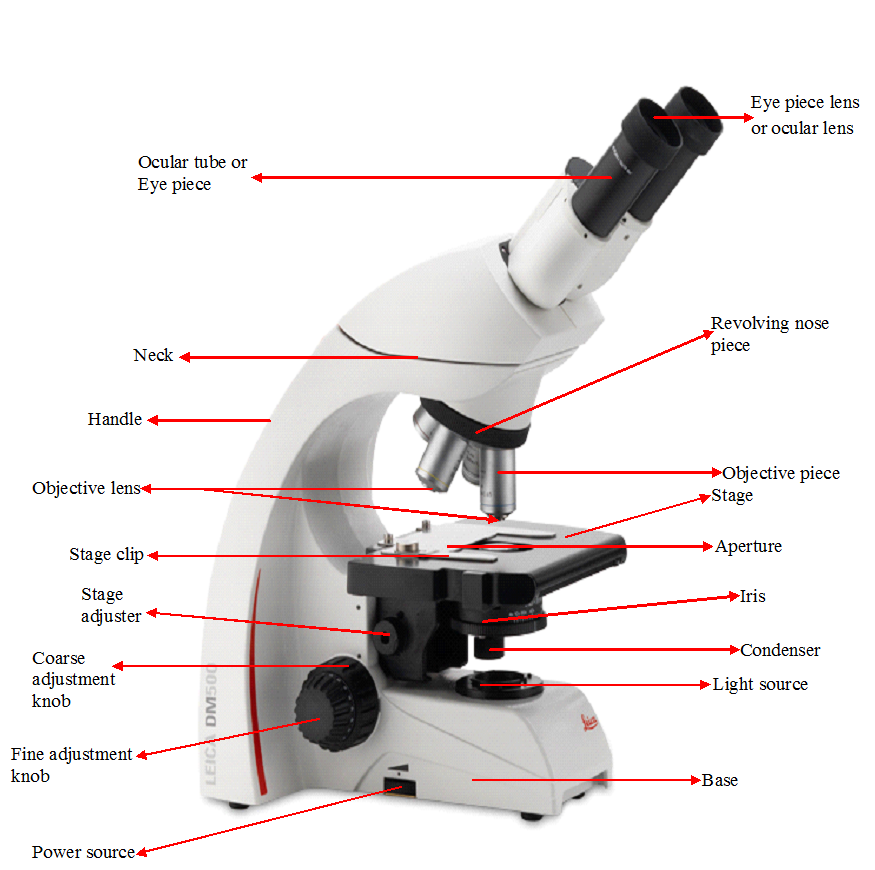
- Increase Magnification (and Refocus): Rotate the revolving nosepiece to the next higher power objective (e.g., 40x). Crucially, do not touch the coarse adjustment knob from this point onward.
- Focus Solely with Fine Adjustment (High Power): At higher magnifications, only use the fine adjustment knob. Turn it slowly in either direction until the image becomes perfectly sharp. Due to the reduced depth of field, you might need to make very small adjustments to examine different layers or depths within the specimen.
- Oil Immersion (if applicable): If using a 100x oil immersion objective, carefully place a drop of immersion oil on the slide, then rotate the nosepiece until the 100x objective dips into the oil. Again, only use the fine adjustment knob to bring the image into focus.
Recognizing “Perfect Focus”: What to Look For
Achieving perfect focus is a skill honed with practice. Here’s what to look for:
- Sharp Edges and Boundaries: Lines, cell walls, and borders should appear crisp and well-defined, not blurry or hazy.
- Absence of Halos: A poorly focused image often has light or dark “halos” around structures. A perfectly focused image minimizes these artifacts.
- Maximized Detail: When in perfect focus, the maximum amount of detail within the specimen’s focal plane will be visible. Tiny dots, granules, or striations will become apparent.
- Contextual Clarity: Ensure that the surrounding background or matrix is also in focus to provide proper context to the observed structures. Sometimes, specific parts of a 3D specimen will be in focus while others are not; the fine adjustment allows you to “scan” through these planes.
Troubleshooting Common Focusing Issues
Even with proper technique, focusing challenges can arise. The fine adjustment knob often plays a role in diagnosis and resolution:
- Image is consistently blurry despite using the fine adjustment:
- Check the objective lens: Ensure it is clean and correctly screwed into the nosepiece.
- Check the eyepiece: Ensure it is clean and properly seated.
- Verify the slide orientation: Is the cover slip facing up? Is the specimen itself prepared correctly and thin enough for transmission?
- Is the correct objective in place? Sometimes an objective is slightly between clicks on the nosepiece.
- The image drifts out of focus:
- Loose stage or objective mechanism: This indicates a mechanical issue within the microscope itself. Professional servicing might be required.
- Temperature changes: Significant temperature fluctuations can cause components to expand or contract, leading to focus drift, especially over long observation periods. Minor fine adjustments will be necessary.
- Can’t achieve full sharpness across the entire field of view: This could be due to field curvature (an optical aberration where the image plane is curved rather than flat), or simply the uneven thickness of the specimen. The fine adjustment knob allows you to focus on specific regions.
Why Precision Matters: Applications and Impact
The fine adjustment knob is more than just a mechanical part; it’s a critical enabler of accurate observation and analysis, underpinning discoveries and quality control across diverse fields. Its precision directly impacts the validity and utility of microscopic data.
Scientific Research and Discovery: Unveiling the Microcosmos
In scientific research, the fine adjustment knob is indispensable. Researchers studying cell biology rely on it to visualize organelles, observe cellular processes in real-time, and identify subtle morphological changes. Microbiologists use it to differentiate between bacterial strains, study motility, and identify specific pathogens. Histologists and pathologists depend on its precision to diagnose diseases by analyzing tissue samples, identifying cancerous cells, or detecting abnormalities in cellular architecture. The ability to precisely focus allows for:
- Accurate Identification: Distinguishing between similar-looking structures.
- Detailed Morphology: Documenting the exact shape, size, and arrangement of components.
- Quantification: Measuring dimensions and counting features with greater accuracy, which is crucial for statistical analysis and drawing robust conclusions.
- Dynamic Observation: Following the movement or interaction of microscopic entities as they change over time.
Without the fine adjustment knob, much of the groundbreaking research that relies on detailed microscopic observation would be severely hampered, if not impossible.
Education and Learning: Foundations of Scientific Literacy
In educational settings, the fine adjustment knob plays a pivotal role in teaching students the fundamentals of microscopy and biological observation. Learning to use this knob effectively helps students:
- Develop Observational Skills: It trains the eye to discern subtle details and appreciate the three-dimensional nature of microscopic specimens.
- Understand Optical Principles: It reinforces concepts like depth of field and resolution in a practical, hands-on manner.
- Build Confidence: Mastering a core scientific tool instills confidence and encourages further exploration in scientific disciplines.
- Safety Practices: Emphasizing its exclusive use at high power teaches essential safety protocols for protecting expensive equipment.
For many aspiring scientists, the fine adjustment knob is one of the first technical controls they master, opening their eyes to the microscopic world and sparking a lifelong curiosity.
Industrial Quality Control: Ensuring Perfection at Scale
Beyond academia and pure research, the fine adjustment knob is a workhorse in various industrial sectors where precision and quality control are paramount.
- Material Science: Engineers use microscopes with fine adjustment to examine the microstructure of metals, polymers, and ceramics, identifying grain boundaries, phase distributions, and micro-cracks that could compromise material integrity.
- Electronics Manufacturing: In the production of integrated circuits and other electronic components, microscopes are used to inspect tiny features, detect solder defects, verify wire bonding, and check for impurities or manufacturing flaws that are invisible to the naked eye. The extreme precision of the fine adjustment knob is critical for these intricate inspections.
- Forensics: Forensic scientists use microscopes with fine adjustment to analyze fibers, hairs, residues, and other trace evidence, crucial for criminal investigations.
- Jewelry and Gemology: Appraisers and jewelers use microscopes to examine inclusions, facets, and overall quality of gemstones, with the fine adjustment knob allowing for detailed scrutiny of their internal and external characteristics.
In these applications, the fine adjustment knob contributes directly to product reliability, safety, and performance, preventing costly failures and ensuring high standards of manufacturing.
Conclusion
The fine adjustment knob, though a small component on a complex instrument, is undeniably mighty in its function. It is the gatekeeper of clarity, the enabler of detailed observation, and a silent partner in countless scientific discoveries and technological advancements. While the coarse adjustment knob provides the initial navigational framework, it is the fine adjustment knob that guides the user to the precise point of insight, transforming a magnified blur into a crisp, informative image.
Mastering its use is a fundamental skill for anyone engaging with microscopy, whether in a high-tech research lab, an educational setting, or an industrial quality control facility. By understanding its mechanical precision, appreciating its critical role at higher magnifications, and practicing proper focusing techniques, users can unlock the full potential of their microscopes, delving deeper into the intricate beauty and crucial details of the microscopic world. In the quest for knowledge and precision, the fine adjustment knob stands as a testament to the fact that sometimes, the smallest adjustments yield the biggest revelations.
aViewFromTheCave is a participant in the Amazon Services LLC Associates Program, an affiliate advertising program designed to provide a means for sites to earn advertising fees by advertising and linking to Amazon.com. Amazon, the Amazon logo, AmazonSupply, and the AmazonSupply logo are trademarks of Amazon.com, Inc. or its affiliates. As an Amazon Associate we earn affiliate commissions from qualifying purchases.