
In the lexicon of modern marketing, few terms carry as much destructive weight as “hypocrisy.” Derived from the ancient Greek word hypokrisis, meaning “acting a part,” hypocrisy in a branding context refers to the dissonance between what a company claims to be and how it actually operates. Just as the historical and theological critiques of hypocrisy focus on the misalignment of inner virtue and outward display, modern brand strategy is increasingly defined by the “Alignment Gap.” In an era where information is decentralized and consumer skepticism is at an all-time high, the “gospel” of a brand—its mission statement, values, and advertising—must be mirrored by its corporate actions, or it risks total obsolescence.

Defining Brand Hypocrisy in the Modern Marketplace
Brand hypocrisy is not merely a marketing failure; it is a structural integrity failure. It occurs when a brand proactively signals a set of values to its audience while simultaneously engaging in behaviors that contradict those values. This is particularly prevalent in the “purpose-driven” era of branding, where companies feel pressured to take stances on social, environmental, and political issues to attract Gen Z and Millennial consumers.
The Anatomy of a Value-Action Gap
The “Value-Action Gap” is the scientific measure of brand hypocrisy. When a corporation launches a campaign centered on sustainability but continues to rely on non-recyclable supply chains or unethical labor practices, they are creating a gap that consumers can see clearly through digital transparency. This gap acts as a “trust tax.” Every time a brand’s actions fall short of its marketing promises, it must spend more on customer acquisition and reputation management to compensate for the lack of organic trust. For a brand to have true identity, its “preaching” (advertising) must be the natural overflow of its “practice” (operations).
Why Authenticity is the Antidote to Corporate Pretense
In personal and corporate branding, authenticity is often misused as a buzzword, but its technical definition is simple: the degree to which an entity is true to its own personality, spirit, or character. To combat hypocrisy, a brand must move away from “performative” branding—where the goal is to look good—toward “integrated” branding, where the goal is to be good. This requires a rigorous internal audit. If a brand cannot live up to a value 100% of the time, it is more “authentic” to admit the struggle than to claim a false perfection. Consumers today do not demand perfection; they demand honesty about the process.
The High Cost of Performative Marketing
The financial and social repercussions of brand hypocrisy are more severe than ever. In previous decades, a brand could manage its image through top-down communication (TV ads, billboards). Today, the brand is no longer what the company says it is; it is what consumers tell each other it is. When a brand is “called out” for hypocrisy, the damage is viral and often permanent.
Greenwashing and Purpose-Washing: The New Ethics
“Greenwashing” (claiming environmental friendliness without substance) and “Purpose-washing” (claiming social justice goals for profit) are the most common forms of modern brand hypocrisy. These tactics are often the result of marketing departments moving faster than the actual C-suite or supply chain. When a brand adopts a “holy” posture regarding the planet or society without doing the difficult work of operational reform, they are essentially wearing a mask. This mask-wearing is exactly what creates the “hypocrite” archetype. The market eventually tears the mask off, leading to boycotts, regulatory fines, and a permanent stain on the corporate identity.
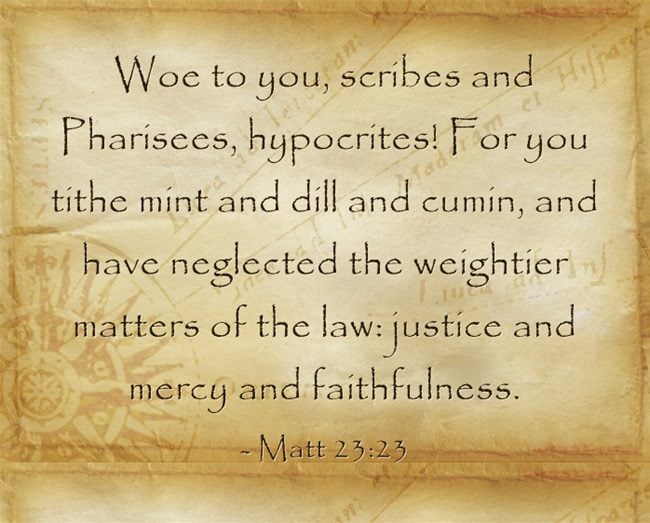
The Social Media Echo Chamber and the Risk of “Saying” vs. “Doing”
Social media has turned every consumer into an investigative journalist. If a brand tweets a message of solidarity during a social movement, users will immediately look at the company’s board of directors or their historical hiring practices. If the two don’t align, the brand is labeled a hypocrite within hours. This “Say-Do” ratio is the most critical metric in modern brand health. High-performing brands ensure that their social media teams are in constant communication with their HR and legal departments to ensure that every outward proclamation is backed by internal evidence.
Building a “Biblical” Level of Integrity: Strategies for Brand Alignment
To avoid the pitfalls of hypocrisy, brand strategists must shift their focus from “image making” to “identity building.” This involves a “bottom-up” approach to branding where the core values of the company dictate the marketing, rather than the marketing dictating a false set of values to the company.
Internal Culture as the Foundation of External Identity
A brand is an iceberg; the marketing is just the tip visible above the water. The 90% below the surface is the internal culture. Hypocrisy begins when the culture of an organization does not reflect the brand’s public-facing promises. If a brand markets itself as “innovative” and “people-first,” but its internal structure is bureaucratic and toxic, the hypocrisy will eventually leak out through Glassdoor reviews, employee leaks, and poor customer service. Building a brand with integrity starts with the employees. They are the primary disciples of the brand’s message. If they don’t believe the “gospel” of the company, the world won’t either.
Transparency as a Long-term Asset
The most effective way to eliminate the charge of hypocrisy is to adopt radical transparency. This means showing the “how” and the “why” behind business decisions. When a brand is transparent about its failures, it builds a “trust reservoir.” If a company admits, “We want to be 100% sustainable, but we are currently only at 40%,” they are inoculated against charges of hypocrisy. They are being honest about their journey. This strategic vulnerability is a powerful branding tool that transforms a cold corporation into a relatable, human entity.
Case Studies: Lessons from Brands That Fell and Rose Through Consistency
Analyzing how brands handle the tension between their claims and their reality offers a roadmap for any business looking to secure its legacy. The difference between a brand that survives a scandal and one that collapses often comes down to how they addressed their own hypocrisy.
Recovering from a Crisis of Character
When a brand is caught in an act of hypocrisy—such as a data breach after promising security, or a labor scandal after promising ethics—the traditional PR move was to deny or deflect. Modern brand strategy suggests a different path: Repentance and Reform. The brands that successfully navigate these crises are those that acknowledge the hypocrisy, explain why it happened without making excuses, and provide a clear, measurable roadmap for change. This is the “Atonement Model” of branding. It recognizes that the relationship between brand and consumer is a social contract based on trust, and when that contract is broken, it requires more than just a clever ad campaign to fix.

Future-Proofing Your Brand Through Radically Honest Communication
The future of branding belongs to the “Radically Honest.” These are brands that do not try to be everything to everyone. They don’t pretend to be perfect. Instead, they define a narrow set of values and stick to them with religious fervor. By narrowing the scope of what the brand “stands for,” the company reduces the surface area for potential hypocrisy. Future-proofing requires a commitment to “Slow Branding”—the idea that building a reputation for integrity takes years, but losing it takes seconds. In the digital age, your brand’s “scripture” is every tweet, every product, and every customer interaction. Keeping these in harmony is the only way to avoid the devastating label of the hypocrite.
In conclusion, the “gospel” of a brand is only as good as the life it leads in the marketplace. While the temptation to “act a part” to gain quick market share is high, the long-term cost of brand hypocrisy is a total loss of equity. By focusing on alignment, transparency, and a high “Say-Do” ratio, companies can build brands that don’t just look good on a screen, but are built on the bedrock of genuine integrity. In the end, the marketplace is the ultimate judge: it rewards the faithful and eventually exposes the hypocrite.
aViewFromTheCave is a participant in the Amazon Services LLC Associates Program, an affiliate advertising program designed to provide a means for sites to earn advertising fees by advertising and linking to Amazon.com. Amazon, the Amazon logo, AmazonSupply, and the AmazonSupply logo are trademarks of Amazon.com, Inc. or its affiliates. As an Amazon Associate we earn affiliate commissions from qualifying purchases.