
In the intricate landscape of modern compensation, the concept of “supplemental pay” often surfaces, yet its precise definition and implications can remain somewhat nebulous for many. Far from being a mere add-on, supplemental pay represents a critical component of an individual’s total compensation package and a strategic tool for businesses. Understanding supplemental pay is not just about identifying extra income; it’s about grasping how various forms of remuneration beyond regular wages contribute to an employee’s financial well-being, influence workplace motivation, and carry specific tax and financial planning considerations. This article delves into the nuances of supplemental pay, dissecting its forms, financial impact, and strategic significance for both employees and employers within the dynamic economic environment.

Understanding the Core Concept of Supplemental Pay
At its heart, supplemental pay is any form of compensation an employee receives that is additional to their regular wages or salary for a pay period. It is distinct from the fixed, predictable income an employee typically earns for their standard work hours. While regular wages compensate for the base performance of job duties, supplemental pay often serves as a reward for extraordinary effort, a benefit for specific circumstances, or an incentive to achieve particular goals.
Defining Supplemental Pay in the Modern Workforce
In the current professional landscape, supplemental pay has evolved beyond simple bonuses. It encompasses a wide array of payments designed to complement an employee’s base salary. These payments can be discretionary, tied to specific performance metrics, or mandated by law under certain conditions. The common thread among all forms of supplemental pay is their variable nature and their role in augmenting an employee’s standard earnings. This variability means that while it can significantly boost an individual’s take-home pay, it often requires different tax treatment and careful financial planning. From a business perspective, it’s a flexible mechanism to reward, retain, and motivate talent, aligning employee efforts with organizational objectives.
Differentiating Supplemental from Regular Wages
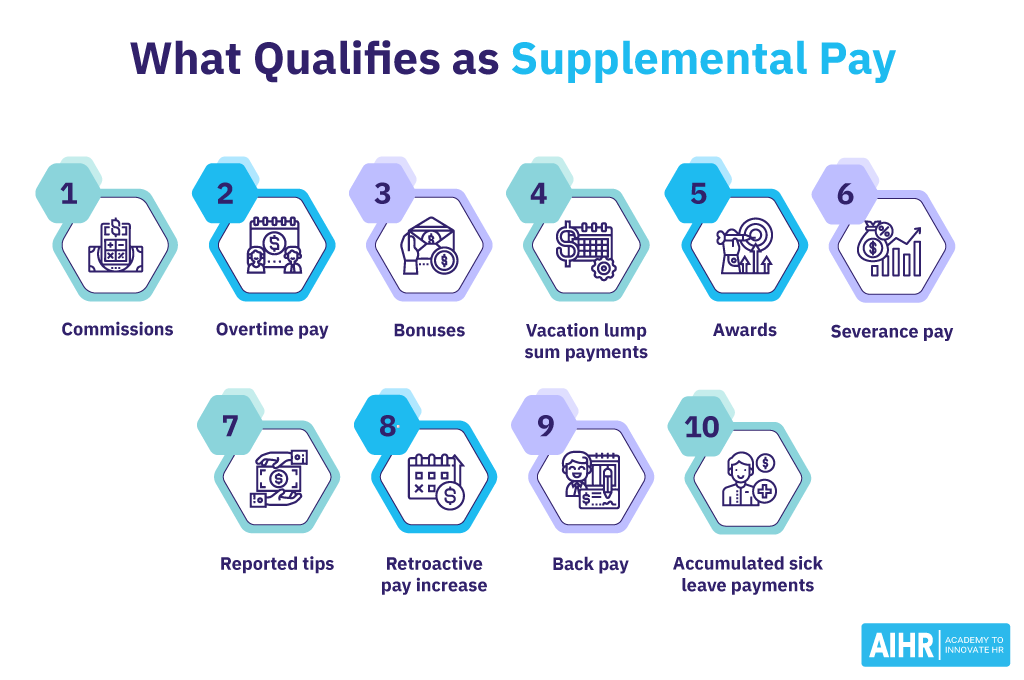
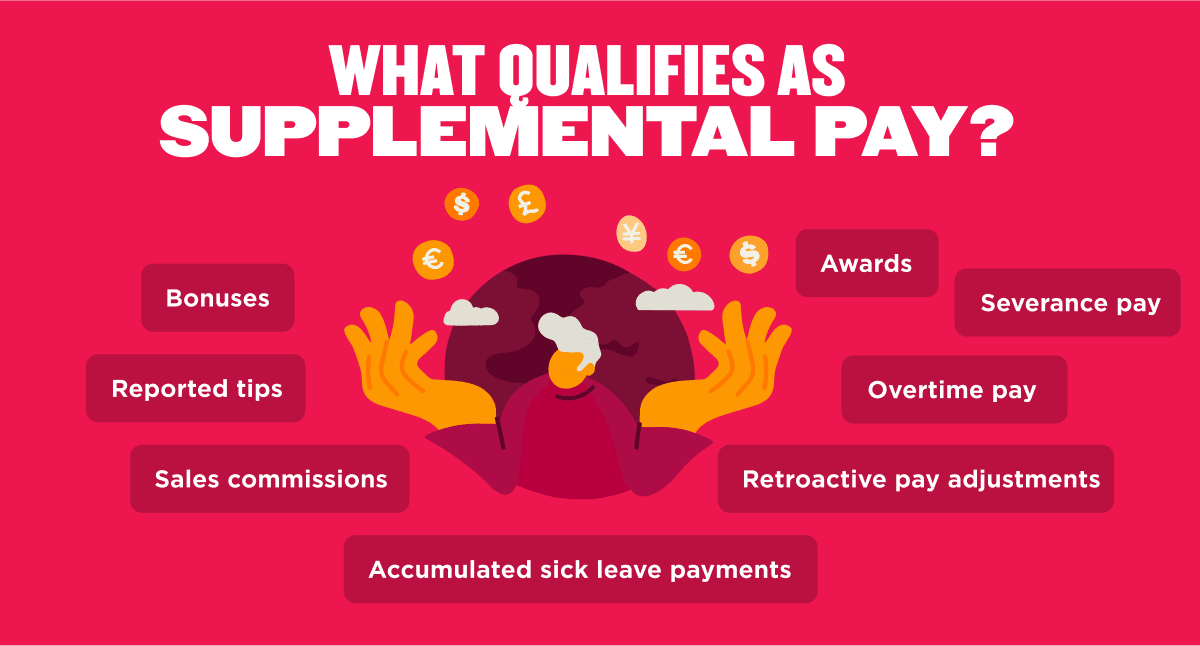
The distinction between supplemental pay and regular wages is crucial, particularly for tax purposes and financial planning. Regular wages are typically defined as the fixed hourly rate or salary an employee receives for their standard work. This income is usually consistent from one pay period to the next, barring changes in hours or pay rate. Supplemental pay, conversely, is irregular or unpredictable. Examples include bonuses, commissions, overtime pay, severance pay, or even awards. This distinction influences how these payments are withheld for taxes. While regular wages are subject to standard income tax withholding calculations based on an employee’s W-4 form, supplemental wages often face different withholding rules, sometimes at a flat federal rate, which can lead to confusion if not properly understood.
The Rationale Behind Offering Supplemental Compensation
Employers offer supplemental pay for a variety of strategic reasons, all aimed at enhancing business performance and employee satisfaction. One primary reason is motivation and incentive. By tying payments to specific goals (e.g., sales targets, project completion, company profitability), businesses can galvanize employees to exert extra effort and achieve higher productivity. Secondly, supplemental pay is a powerful retention tool. In competitive industries, offering attractive bonuses, equity, or performance incentives can be key to preventing top talent from seeking opportunities elsewhere. Thirdly, it provides flexibility in compensation costs. Rather than increasing fixed salaries, which become a permanent expense, businesses can scale supplemental pay up or down based on financial performance, allowing for greater agility in managing labor costs. Lastly, it can be used for recognition and reward, acknowledging exceptional contributions and fostering a culture of high achievement.
Common Forms and Types of Supplemental Pay
The spectrum of supplemental pay is broad, covering various scenarios and objectives. Recognizing these different types is essential for both employers structuring compensation plans and employees evaluating their total earnings potential.
Performance-Based Bonuses and Incentives
Perhaps the most recognized form of supplemental pay, performance-based bonuses are monetary rewards given for achieving specific individual, team, or company goals. These can range from annual performance bonuses tied to year-end reviews, project completion bonuses for meeting deadlines, or profit-sharing bonuses distributed when the company exceeds financial targets. Incentives often refer to ongoing programs designed to drive specific behaviors, such as quarterly bonuses for meeting sales quotas or safety incentives for maintaining an accident-free record.
Commissions and Sales-Driven Compensation
Predominant in sales roles, commissions are payments made to employees based on the volume or value of sales they generate. This form of supplemental pay directly links an employee’s earnings to their sales performance, providing a strong incentive to close deals and maximize revenue. Commission structures can vary widely, from a flat percentage of sales to tiered systems that offer higher percentages for exceeding targets, or even residual commissions for ongoing revenue streams.
Overtime, Shift Differentials, and Premium Pay
These forms of supplemental pay are often mandated by labor laws or collective bargaining agreements. Overtime pay is compensation for hours worked beyond the standard workweek (typically 40 hours) at a rate higher than the regular hourly wage, commonly 1.5 times the regular rate (“time and a half”). Shift differentials are extra payments for working undesirable hours, such as night shifts, weekends, or holidays. Premium pay can include hazard pay for dangerous conditions or on-call pay for being available outside regular working hours.
Severance Pay and Payouts
When an employee’s employment is terminated, whether voluntarily or involuntarily, they may receive severance pay. This lump-sum payment or series of payments is often provided in exchange for signing a release of claims against the employer. Severance packages can also include payouts for unused vacation time, sick leave, or other accrued benefits. While often seen as an unfortunate consequence, severance is a form of supplemental pay designed to provide financial bridge for the employee during a transition period.
Equity Compensation (Stock Options, RSUs)
Increasingly common, especially in tech and growth-oriented companies, equity compensation grants employees ownership stakes in the company. Stock options give employees the right to purchase company stock at a predetermined price in the future. Restricted Stock Units (RSUs) are a promise to deliver company stock or its cash equivalent once certain conditions (like vesting periods) are met. While not cash in hand immediately, equity compensation has the potential for significant long-term financial gain, making it a powerful tool for aligning employee interests with shareholder value.
Other Forms: Per Diem, Relocation Packages, Sign-on Bonuses
The list of supplemental payments is extensive. Per diem payments cover daily expenses for employees traveling for business. Relocation packages assist employees moving for a job, covering costs like moving expenses, temporary housing, or real estate fees. Sign-on bonuses are one-time payments offered to new hires as an incentive to join the company, often contingent on staying for a certain period. Other examples include suggestion awards, wellness program incentives, or even referral bonuses for bringing in new talent.
The Financial Impact and Strategic Value of Supplemental Pay
For both individuals and organizations, supplemental pay plays a multifaceted role, influencing financial stability, strategic decision-making, and long-term planning.
For Employees: Enhancing Income and Financial Security
From an employee’s perspective, supplemental pay can significantly enhance overall income. A substantial bonus can provide the funds for a down payment on a house, pay off debt, or boost retirement savings. Commissions offer direct control over earning potential, motivating sales professionals to push harder. Equity compensation, while volatile, offers the chance for wealth creation that can far surpass annual salary increases. However, the irregular nature of supplemental pay also introduces a degree of financial uncertainty. Employees must understand that these payments are not guaranteed and should not be relied upon for essential recurring expenses. Smart financial planning involves distinguishing between reliable base income and variable supplemental income, allocating the latter towards savings, investments, or discretionary spending rather than fixed obligations.
For Employers: Driving Performance and Retention
For businesses, supplemental pay is a strategic investment rather than just an expense. By directly linking compensation to outcomes, employers can create a performance-driven culture where employees are incentivized to contribute maximally to company goals. This direct linkage can lead to increased productivity, higher quality work, and greater innovation. Moreover, competitive supplemental pay packages are crucial for attracting and retaining top talent in a tight labor market. Offering robust bonuses, compelling equity schemes, or comprehensive relocation packages can differentiate an employer from competitors, securing valuable human capital. The flexibility of supplemental pay also allows companies to reward success without permanently inflating their fixed salary expenses, providing a sustainable model for growth and profitability.
Navigating Fluctuations in Income
One of the key challenges, particularly for employees heavily reliant on supplemental pay (like commission-only sales roles), is managing income fluctuations. Unlike a steady salary, supplemental income can vary wildly from month to month or year to year. This variability necessitates robust financial planning. Employees should build emergency funds to cover periods of lower supplemental earnings, prioritize debt repayment when income is high, and meticulously budget to ensure essential expenses are always met. For employers, managing fluctuations means carefully designing compensation plans that balance incentive with predictability, ensuring employees feel secure enough to focus on performance without undue financial stress. Transparent communication about how supplemental pay is calculated and distributed is also vital to managing expectations.
Tax Implications and Financial Planning for Supplemental Pay
One of the most critical, and often misunderstood, aspects of supplemental pay involves its tax treatment. Unlike regular wages, which are subject to standard payroll withholding, supplemental payments can have different federal, state, and local tax implications.
Understanding Federal Income Tax Withholding
Federally, supplemental wages are generally subject to income tax withholding. The IRS provides two main methods for withholding taxes from supplemental wages:
- The Aggregate Method: If supplemental wages are paid concurrently with regular wages, and the employer withholds income tax from the combined amount as if it were a single payment, this method is used. The withholding is calculated based on the employee’s W-4 form.
- The Flat Rate Method: If supplemental wages are identified separately from regular wages, or if they exceed certain thresholds (e.g., over $1 million in a calendar year), employers often use a flat percentage rate for withholding. For amounts up to $1 million in a calendar year, the mandatory flat rate is currently 22%. For amounts exceeding $1 million, the rate can be significantly higher (e.g., 37% for 2023 and 2024). It’s crucial to understand that this flat rate is withholding, not necessarily the final tax liability. Employees may still owe more or receive a refund when they file their annual tax return, depending on their total income and deductions.
State and Local Tax Considerations
Beyond federal taxes, supplemental pay is also subject to state and, in some cases, local income taxes. Each state has its own rules for how supplemental wages are treated. Some states might follow the federal aggregate or flat-rate method, while others may have entirely different withholding guidelines. Employees residing in states with high income taxes or localities with municipal income taxes need to be particularly aware of how these payments will impact their net income. Consulting a tax professional or reviewing state tax department guidelines is advisable.
The Impact on Social Security and Medicare (FICA)
Crucially, supplemental pay is generally subject to Social Security and Medicare taxes (FICA taxes) just like regular wages, up to the annual Social Security wage base limit. This means that both the employee and employer will contribute their respective shares to these federal programs from supplemental payments. The flat rate withholding for federal income tax does not apply to FICA taxes; instead, the standard FICA rates apply to supplemental wages until the annual Social Security maximum is reached.
Smart Financial Planning: Budgeting and Investing Supplemental Funds
Given the unique tax treatment and often substantial nature of supplemental pay, careful financial planning is paramount.
- Anticipate Withholding: Don’t assume the full bonus amount will land in your bank account. Understand the withholding rules to avoid unpleasant surprises.
- Adjust Estimated Taxes: If you receive significant supplemental pay, especially if withheld at the flat 22% rate, and your marginal tax bracket is higher, you might need to make estimated tax payments throughout the year to avoid underpayment penalties.
- Prioritize Financial Goals: Use supplemental income strategically. Consider directing it towards high-interest debt repayment, bolstering your emergency fund, contributing to retirement accounts (401(k), IRA), or investing in diversified portfolios.
- Consult a Professional: A financial advisor or tax professional can help optimize your approach to supplemental pay, ensuring you maximize its benefits while minimizing tax liabilities.
The Future of Supplemental Pay in a Dynamic Economy
As global economies evolve, so too do the methods and philosophies behind compensating employees. Supplemental pay is continually adapting to new work models, technological advancements, and shifting workforce expectations.
Adapting to Gig Economy and Remote Work Models
The rise of the gig economy and the widespread adoption of remote work have introduced new paradigms for supplemental pay. For independent contractors and freelancers, who essentially operate as small businesses, their entire income structure is often “supplemental” in nature, being project-based or commission-driven. Traditional employers are also experimenting with performance-based bonuses for remote teams, or incentives for achieving results regardless of physical location. The focus is shifting from hours-worked to value-delivered, making supplemental pay even more relevant as a flexible compensation tool.
The Role of Performance Metrics and Data
The increasing availability of data and sophisticated analytics tools is transforming how supplemental pay is designed and evaluated. Employers can now precisely track individual, team, and company performance, allowing for more objective and granular bonus structures. This data-driven approach ensures that supplemental payments are directly tied to measurable outcomes, enhancing fairness and transparency. AI tools and performance management software are becoming integral in calculating and distributing these complex compensation schemes, further refining the link between effort and reward.
Ethical Considerations and Transparency
As supplemental pay becomes more complex and pervasive, ethical considerations and transparency are becoming increasingly important. Issues such as pay equity, the potential for bias in performance evaluations, and the clarity of bonus calculation methodologies are under scrutiny. Employees demand clear communication about how their supplemental pay is earned and calculated. Employers who prioritize transparency and fair practices in their supplemental pay schemes will not only build trust and morale but also ensure compliance with labor laws and foster a more equitable and motivated workforce in the long run.
In conclusion, supplemental pay is a dynamic and essential element of modern compensation. It serves as a powerful instrument for employers to drive performance, foster loyalty, and manage costs strategically. For employees, it represents a significant opportunity to enhance their financial standing, providing both immediate rewards and pathways to long-term wealth accumulation. However, its variable nature and distinct tax implications necessitate a proactive and informed approach to financial planning. As the world of work continues to evolve, understanding and effectively leveraging supplemental pay will remain crucial for both individuals and organizations striving for financial success and sustainable growth.
aViewFromTheCave is a participant in the Amazon Services LLC Associates Program, an affiliate advertising program designed to provide a means for sites to earn advertising fees by advertising and linking to Amazon.com. Amazon, the Amazon logo, AmazonSupply, and the AmazonSupply logo are trademarks of Amazon.com, Inc. or its affiliates. As an Amazon Associate we earn affiliate commissions from qualifying purchases.