
The world of lumber, while seemingly straightforward, is filled with specialized terminology that can confuse even seasoned professionals. One such term that frequently arises is “S4S.” Understanding this designation is crucial for anyone involved in woodworking, construction, or even DIY projects. S4S is not merely a label; it signifies a specific processing method that impacts the lumber’s usability, cost, and appearance.
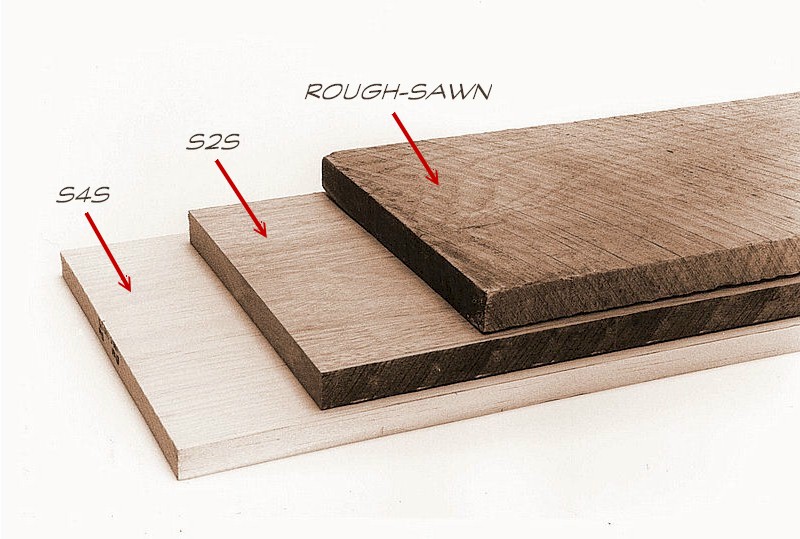
At its core, S4S stands for “surfaced four sides.” This classification indicates that a piece of lumber has undergone a process of planing on all four of its surfaces. Planing is a milling operation that uses a cutting tool to remove a thin layer of wood, resulting in smooth, flat, and dimensionally accurate surfaces. When lumber is designated S4S, it means it has been planed on its top, bottom, and both edges. This stands in contrast to other lumber designations like rough-sawn lumber, which is straight from the sawmill and has an unfinished, often uneven texture, or S2S (surfaced two sides), which has only been planed on its top and bottom.
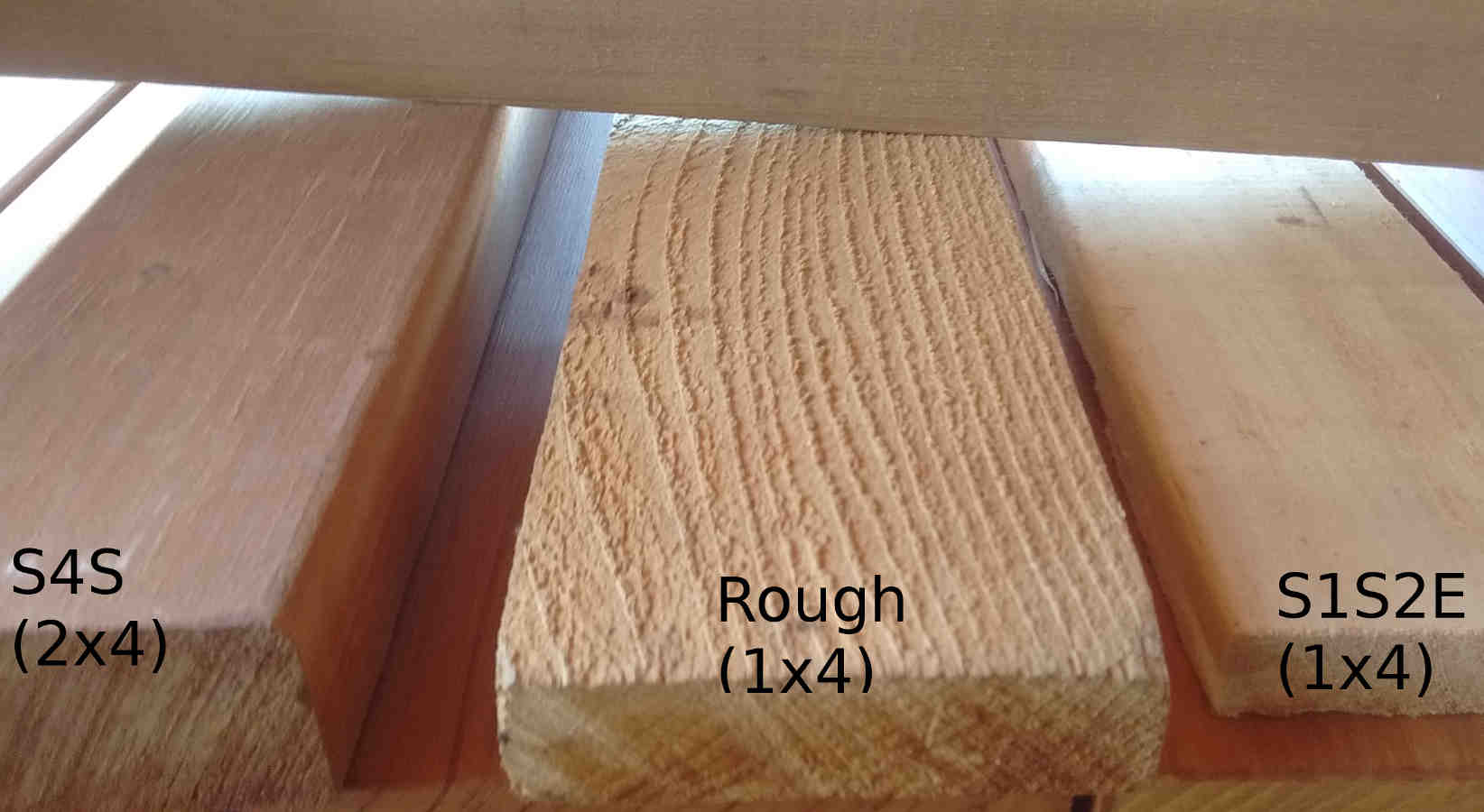
The significance of S4S lumber lies in its immediate readiness for use in many applications. Unlike rough lumber, which requires extensive sanding and squaring before it can be incorporated into a project, S4S lumber is already prepared. This saves considerable time and labor for the end-user, making it a popular choice for a wide range of woodworking projects, from furniture construction and cabinetry to interior trim and decorative elements. The consistent dimensions and smooth finish provided by S4S lumber contribute to a higher quality final product, with joints that fit together more precisely and surfaces that are ready for finishing without extensive preparation.
This article will delve deeper into the meaning of S4S in lumber, exploring the processes involved, the advantages and disadvantages of using S4S lumber, common applications, and how its classification impacts purchasing decisions.
The Milling Process Behind S4S Lumber
The “surfaced four sides” designation is a direct result of specific milling operations performed on raw lumber. Understanding this process helps to appreciate why S4S lumber has its characteristic properties and costs. The journey from a rough-sawn plank to a smooth, ready-to-use S4S board involves precision machinery and careful execution.
Planing and Jointing
The primary machines involved in creating S4S lumber are the planer and the jointer. A planer (also known as a thicknesser) is used to flatten and smooth the top and bottom surfaces of the lumber, as well as to bring the board to a consistent thickness. The wood passes under rotating cutterheads that shave off thin layers of wood, creating perfectly parallel surfaces. This process is critical for achieving the desired dimensions and a smooth finish.
A jointer is used to flatten and square the edges of the lumber. It typically has a long, flat table with a cutterhead positioned between two fence-like guides. As the lumber is passed over the cutterhead, it creates a perfectly straight and square edge. When lumber is processed to be S4S, it undergoes this jointing process on both its long edges. This ensures that the edges are perpendicular to the faces, which is essential for creating tight, gap-free joints in woodworking.
Achieving Dimensional Accuracy and Smoothness
The combination of planing and jointing on all four sides results in lumber that is not only smooth but also dimensionally accurate. This means that the width, thickness, and straightness of the edges are all controlled within tight tolerances. For example, a 1×4 S4S board will have consistent dimensions throughout its length, making it easy to interlock with other pieces. The smooth surfaces reduce the need for extensive sanding, although a light sanding is often recommended for optimal finishing results.
The degree of smoothness achieved depends on the type of cutterheads used and the feed rate of the lumber through the machines. High-quality S4S lumber will have a very fine finish, suitable for visible applications where aesthetics are important. The consistent milling also ensures that the wood is “flat” and “square,” terms that are critical in woodworking. Flatness refers to the absence of warpage or cupping, while squareness refers to the edges being at a perfect 90-degree angle to the faces.
Advantages and Disadvantages of S4S Lumber
Like any material classification, S4S lumber comes with its own set of pros and cons. Understanding these will help you make informed decisions about whether it’s the right choice for your project.
The Benefits of S4S

The most significant advantage of S4S lumber is its convenience and time-saving aspect. Because it has already been surfaced and squared on all sides, it is ready for immediate use. This is particularly valuable for hobbyists, DIY enthusiasts, or professional woodworkers who are working under tight deadlines. The labor involved in flattening and squaring rough lumber can be substantial, requiring specialized equipment like jointers and planers, as well as significant skill to operate them effectively. S4S lumber eliminates this initial, labor-intensive step.
Another key benefit is dimensional consistency and accuracy. The precise milling ensures that each piece of S4S lumber is uniform in thickness and width, and that the edges are perfectly square. This leads to better joinery and a more professional finish. When building cabinets, furniture, or trim, perfectly square edges allow for tight, seamless joints that are crucial for both structural integrity and aesthetic appeal. The smooth surfaces also mean less sanding is required, saving further time and effort.
Furthermore, S4S lumber is often easier to handle and transport. Its smooth surfaces are less likely to cause splinters, and its consistent dimensions make it more predictable to stack and move. For many common woodworking tasks, the quality and finish of S4S lumber are more than adequate, and in some cases, superior to what could be achieved with hand-planing rough lumber without extensive practice.
Potential Drawbacks to Consider
Despite its advantages, S4S lumber is not without its drawbacks. The most notable is cost. The extra milling process adds labor and machinery costs, which are passed on to the consumer. Therefore, S4S lumber is generally more expensive than rough-sawn lumber of the same species and grade. For projects where cost is a primary concern, and the user has the necessary equipment and skills, starting with rough lumber and milling it themselves can be a more economical option.
Another consideration is the loss of wood volume. During the planing and jointing process, a layer of wood is removed from all four sides. This means that an S4S board will have slightly smaller actual dimensions than its nominal dimensions suggest. For example, a 1×4 board, which is nominally one inch thick and four inches wide, will likely measure closer to 3/4 inch thick and 3 1/2 inches wide after being surfaced. This is a standard practice, but it’s important for buyers to be aware of the actual dimensions to ensure they are purchasing the correct size for their needs.
Finally, while S4S lumber is generally considered high-quality, it may not always be suitable for very specialized applications. For example, fine art woodturners or luthiers might prefer to start with exceptionally high-quality, rift-sawn or quarter-sawn lumber and mill it themselves to achieve specific grain patterns or stability characteristics that may not be guaranteed in standard S4S offerings. In some cases, the outermost layers removed during surfacing might contain unique wood grain or figuring that some woodworkers value.
Common Applications and Purchasing Considerations for S4S Lumber
The versatility and convenience of S4S lumber make it a popular choice across a broad spectrum of woodworking and construction projects. Understanding these applications and how to best purchase S4S lumber will ensure you select the right material for your needs.
Where S4S Lumber Shines
S4S lumber is frequently used in cabinetry and furniture construction. Its smooth surfaces and square edges are ideal for building cabinet boxes, drawer sides, doors, and furniture frames. The precision of S4S ensures that joints are tight and the final product has a professional, polished look. For interior trim work, such as baseboards, crown molding, and door casings, S4S lumber is an excellent choice. Its ready-to-finish surfaces and consistent dimensions make installation straightforward and result in clean, sharp lines.
DIY projects and hobbyist woodworking also heavily rely on S4S lumber. For those who may not have access to extensive woodworking machinery, S4S provides a way to achieve professional-looking results without significant investment in tools or specialized skills. From shelves and simple frames to decorative items, S4S lumber simplifies the process. In some light construction applications, such as building simple partition walls or fabricating custom shelving units, S4S lumber can be used for its ease of handling and finishing.
Factors to Consider When Buying S4S Lumber
When purchasing S4S lumber, several factors are crucial to consider. Species of wood is paramount, as different woods offer varying properties in terms of hardness, grain pattern, workability, and cost. Pine, poplar, oak, and maple are common choices, each suited to different applications. Grade of lumber is also important. Lumber grades (e.g., FAS, Select, #1 Common) denote the quality of the wood, indicating the presence and size of defects like knots, checks, and stains. Higher grades will be more expensive but will have fewer imperfections.
Always check the actual dimensions. As mentioned, S4S lumber will be smaller than its nominal size. It’s good practice to verify the actual thickness and width of the boards before purchasing, especially if precise measurements are critical for your project. Inspect the lumber for any signs of damage, such as dents, deep scratches, or excessive warping, even though it has been milled.
Finally, consider the source of the lumber. Reputable lumber yards and suppliers will offer higher quality products and can provide expert advice. Buying in bulk can sometimes offer cost savings, but ensure you have adequate storage space and that the lumber is properly seasoned and stored to prevent future issues. Understanding the difference between S4S and other lumber designations, and the benefits and drawbacks of S4S, will empower you to make the most appropriate and cost-effective choice for your woodworking endeavors.
aViewFromTheCave is a participant in the Amazon Services LLC Associates Program, an affiliate advertising program designed to provide a means for sites to earn advertising fees by advertising and linking to Amazon.com. Amazon, the Amazon logo, AmazonSupply, and the AmazonSupply logo are trademarks of Amazon.com, Inc. or its affiliates. As an Amazon Associate we earn affiliate commissions from qualifying purchases.