
In the complex and dynamic world of construction, clarity and precision are paramount. Misunderstandings, incomplete information, or unforeseen site conditions can lead to costly delays, budget overruns, and even safety hazards. To mitigate these risks, a crucial communication tool known as the Request for Information (RFI) plays a pivotal role. But what exactly does RFI stand for in construction, and how has technology reshaped its application and significance in the modern building landscape?
At its core, RFI stands for Request for Information. It is a formal process initiated by a contractor, subcontractor, or supplier to solicit clarification or additional information from the client, architect, engineer, or other project stakeholders regarding ambiguities, discrepancies, or missing details in the contract documents, drawings, specifications, or other project-related instructions. While traditionally a paper-heavy and often cumbersome process, the digital revolution has transformed RFI management into a streamlined, data-rich activity, leveraging cutting-edge technology to enhance efficiency, collaboration, and project outcomes. This article delves into the technological backbone that now defines the RFI process in construction, examining how software, data, and emerging tech are making projects smarter and more responsive.
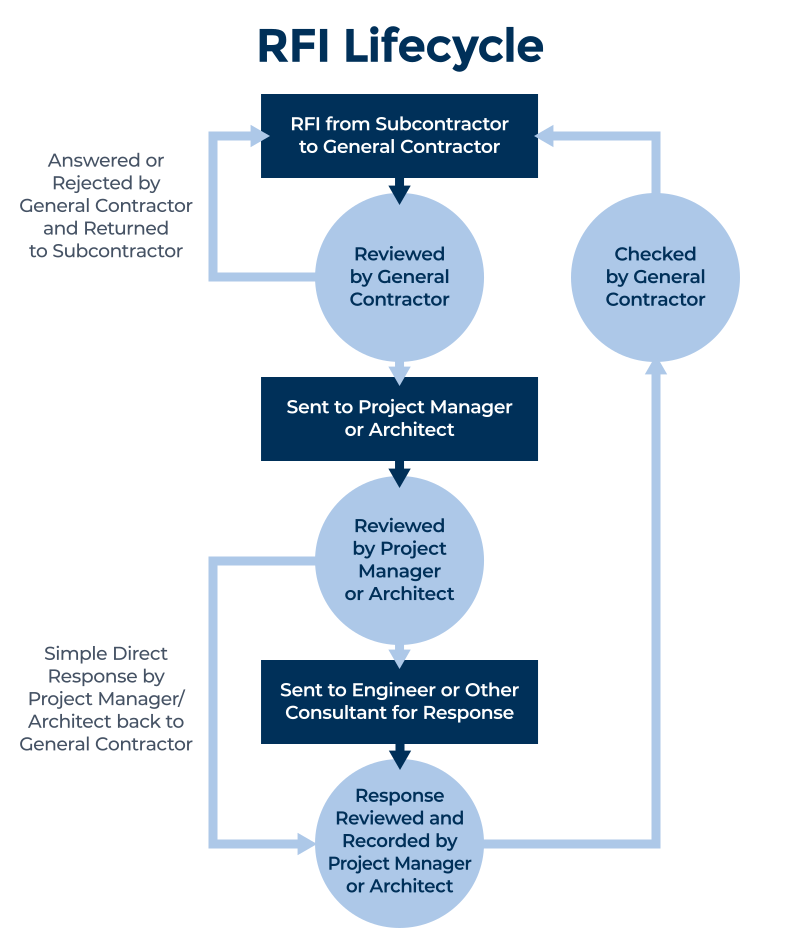
Understanding RFI in the Digital Age
The fundamental purpose of an RFI remains unchanged: to ensure all parties have a clear, shared understanding of project requirements to avoid assumptions and potential rework. However, the methods and tools employed have undergone a significant evolution, pushing RFIs from physical binders to integrated digital platforms.
Defining the Request for Information (RFI)
An RFI is a formal query documented in writing, detailing a specific question or issue encountered during the planning, design, or construction phase. It’s not a change order or a claim; rather, it’s a proactive step to resolve uncertainties before they escalate into larger problems. Common scenarios prompting an RFI include conflicting dimensions on drawings, unclear material specifications, discrepancies between architectural and structural plans, or questions about installation procedures. The response to an RFI becomes a part of the project’s official record, providing a clear audit trail and mitigating future disputes.
Why RFIs Are Indispensable in Construction
Beyond merely seeking clarification, RFIs are a cornerstone of effective project management. They serve as a critical risk mitigation tool by identifying potential issues early, preventing costly mistakes, and ensuring compliance with design intent and building codes. Properly managed RFIs help maintain project schedules by resolving ambiguities promptly, thereby minimizing delays caused by uncertainty. Furthermore, they contribute to quality assurance by ensuring that all work is performed according to the most current and accurate information available. In an industry where profit margins can be tight and liabilities high, the proactive nature of RFIs is invaluable for maintaining budget control and legal defensibility.
The Paradigm Shift: From Paper to Pixels
Historically, RFIs were manually drafted, printed, mailed or faxed, and tracked via spreadsheets or physical logs. This traditional approach was prone to errors, slow response times, lost documents, and a lack of real-time visibility. The digital age has ushered in a paradigm shift, replacing these cumbersome manual processes with sophisticated software solutions. This transition has not only improved the speed and accuracy of RFI management but has also opened up new avenues for data analysis and collaboration, transforming RFIs from mere administrative tasks into strategic project assets.
The Technological Backbone of RFI Management
Modern construction projects thrive on interconnectedness and data flow. The technological landscape supporting RFI management is now robust, integrating various software and platforms to create a seamless communication ecosystem.
Integrated Project Management (PM) Software
The proliferation of comprehensive project management software has been a game-changer for RFI processes. Platforms like Procore, Autodesk Construction Cloud, Aconex, and Trimble Connect offer dedicated RFI modules that centralize all project communication. These systems allow users to create, submit, track, and respond to RFIs directly within the platform. Key features often include automatic numbering, customizable templates, attachment capabilities for drawings and photos, and a clear audit trail of all actions. By consolidating project information, these platforms ensure that everyone is working from the latest data, significantly reducing the potential for miscommunication and rework.
Building Information Modeling (BIM) Integration
BIM is revolutionizing how construction projects are designed, planned, and executed. Its integration with RFI management is particularly powerful. By creating a 3D digital model of a building, BIM can identify potential clashes or design discrepancies long before construction begins. When an RFI arises, BIM models can be directly linked to the RFI, providing visual context and pinpointing the exact location of the issue. This visual clarity greatly enhances understanding for all stakeholders, speeding up the response process and making solutions more accurate. Furthermore, some advanced BIM tools can even flag potential RFIs during the design phase, proactively addressing issues before they impact the construction site.
Cloud-Based Collaboration Platforms
The shift to cloud computing has made project data accessible from anywhere, at any time. Cloud-based collaboration platforms underpin modern RFI management by providing a centralized repository for all project documents, including RFIs, drawings, specifications, and correspondence. This ensures that the most current versions are always available to authorized personnel, regardless of their physical location. Real-time updates, shared dashboards, and version control capabilities minimize confusion and facilitate quick decision-making. These platforms often integrate with mobile applications, allowing field teams to submit RFIs directly from the job site using smartphones or tablets, complete with photos and voice notes.
Streamlining RFI Workflows with Software Solutions
Beyond merely digitizing existing processes, specialized software solutions fundamentally streamline RFI workflows, driving efficiency and minimizing human error.

Centralized Documentation and Tracking
One of the most significant benefits of tech-driven RFI management is the centralization of all documentation. Gone are the days of searching through binders or email chains for RFI history. Modern software provides a single source of truth, creating a comprehensive, searchable database of every RFI submitted, its status, responses, and associated documents. This eliminates lost paperwork, reduces administrative overhead, and ensures that a complete audit trail is readily available for compliance or dispute resolution. Project managers can instantly see the status of all active RFIs, identifying potential bottlenecks and ensuring timely resolution.
Automated Routing and Notifications
Delays in RFI responses are a major source of project slowdowns. Software solutions address this by implementing automated routing and notification systems. When an RFI is submitted, the system can automatically route it to the designated responsible party (e.g., the architect for a design question, the structural engineer for a structural query). Automated notifications alert recipients instantly, prompting a quicker review and response. Escalation rules can also be configured, triggering reminders or re-routing the RFI to a higher authority if a response deadline is missed. This automation ensures accountability and significantly reduces the time an RFI spends awaiting action.
Standardized Templates and Forms
Consistency is key in formal communication. Construction management software provides standardized RFI templates that ensure all necessary information is captured upfront. These templates often include fields for project name, RFI number, date submitted, requested by, subject, detailed question, suggested solution, required response date, and attached references. This standardization eliminates ambiguity, ensures clarity, and reduces the back-and-forth typically associated with incomplete submissions. It also makes it easier to categorize and analyze RFI data across projects.
Leveraging Data and Analytics from RFI Processes
The digital transformation of RFI management yields a treasure trove of data. Analyzing this information provides invaluable insights that can drive continuous improvement and smarter project delivery.
Identifying Common Issues and Root Causes
By tracking and categorizing RFIs across multiple projects, construction firms can identify recurring patterns and common issues. For instance, if a significant number of RFIs consistently point to ambiguities in a particular section of the specifications or frequent clashes in a specific design element, it highlights a systemic problem. Analyzing RFI data can pinpoint the root causes, whether it’s a gap in design standards, a deficiency in a subcontractor’s understanding, or an issue with material procurement. This insight allows companies to proactively address these issues in future projects, leading to better designs, clearer contracts, and fewer on-site problems.
Performance Metrics and Benchmarking
RFI data provides concrete metrics to evaluate project performance and team efficiency. Key performance indicators (KPIs) like average RFI response time, total RFI volume per project phase, the percentage of RFIs impacting schedule or cost, and the number of RFIs requiring multiple revisions can be tracked. Benchmarking these metrics against industry standards or previous projects allows firms to assess their operational efficiency and identify areas for improvement. For example, a consistently high volume of RFIs or slow response times might indicate a need for better upfront planning, enhanced design coordination, or additional training for specific teams.
Predictive Insights for Future Projects
Moving beyond reactive problem-solving, RFI analytics can offer predictive insights. Historical RFI data can be fed into machine learning models to identify potential risks in new projects. For instance, if similar project types or specific designers consistently generate a high volume of RFIs in certain areas, the system could flag these as potential risk zones during the planning phase of a new project. This allows project teams to allocate additional resources for review, implement stricter quality checks, or engage in more thorough initial discussions to mitigate these predicted challenges before they arise, saving time and money.
Future Trends: AI and Automation in RFI Management
The evolution of RFI management is far from over. Artificial intelligence (AI) and further automation are poised to redefine how construction teams handle information requests, making processes even more intelligent and efficient.
AI-Powered RFI Generation and Classification
Imagine AI assisting in drafting RFIs or automatically classifying incoming queries. AI algorithms can analyze project documents, identify common questions, and even suggest appropriate wording for RFIs, ensuring clarity and completeness. For incoming RFIs, AI can automatically categorize them by subject, urgency, and responsible party, significantly reducing manual sorting and ensuring they reach the right expert faster. This predictive intelligence can accelerate the initial steps of the RFI process, allowing human teams to focus on complex problem-solving.
Automated Response Suggestions
One of the most exciting prospects is AI’s ability to provide automated response suggestions. By scanning a project’s vast repository of documents—including drawings, specifications, previous RFIs, and submittals—AI could identify relevant information that directly answers an incoming RFI. While human oversight would always be crucial for final approval, AI could dramatically reduce the time spent researching and drafting responses, especially for recurring or straightforward questions. This would free up architects, engineers, and project managers to tackle more intricate issues requiring human expertise.
Predictive Risk Analysis
AI’s capacity for pattern recognition will elevate RFI data analysis to a new level. By analyzing patterns in RFI submissions, response times, and their subsequent impact on schedule and cost, AI can develop sophisticated predictive models. These models could forecast potential project delays or budget overruns based on early RFI indicators, allowing project managers to intervene proactively. For example, an AI might detect an unusual clustering of RFIs related to a specific trade or design element, predicting a potential coordination failure before it escalates into a major problem.
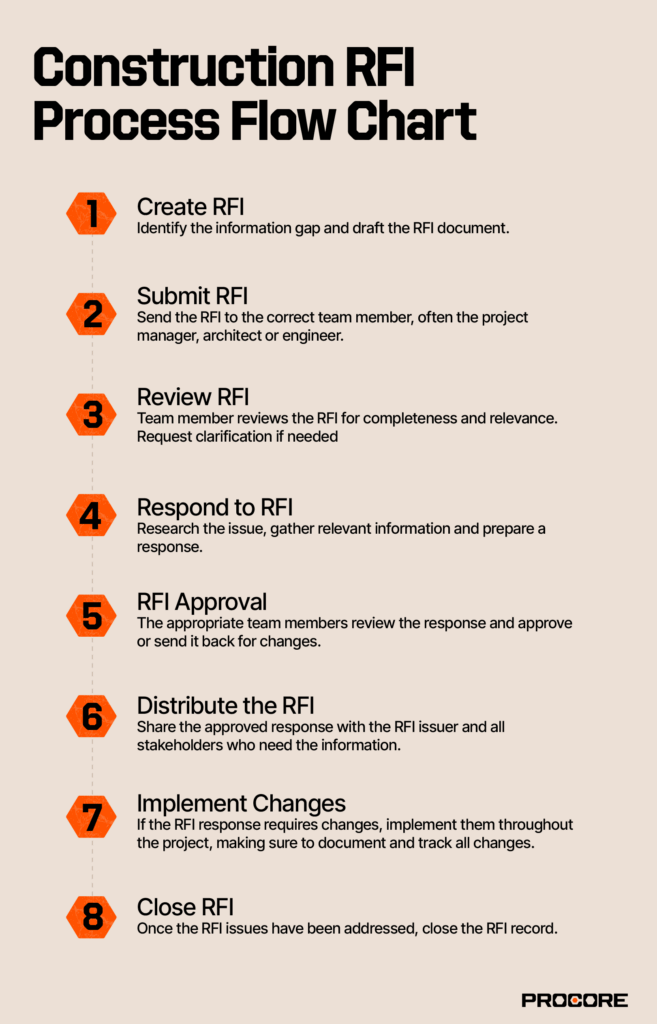
Blockchain for Enhanced Trust and Traceability
Blockchain technology, known for its immutable and distributed ledger capabilities, holds promise for further enhancing trust and traceability in RFI management. Each RFI, its submission, responses, and approvals could be recorded on a blockchain, creating an unalterable, transparent, and verifiable record of all communications. This would virtually eliminate disputes over when an RFI was submitted, who responded, and what the final decision was, providing an indisputable audit trail for contractual obligations and liability management. This added layer of security and transparency can foster greater collaboration and reduce legal complexities in construction projects.
In conclusion, “RFI” in construction stands for Request for Information, a critical mechanism for clarity and risk management. However, its modern definition is incomplete without acknowledging the profound impact of technology. From integrated project management software and BIM integration to cloud-based collaboration and the future promise of AI and blockchain, technology is continuously refining how RFIs are managed. This tech-driven approach not only streamlines processes and reduces costs but also transforms RFIs from a mere administrative burden into an intelligent data source, paving the way for more efficient, transparent, and ultimately more successful construction projects. Embracing these technological advancements is no longer optional; it is essential for thriving in the complex, information-rich construction environment of today and tomorrow.
aViewFromTheCave is a participant in the Amazon Services LLC Associates Program, an affiliate advertising program designed to provide a means for sites to earn advertising fees by advertising and linking to Amazon.com. Amazon, the Amazon logo, AmazonSupply, and the AmazonSupply logo are trademarks of Amazon.com, Inc. or its affiliates. As an Amazon Associate we earn affiliate commissions from qualifying purchases.