
The allure of the diamond is undeniable, a symbol of enduring love, unparalleled beauty, and significant financial value. We are accustomed to seeing diamonds in their dazzling, faceted form, polished to perfection and set in exquisite jewelry. However, the journey from earth to adornment is a fascinating one, beginning with the raw, unpolished state of the diamond. Understanding what a raw diamond looks like is not just a matter of idle curiosity; for those involved in the diamond industry, from geologists to investors, it’s a fundamental aspect of identification, valuation, and acquisition. This exploration delves into the often-overlooked world of rough diamonds, revealing their diverse appearances and the inherent characteristics that hint at their potential brilliance.
The Untamed Nature of Rough Diamonds
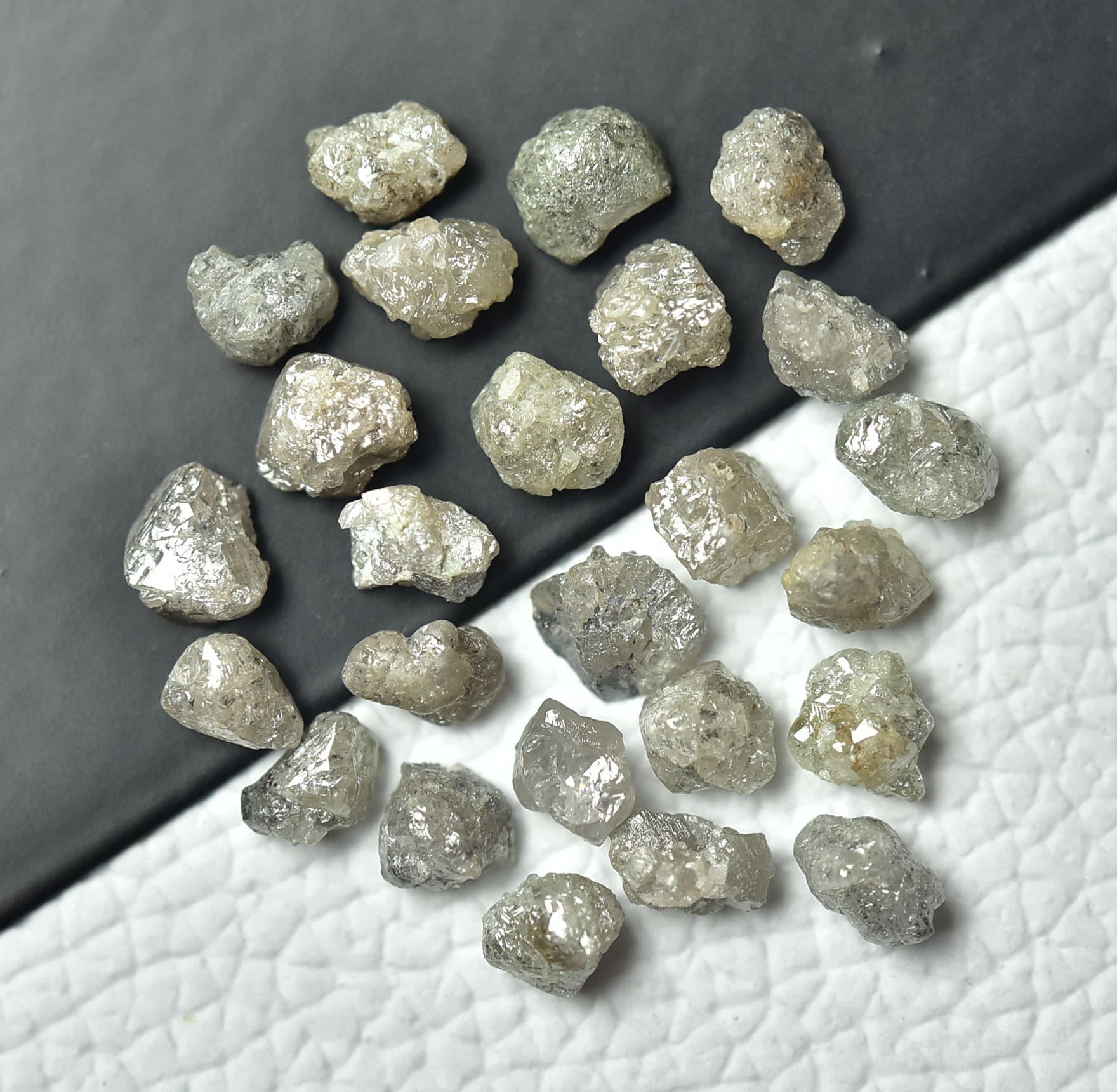
Raw diamonds, as they are extracted from the earth, bear little resemblance to the sparkling gems we recognize. Their appearance is a direct consequence of their natural formation processes deep within the Earth’s mantle and the subsequent geological events that bring them to the surface. Unlike polished diamonds, which have been meticulously shaped and refined by human hands, rough diamonds are a testament to nature’s raw artistry. Their surfaces are rarely smooth and often possess a dull, earthy, or even greasy luster.
Surface Textures and Forms
The surface of a rough diamond is a canvas of its geological history. Instead of sharp, precise facets, you’ll typically find a range of textures:
- Cubic and Octahedral Crystals: The most common natural shapes for diamonds are the octahedron (an eight-sided pyramid) and the cube. These geometric forms are a direct result of the diamond’s crystalline structure, which is based on a repeating arrangement of carbon atoms. You will often see rounded or heavily modified versions of these shapes due to erosion and transport.
- Dodecahedrons and Other Polysynthetic Forms: While less common, diamonds can also form in dodecahedral (twelve-sided) shapes or other complex polysynthetic structures. These are often the result of specific growth conditions and pressure variations during their formation.
- Fibrous or Aggregate Structures: Some diamonds, particularly those with lower gem quality, can exhibit fibrous or aggregate structures. These are characterized by a less defined crystalline form and can appear as masses of smaller crystals.
- Surface Etchings and Growths: The journey of a diamond from the Earth’s mantle can leave its mark. You might observe etchings, pitting, or the presence of other minerals or secondary growths on the surface, indicating its geological past.
- “Grit” or “Boart”: This term is often used for lower-quality, industrial-grade diamonds that are very rough, often with irregular shapes and a dull, porous surface. They are typically used for crushing and grinding purposes rather than gem cutting.
The Luster of the Unpolished
The luster of a rough diamond is also distinct. Instead of the brilliant, sparkling reflection of light seen in a polished gem, rough diamonds typically display:
- Adamantine Luster (when clean and transparent): In rare cases, particularly for very high-quality rough diamonds, a faint adamantine luster might be present on the crystal faces, hinting at the diamond’s inherent refractive properties. This is a very distinct, almost metallic sheen, but it’s often subdued by the rough surface.
- Vitreous Luster (glassy): Many rough diamonds exhibit a vitreous or glassy luster. This is a more common and less brilliant shine compared to adamantine, but it still indicates a degree of transparency.
- Dull or Earthy Appearance: The most common appearance for many rough diamonds is a dull, opaque, or earthy look. This is due to surface imperfections, inclusions, or a natural lack of transparency.
Identifying the Gem Within: Color and Clarity in Rough Diamonds
While the external appearance of a raw diamond can be unassuming, internal characteristics are crucial for determining its potential value and suitability for cutting. These are the qualities that determine whether a rough diamond will yield a sparkling gem or remain a utilitarian industrial stone.
Coloration in the Rough
Color in rough diamonds can range from completely colorless to various shades of yellow, brown, green, blue, pink, and even black. The color is a result of trace elements or structural imperfections within the diamond’s crystal lattice.
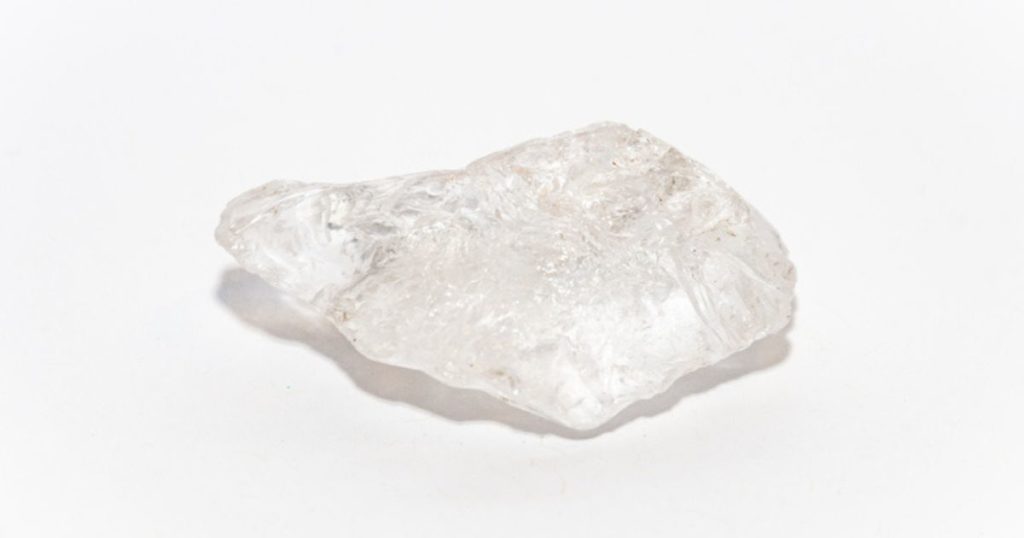
- Colorless to Near-Colorless: These are the most sought-after for gem-quality diamonds. They will often appear milky or slightly yellowish in their rough state, but the discerning eye can sometimes detect the potential for a clear, brilliant gem after cutting.
- Yellow and Brown: These are the most common colors found in rough diamonds. The intensity of the color can vary significantly, from a faint tint to a deep, rich hue. While often less valuable than colorless diamonds, certain shades of yellow and brown can be highly desirable, especially for specific jewelry designs.
- Fancy Colors (Blue, Pink, Green, etc.): These are exceptionally rare and command very high prices. In their rough form, these colors might be subtle or concentrated in specific areas of the crystal. Identifying and assessing the color distribution is critical for maximizing the yield of a colored polished diamond.
- Black Diamonds: These are diamonds that contain a high concentration of dark inclusions, making them appear opaque and black. While not typically used for fine jewelry, they have industrial applications and are gaining popularity for certain fashion jewelry pieces.
Inclusions and Imperfections
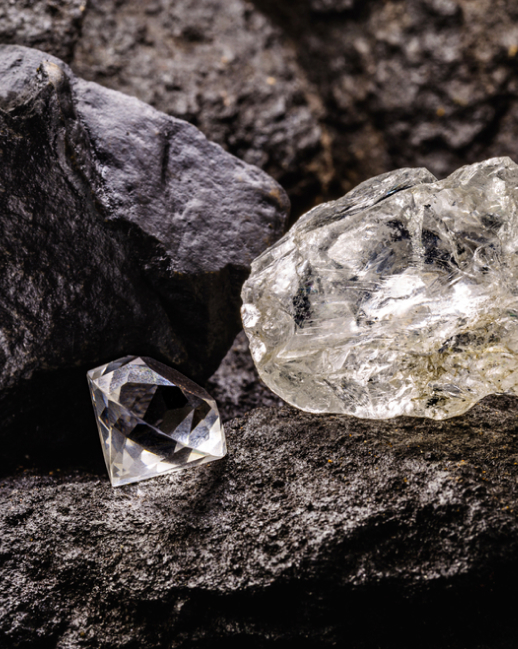
Just as in polished diamonds, inclusions (internal flaws) and blemishes (external imperfections) are present in rough diamonds. However, their appearance and impact are viewed differently in the rough state.
- Nature of Inclusions: Inclusions can be other minerals (like garnet, olivine, or even other diamond crystals), internal fractures, or graphite. These can affect the clarity and transparency of the potential polished diamond.
- Feathers and Crystals: Feathers are small internal fractures, while crystal inclusions are the presence of other minerals trapped within the diamond. Their size, type, and location are critical factors in determining how they can be handled during the cutting process.
- Surface Blemishes: These can include scratches, pits, or natural grain lines on the surface. While some surface blemishes can be polished away, others might indicate deeper structural weaknesses.
- “Boil” and “Glacé”: These terms refer to specific types of inclusions. “Boil” refers to a cloudy or milky appearance within the diamond, often due to numerous small inclusions. “Glacé” refers to a smooth, glassy surface that can sometimes mask internal flaws.
From Rough to Radiant: The Diamond Cutting Process
The transformation of a raw diamond into a dazzling gem is an intricate and skilled process. It involves careful planning, precise execution, and a deep understanding of the diamond’s internal structure. This is where the true artistry and economic value are realized.
Planning and Assessment
Before any cutting or polishing begins, a thorough assessment of the rough diamond is undertaken. This involves:
- Carat Weight: The initial weight of the rough diamond is a primary factor in its value.
- Shape and Crystal Habit: The natural shape of the rough diamond dictates the optimal cutting strategy. Gem cutters aim to preserve as much of the original crystal’s integrity and potential brilliance as possible.
- Color and Clarity Analysis: The internal characteristics are meticulously examined, often with specialized tools like magnifying loupes and even advanced imaging technologies. The goal is to predict the final color and clarity of the polished diamond.
- Inclusion Mapping: The location, type, and size of inclusions are mapped to determine how they will affect the finished stone and to plan cuts that will minimize their visibility or impact.
- Yield Prediction: Based on all these factors, gemologists and cutters estimate the potential carat weight and quality of the polished diamond(s) that can be obtained from the rough stone. This is a critical step in determining profitability.
The Art of Cleaving and Sawing
Once the plan is set, the rough diamond is ready for its initial transformation.
- Cleaving: This is an ancient technique that utilizes the natural cleavage planes of the diamond. A precisely placed groove is made, and a cleaving tool is struck, splitting the diamond along its weakest point. This is a very precise process, relying on the diamond’s inherent crystalline structure.
- Sawing: Modern diamond cutting often employs laser sawing. A high-precision laser beam can cut through the diamond, allowing for more intricate shapes and the separation of multiple potential gems from a single rough stone. This method offers greater flexibility and accuracy than cleaving.
Polishing and Faceting
This is the stage where the rough diamond truly begins to reveal its inner fire.
- Bruting: The outer surface of the diamond is rounded into a basic shape, often by rubbing two diamonds against each other.
- Blocking: The first set of facets, known as “blocking facets,” are precisely cut to establish the diamond’s outline and basic proportions.
- Brilliant Cutting: The majority of diamonds are cut into a brilliant style, typically with 57 or 58 facets. These facets are arranged in a specific geometric pattern to maximize the reflection and refraction of light, creating the dazzling sparkle we associate with diamonds.
- Polishing: Each facet is meticulously polished to a mirror-like finish, further enhancing the diamond’s brilliance and fire. This is a time-consuming and labor-intensive process, requiring specialized tools and immense skill.
Understanding what a raw diamond looks like is not merely about appreciating its natural state; it’s about recognizing the potential locked within. Each rough diamond is a unique geological artifact, a puzzle waiting to be solved by the skilled hands of a gem cutter. The journey from an unassuming, earth-covered stone to a symbol of timeless beauty and enduring value is a testament to both the wonders of nature and the ingenuity of human craftsmanship. The appearance of a raw diamond, with its varied textures, colors, and internal characteristics, offers a fascinating glimpse into the origins of one of the world’s most prized treasures.
aViewFromTheCave is a participant in the Amazon Services LLC Associates Program, an affiliate advertising program designed to provide a means for sites to earn advertising fees by advertising and linking to Amazon.com. Amazon, the Amazon logo, AmazonSupply, and the AmazonSupply logo are trademarks of Amazon.com, Inc. or its affiliates. As an Amazon Associate we earn affiliate commissions from qualifying purchases.