
Blackjack, at its core, is a game of probabilities and strategic decisions. While the ultimate goal is to beat the dealer’s hand, not every outcome results in a win or a loss. Understanding the nuances of each potential result is crucial for any player aiming to improve their game. Among the most frequently encountered, and sometimes misunderstood, outcomes is the “push.” This seemingly simple event, where neither the player nor the dealer wins, has significant implications for your bankroll and your overall strategy. This article delves into the meaning of a push in blackjack, its strategic implications, and how it influences the house edge.
Understanding the Mechanics of a Push
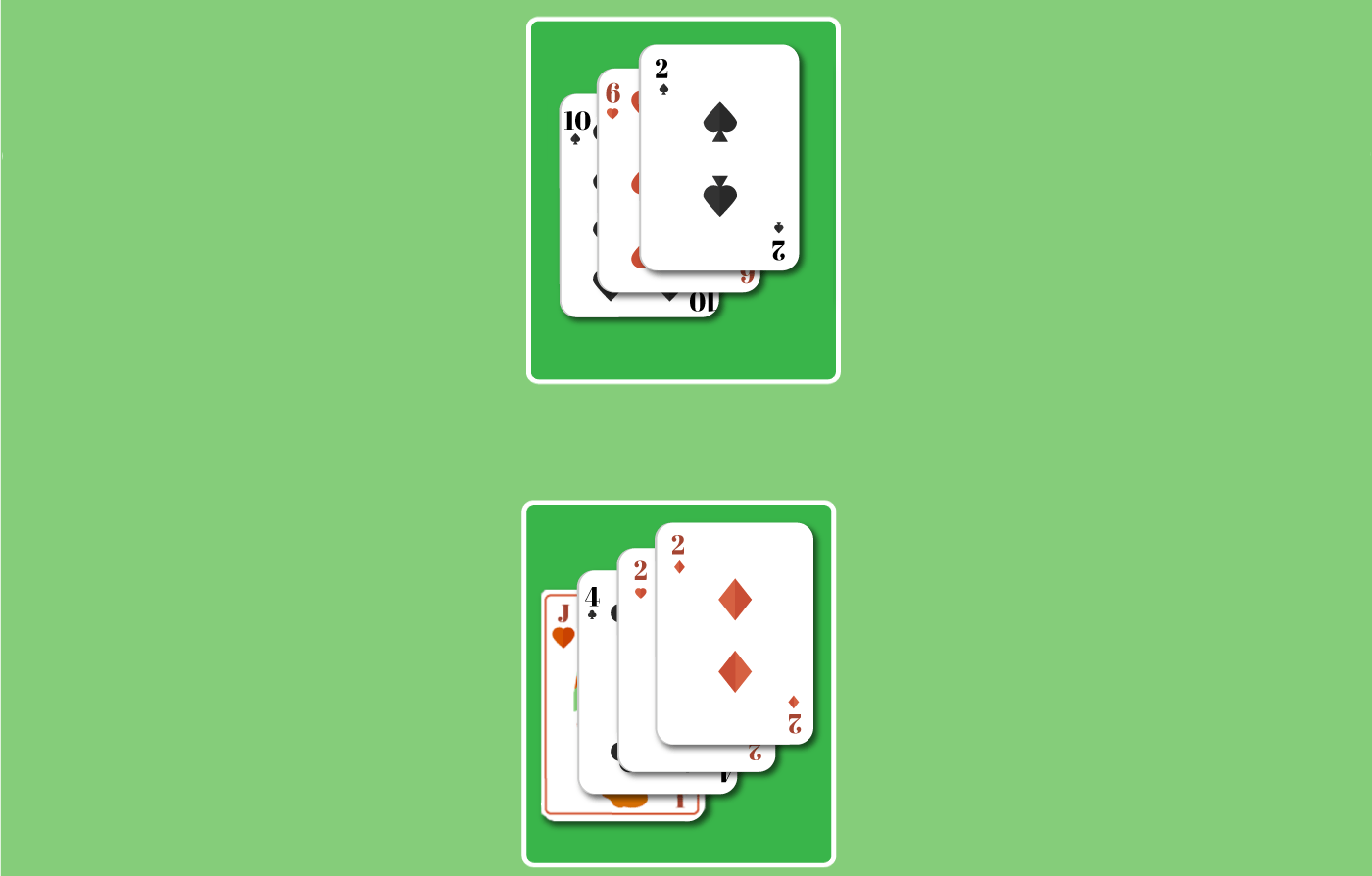
At its most fundamental level, a push in blackjack occurs when the player’s hand total is exactly equal to the dealer’s hand total, and neither hand has busted. Let’s break down the scenarios that lead to this outcome.
The Perfect Tie
The most straightforward instance of a push is when both the player and the dealer achieve the same total value with their cards, and that total is less than or equal to 21. For example, if you are dealt a 10 and a 7, giving you a total of 17, and the dealer also ends up with a 17 (perhaps from a 7 and a 10, or a 5, 6, and a 6), the result is a push. In this situation, your bet remains on the table, and no money is exchanged between you and the casino. It’s as if the hand never happened in terms of financial outcome.
The Blackjack Stalemate
A slightly more specific scenario involves the coveted blackjack itself – an Ace and a 10-value card (10, Jack, Queen, or King) dealt as the initial two cards, totaling 21. If both the player and the dealer are dealt a blackjack, it results in a push. This is a relatively rare occurrence, but it’s important to know that even the strongest hand can lead to a neutral outcome. In most standard blackjack rules, a player blackjack pays 3:2, but if the dealer also has a blackjack, this payout is nullified, and the original bet is returned.
The Influence of Dealer Rules
It’s important to note that the exact conditions under which a push occurs can be influenced by specific house rules. While the fundamental principle of equal totals remains, some casinos may have variations. For instance, the dealer’s hitting rules (whether they hit on a soft 17, for example) can indirectly affect the likelihood of reaching certain totals, and thus, the frequency of pushes. However, the core definition of a push as a tie in total value, without a bust, is universal across virtually all blackjack variations.
Strategic Implications of the Push
While a push doesn’t directly cost you money, it’s far from an irrelevant outcome. Strategically, it represents a missed opportunity and can influence your decision-making throughout the game.
The Cost of Opportunity
Every push is a hand where you didn’t win. In a game where consistent wins are the goal, a push is essentially a neutral outcome that delays your progress towards profitability. If you’re on a winning streak, a push interrupts that momentum. Conversely, if you’re on a losing streak, a push offers a brief respite but doesn’t reverse your fortunes. The true cost of a push lies in the potential winnings you could have had if your hand had been one point higher, or the dealer had busted.
Impact on Basic Strategy
Basic strategy in blackjack is designed to maximize your expected return over the long run by outlining the optimal play for every possible player hand against every possible dealer upcard. The probability of a push is a factor considered within these calculations. While you don’t make specific decisions to aim for a push, understanding its occurrence helps to contextualize the effectiveness of your basic strategy plays. For example, a decision that results in a push might still be the mathematically correct move according to basic strategy, even though it feels less satisfying than a win.
Psychological Effects
The psychological impact of a push can be varied. For some players, it’s a relief, especially if they were in a precarious situation and avoided a loss. For others, it can be frustrating, as they feel they narrowly missed out on a win. This can lead to emotional decision-making, which is detrimental to long-term success. Recognizing that a push is a normal part of the game and doesn’t signify a mistake on your part is crucial for maintaining a disciplined approach.
The Push and the House Edge
The house edge in blackjack is the statistical advantage that the casino holds over the player. This edge is built into the rules of the game, ensuring that over millions of hands, the casino will turn a profit. The push plays a subtle but important role in maintaining this edge.
Why Pushes Don’t Erase the House Edge
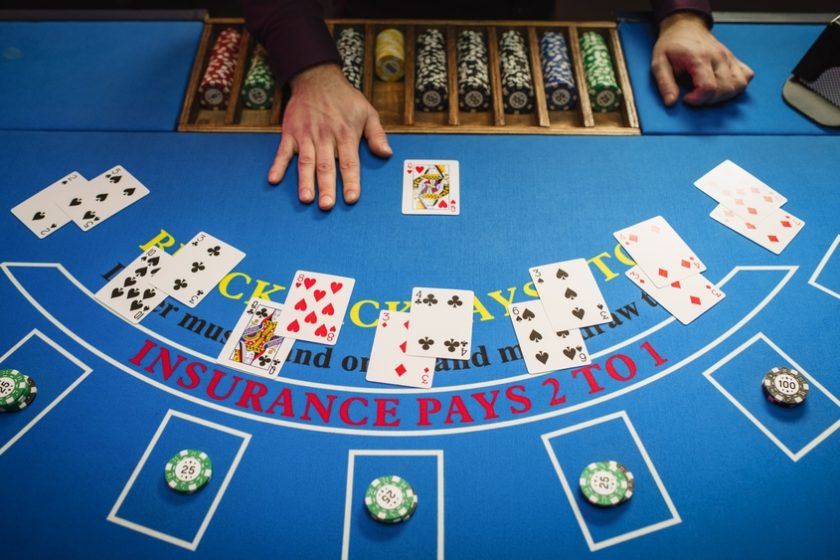
While it might seem counterintuitive, a game with a high frequency of pushes would logically lead to a lower house edge. However, the mathematical advantage of the casino is derived from a combination of factors, including the player busting more often than the dealer, and the dealer’s advantage in acting last. Crucially, the dealer has a slight advantage in certain tie situations. For instance, if the player has a blackjack (21) and the dealer does not bust but also achieves 21 (not a blackjack), the player’s blackjack payout is nullified to a push. However, if the dealer busts, the player wins regardless of their own total.
The Role of Dealer Rules in Push Frequency
The specific rules regarding the dealer’s play significantly influence the frequency of pushes. The most common rule variation is whether the dealer hits or stands on a “soft 17” (an Ace and a 6).
- Dealer Stands on Soft 17 (S17): In this scenario, the dealer will not take another card if their hand totals 17 and includes an Ace that can be counted as 11. This rule generally leads to a slightly lower house edge and, consequently, a slightly lower frequency of pushes compared to the alternative.
- Dealer Hits on Soft 17 (H17): Here, the dealer will take another card when their hand is a soft 17. This rule increases the dealer’s chance of improving their hand or busting. An increased chance of busting for the dealer can lead to more player wins, but it can also lead to more instances where the dealer’s improved hand matches the player’s hand, thus increasing the frequency of pushes in certain situations.
The subtle interplay between these rules and the probabilities of different hand totals means that the casino’s edge is always maintained, even with frequent pushes. The objective of blackjack rules is not to eliminate ties but to create conditions where the player, on average, will lose slightly more often than they win.
Optimizing for Wins, Not Avoiding Pushes
It’s a common misconception that a player can somehow manipulate their strategy to increase the number of pushes and thus reduce the house edge. This is not the case. Your objective in blackjack is to achieve a higher total than the dealer without busting. The optimal strategy, as outlined by basic strategy charts, is designed to maximize your winning opportunities and minimize your losses. Trying to force pushes would involve making suboptimal plays that would ultimately increase the house edge against you. Therefore, while understanding pushes is important for complete game comprehension, your strategic focus should always remain on making the best possible decision for each hand to increase your chances of winning.
Blackjack Variations and Their Impact on Pushes
While the core concept of a push remains consistent, different variations of blackjack can subtly alter the frequency of this outcome, and by extension, the overall house edge.
Multi-Deck vs. Single-Deck Blackjack
The number of decks used in a blackjack game can have a noticeable impact on the probabilities of various outcomes, including pushes.
- Single-Deck Blackjack: Games played with a single deck often offer more favorable rules for the player, such as better payout ratios for blackjacks (e.g., 1:1 or even 2:1 in some rare cases). However, the reduced shuffle frequency in single-deck games means that card counting can be more effective. For the non-card counter, single-deck games can sometimes lead to a slightly higher frequency of pushes because the probabilities of specific card combinations are more distinct. The absence of shoe-introduced randomness means certain totals might appear more or less frequently compared to multi-deck games.
- Multi-Deck Blackjack (Shoe Games): Most casinos today use shoes with multiple decks (typically six or eight). This makes card counting significantly more difficult. In multi-deck games, the probabilities are more homogenized. While it’s harder to discern precise effects on push frequency without extensive statistical analysis of specific rulesets, the general effect of more decks is a smoother distribution of outcomes, potentially leading to a more consistent, albeit slightly higher, house edge when other rules are equal.
Rule Modifications and Their Influence
Beyond the number of decks, several other rule modifications can affect the frequency of pushes and the house edge:
- Surrender Options: Rules allowing players to surrender their hand (give up half their bet and forfeit the hand) after the initial deal can influence decisions that might otherwise lead to a push or a loss. If a player surrenders a hand that had a high probability of pushing, they are essentially trading a neutral outcome for a known small loss. This benefits the player by reducing potential future losses, but it doesn’t directly increase pushes.
- Blackjack Payouts: As mentioned, the payout for a blackjack is typically 3:2. However, some casinos have reduced this to 6:5. A 6:5 payout significantly increases the house edge. While this rule change doesn’t directly alter the probability of a push, it makes a push a less desirable outcome for the player because it represents a missed opportunity for a larger payout that is now less likely to occur in other hands.
- Dealer’s Upcard and Player Decisions: The dealer’s visible card is the primary driver of strategic decisions. If the dealer shows a strong upcard (e.g., a 7, 8, 9, 10, or Ace), players are more inclined to play conservatively, which might lead to hands that have a higher chance of pushing if the dealer also ends up with a similar total. Conversely, if the dealer shows a weak upcard (e.g., a 2, 3, 4, 5, or 6), players are more aggressive, aiming to beat the dealer’s potential bust. This dynamic of decision-making based on the dealer’s upcard, informed by basic strategy, will inherently lead to a certain distribution of outcomes, including pushes.
Mastering the Nuances: From Pushes to Profitability
Understanding the concept of a push in blackjack is a fundamental step towards mastering the game. It’s not just about knowing the definition; it’s about appreciating its strategic implications and how it fits within the broader mathematical framework of the game.
The Role of Practice and Experience
The more you play blackjack, the more you will naturally encounter pushes. Experience allows you to develop an intuitive feel for the game’s flow and the various outcomes. It helps you to internalize the probabilities and to recognize situations where a push is likely. However, intuition alone is not enough. Consistent application of basic strategy is paramount. Practice sessions, whether at a live casino, online, or through simulators, will reinforce correct decision-making and help you become more comfortable with all possible outcomes, including the neutral result of a push.
Moving Beyond the Push: Focusing on Long-Term Gain
Ultimately, the goal in blackjack is not to achieve a certain number of pushes, but to maximize your wins and minimize your losses over the long term. A push is simply one of the possible results that contribute to the overall statistical expectation of the game. Instead of dwelling on the missed opportunity of a push, focus on making the mathematically optimal play for every hand. This involves understanding when to hit, stand, double down, or split. By consistently making these sound decisions, you ensure that you are giving yourself the best possible chance to win in the long run, regardless of how many times the dealer’s hand happens to match yours.
The Psychology of the Table and the Push
The psychological aspect of blackjack cannot be overstated. A push can evoke a range of emotions, from relief to frustration. Recognizing and managing these emotions is a critical skill. If a push occurs when you felt you had a winning hand, resist the urge to become overly aggressive in the next hand to “make up” for it. Similarly, if a push saves you from a potential loss, don’t let that lead to complacency. The best players maintain a disciplined and even-keeled approach, viewing each hand as an independent event and focusing solely on executing the correct strategy. Acknowledging the push as a standard part of the game, rather than an anomaly or a sign of bad luck, is a significant step towards developing this mental fortitude.
In conclusion, a push in blackjack is a tie between the player’s and the dealer’s hands, resulting in no change in the player’s bet. While it represents a missed opportunity for a win, it is a natural and expected outcome of the game. Understanding its mechanics, strategic implications, and its subtle relationship with the house edge allows players to approach blackjack with a more informed and disciplined perspective, ultimately leading to a more consistent and potentially profitable experience.
aViewFromTheCave is a participant in the Amazon Services LLC Associates Program, an affiliate advertising program designed to provide a means for sites to earn advertising fees by advertising and linking to Amazon.com. Amazon, the Amazon logo, AmazonSupply, and the AmazonSupply logo are trademarks of Amazon.com, Inc. or its affiliates. As an Amazon Associate we earn affiliate commissions from qualifying purchases.