
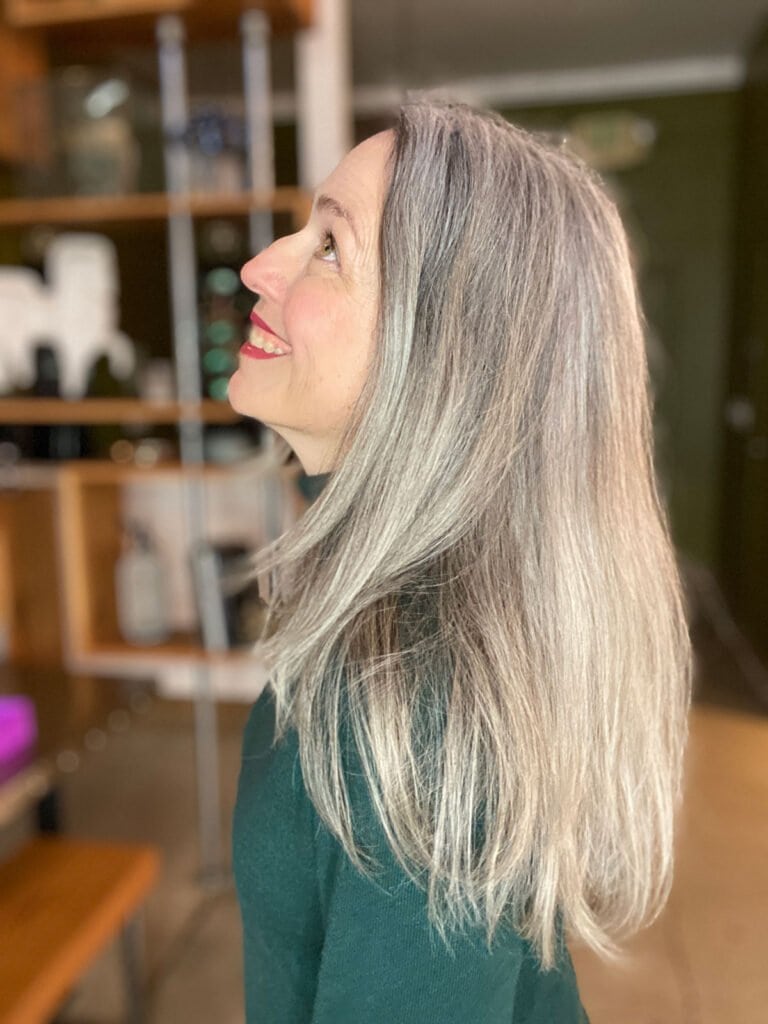
Purple shampoo, a seemingly simple haircare product, has become a cornerstone for those embracing or experiencing the beauty of grey hair. Far from being a mere coloring agent, its efficacy lies in a clever application of optical illusion and pigment neutralization, rooted in the fundamental principles of color theory. Understanding why purple shampoo works is key to appreciating its transformative power for grey hair, which often faces challenges like brassiness and a dull appearance. This article delves into the science behind purple shampoo, its specific benefits for grey hair, and how to effectively incorporate it into your haircare routine to achieve vibrant, well-maintained silver strands.
The Science of Color Neutralization: Understanding the Violet Pigment
The core function of purple shampoo hinges on a well-established principle in color theory: complementary colors. When two colors are directly opposite each other on the color wheel, they neutralize each other. Think of mixing red and green paint; the result is a muddy brown. In the context of hair color, yellow and purple are complementary.
The Color Wheel and Opposite Hues
The color wheel is a visual representation of how colors relate to each other. Primary colors (red, yellow, blue) form the foundation, and secondary colors (orange, green, violet) are created by mixing primaries. Tertiary colors lie between primary and secondary colors.
In the realm of hair color, the visible spectrum is crucial. The natural pigments in our hair, melanin, contribute to its underlying tones. As hair grays, the production of melanin decreases, and the hair shaft itself can change in texture and porosity. This often leads to an uneven distribution of color, and crucially, a tendency for underlying yellow and brassy tones to become more prominent. These unwelcome yellow hues are a direct result of the oxidation process that affects hair pigments over time, especially when exposed to environmental factors like UV rays and heat styling.
Why Purple? The Neutralizing Power
Purple sits directly opposite yellow on the standard color wheel. Therefore, when purple pigments are applied to hair that has yellow undertones, they don’t add more color in the traditional sense. Instead, they work to cancel out and neutralize the yellow. This is an additive process of light. The purple molecules in the shampoo are designed to be absorbed by the hair shaft. When light hits the hair, the purple pigments absorb the yellow wavelengths, making the overall color appear cooler and more neutralized. It’s not about depositing a strong purple dye; it’s about using a subtle, targeted pigment to counteract unwanted warmth.
The Role of Pigment Strength and Concentration
The effectiveness of purple shampoo is directly linked to the concentration and intensity of its purple pigment. Not all purple shampoos are created equal. Some are formulated for daily use with lighter pigmentation, while others are designed for weekly treatments with a higher concentration for more stubborn brassiness. The pigments used are typically semi-permanent dyes, meaning they sit on the surface of the hair shaft and will gradually wash out. This makes them a safe and effective way to manage unwanted tones without permanently altering the hair’s color. The goal is to achieve a balanced, ash-toned result rather than a vibrant purple hue unless that is the desired effect, which is a separate form of toning.
The Specific Benefits of Purple Shampoo for Grey Hair
Grey hair, while often celebrated for its elegance, can present unique challenges. The loss of pigment can lead to a less vibrant appearance, and the hair can be more susceptible to external factors that cause discoloration. Purple shampoo offers targeted solutions to these common issues.
Combating Yellowing and Brassiness
As hair greys, the cuticle layer, the outer protective layer of the hair shaft, can become more porous and lifted. This increased porosity allows environmental elements like pollution, hard water minerals, and UV radiation to penetrate the hair more easily. These elements, along with the natural oxidation of remaining pigments, contribute to the development of yellow and brassy tones. These tones can make grey hair look dull, dingy, and even prematurely aged.
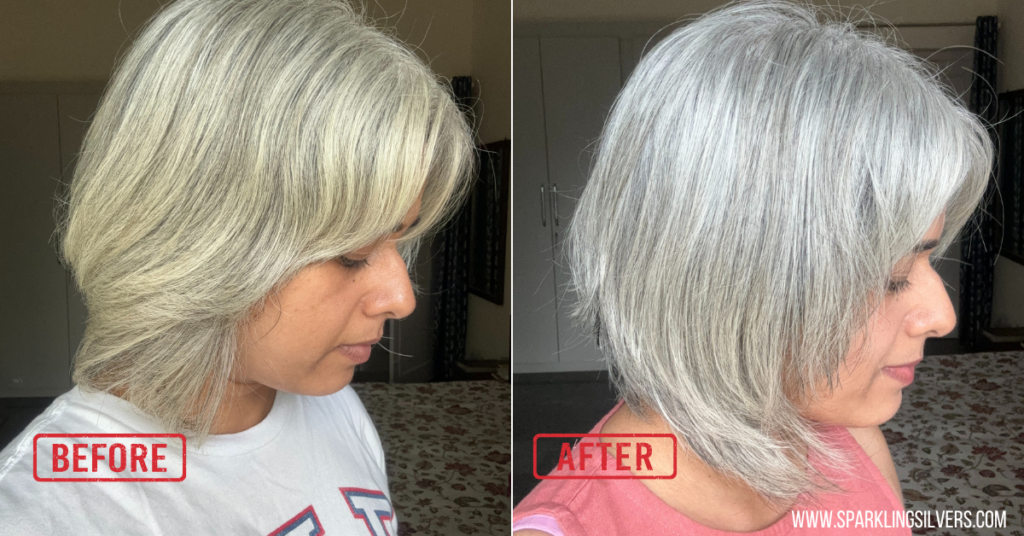
Purple shampoo acts as a toner by depositing violet pigments that neutralize these unwanted yellow undertones. By counteracting the yellow, the purple pigment visually brightens and clarifies the grey hair, making it appear cleaner, more vibrant, and more silver. It’s like applying a subtle correction to the hair’s canvas, revealing a cooler, more polished hue. This neutralization effect is crucial for maintaining the desired cool, ash tones often associated with beautiful silver hair.
Enhancing Brightness and Vibrancy
Beyond simply neutralizing yellow, purple shampoo can also contribute to an overall enhancement of the hair’s brightness and vibrancy. When brassy tones are diminished, the natural luminosity of the grey strands is allowed to shine through. The visual contrast is improved, making the silver appear more striking and dimensional. Think of it like cleaning a dusty window; once the dust (brassy tones) is removed, the light (hair’s natural vibrancy) can pass through more freely and clearly. This effect can make grey hair look healthier and more lustrous, transforming it from a potentially muted color to a radiant statement.
Addressing Potential Dullness and Lack of Dimension
The structure of grey hair can also contribute to a perceived lack of dimension or dullness. As the hair loses its natural pigment, it can sometimes appear flatter. The neutralizing effect of purple shampoo, by removing the yellow cast and enhancing the silver tones, can create a more striking contrast and visual depth. This, in turn, can make the hair appear more dynamic and multifaceted. It’s not adding color in the way a dye would, but rather refining the existing tones to bring out their best qualities. The cooler tones created by the purple shampoo can also make the hair appear smoother and more refined, contributing to a more polished overall look.
How to Effectively Use Purple Shampoo for Grey Hair
The efficacy of purple shampoo is not solely dependent on the product itself, but also on its correct application. Understanding the frequency, saturation, and conditioning aspects of its use will maximize its benefits for your grey hair.
Determining Frequency of Use
The optimal frequency for using purple shampoo varies depending on several factors, including the hair’s propensity to yellow, environmental exposure, and personal preference.
- Initial Phase: When first transitioning to or consistently using purple shampoo, you might find yourself using it once or twice a week. This allows you to gauge how your hair responds to the pigment and how quickly brassiness reappears.
- Maintenance Phase: Once you achieve your desired level of neutralization, you can often reduce usage to once every 7-14 days. Some individuals with very light grey hair or those exposed to significant environmental stressors might benefit from more frequent, albeit shorter, applications.
- Listen to Your Hair: The most important guideline is to observe your hair. If it starts to look brassy, it’s time for a purple shampoo session. If it begins to look too cool or lavender-toned, it’s a sign to reduce frequency or dilute the shampoo.
Application Techniques for Optimal Results
Proper application ensures the purple pigment is evenly distributed and effectively neutralizes unwanted tones without over-depositing.
- Lather and Leave: Start by thoroughly wetting your hair and applying the purple shampoo. Lather it gently, ensuring an even distribution throughout the hair.
- Development Time: This is a crucial step. Unlike regular shampoo, purple shampoo requires some development time to allow the pigments to work. For most shampoos, this ranges from 1-5 minutes. Always refer to the product’s instructions. Shorter times are for maintaining coolness, while longer times are for combating more significant brassiness. Be cautious not to leave it on for too long, as this can lead to a purple or lavender tint, especially on lighter grey hair.
- Rinse Thoroughly: Rinse the shampoo out completely with cool or lukewarm water. Ensure no residue is left behind, as this can contribute to a dull appearance.
The Importance of Conditioning Post-Treatment
Purple shampoo, while beneficial for toning, can sometimes be drying due to its cleansing properties and the pigments it contains. Therefore, a good conditioning routine is essential.
- Moisturizing Conditioner: Always follow up with a hydrating or moisturizing conditioner. This helps to replenish lost moisture, smooth the hair cuticle, and detangle. Look for conditioners that are specifically designed for color-treated hair or that offer deep hydration.
- Deep Conditioning Treatments: Incorporate a deep conditioning mask or treatment once a week. This provides an extra boost of moisture and nourishment, which is particularly beneficial for grey hair that can be naturally drier and more prone to breakage.
- Leave-In Conditioners: For daily hydration and protection, a leave-in conditioner can be a valuable addition. It helps to keep hair soft, manageable, and protected from environmental damage throughout the day.
By understanding the science behind purple shampoo and applying it thoughtfully, you can effectively manage and enhance the beauty of your grey hair, achieving a vibrant, cool-toned, and luminous silver that truly shines.
aViewFromTheCave is a participant in the Amazon Services LLC Associates Program, an affiliate advertising program designed to provide a means for sites to earn advertising fees by advertising and linking to Amazon.com. Amazon, the Amazon logo, AmazonSupply, and the AmazonSupply logo are trademarks of Amazon.com, Inc. or its affiliates. As an Amazon Associate we earn affiliate commissions from qualifying purchases.