
In the modern era of athletics, the diamond has become a laboratory. While softball was once a game defined primarily by intuition and raw physical talent, the integration of high-level technology has transformed it into a data-driven discipline. At the heart of this transformation is a singular metric that has migrated from the spreadsheets of professional analysts to the handheld devices of every collegiate and amateur coach: OPS.
To the casual observer, OPS stands for “On-base Plus Slugging.” However, in the realm of sports technology, software engineering, and data science, OPS represents much more. It is a vital data point in the algorithmic evaluation of offensive efficiency. Understanding what OPS means in the context of softball tech requires a deep dive into how software captures performance, how sensors quantify swing mechanics, and how cloud-based platforms turn raw numbers into actionable strategic intelligence.

The Mechanics of OPS: From Traditional Stats to Digital Algorithms
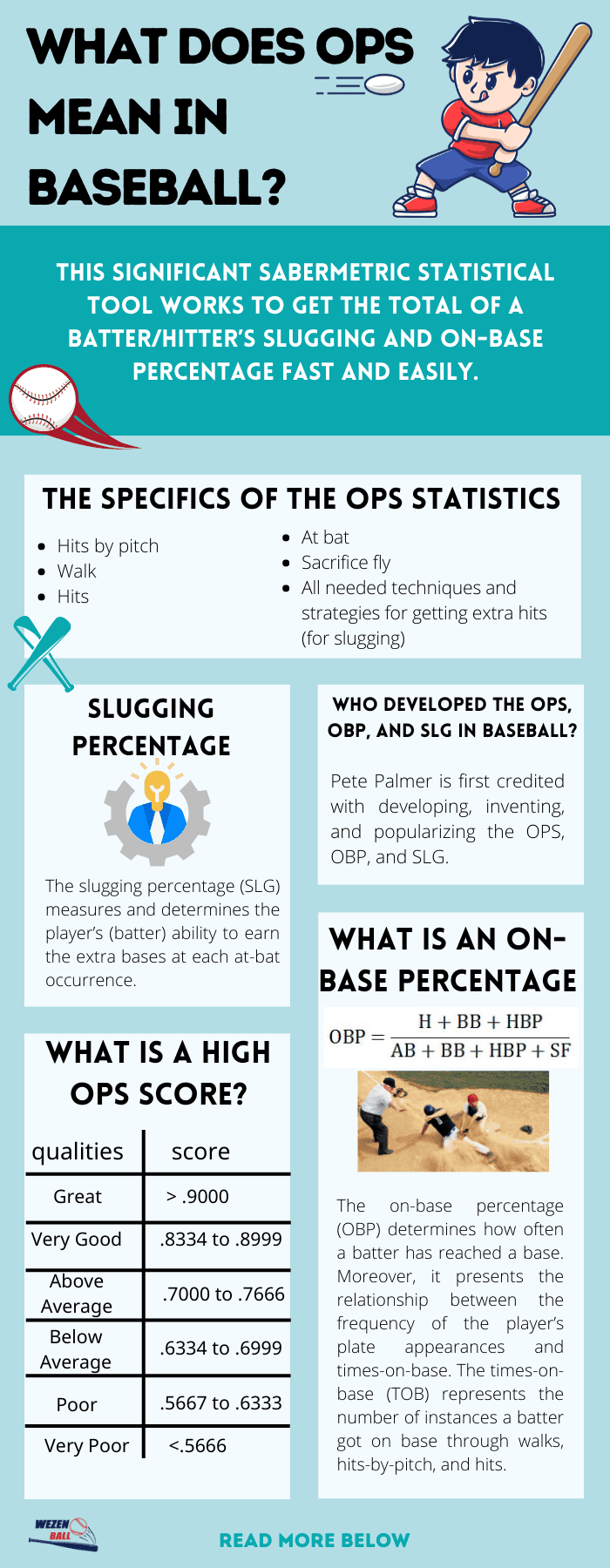
In its simplest form, OPS is the sum of two other statistics: On-Base Percentage (OBP) and Slugging Percentage (SLG). In the tech landscape, however, we view OPS as a composite KPI (Key Performance Indicator) that serves as a proxy for a player’s total offensive contribution.
Defining On-base Plus Slugging in a Digital Context
The digital calculation of OPS is the first step in creating a player’s “performance profile.” Tech platforms like GameChanger or Synergy Sports don’t just add two numbers; they weigh these inputs against massive databases of historical performance. On-Base Percentage measures how frequently a batter reaches base, while Slugging Percentage measures the total bases achieved per at-bat. In software terms, OBP represents “reliability and uptime,” while SLG represents “impact and throughput.” When combined, the resulting OPS provides a holistic view of a player’s technical output at the plate.
How Modern Software Automates Calculation
Gone are the days of manual tallying in paper scorebooks. Today, the “what” of OPS is defined by automated data pipelines. When a scout or a coach inputs a play into a tablet, an underlying API (Application Programming Interface) triggers a series of calculations. The software identifies the event type—be it a walk, a double, or a strikeout—and updates the player’s aggregate OPS in real-time. This instantaneous feedback loop allows for “Live Analytics,” where coaching staff can see the statistical impact of a player’s performance as the game progresses, much like a DevOps engineer monitors server health during a peak traffic event.
High-Performance Tech: Tools That Measure and Improve OPS
The “meaning” of OPS in softball has been fundamentally altered by the hardware used to improve it. We are no longer looking at the result of a hit; we are looking at the physics of the swing that created the result. This is where IoT (Internet of Things) and wearable tech enter the fray.
Swing Analysis Sensors and Wearables
To improve a player’s OPS, tech companies like Blast Motion and Diamond Kinetics have developed precision sensors that attach to the knob of a softball bat. These devices contain inertial measurement units (IMUs) consisting of accelerometers and gyroscopes. These sensors track “Swing Quality” metrics—such as attack angle, bat speed, and time to contact—which are direct predictors of a high OPS.
In the tech niche, this is referred to as “input optimization.” By refining the physical inputs (the swing), the software can predict the statistical output (the OPS). For example, a software dashboard might show that a player’s OPS drops when their “Vertical Bat Angle” deviates from a specific range. This level of granularity allows for a personalized, data-backed approach to player development that was impossible a decade ago.
Computer Vision and Video Analytics
Beyond wearables, computer vision (CV) is the new frontier in softball analytics. Using high-frame-rate cameras and AI-driven software like Rapsodo or Yakkertech, teams can track the flight of the ball with surgical precision. These systems use optical tracking algorithms to measure exit velocity and launch angle.
In the software ecosystem, OPS is the “macro” view, while exit velocity is the “micro” data point. High-end video analytics software uses machine learning to correlate specific launch angles with higher OPS outcomes. If a player’s software profile shows a high percentage of ground balls, the AI suggests mechanical adjustments to increase the launch angle, thereby mathematically increasing the probability of a higher Slugging Percentage and, consequently, a higher OPS.
Data Management Systems: Storing and Interpreting Sabermetric Data
Understanding OPS is one thing; managing the petabytes of data generated by an entire league is another. This is where the intersection of sports and enterprise-grade software becomes most apparent.
Cloud Integration for Coaching Staff
For elite softball programs, player data—including OPS, spin rates, and defensive metrics—is stored in centralized, cloud-based athlete management systems (AMS). Platforms like Kinduct or Fusion Sport provide a unified dashboard where the OPS is just one of many variables. These systems utilize cloud architecture (AWS or Azure) to ensure that data is accessible across devices, whether a coach is in the dugout with an iPad or an analyst is in the front office on a desktop.
The “tech” meaning of OPS here is “interoperability.” The data must be able to move seamlessly from the sensor on the bat, through a mobile app, into the cloud, and finally into a visualization tool like Tableau or Power BI. This allows for complex “What-If” analysis, where coaches can simulate how a lineup’s total OPS might change if specific roster substitutions are made.
Predictive Modeling and AI in Player Valuation
In the professional and collegiate scouting worlds, OPS is the foundational metric for predictive modeling. Data scientists use Python or R to build regression models that predict a player’s future OPS based on their performance in different environments or against specific pitcher archetypes.
Using machine learning libraries like Scikit-learn or TensorFlow, teams can identify “undervalued” players. This is the “Moneyball” approach applied to softball tech. If the data shows that a player has a high “Expected OPS” (xOPS) based on their exit velocity and contact rate, but their actual OPS is low due to bad luck or defensive positioning, the software identifies them as a high-value acquisition target. In this context, OPS is a data signal used to cut through the “noise” of traditional scouting.
The Future of Softball Tech: Beyond Basic OPS
As we look toward the future, the definition of OPS is evolving from a static number into a dynamic, multi-dimensional data set. The integration of advanced tech continues to push the boundaries of how we define “success” on the field.
Integrated Bio-Mechanics and Real-Time Feedback
The next generation of softball tech involves the integration of OPS data with biomechanical sensors. Electromyography (EMG) suits and 3D motion capture systems are now being used to see how muscle activation patterns correlate with offensive output.
Imagine a software interface that overlays a player’s skeletal movement with their OPS heat map. Tech of this caliber allows analysts to see if a drop in OPS is due to a physical fatigue factor detected by the wearable sensors. This “Holistic Performance Monitoring” is the pinnacle of current sports technology, merging the physical, biological, and statistical realms into a single pane of glass.
Cybersecurity in Collegiate and Professional Scouting Databases
With the rise of data-driven recruiting, the security of OPS data and player profiles has become a paramount concern. Proprietary algorithms and secret scouting reports are high-value targets. Digital security in softball tech involves implementing robust encryption, multi-factor authentication (MFA), and secure API gateways to protect a team’s intellectual property.
As teams become more reliant on their “data moat”—the unique way they calculate and utilize metrics like OPS—the technology required to defend that data becomes just as important as the technology used to collect it. In the tech world, a breach of a scouting database is as devastating as a leak of corporate trade secrets.

Conclusion: The Digital Evolution of the Game
When someone asks “what does OPS mean in softball,” the answer depends entirely on the lens through which you view the sport. To the fan, it is a sign of a great hitter. But to the technologist, the software engineer, and the data analyst, OPS is a sophisticated metric at the intersection of IoT, cloud computing, and artificial intelligence.
It is a testament to the power of technology that a century-old game has been distilled into a series of algorithms and data points. OPS is the “north star” of softball tech—a constant objective in an environment of high-speed variables. As software continues to eat the world, it is also refining the diamond, ensuring that every swing, every base reached, and every home run is captured, analyzed, and optimized for the digital age. In this ecosystem, OPS isn’t just a stat; it’s the code for success.
aViewFromTheCave is a participant in the Amazon Services LLC Associates Program, an affiliate advertising program designed to provide a means for sites to earn advertising fees by advertising and linking to Amazon.com. Amazon, the Amazon logo, AmazonSupply, and the AmazonSupply logo are trademarks of Amazon.com, Inc. or its affiliates. As an Amazon Associate we earn affiliate commissions from qualifying purchases.