
In the ecosystem of personal finance, travel is often one of the most significant discretionary expenses a household or business will encounter. Efficiently managing this expense requires more than just a passing glance at travel blogs; it requires an understanding of market timing, liquidity, and the mechanics of airline revenue management. When consumers ask, “How far out can you book a flight?” they are rarely asking about the technical limitations of a website. Instead, they are asking a fundamental question of financial optimization: At what point does the deployment of capital result in the highest possible value?
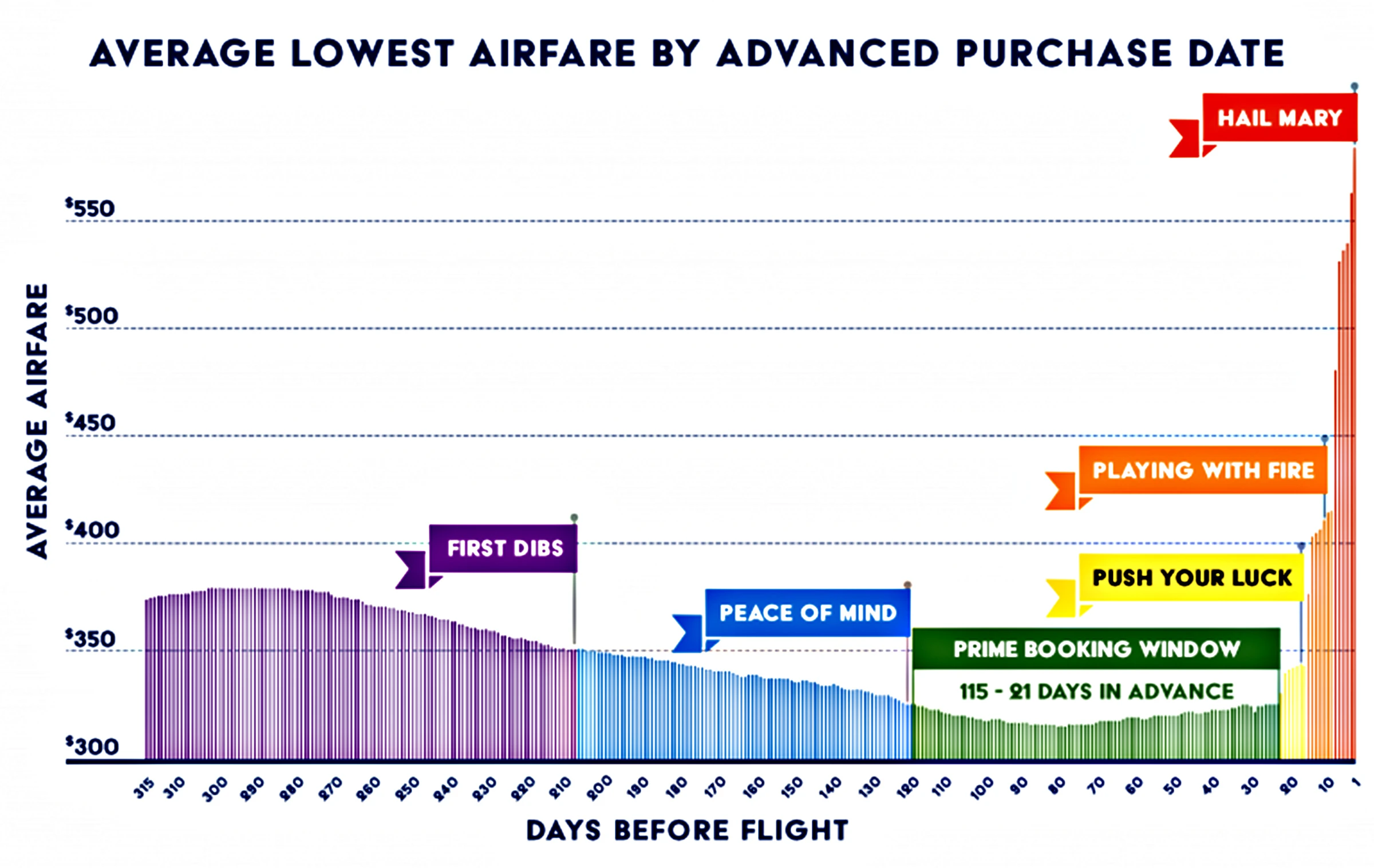
Understanding the booking window is the first step in a broader strategy of travel arbitrage and fiscal responsibility. From the perspective of personal finance and wealth management, timing your flight purchase is an exercise in risk mitigation and cost-avoidance.
The Financial Mechanics of Airline Booking Windows
To understand when to book, one must first understand the constraints of the marketplace. Most major legacy carriers—such as Delta, United, and British Airways—typically release their “load” or schedule approximately 330 to 362 days in advance. This is not an arbitrary number; it is a legacy of the Global Distribution Systems (GDS) that manage the flow of data between airlines and travel agents.
Understanding the 330-Day Rule
From a financial planning perspective, the 330-day mark represents the opening of the “futures market” for a specific route. When an airline opens its seats nearly a year in advance, it is essentially offering an opening price based on historical data and projected fuel costs. However, booking exactly 330 days out is rarely the most cost-effective move for the average consumer. At this stage, the airline’s revenue management algorithms are set to a “baseline” price. Because there is no immediate pressure to fill the plane, these early prices are often higher than they will be three to six months later.
Revenue Management Systems and Price Volatility
Airlines utilize sophisticated AI-driven revenue management systems (RMS) that adjust prices in real-time based on supply and demand. For the financially savvy traveler, understanding this volatility is key. These systems look for “booking velocity.” If a flight is filling up faster than the historical average, the price climbs. If it is lagging, the price drops. By monitoring these fluctuations, a traveler can treat their flight purchase like a stock entry point, looking for the “dip” rather than buying at the IPO (the 330-day opening).
Maximizing ROI: When Does Early Booking Make Financial Sense?
In personal finance, the “Return on Investment” (ROI) of a flight booking is measured in the savings realized versus the baseline price. However, one must also account for the opportunity cost of tying up capital.
The Opportunity Cost of Tying Up Capital
If you book a $1,200 international flight 11 months in advance, you are essentially giving the airline an interest-free loan for nearly a year. In a high-interest environment, that $1,200 could have been sitting in a High-Yield Savings Account (HYSA) or a short-term money market fund, earning 4-5% APY.
A professional approach to travel finance suggests that you should only book extremely early if the “Early Bird” discount exceeds the potential interest earned on that capital. For example, if booking 11 months out saves you $200 on a $1,200 flight, that is a 16.6% “return” on your money—far outperforming any savings account. If the price is the same 11 months out as it is 4 months out, you are better off keeping your cash liquid as long as possible.
Identifying the “Sweet Spot” for Domestic vs. International Routes
Data-driven financial analysis shows that different markets have different “sweet spots.”
- Domestic (US/EU): The optimal financial window is typically 1 to 3 months before departure. Booking earlier often results in paying a premium for “peace of mind,” while booking later subjects the buyer to the “business traveler penalty,” where prices spike for last-minute corporate flyers.
- International Long-Haul: The window shifts to 4 to 8 months. Because these flights involve higher operational costs for the airline, they tend to stabilize their pricing earlier. Waiting until the last minute for an international flight is a high-risk financial move that rarely results in a “deal.”
Leveraging Financial Tools and Travel Arbitrage

In the modern era, managing travel expenses has moved from spreadsheets to automated financial tools. To truly optimize the “how far out” question, one must employ technology that monitors market movements.
Predictive Analytics and Price Tracking Software
Tools like Google Flights, Hopper, and Kayak use massive datasets to predict whether a fare will rise or fall. From a personal finance standpoint, these are essential “advisory” tools. Setting a price alert allows you to stay liquid while waiting for a specific “buy signal.” This removes the emotional impulse to “book now before it goes up,” replacing it with a disciplined, data-backed entry point.
Credit Card Points and Award Seat Availability
For those focused on “online income” or maximizing credit card rewards, the rules of the booking window change significantly. Award seats (flights booked with points) are a finite currency. Unlike cash fares, which fluctuate, award seats are often released in limited “buckets.”
In this niche, booking exactly 330 days out is often the only way to achieve a high “Cent Per Point” (CPP) valuation. If you can book a $5,000 Business Class seat for 80,000 points the moment the window opens, you are achieving a valuation of 6.25 cents per point—an incredible financial return. If you wait until 3 months out, that same seat may no longer be available for points, forcing you to spend cash and diminishing your overall net worth.
Risk Management: Cancellation Policies and Travel Insurance
Any sophisticated financial strategy must include a component of risk management. When booking a flight far in advance, the primary risk is “non-performance”—the possibility that you cannot take the trip or the airline cancels the route.
The Cost-Benefit Analysis of Refundable Fares
Airlines offer various fare classes: Basic Economy (non-refundable), Main Cabin (changeable for credit), and Fully Refundable. A common financial mistake is overpaying for “Fully Refundable” tickets. Often, the premium for a refundable ticket is 30-50% higher than a standard fare.
From a wealth management perspective, it is often more efficient to book a “Main Cabin” fare and self-insure or rely on credit card protections. If the price of the “Fully Refundable” ticket is $300 more than the “Main Cabin,” you are essentially paying a $300 insurance premium. Unless the probability of cancellation is extremely high, this is a poor use of capital.
Hedging Against Inflation in Travel Costs
Travel is highly sensitive to inflation, particularly through the lens of fuel surcharges and labor costs. Booking a flight 6 to 10 months out can act as a “hedge.” By locking in a price today, you are protecting yourself against potential spikes in jet fuel prices or currency fluctuations. For international travel, where you may be paying in USD for a flight on a foreign carrier, booking early can be a way to lock in a favorable exchange rate before the dollar potentially weakens.

Conclusion: The Strategic Timeline
So, how far out can you book a flight? While the technical answer is roughly 11 months, the financial answer is more nuanced.
To manage your money effectively, you should view the 11-month window as the beginning of your observation period. For peak holiday travel (Christmas, Summer Olympics, etc.), booking as soon as the window opens is a defensive financial move to avoid the inevitable price surges caused by fixed demand. For standard travel, the most disciplined approach is to monitor the fare via predictive tools and execute the purchase during the 3-to-6-month “Goldilocks Zone.”
By treating flight bookings as a capital investment rather than a simple purchase, you can minimize waste, maximize your liquid cash flow, and ensure that your travel budget contributes to your overall financial health rather than detracting from it. In the world of money, timing isn’t just everything—it’s the difference between a high-cost liability and a well-managed asset.
aViewFromTheCave is a participant in the Amazon Services LLC Associates Program, an affiliate advertising program designed to provide a means for sites to earn advertising fees by advertising and linking to Amazon.com. Amazon, the Amazon logo, AmazonSupply, and the AmazonSupply logo are trademarks of Amazon.com, Inc. or its affiliates. As an Amazon Associate we earn affiliate commissions from qualifying purchases.