
In the modern financial landscape, travel is often categorized as a discretionary expense. However, for the savvy personal finance enthusiast, airfare is not a fixed cost but a variable market subject to the laws of supply, demand, and digital arbitrage. Finding the cheapest flights is less about luck and more about understanding the complex financial algorithms used by carriers to maximize yield. By approaching flight booking as a strategic asset procurement task, travelers can significantly reduce their overhead, allowing for greater capital allocation toward investments, savings, or high-value experiences.

This guide explores the financial mechanics of the aviation industry and provides a framework for leveraging financial tools and market timing to secure the lowest possible prices.
The Economics of Airfare: Understanding Dynamic Pricing and Market Timing
To find the cheapest flights, one must first understand how airlines price their inventory. Airlines utilize “yield management,” a variable pricing strategy based on anticipating and influencing consumer behavior to maximize revenue. This means that two people sitting in the same cabin may have paid vastly different prices for the same service. From a personal finance perspective, your goal is to be the passenger who paid the lowest price in the distribution curve.
Supply and Demand Cycles
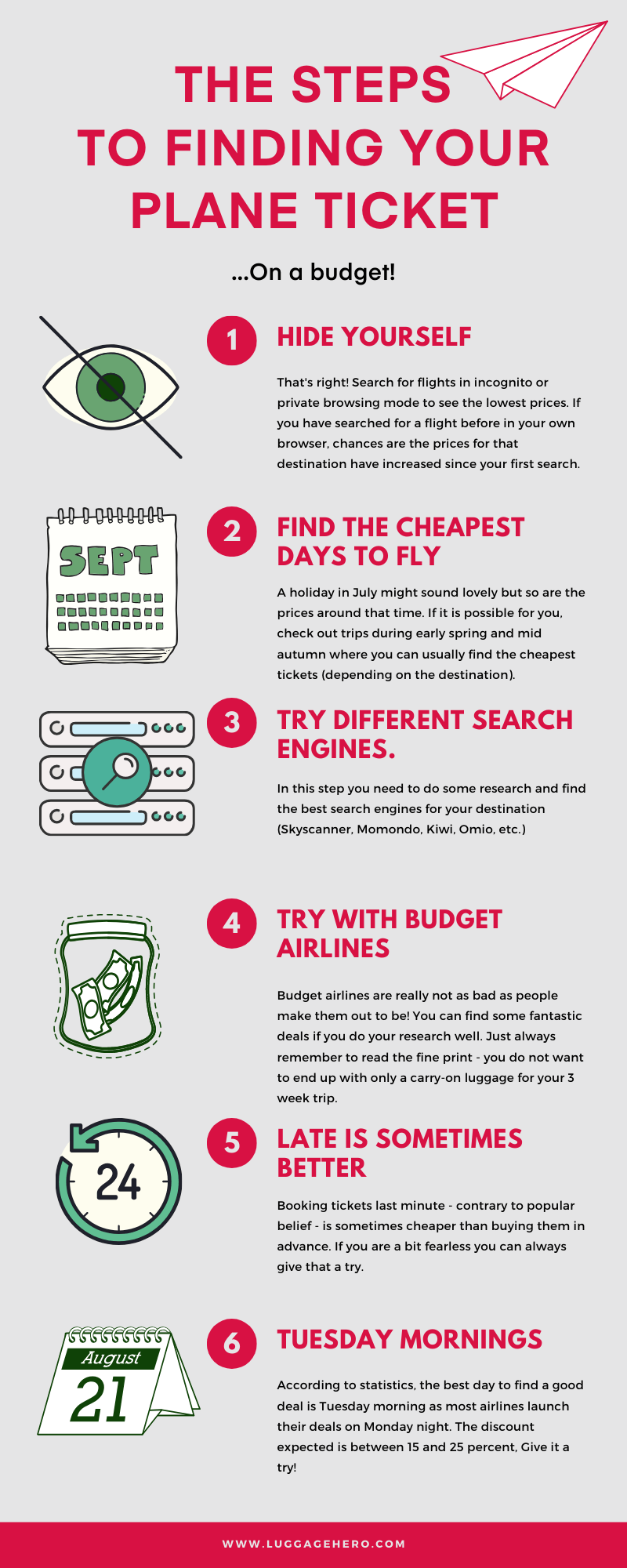
The primary driver of flight costs is the basic economic principle of supply and demand. Airlines track historical data to predict when demand will peak—such as during summer holidays, major sporting events, or end-of-year festivities. When demand is high, prices are inelastic. Conversely, during “shoulder seasons” or mid-week periods (typically Tuesday and Wednesday), demand drops, and airlines lower prices to ensure high load factors.
From a financial planning standpoint, flexibility is your greatest asset. By shifting your travel dates by even 48 hours, you can often realize a 30% to 50% reduction in cost. This is the equivalent of a high-yield return on your time, as the “work” of changing a date pays out in significant cash savings.
The “Goldilocks” Booking Window
There is a common misconception that booking a year in advance or at the very last minute yields the best results. However, financial data from booking aggregators suggests a “Goldilocks” window. For domestic flights, this is typically 1 to 3 months before departure; for international routes, 2 to 8 months is the sweet spot.
Booking too early means you miss out on promotional fare wars that occur when airlines realize they haven’t met their sales quotas. Booking too late subjects you to the “business traveler premium,” where airlines gouge passengers who have no choice but to fly on specific dates. Strategically timing your purchase within these windows is a core component of travel cost optimization.
Leveraging Financial Tools and Credit Card Ecosystems
The most effective way to find the “cheapest” flight is often to remove the cash element entirely. In the world of personal finance, travel hacking through credit card rewards is the ultimate optimization strategy. By viewing credit card points as a form of secondary currency, you can access flights for a fraction of their retail value.
Maximizing Point Valuations and Transfer Partners
Not all points are created equal. Fixed-value points (where 1 point always equals 1 cent) offer stability but limited upside. To find the true “cheap” flights, one must master the art of transferring points to airline partners.
For example, a flight from New York to London might cost $1,200 in cash or 60,000 points through a credit card portal. However, by transferring those same points to a specific airline partner during a transfer bonus promotion, that same seat might only cost 30,000 points. In this scenario, you have effectively doubled the purchasing power of your financial rewards. This is a form of currency arbitrage that requires research into “sweet spots” within various airline alliance award charts.
The Hidden Value of Travel Insurance and Consumer Protections
When discussing the “cheapest” flight, one must account for risk. A $200 flight is not cheap if a cancellation costs you $500 in lost hotel bookings. High-end financial tools—specifically premium credit cards—provide built-in trip delay, cancellation, and interruption insurance.

From a business finance perspective, this is “risk mitigation.” By using the right financial instrument to purchase your ticket, you are essentially getting a free insurance policy. Should the airline fail to deliver, your financial downside is protected, ensuring that a cheap flight doesn’t turn into an expensive disaster.
Digital Arbitrage: Using Technological Tools for Financial Gain
In the digital age, information asymmetry is the enemy of the budget-conscious traveler. To find the cheapest flights, you must use financial tools and search engines that aggregate data across thousands of sources to identify price discrepancies.
Aggregator Meta-Search Engines and Direct Booking Benefits
Meta-search engines are the “Bloomberg Terminals” of the travel world. Tools like Google Flights, Skyscanner, and Kayak allow you to view the entire market at once. They provide historical price tracking, letting you know if the current price is “low,” “average,” or “high” compared to the trailing 12-month data.
However, a savvy financial move is to use these aggregators for discovery but book directly with the airline. Direct booking often provides better consumer protection and easier refund processing. In the event of a price drop, many airlines now offer “price protection” or credits for the difference, a feature rarely available through third-party online travel agencies (OTAs).
VPNs and Currency Arbitrage Strategies
A more advanced financial tactic involves using a Virtual Private Network (VPN) to change your digital location. Airlines often practice “point-of-sale” pricing, where the cost of a ticket varies depending on the country from which it is purchased.
For instance, a domestic flight within Peru may be priced in USD for an American consumer but at a significantly lower rate in Soles for a local resident. By setting your VPN to the destination country and paying in the local currency (using a credit card with no foreign transaction fees), you can often exploit these regional price differences. This is a classic example of arbitrage—buying in a low-cost market to consume in a high-cost one.
Advanced Budgeting: Hidden City Ticketing and Long-Haul Strategy
For those committed to the highest level of financial optimization, certain unconventional strategies can yield massive savings, though they come with specific risks that must be managed.
The Risks and Rewards of Skiplagging
“Hidden city ticketing,” or skiplagging, is a strategy where you book a flight with a layover in your actual intended destination and simply exit the airport during the connection. For example, a direct flight from New York to Paris might be $800, but a flight from New York to Madrid with a layover in Paris might only be $450.
From a financial standpoint, this is a clear win, but it requires an understanding of the “contract of carriage.” Airlines dislike this practice and may penalize frequent flyer accounts. Therefore, this strategy should only be used by those who have calculated the risk-to-reward ratio and are prepared to fly without checked luggage (as bags will go to the final ticketed destination).
Building a “Travel Sinking Fund”
Finally, finding the cheapest flights is a matter of liquidity. Many people miss out on “mistake fares”—instances where an airline accidentally lists a $1,200 ticket for $120—because they do not have the immediate cash flow to capitalize on the opportunity.
A “travel sinking fund” is a dedicated high-yield savings account where you set aside a fixed amount of money each month specifically for travel. When a market anomaly or an incredible deal arises, you have the “dry powder” necessary to strike immediately. In finance, being able to move quickly when an asset is undervalued is the key to long-term wealth; the same logic applies to securing ultra-low-cost airfare.
Conclusion: The Holistic Financial Approach to Travel
Finding the cheapest flights is not merely about visiting the right website; it is an integrated financial strategy. It involves understanding the market mechanics of the aviation industry, leveraging the power of credit card ecosystems, utilizing digital tools to eliminate information asymmetry, and maintaining the liquidity to act on market opportunities.
By treating travel as a financial challenge to be optimized, you can see the world without compromising your long-term financial goals. In the end, the money saved on airfare is capital that can be redirected toward your investment portfolio, effectively making your travel a catalyst for future financial freedom.
aViewFromTheCave is a participant in the Amazon Services LLC Associates Program, an affiliate advertising program designed to provide a means for sites to earn advertising fees by advertising and linking to Amazon.com. Amazon, the Amazon logo, AmazonSupply, and the AmazonSupply logo are trademarks of Amazon.com, Inc. or its affiliates. As an Amazon Associate we earn affiliate commissions from qualifying purchases.