
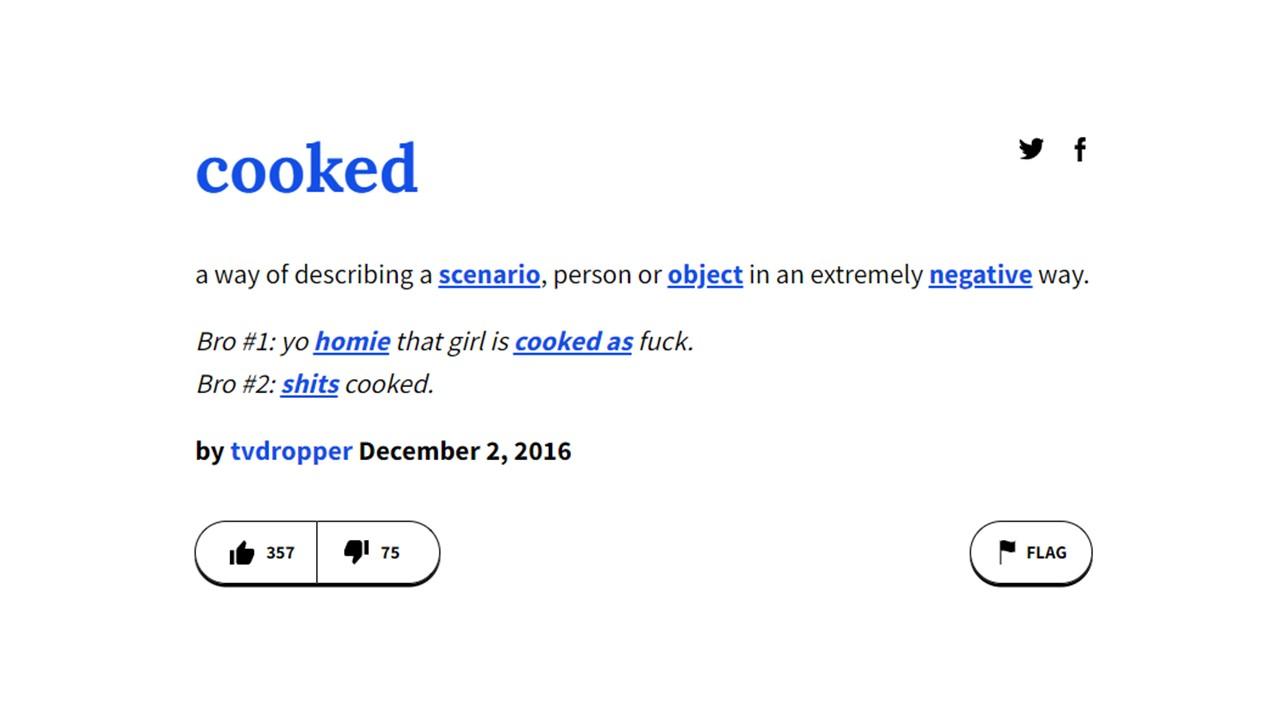
The phrase “I’m cooked” has permeated the digital landscape, evolving from a colloquial expression of defeat into a multifaceted descriptor within the tech community. While its origins lie in more general slang, its modern interpretation within technology contexts often signifies a state of overwhelming difficulty, imminent failure, or an insurmountable challenge faced by individuals, projects, or even entire systems. This isn’t merely about being tired or stressed; it’s about reaching a point where recovery seems impossible without significant intervention or a complete paradigm shift. Understanding the nuances of “I’m cooked” in tech requires an examination of its application across various domains, from personal coding endeavors to enterprise-level system failures.

The Personal Processor: When Developers and Engineers Feel the Heat
For individuals deeply entrenched in the world of technology, particularly developers, engineers, and IT professionals, the feeling of being “cooked” often stems from a confluence of demanding deadlines, complex problem-solving, and the relentless pace of innovation. This isn’t a minor inconvenience; it’s a profound sense of being overwhelmed, where the cognitive load exceeds perceived capacity, leading to burnout and a potential breakdown of productivity and well-being.
The Never-Ending Bug Hunt
At the heart of many developer’s “cooked” experiences is the notorious bug. When a critical bug surfaces, especially one that is elusive, deeply embedded, or appears just before a major release, the mental toll can be immense. The hours spent tracing code, experimenting with fixes, and the constant pressure to resolve the issue can lead to a feeling of being trapped in an endless cycle. The “cooked” state here is not just about the bug itself, but the realization that the perceived effort required to fix it, coupled with the diminishing time, makes the original goal of a successful deployment seem increasingly unattainable. This can manifest as sleep deprivation, increased anxiety, and a general sense of despair, all contributing to the feeling of being “cooked.”
The Feature Creep Nightmare
Another significant contributor to the “cooked” syndrome among tech professionals is feature creep. This occurs when a project’s scope expands beyond its initial requirements, often with new features being added without a corresponding increase in resources or timeline. For a developer or engineer, this can feel like being asked to build a skyscraper with the materials and time allocated for a garden shed. The constant influx of new demands, the need to re-architect existing solutions, and the ever-shifting goalposts create a Sisyphean task. The feeling of being “cooked” arises from the realization that no matter how much effort is expended, the finish line is perpetually receding, and the original vision is becoming diluted or impossible to achieve within the imposed constraints.
The Legacy Code Labyrinth
Working with legacy code, while often a necessary part of maintaining existing systems, can also be a significant source of the “cooked” feeling. Old codebases, lacking proper documentation, written in outdated languages or frameworks, and often riddled with technical debt, present formidable challenges. When a critical update or integration is required, navigating this labyrinth can feel like an impossible undertaking. The lack of clarity, the potential for unforeseen side effects, and the sheer volume of archaic logic can overwhelm even the most experienced professionals. The “cooked” state here is characterized by the dread of touching certain parts of the system, the understanding that even minor changes could have catastrophic ripple effects, and the feeling that progress is being made at a snail’s pace, if at all.
Systemic Meltdown: When Infrastructure and Applications Crumble
Beyond individual struggles, the phrase “I’m cooked” can also describe the state of technology systems themselves. When critical infrastructure fails, applications crash en masse, or data becomes irretrievable, the collective impact can be profound, leading to significant business disruptions and immense reputational damage. This is not a minor glitch; it’s a systemic failure that can feel like the digital equivalent of an irreparable collapse.
The Cascading Failure Phenomenon

In complex distributed systems, a single point of failure can, and often does, lead to a cascade of subsequent failures. This is a classic scenario where the “I’m cooked” sentiment applies to the system’s operational status. Imagine a critical database server going offline. This might trigger application servers to fail as they cannot access their data, leading to user-facing services becoming unavailable. Then, monitoring systems designed to alert on such failures might themselves become overloaded or fail due to the widespread disruption. The interconnectedness of modern tech means that a localized problem can quickly escalate into a full-blown crisis, leaving IT teams scrambling to contain the damage, often with the grim realization that the system is “cooked” until the root cause can be identified and rectified, a process that can be lengthy and arduous.
The Data Breach Catastrophe
A data breach is perhaps one of the most devastating scenarios that can lead to a “cooked” state for any organization operating in the tech sphere. The loss of sensitive customer data, intellectual property, or proprietary information carries immense financial, legal, and reputational consequences. For the IT security teams responsible, the immediate aftermath of a breach is often a frantic and overwhelming period. The realization that defenses have been compromised, that the integrity of data is shattered, and that the organization is now vulnerable to further attacks can lead to an overwhelming sense of defeat. The “cooked” state in this context signifies not just the immediate operational disruption but the long-term fallout, including regulatory fines, lawsuits, loss of customer trust, and the extensive efforts required to rebuild security and restore confidence.
The Obsolete Technology Trap
Organizations can also find themselves in a “cooked” situation due to their reliance on obsolete technology. When core systems are built on outdated infrastructure or software that is no longer supported by vendors, upgrading or integrating with newer technologies becomes a Herculean task. The lack of security patches, the absence of community support, and the difficulty in finding skilled personnel to manage these systems can leave an organization vulnerable and inefficient. The “cooked” state here is one of stagnation, where the inability to evolve with the technological landscape leads to competitive disadvantage, increased operational risks, and an inability to leverage modern efficiencies. The path to modernization becomes fraught with challenges, often requiring significant investment and a complete overhaul, making the current situation feel almost insurmountable.
The Future Foretold: When Innovation Stalls and Competition Overtakes
In the rapidly evolving tech landscape, the concept of being “cooked” can also be applied to the trajectory of companies and their product offerings. When innovation falters, market shifts are ignored, or competitors consistently outmaneuver, a company can find itself in a precarious, almost irreversible, position.
The Missed Technological Wave
The history of technology is replete with examples of companies that failed to adapt to emerging trends, only to find themselves left behind. Think of companies that were once dominant but failed to embrace the internet, the mobile revolution, or the rise of cloud computing. For such entities, the “I’m cooked” sentiment reflects a profound strategic failure. The market has moved on, their product is no longer relevant, and the competitive landscape has been irrevocably altered. The efforts to pivot or catch up can be incredibly challenging, often requiring a complete reinvention that is difficult to achieve when entrenched in old ways of thinking and operating. The realization that they have missed a fundamental technological wave can be the ultimate sign of being “cooked.”
The Product-Market Fit Fallacy
Achieving and maintaining product-market fit is crucial for any tech company’s survival. When a product or service fails to resonate with its target audience, or when market needs evolve in a direction that the product cannot accommodate, the company can find itself in a “cooked” state. This isn’t just about poor sales; it’s about a fundamental disconnect between what is being offered and what the market desires. The painstaking efforts to iterate and improve may yield little results if the core premise is flawed or if the market has simply moved on to better alternatives. The “cooked” feeling here is the dawning realization that despite best efforts, the product is no longer viable, and the path forward is fraught with uncertainty, potentially leading to a decline in revenue, user base, and overall market relevance.
The Regulatory Reckoning
The tech industry is increasingly subject to evolving regulatory frameworks around data privacy, competition, and artificial intelligence. Companies that fail to anticipate or adapt to these regulatory shifts can find themselves in a “cooked” predicament. New legislation can impose significant compliance burdens, restrict certain business practices, or even lead to substantial fines and operational changes. For companies whose business models rely on practices that are now deemed problematic or illegal, the regulatory reckoning can feel like an existential threat. The “cooked” state signifies the struggle to adapt to new rules, the potential for significant financial penalties, and the challenge of fundamentally altering established operational procedures, all of which can impede growth and innovation, leading to a feeling of being irreparably hampered.
In conclusion, the phrase “I’m cooked” in the tech realm is a powerful descriptor of situations ranging from personal burnout and overwhelming technical debt to systemic failures and strategic obsolescence. It encapsulates the feeling of facing insurmountable challenges, impending failure, or a situation from which recovery seems improbable. Understanding these various contexts allows for a more nuanced appreciation of the pressures and pitfalls inherent in the dynamic and often unforgiving world of technology.
aViewFromTheCave is a participant in the Amazon Services LLC Associates Program, an affiliate advertising program designed to provide a means for sites to earn advertising fees by advertising and linking to Amazon.com. Amazon, the Amazon logo, AmazonSupply, and the AmazonSupply logo are trademarks of Amazon.com, Inc. or its affiliates. As an Amazon Associate we earn affiliate commissions from qualifying purchases.