
The trident, a three-pronged spear, transcends its simple physical form to become a potent symbol steeped in millennia of human history, mythology, and culture. From the depths of the ocean to the heights of spiritual enlightenment, its representations are as varied as they are profound. In the realm of branding, where every visual element and narrative thread is meticulously crafted to convey identity and values, understanding what a symbol like the trident represents is not merely an academic exercise; it is a strategic imperative. This article delves into the multifaceted meanings of the trident and explores how its enduring legacy can be harnessed to forge compelling and resonant brand identities in the modern world.
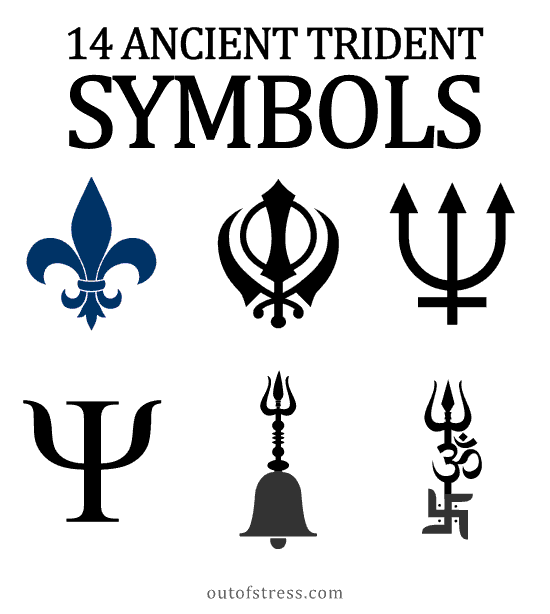
The Trident’s Enduring Legacy: A Deep Dive into its Historical and Mythological Roots
To truly appreciate the trident’s potential in branding, one must first explore its foundational meanings, tracing its origins through ancient myths, diverse cultures, and practical applications. Its power lies not just in its visual form, but in the layers of meaning accumulated over centuries.
Divine Power and Sovereignty: The Trident of Poseidon/Neptune
The most iconic and widely recognized representation of the trident is undoubtedly its association with the Greek god Poseidon and his Roman counterpart, Neptune. As the deities of the sea, earthquakes, and horses, their tridents were instruments of immense power and dominion. This divine attribution imbues the symbol with several key characteristics relevant to branding:
- Ultimate Authority and Control: The trident in the hands of Poseidon or Neptune signifies mastery over vast, unpredictable forces—the turbulent seas, the shifting earth. For a brand, this can represent leadership, unparalleled control over a market segment, or unwavering stability in a dynamic environment.
- Elemental Force and Grandeur: The sea is an entity of immense power, beauty, and mystery. Brands that wish to associate themselves with natural strength, untamed energy, or a grand, awe-inspiring presence might find the trident an ideal emblem. It speaks to a raw, fundamental power that resonates deeply.
- Unpredictability and Innovation (or Measured Power): While often representing control, the sea can also symbolize unpredictability and constant change. This duality can be leveraged by brands that are pioneers, innovators, or those that navigate complex, ever-evolving landscapes with expertise and adaptive strength.
For brands aiming to project an image of formidable presence, global reach (especially if connected to maritime themes), and unwavering authority, the Poseidon/Neptune symbolism offers a powerful narrative.
Beyond Olympus: Diverse Cultural and Religious Interpretations
While its Hellenistic connections are prominent, the trident’s symbolism extends far beyond the Greco-Roman pantheon, revealing a richer tapestry of meaning that can be subtly integrated into branding strategies.
- Hinduism and the Trishula of Shiva: In Hinduism, the Trishula, or trident, is the primary weapon of Lord Shiva, one of the principal deities. Its three prongs hold profound philosophical significance, often representing creation, preservation, and destruction; past, present, and future; or the three gunas (qualities of nature)—sattva, rajas, and tamas. It can also symbolize mind, body, and spirit, or the three fundamental aspects of human experience. For a brand, the Trishula can evoke:
- Holistic Approach: A comprehensive strategy, a product that addresses multiple needs, or a service that considers every aspect of a client’s journey.
- Balance and Harmony: The interplay of different forces working in equilibrium.
- Transformative Power: The ability to bring about profound change, renewal, or evolution, reflecting Shiva’s role as “the Destroyer” who paves the way for new creation.
- Practical Utility: The Fishing Spear: Before its deification, the trident was a practical tool—a fishing spear. This utilitarian aspect brings forth representations of:
- Precision and Skill: The accuracy required to wield such a tool successfully.
- Sustenance and Provision: A connection to basic needs, resourcefulness, and the ability to “gather” or “capture” value.
- Efficiency: The effective capture of resources with a single, well-aimed strike.
- Martial Application: Gladiatorial Weaponry: In some historical contexts, particularly Roman gladiatorial combat, the trident was a weapon. This less divine but equally potent association brings forth attributes of:
- Aggression and Defense: A readiness to confront challenges or protect assets.
- Combativeness and Resilience: The ability to thrive in competitive environments.
- Sharpness and Penetration: Cutting through noise, getting to the core of an issue, or making a significant impact.
These diverse interpretations allow brands to select a specific facet of the trident’s meaning that aligns best with their core values, target audience, and market positioning.
The Power of Three: Triadic Symbolism
Beyond its specific associations, the fundamental structure of the trident—three prongs—inherently taps into the universal power of triadic symbolism. The number three has deep significance across cultures and disciplines, representing:
- Stability and Foundation: Three points define a plane, providing inherent stability.
- Completeness and Synthesis: Thesis, antithesis, synthesis; beginning, middle, end; father, son, holy spirit. Three often signifies a whole or a complete cycle.
- Interconnectedness: Three elements working in concert towards a common goal.
For branding, the power of three in the trident can symbolize:
- Core Values: A brand built upon three unwavering principles.
- Strategic Pillars: Three key areas of focus or expertise.
- Holistic Solutions: Products or services that address a challenge from three complementary angles.
- Strength in Unity: The synergy derived from combining distinct components.
Leveraging this inherent triadic meaning allows brands to convey depth, stability, and a well-rounded approach, reinforcing trustworthiness and comprehensive capability.
From Ancient Artifact to Modern Emblem: The Trident in Corporate Identity
Translating the rich tapestry of the trident’s meaning into a cohesive and impactful corporate identity requires strategic thought and creative execution. It’s not merely about adopting an ancient symbol, but about infusing it with contemporary relevance and brand-specific narratives.
Strategic Integration: Why Brands Choose the Trident
Brands don’t select symbols arbitrarily. The choice of a trident often reflects a deliberate strategy to communicate specific brand attributes and aspirations. Companies might choose the trident to convey:
- Authority and Leadership: To position themselves as dominant forces within their industry.
- Heritage and Timelessness: To imply a long-standing tradition of excellence or a classic, enduring quality.
- Precision and Expertise: For brands emphasizing meticulous craftsmanship, scientific accuracy, or specialized knowledge.
- Dynamism and Adaptability: Particularly in contexts relating to navigating change, much like a ship cutting through waves.
- Connection to Nature or Global Reach: For environmental initiatives, maritime industries, or organizations with a worldwide presence.
By aligning the trident’s inherent meanings with desired brand perceptions, companies can create a powerful, non-verbal communication that resonates with their target audience.
Crafting Brand Narratives with Trident Symbolism

A symbol is most effective when it is woven into the brand’s overarching narrative. The trident isn’t just a logo; it’s a storytelling device.
- A maritime logistics company might narrate its brand story around “mastery of the global waters,” evoking Poseidon’s command to assure clients of reliable, expansive shipping capabilities.
- A luxury watchmaker could speak of “precision in every moment,” using a stylized trident to signify the meticulous engineering and enduring accuracy, drawing parallels to the fishing spear’s exactitude.
- A wellness brand offering integrated health solutions might adopt a trident to represent its “holistic approach to mind, body, and spirit,” reflecting the Trishula’s balance.
The key is to articulate which aspect of the trident’s symbolism is being leveraged and to consistently reinforce this through all brand communications, from mission statements to marketing campaigns.
Design Considerations: Modernizing an Ancient Form
The visual execution of the trident in a brand’s identity is paramount. An ancient symbol needs modern sensibility to avoid appearing anachronistic or cliché.
- Stylization: Should it be sleek and minimalist, abstract, or retain some classical ornamentation? A tech company might opt for sharp, geometric lines, while a heritage brand might lean towards a more classical, intricate depiction.
- Color Palette: The chosen colors can significantly alter the perception. Deep blues and greens might reinforce oceanic themes, while metallics could convey luxury and strength.
- Typography: The font paired with the trident should complement its aesthetic. A bold, sans-serif font might project modernity and strength, while a serif font could speak to tradition and elegance.
- Contextual Elements: How does the trident interact with other elements of the brand’s visual identity? Does it stand alone, or is it integrated into a larger emblem or pattern?
The goal is to create a unique and memorable visual mark that leverages the trident’s symbolic power while feeling fresh, relevant, and distinct to the brand.
Case Studies and Applications: Where the Trident Manifests (Conceptual Examples)
To illustrate the practical application of trident symbolism in branding, let’s consider hypothetical scenarios across different industries.
Maritime & Logistics Brands: Navigating with Authority
- Conceptual Brand: “Oceanic Sovereign Logistics”
- Symbolic Focus: Poseidon’s dominion over the seas.
- Brand Narrative: Positioned as the undisputed leader in global shipping and supply chain management, Oceanic Sovereign Logistics uses a bold, angular trident as its logo. The prongs are sharp, suggesting efficient navigation and cutting-edge operational precision. Their marketing emphasizes “mastery of the elements” and “unwavering command of the global transit network,” assuring clients of reliability, speed, and expansive reach. The trident here embodies not just transport, but the ultimate authority and control over the vastness of the ocean.
Luxury & Lifestyle Brands: Precision, Power, and Exclusivity
- Conceptual Brand: “TriVelo Motors” (a high-performance luxury automotive brand)
- Symbolic Focus: The trident as a precision tool (like a spear) combined with its inherent power.
- Brand Narrative: TriVelo Motors employs a sleek, highly stylized trident in chrome or brushed steel, often integrated into the grille or badging of their vehicles. This design conveys not just speed and power, but also the meticulous engineering, cutting-edge innovation, and pinpoint precision that define their brand. Their slogan might be “Engineered with three-pronged perfection,” subtly linking to the triple points as a symbol of balance, ultimate performance, and a holistic approach to luxury driving experience (power, control, aesthetics). The trident here represents exclusivity and a finely tuned mastery of automotive craftsmanship.
Technology & Innovation: Guiding Future Horizons
- Conceptual Brand: “Synapse Triad Solutions” (a data analytics and AI strategy firm)
- Symbolic Focus: The Trishula’s representation of past, present, future, or a three-pronged approach to complex problems.
- Brand Narrative: Synapse Triad Solutions uses an abstract, interconnected trident-like emblem with glowing or converging lines. Their brand identity focuses on helping businesses “navigate the currents of data” and “chart a course for the future.” The three prongs represent their core methodology: Data Collection, Insight Generation, and Strategic Implementation. Their messaging emphasizes foresight, comprehensive analytical power, and the ability to synthesize complex information into actionable strategies. The trident, in this context, becomes a symbol of intelligent guidance, multi-faceted insight, and the harmonious integration of distinct elements for future success.
The Nuances of Symbol Adoption: Avoiding Pitfalls and Ensuring Authenticity
While the trident offers a wealth of branding potential, its adoption requires careful consideration to ensure authenticity, avoid misinterpretation, and maintain cultural sensitivity.
Cultural Sensitivity and Context
A symbol’s meaning can vary dramatically across cultures. What is revered in one context might be innocuous or even offensive in another. Brands operating globally must conduct thorough cultural due diligence. While the trident is largely positive or neutral in Western contexts, its specific religious connotations in Hinduism (Trishula) mean that a brand using it must be mindful of how it’s perceived in regions with large Hindu populations. Misappropriation or a lack of respect for sacred meanings can severely damage a brand’s reputation. The key is to understand the full spectrum of interpretations and to be clear about the intended meaning within the brand’s specific cultural context.
Originality vs. Recognition
The power of a widely recognized symbol lies in its immediate impact, but this also presents a challenge: how to make it unique? Simply copying a generic trident risks blending into the background or being mistaken for another entity. Successful brands leverage the essence of the trident while employing distinct stylization, color palettes, and accompanying design elements to create an original mark. The goal is to be immediately recognizable as a trident, yet undeniably theirs. This balance requires creative design that honors the symbol’s legacy while pushing its aesthetic boundaries.
Consistency Across Brand Touchpoints
Once a specific representation and narrative for the trident are chosen, consistency is paramount. The symbol’s meaning and visual depiction must be uniform across all brand touchpoints—from the logo on a website and product packaging to advertising campaigns and internal communications. Inconsistency dilutes the brand message and weakens the symbolic power. The trident should be an integrated element of the brand’s identity, a constant reminder of its core values and aspirations, not merely a decorative element.

Conclusion
The trident, in its ancient and multifaceted representations, offers a profoundly rich resource for brand building. From embodying divine power and elemental mastery to signifying precision, balance, or a holistic approach, its symbolic depth is immense. For brands seeking to convey authority, heritage, innovation, or a powerful, guiding presence, the strategic adoption of a trident can imbue their identity with layers of meaning that resonate deeply with consumers. However, success lies in a thoughtful, culturally sensitive, and creatively executed integration, ensuring that the ancient power of the trident is harnessed to tell a unique and compelling modern brand story. By understanding what a trident represents, brands can strategically tap into this timeless symbol to forge an identity that is not only visually striking but also deeply meaningful and enduring.
aViewFromTheCave is a participant in the Amazon Services LLC Associates Program, an affiliate advertising program designed to provide a means for sites to earn advertising fees by advertising and linking to Amazon.com. Amazon, the Amazon logo, AmazonSupply, and the AmazonSupply logo are trademarks of Amazon.com, Inc. or its affiliates. As an Amazon Associate we earn affiliate commissions from qualifying purchases.