
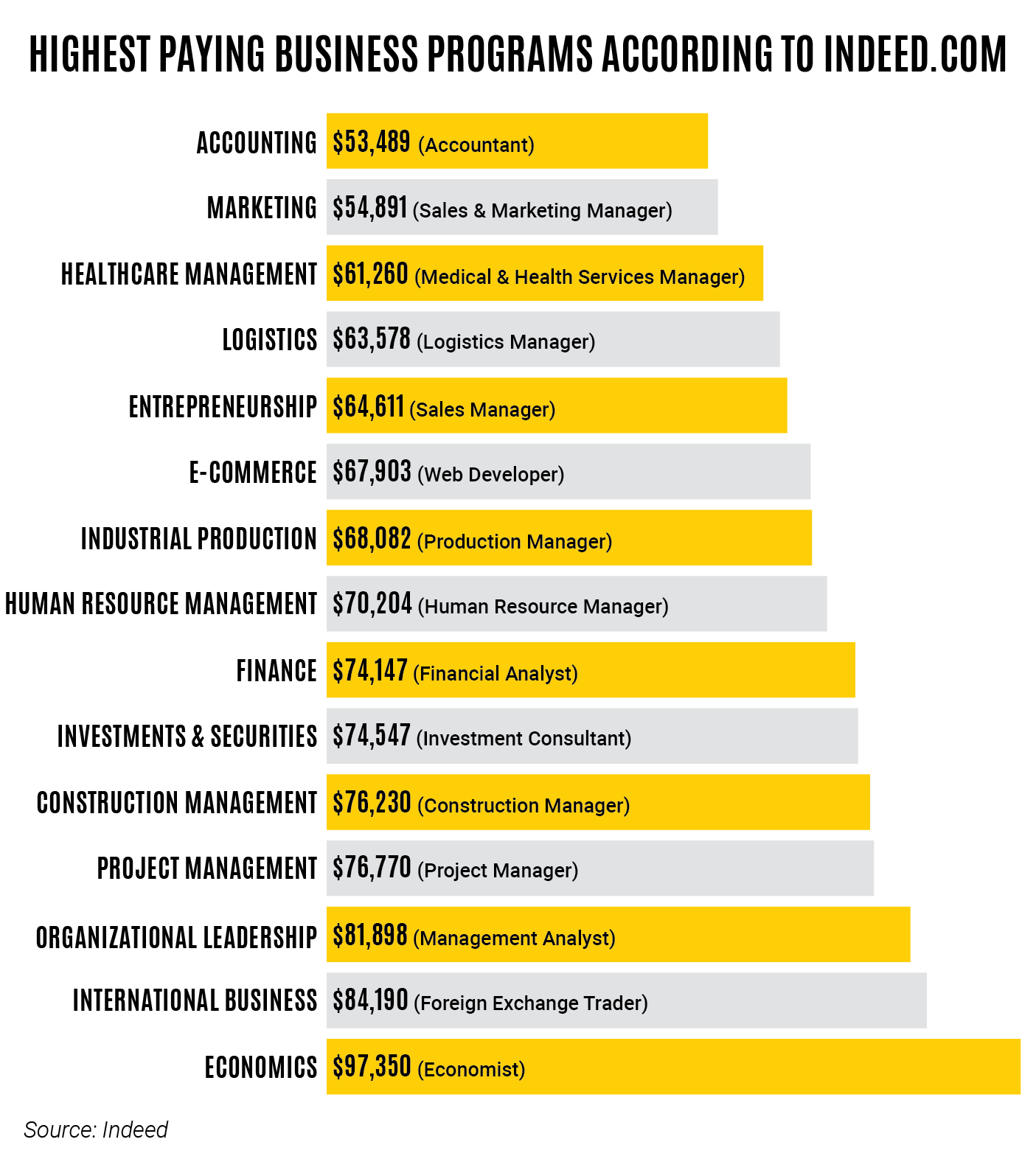
In an increasingly competitive global economy, the pursuit of higher education is often viewed through the lens of potential return on investment. For aspiring professionals considering a career in business, a critical question frequently arises: “What business degree makes the most money?” While there’s no single, universally definitive answer, as earning potential is influenced by a myriad of factors beyond the degree itself, certain specializations consistently demonstrate higher salary potential and greater financial rewards. This comprehensive exploration delves into the various facets of business education, identifying the degrees that typically lead to the most lucrative careers, alongside the essential complementary elements that truly unlock peak financial success.
Decoding the Business Degree Landscape: A Financial Perspective
The world of business degrees is vast and multifaceted, encompassing disciplines from marketing to finance, human resources to supply chain management. Each path offers a unique set of skills and career opportunities, with varying salary trajectories. Understanding this landscape from a purely financial viewpoint is the first step in making an informed educational choice.
The Breadth of Business Education
A Bachelor of Business Administration (BBA) or a Bachelor of Science in Business (BSB) provides a foundational understanding of core business principles, including accounting, economics, management, and marketing. While these general degrees are valuable, specialized business degrees often lead to higher initial salaries and accelerated career progression in specific, high-demand sectors. The key differentiator lies in the depth of specialized knowledge and quantitative skills acquired, which are highly prized by employers in financially rewarding roles.
Understanding Salary Expectations vs. Starting Salaries
It’s crucial to distinguish between starting salaries and long-term earning potential. While a business degree might open doors to a decent entry-level position, the true financial impact often materializes five, ten, or even twenty years into a career. Degrees that equip graduates with highly specialized, quantitative, or strategic skills tend to offer not only strong starting salaries but also a steeper salary growth curve, leading to significantly higher lifetime earnings. These are the degrees we will focus on, as they represent the most robust financial investments in education.
High-Value Business Specializations: Pathways to Peak Earnings
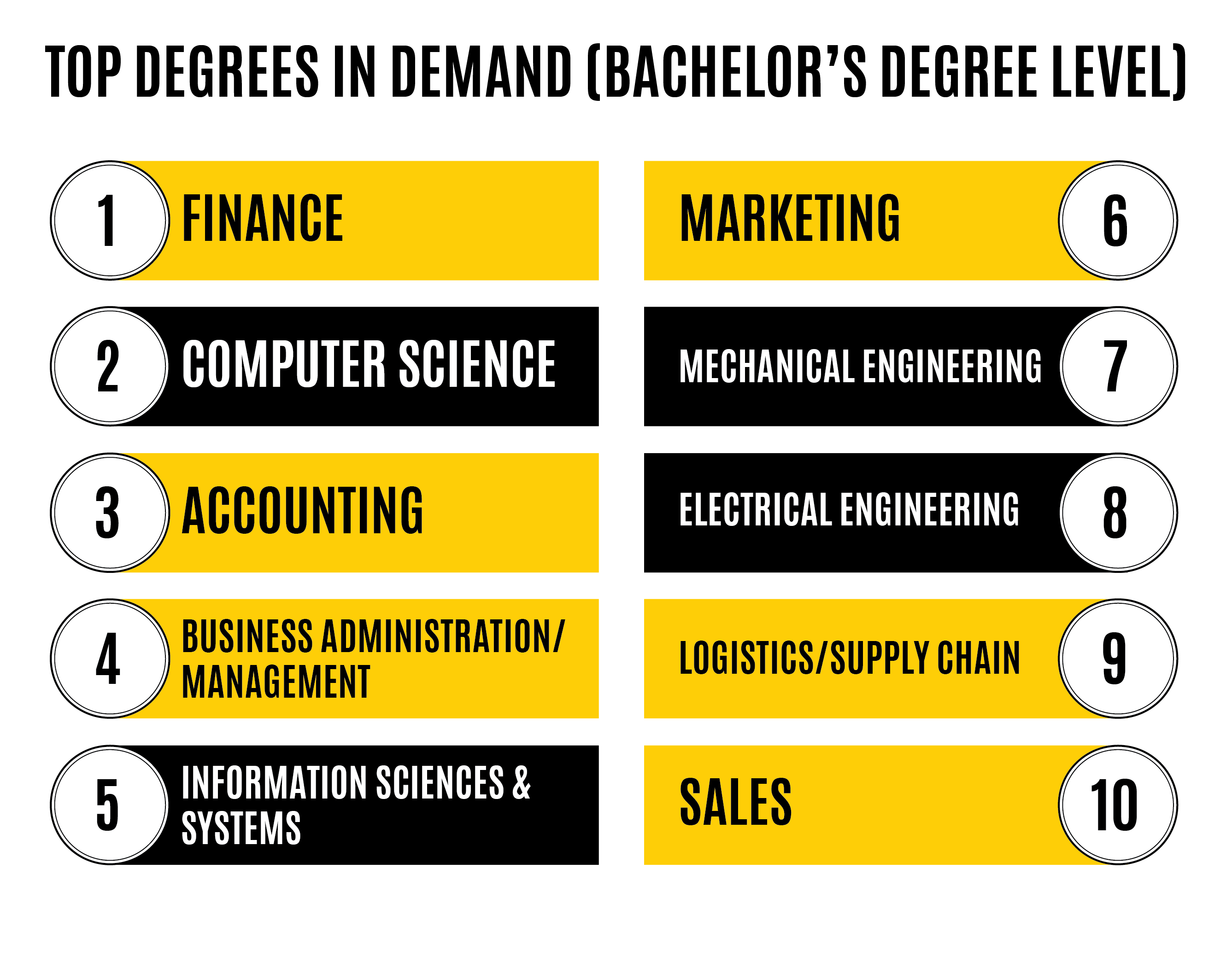
When examining business degrees through the lens of maximum financial return, several specializations consistently rise to the top, driven by market demand, the complexity of skills required, and the direct impact these roles have on an organization’s bottom line.
Finance: Investment Banking, Private Equity, and Portfolio Management
A degree in Finance, particularly with a strong emphasis on quantitative analysis, financial modeling, and risk management, consistently ranks among the highest-paying business specializations. Graduates often pursue careers in:
- Investment Banking: Advising corporations on mergers, acquisitions, and capital raising, known for exceptionally high compensation.
- Private Equity: Investing in and managing companies with the goal of increasing their value, offering lucrative profit-sharing opportunities.
- Hedge Funds: Managing aggressive investment portfolios for high-net-worth individuals and institutions.
- Portfolio Management: Overseeing investment portfolios for clients, requiring deep market knowledge and strategic thinking.
- Corporate Finance: Managing the financial activities of a corporation, including capital allocation, budgeting, and financial planning.
These roles demand rigorous analytical abilities, long hours, and a high-stakes environment, but the financial rewards can be substantial, often reaching six figures within a few years of graduation and multi-million dollar compensation at senior levels.
Business Analytics & Data Science: The Power of Information
In the digital age, data is king, and professionals who can extract insights from vast datasets are invaluable. A degree in Business Analytics, Data Science, or a related quantitative field, often housed within business schools, is a hot commodity. These programs equip students with skills in statistical analysis, predictive modeling, machine learning, and data visualization. Graduates are sought after for roles such as:
- Data Scientist: Developing and implementing algorithms to solve complex business problems.
- Business Intelligence Analyst: Translating data into actionable insights for strategic decision-making.
- Quantitative Analyst (Quant): Applying mathematical and statistical methods to financial and risk management problems.
The demand for these skills far outstrips supply, leading to high salaries, particularly as companies increasingly rely on data-driven strategies for growth and efficiency. These roles are critical for optimizing revenue, reducing costs, and gaining a competitive edge, making them highly valued.
Supply Chain Management: Optimizing Global Operations
Often underestimated in terms of its financial impact, a degree in Supply Chain Management has become increasingly lucrative, especially in a globalized and complex economy. Professionals in this field are responsible for optimizing the entire lifecycle of a product, from raw materials to consumer delivery, encompassing logistics, procurement, and operations. Their efficiency directly impacts a company’s profitability and competitive advantage. High-paying roles include:
- Supply Chain Director/Manager: Overseeing all aspects of the supply chain to maximize efficiency and minimize costs.
- Logistics Manager: Managing the storage and movement of goods.
- Procurement Manager: Sourcing and purchasing materials and services.
- Operations Analyst: Identifying areas for process improvement within the supply chain.
The strategic importance of a well-managed supply chain, highlighted by recent global disruptions, has significantly driven up compensation for skilled professionals in this domain.
Management Information Systems (MIS): Bridging Business and Tech
A degree in Management Information Systems (MIS) sits at the intersection of business and technology, making it a powerful specialization for high earners. MIS professionals understand both business processes and the technological systems that support them. They are crucial for implementing and managing technology solutions that drive business efficiency and innovation. Career paths include:
- IT Consultant: Advising organizations on technology strategies and solutions.
- Systems Analyst: Designing and implementing information systems.
- Project Manager (IT): Leading technology-related projects from conception to completion.
- Cybersecurity Analyst (with a business context): Protecting organizational data and systems, a rapidly growing and highly paid field.
The ability to translate complex technical concepts into business value and manage technological assets makes MIS graduates incredibly valuable, commanding high salaries as they help organizations navigate digital transformation.
Actuarial Science: Quantifying Risk for Financial Security
While highly specialized, Actuarial Science is arguably one of the most financially rewarding business-related degrees. Actuaries are experts in risk assessment and financial modeling, primarily working in the insurance and pension industries. They use advanced mathematical, statistical, and financial theories to analyze future events, such as life expectancy, accident rates, and property damage, to help businesses manage financial risk. The rigorous professional exams and the highly specialized nature of the work contribute to exceptional earning potential. Roles include:
- Life Actuary: Analyzing mortality, morbidity, and longevity for life insurance and pension products.
- Property and Casualty Actuary: Assessing risks for auto, home, and other non-life insurance.
- Health Actuary: Focusing on health insurance products and healthcare costs.
The analytical rigor and critical decision-making responsibilities in this field make actuaries some of the highest-paid professionals with a business-related background.
Beyond the Diploma: Key Factors Driving Financial Success

While the choice of degree specialization is paramount, it is by no means the sole determinant of financial success. A constellation of other factors significantly influences earning potential throughout a career.
The Impact of Industry and Company Size
Even within the same specialization, salaries can vary dramatically based on the industry and the size of the employer. For instance, a finance graduate working for a major investment bank in New York will likely earn substantially more than one working for a small regional accounting firm. Similarly, a supply chain manager at a multinational tech giant will typically command a higher salary than one at a local manufacturing company. High-growth industries (e.g., technology, biotechnology, renewable energy) and large, established corporations often offer higher compensation packages due to greater resources and more complex operational demands.
Geographical Location and Cost of Living Adjustments
Where you choose to work also plays a significant role. Major financial hubs like New York, London, Singapore, and Hong Kong, or tech centers like Silicon Valley and Seattle, offer some of the highest salaries for business professionals. However, these areas also come with a higher cost of living. It’s important to consider “real income” – how much your salary allows you to save and invest after expenses – rather than just the nominal figure. Some graduates might find greater financial freedom in cities with a strong job market but a lower cost of living.
Experience, Skill Development, and Continuous Learning
A degree is an entry ticket; sustained financial growth comes from continuous skill development and accumulating valuable experience. Employers highly value professionals who demonstrate leadership potential, problem-solving abilities, communication skills, and adaptability. Investing in certifications (e.g., CFA for finance, PMP for project management, various data analytics certifications), pursuing advanced degrees (like an MBA), and staying abreast of industry trends through continuous learning are critical for accelerating salary growth. The ability to evolve with market demands ensures long-term career resilience and financial progression.
Networking and Personal Branding
While “Personal Branding” falls under the Brand category, its financial impact cannot be overstated. Building a robust professional network and cultivating a strong personal brand within your industry can open doors to new opportunities, promotions, and significantly higher compensation. Referrals from trusted contacts often lead to interviews for exclusive, high-paying roles that are not publicly advertised. A strong professional reputation, built through consistent performance and effective networking, acts as a powerful lever for financial advancement.
Maximizing Your Return on Education Investment (ROI)
Considering the substantial investment of time and money in a business degree, strategizing to maximize its return is crucial.
Strategic Internship and Co-op Experiences
Internships and co-op programs are invaluable for gaining practical experience, building a professional network, and often securing full-time job offers upon graduation. These experiences provide a competitive edge, allowing graduates to hit the ground running and negotiate higher starting salaries. Focusing on internships with reputable companies in high-paying sectors during your studies can significantly boost your post-graduation earning potential.
Pursuing Graduate Degrees: MBA and Specialized Masters
For many business professionals, an MBA (Master of Business Administration) is a significant accelerator for career advancement and salary growth, especially from top-tier programs. An MBA can pivot careers, deepen expertise, and unlock senior leadership roles. Similarly, specialized master’s degrees, such as a Master of Finance (MFin), Master of Science in Business Analytics (MSBA), or Master of Science in Supply Chain Management (MSSCM), can provide advanced, highly focused skills that are in high demand and command premium salaries. The financial ROI on a well-chosen graduate degree, particularly after gaining some professional experience, can be very substantial.
Entrepreneurship and Alternative Income Streams
While most business degrees prepare individuals for corporate roles, they also equip aspiring entrepreneurs with the knowledge and skills to launch their own ventures. Entrepreneurship, though risky, offers unlimited earning potential. Furthermore, the analytical and strategic thinking developed through a business degree can be applied to generating alternative income streams, such as consulting, freelance work, or investing, providing additional pathways to financial success beyond a traditional salary.
The Holistic View: More Than Just a Number
Ultimately, while the financial rewards of a degree are a critical consideration, the most successful and fulfilling careers often blend high earning potential with personal passion and purpose.
Aligning Passion with Profit
Choosing a degree solely based on salary potential without considering your interests, strengths, and long-term career satisfaction can lead to burnout and dissatisfaction. The degrees identified as high-earning often require intense dedication and a genuine interest in the subject matter. Finding a specialization where your passion aligns with lucrative opportunities can lead to sustained motivation, excellence, and, consequently, greater financial success. A happy, engaged professional is often a more productive and higher-earning one.
Long-Term Financial Planning and Wealth Building
Regardless of the degree chosen, true financial success is not just about earning a high salary, but also about how that income is managed. A strong understanding of personal finance, investing, saving, and wealth creation strategies—many of which are foundational in a good business education—is essential for converting high earnings into long-term financial security and independence. The most money is “made” not just in the paycheck, but in how intelligently that money is invested and grown over time.
In conclusion, while specializations in Finance (especially investment banking), Business Analytics, Supply Chain Management, Management Information Systems, and Actuarial Science generally lead the pack in terms of immediate and long-term earning potential, a holistic approach to career planning, continuous skill development, strategic networking, and sound financial management will ultimately determine the true extent of financial success derived from any business degree.
aViewFromTheCave is a participant in the Amazon Services LLC Associates Program, an affiliate advertising program designed to provide a means for sites to earn advertising fees by advertising and linking to Amazon.com. Amazon, the Amazon logo, AmazonSupply, and the AmazonSupply logo are trademarks of Amazon.com, Inc. or its affiliates. As an Amazon Associate we earn affiliate commissions from qualifying purchases.