
The intricate dance of atoms forms the bedrock of our technological landscape. From the microprocessors powering our devices to the advanced materials enabling next-generation infrastructure, a deep understanding of elemental behavior is paramount. Among the fundamental concepts in chemistry, the nature of diatomic molecules holds particular significance, especially when considering their widespread presence and influence on technological innovation. While the term “diatomic atom” is a slight misnomer (as diatomic molecules are formed by two atoms bonded together, not an atom itself), the concept refers to the elements that naturally exist as molecules composed of two identical atoms. These elements, seven in total, are not merely academic curiosities; they are foundational to many of the technologies we rely on daily and those poised to shape our future.

This exploration delves into the nature of these seven diatomic elements, not just from a theoretical standpoint, but through the lens of their tangible impact on technological progress. We will uncover why these elements choose to pair up, how this bonding influences their properties, and most importantly, how these properties are harnessed and exploited across a diverse range of cutting-edge technological applications.
The Chemistry of Pairing: Why Certain Elements Exist as Diatomic Molecules
Atoms, in their quest for stability, often engage in the formation of chemical bonds. The driving force behind this phenomenon is the desire to achieve a full outer electron shell, mirroring the electron configuration of noble gases, which are exceptionally stable. This pursuit of stability can lead to atoms sharing or transferring electrons, creating molecules. Diatomic molecules are a specific manifestation of this principle, where two atoms of the same element bond together.
The Octet Rule and Electron Configuration
The octet rule is a fundamental principle that explains the tendency of atoms to gain, lose, or share electrons to achieve a stable configuration of eight valence electrons. Elements that have six or seven valence electrons, such as those in Group 16 (like Oxygen) and Group 17 (like Fluorine) of the periodic table, are prime candidates for forming diatomic molecules. By sharing one or two electrons with an identical atom, they can each achieve a stable octet. For instance, oxygen has six valence electrons. Two oxygen atoms can form a double bond, where they share two pairs of electrons. Each oxygen atom then effectively has eight valence electrons, leading to a stable O₂ molecule. Similarly, halogens like fluorine (seven valence electrons) can form a single bond, sharing one pair of electrons to achieve an octet.
Electronegativity and Nonpolar Covalent Bonds
Electronegativity is a measure of an atom’s attraction for electrons in a chemical bond. When two atoms of the same element bond, they have identical electronegativities. This means that the electrons in the bond are shared equally between the two atoms. This type of bond is called a nonpolar covalent bond. The absence of a significant charge separation across the bond gives these diatomic molecules unique properties. This inherent symmetry and the strength of the covalent bond contribute to their stability and influence how they interact with other substances and how they can be manipulated in technological processes.
The Seven Elemental Survivors: Identifying the Diatomic Duo
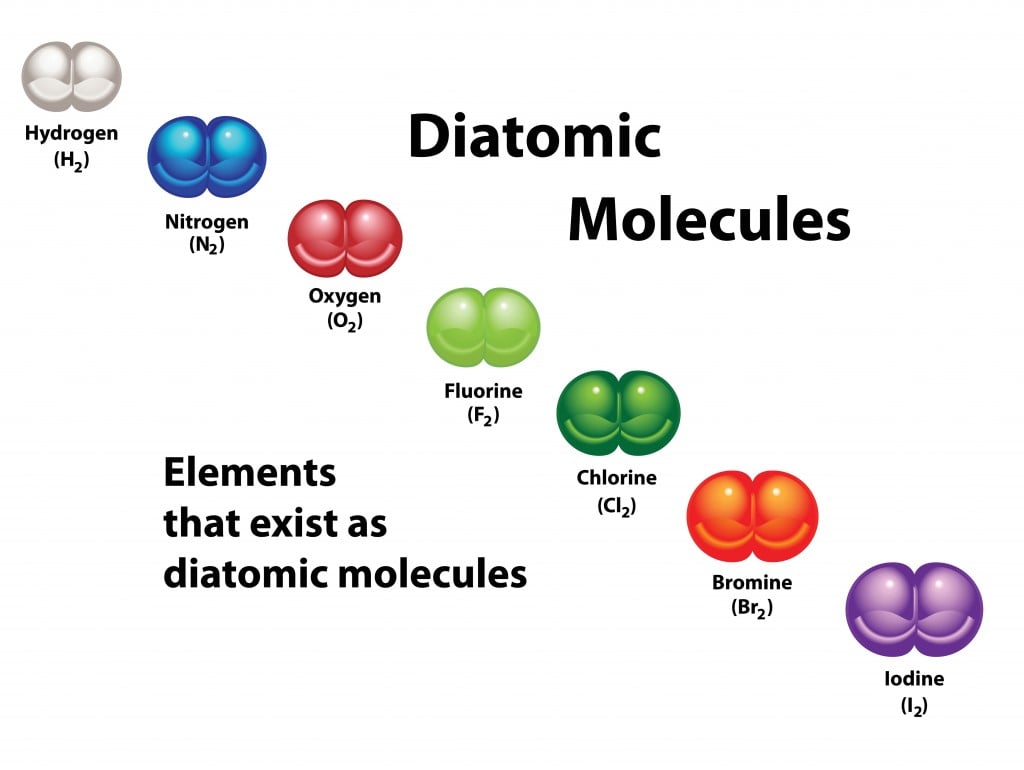
While many elements can form diatomic molecules under specific, often extreme, conditions, there are seven elements that naturally and readily exist as diatomic molecules under standard temperature and pressure. These are:
- Hydrogen (H₂)
- Nitrogen (N₂)
- Oxygen (O₂)
- Fluorine (F₂)
- Chlorine (Cl₂)
- Bromine (Br₂)
- Iodine (I₂)
These elements are found as diatomic molecules in their elemental form and are crucial components of our atmosphere and biosphere, underscoring their fundamental importance in both natural systems and human-engineered technologies. Understanding their diatomic nature is the first step in appreciating their technological utility.
Technological Applications: Harnessing the Power of Diatomic Molecules
The inherent properties of diatomic molecules – their stability, reactivity (or lack thereof), and the energy associated with their bonds – make them indispensable in a vast array of technological applications. Their influence spans from basic manufacturing processes to highly sophisticated scientific instruments and advanced materials.
The Air We Breathe and Beyond: Nitrogen and Oxygen in Industry
Nitrogen (N₂) and Oxygen (O₂), the two primary components of Earth’s atmosphere, are perhaps the most ubiquitously applied diatomic molecules in technology. Their abundance and distinct chemical behaviors are leveraged in numerous industrial processes.
Inert Atmospheres and Combustion Control: The Role of Nitrogen
Nitrogen gas (N₂) is known for its inertness. Its triple bond between the two nitrogen atoms is exceptionally strong, making it difficult to break. This property is critical for creating inert atmospheres in various industrial settings. In the manufacturing of semiconductors and electronics, for instance, processing often occurs at high temperatures. Exposing sensitive components to air (which contains oxygen) would lead to oxidation and failure. By flushing equipment with nitrogen gas, manufacturers create an oxygen-free environment, preventing unwanted reactions and ensuring the integrity of the delicate circuitry.
Furthermore, nitrogen is used to control combustion. In certain high-temperature industrial furnaces or in the automotive industry, controlled atmospheres are necessary for efficient and safe operation. Nitrogen can displace oxygen, slowing down or preventing combustion, which is vital for safety and process regulation. In food packaging, nitrogen is used to displace oxygen, extending the shelf life of products by preventing oxidation and the growth of aerobic bacteria.
Oxygen’s Energetic Role: Welding, Medicine, and Rocketry

Oxygen (O₂), in stark contrast to nitrogen, is highly reactive and a powerful oxidizer. This reactivity is harnessed for essential technological purposes. The most common application is in welding and cutting metals. Oxy-acetylene torches, which use a mixture of oxygen and acetylene, generate extremely high temperatures capable of melting and fusing metals, a cornerstone of construction and manufacturing.
In the medical field, medical-grade oxygen is a life-saving gas, administered to patients with respiratory issues. Its role in cellular respiration is fundamental, and its therapeutic application is a testament to its vital importance. Beyond Earth, oxygen plays a critical role in rocket propulsion. Liquid oxygen (LOX) is a common oxidizer in rocket engines, providing the necessary oxygen to burn fuel efficiently and generate the thrust required for space exploration. The controlled combustion of fuel with oxygen is a precisely engineered technological marvel.
Halogens in Action: From Disinfection to Advanced Materials
The diatomic halogens – Fluorine (F₂), Chlorine (Cl₂), Bromine (Br₂), and Iodine (I₂) – each possess unique reactivities that are exploited in various technological domains, though their handling often requires significant safety precautions due to their corrosive and toxic nature.
Sanitation and Synthesis: Chlorine and Fluorine
Chlorine (Cl₂) is a powerful disinfectant, widely used in water treatment to kill harmful bacteria and viruses, ensuring public health. Its application in swimming pools and municipal water systems is a large-scale technological deployment safeguarding millions. Beyond sanitation, chlorine is a crucial reagent in the synthesis of numerous chemicals, including plastics like PVC (polyvinyl chloride), solvents, and pharmaceuticals.
Fluorine (F₂), the most electronegative element, is extremely reactive. While elemental fluorine is handled with extreme caution, its compounds are invaluable. Fluorocarbons, derived from fluorine, are used in refrigerants, non-stick coatings (like Teflon), and as propellants. The development of these materials has revolutionized kitchenware, industrial processes, and various consumer products, demonstrating how the controlled harnessing of highly reactive diatomic elements leads to significant technological advancements.
Specialized Applications: Bromine and Iodine
Bromine (Br₂) and its compounds have found applications in fire retardants, helping to prevent the spread of flames in materials like plastics and textiles. While environmental concerns have led to some restrictions, its historical and continued use in specific applications highlights its technological utility. Iodine (I₂), in its diatomic form, has applications in antiseptics and as a key component in thyroid hormone production, essential for human health. In photography, historically, silver iodide was used in photographic emulsions.
The Future Frontier: Diatomic Molecules in Emerging Technologies
The ongoing quest for innovation continually uncovers new ways to leverage the properties of diatomic molecules. As we push the boundaries of materials science, nanotechnology, and energy, these fundamental chemical entities remain at the forefront.
Nanotechnology and Materials Science: Precision Engineering with Diatomic Building Blocks
At the nanoscale, the behavior of molecules becomes even more critical. The ability to precisely control the arrangement and interaction of atoms and molecules is the essence of nanotechnology. Diatomic molecules serve as fundamental building blocks for novel nanomaterials. For instance, specific arrangements of diatomic molecules can form the basis of carbon nanotubes or other advanced structures with unique electrical, thermal, and mechanical properties.
The controlled deposition of diatomic gases, like nitrogen or oxygen, is fundamental to surface modification techniques. This process can alter the properties of materials, making them more durable, conductive, or biocompatible. For example, in the medical device industry, surfaces can be treated with diatomic gases to improve their integration with biological tissues, reducing rejection rates. The precise engineering of interfaces at the atomic level, often involving diatomic species, is crucial for the development of next-generation sensors, catalysts, and energy storage devices.
Advanced Catalysis and Energy Conversion: Optimizing Chemical Reactions
Diatomic molecules, particularly oxygen and nitrogen, play a pivotal role in catalysis, a field that underpins a vast segment of chemical manufacturing and energy production. Catalysts are substances that speed up chemical reactions without being consumed themselves. Many industrial catalysts rely on diatomic molecules for their effectiveness.
For example, in the Haber-Bosch process for ammonia synthesis, diatomic nitrogen is reacted with hydrogen under high pressure and temperature using an iron catalyst. Ammonia is a crucial component in fertilizers, making this process vital for global food security. Similarly, catalytic converters in automobiles use diatomic oxygen and precious metal catalysts to convert harmful exhaust gases like carbon monoxide and nitrogen oxides into less harmful substances, a critical application for environmental technology.
As we explore more sustainable energy solutions, diatomic molecules are central to research in fuel cells and electrochemical processes. The efficient splitting of water (H₂O) into hydrogen and oxygen, and the subsequent use of these diatomic species in energy conversion devices, relies on understanding and controlling their chemical behavior. The development of new catalysts that can efficiently facilitate these reactions, often involving diatomic intermediates, is a key area of research, directly impacting the future of energy technology.
Conclusion: The Enduring Significance of Diatomic Elements
The seven diatomic elements – hydrogen, nitrogen, oxygen, fluorine, chlorine, bromine, and iodine – are far more than just entries in a chemistry textbook. They are the unsung heroes of countless technological advancements. Their inherent tendency to bond as pairs, driven by the fundamental principles of electron configuration and electronegativity, imbues them with unique and exploitable properties.
From the inert atmospheres that enable the creation of our most sophisticated electronic devices, to the reactive power of oxygen that fuels welding and rocket engines, and the disinfecting prowess of chlorine that safeguards public health, diatomic molecules are deeply woven into the fabric of modern technology. As we venture into new frontiers of nanotechnology, advanced materials, and sustainable energy, the understanding and manipulation of these fundamental diatomic pairings will undoubtedly continue to drive innovation, shaping the technologies that define our present and our future. Their enduring significance lies not just in their existence, but in our ability to harness their predictable yet powerful behaviors for the betterment of society.
aViewFromTheCave is a participant in the Amazon Services LLC Associates Program, an affiliate advertising program designed to provide a means for sites to earn advertising fees by advertising and linking to Amazon.com. Amazon, the Amazon logo, AmazonSupply, and the AmazonSupply logo are trademarks of Amazon.com, Inc. or its affiliates. As an Amazon Associate we earn affiliate commissions from qualifying purchases.