
The term “metazoan” might at first glance conjure images of ancient life forms or obscure biological classifications. Yet, beneath the scientific nomenclature lies a fundamental concept that resonates deeply within the realm of technology: the emergence of complex, multi-cellular systems from simpler origins. While biological metazoans are defined by their intricate organization, coordinated functions, and distinct cell differentiation, understanding them can provide a powerful lens through which to examine the development, architecture, and operational dynamics of advanced technological ecosystems. This article explores the concept of metazoans not as a biological study, but as a compelling analogy for understanding the fundamental principles that underpin our increasingly complex technological world.

The Biological Blueprint: From Single Cells to Integrated Organisms
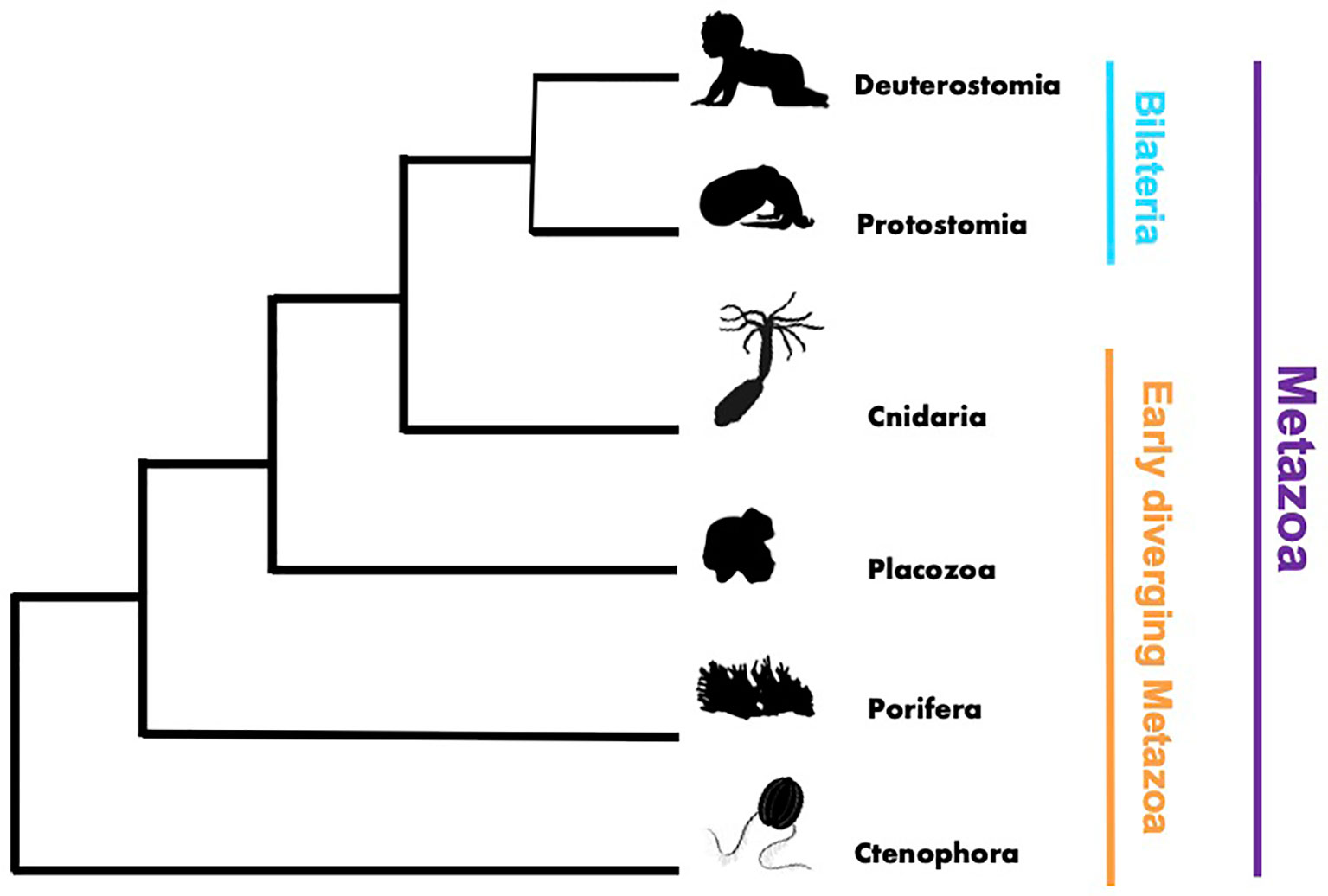
To draw parallels with technology, we must first grasp the core essence of biological metazoans. These are the multicellular animals that inhabit our planet, from the simplest sponges to the most complex vertebrates. Their defining characteristic is the organization of specialized cells into tissues, organs, and organ systems, all working in concert to maintain the life and function of the entire organism.
Cell Specialization and Differentiation: The Foundation of Complexity
At the most basic level, metazoans are built upon the principle of cell specialization. Unlike single-celled organisms that perform all life functions within a single cellular boundary, metazoan cells evolve to perform specific roles. Nerve cells transmit signals, muscle cells facilitate movement, and digestive cells process nutrients. This division of labor is crucial; without it, a complex organism could not exist. Each cell, though specialized, is still part of a larger whole, contributing to the organism’s overall survival and reproduction.
- Technological Parallel: Specialized Software Modules and Microservices
In the technological landscape, this concept of specialization is mirrored in the architecture of modern software. Instead of monolithic applications that attempt to do everything, we see the rise of modular design, microservices, and specialized libraries. Each module or service is designed for a specific function, much like a biological cell. A database service handles data storage and retrieval, an authentication service manages user logins, and a payment gateway processes transactions. These specialized components, when integrated and communicating effectively, form a robust and scalable application, analogous to how differentiated cells form a functional organism. The efficiency and resilience of the system depend on each specialized unit performing its designated task optimally.
Intercellular Communication and Coordination: The Nervous System of Technology
The seamless functioning of a metazoan relies on intricate communication networks. The nervous system and endocrine system transmit signals, regulate processes, and ensure that different parts of the body respond appropriately to internal and external stimuli. This coordinated communication is vital for everything from simple reflexes to complex behaviors.
- Technological Parallel: APIs, Messaging Queues, and Network Protocols
In technology, the equivalent of this intricate communication network is found in Application Programming Interfaces (APIs), messaging queues, and network protocols. APIs act as standardized channels through which different software components can exchange data and commands. Messaging queues facilitate asynchronous communication, allowing services to send and receive information without direct, real-time dependency. Network protocols, like TCP/IP, provide the underlying framework for data transmission across vast distances. These technologies enable the diverse, specialized components of a complex tech system to interact, share information, and coordinate their actions, much like the biological signaling pathways within a metazoan. The speed and reliability of this communication directly impact the system’s performance and responsiveness.
Hierarchical Organization and Emergent Properties: The Organisms of the Digital Realm
Metazoans exhibit hierarchical organization, with cells forming tissues, tissues forming organs, and organs forming organ systems. This layered structure allows for increasing complexity and specialized functions at each level. Furthermore, the interaction of these components gives rise to emergent properties – characteristics of the whole organism that are not present in any single part. For example, consciousness is an emergent property of a complex nervous system, not of individual neurons.
- Technological Parallel: Distributed Systems, Cloud Architectures, and AI Frameworks
This hierarchical structure and the concept of emergent properties are profoundly evident in modern technological architectures, particularly in distributed systems and cloud computing. A cloud platform, for instance, is composed of countless interconnected servers, storage units, and networking devices. At a higher level, these form data centers, and at an even higher level, they form a global infrastructure. Each component has its specific role, but their collective operation enables vast computational power, data storage, and a suite of services that no single machine could provide. Similarly, advanced Artificial Intelligence (AI) frameworks, like deep neural networks, are built from layers of interconnected computational units. The training and interaction of these units lead to emergent capabilities in pattern recognition, natural language processing, and decision-making, which are far beyond the sum of their individual computational parts.
The Evolutionary Trajectory: Adapting and Evolving Technological Systems
The biological world is a testament to evolution and adaptation. Metazoans have continuously evolved to better suit their environments, developing new traits and functionalities for survival. This process of adaptation, driven by necessity and innovation, has a strong parallel in the technology sector.
Adaptation to Environmental Pressures: The Drive for Innovation
Biological organisms adapt to changing environmental conditions, such as shifts in climate, availability of food, or presence of predators. This adaptation often involves developing new biological mechanisms or refining existing ones.
- Technological Parallel: Responding to Market Demands, Security Threats, and Scalability Needs
In the technology industry, “environmental pressures” take the form of evolving market demands, emerging security threats, new competitive landscapes, and the ever-increasing need for scalability. Companies and developers must constantly adapt their technologies to meet these challenges. A software platform that is not secure will be quickly abandoned. An application that cannot scale to handle a surge in users will fail. The constant push for faster processing, more efficient data management, and improved user experiences are all driven by these technological “environmental pressures.” Just as biological evolution favors organisms that can adapt, technological progress favors systems and platforms that can evolve and remain relevant. This often leads to rapid cycles of innovation, updates, and the development of entirely new technological paradigms.
The Role of Feedback Loops: Optimizing Performance and Efficiency
Biological systems employ intricate feedback loops to maintain homeostasis and optimize functions. For example, the body regulates blood sugar levels through hormonal feedback mechanisms.
- Technological Parallel: Performance Monitoring, A/B Testing, and Machine Learning Optimization
Technology leverages similar feedback loops to optimize performance and efficiency. Performance monitoring tools continuously collect data on system usage, response times, and error rates. This data is then used to identify bottlenecks, diagnose issues, and inform development decisions. A/B testing allows developers to compare different versions of a feature or interface to determine which performs better, based on user interaction data. In machine learning, feedback is intrinsic; algorithms learn from data and adjust their parameters based on the accuracy of their predictions or the success of their actions. These feedback mechanisms are crucial for iterative improvement, ensuring that technological systems become more robust, efficient, and user-friendly over time, mirroring the continuous optimization observed in biological evolution.
The Metazoan Mindset: Designing for Resilience and Interconnectivity
The principles embodied by metazoans offer a valuable framework for designing and managing complex technological systems. By considering the lessons learned from billions of years of biological evolution, we can build more resilient, adaptable, and effective technologies.
Redundancy and Fault Tolerance: Biological Safeguards in Digital Systems
Biological organisms often possess redundancy in their systems. For instance, we have two kidneys, and while one can often suffice, the presence of two offers a safeguard against failure. This built-in redundancy enhances the organism’s resilience.
- Technological Parallel: Distributed Databases, Load Balancing, and Disaster Recovery
In technology, redundancy and fault tolerance are paramount for ensuring continuous operation and preventing catastrophic failures. Distributed databases store data across multiple servers, so if one server fails, others can still provide access. Load balancing distributes incoming traffic across multiple servers, preventing any single server from becoming overwhelmed. Disaster recovery plans and backup systems ensure that data and services can be restored in the event of a major outage or disaster. These technological safeguards directly mirror the biological principle of redundancy, aiming to maintain functionality even when individual components fail, thereby enhancing the overall resilience of the system.
Interdependence and Ecosystems: The Symbiotic Relationships of Technology
Metazoans, as complex entities, exist within larger ecosystems and often have symbiotic or interdependent relationships with other organisms. Their survival is linked to the health of their environment and the availability of resources.
- Technological Parallel: Integrated Software Suites, Cloud Service Ecosystems, and Open Source Collaboration
Technological systems are increasingly interconnected, forming intricate ecosystems. Integrated software suites, where different applications work seamlessly together (e.g., a CRM integrating with an email marketing platform), demonstrate interdependence. Cloud computing platforms have fostered vast ecosystems of services and applications that rely on each other for functionality. Open-source collaboration, where developers contribute to shared projects, exemplifies a form of technological symbiosis, where collective effort leads to more robust and feature-rich outcomes. Understanding this interdependence is crucial for building cohesive and sustainable technological solutions that can thrive within broader digital environments.

Conclusion: Embracing the Metazoan Model for Future Innovation
While the literal definition of metazoans resides in the biological sciences, the underlying principles of complexity, specialization, communication, evolution, and resilience offer a profound and applicable model for the world of technology. By drawing parallels between the biological marvel of multicellular life and the intricate architecture of our digital creations, we gain a richer understanding of how to design, build, and maintain systems that are not only functional but also adaptable and enduring. The “metazoan mindset” encourages us to think in terms of interconnected components, emergent properties, and continuous evolution, pushing the boundaries of what is possible in the ever-evolving technological landscape. As we continue to develop increasingly sophisticated technologies, the lessons from the simplest multicellular animals can serve as a guiding blueprint for building a more intelligent, resilient, and interconnected digital future.
aViewFromTheCave is a participant in the Amazon Services LLC Associates Program, an affiliate advertising program designed to provide a means for sites to earn advertising fees by advertising and linking to Amazon.com. Amazon, the Amazon logo, AmazonSupply, and the AmazonSupply logo are trademarks of Amazon.com, Inc. or its affiliates. As an Amazon Associate we earn affiliate commissions from qualifying purchases.