
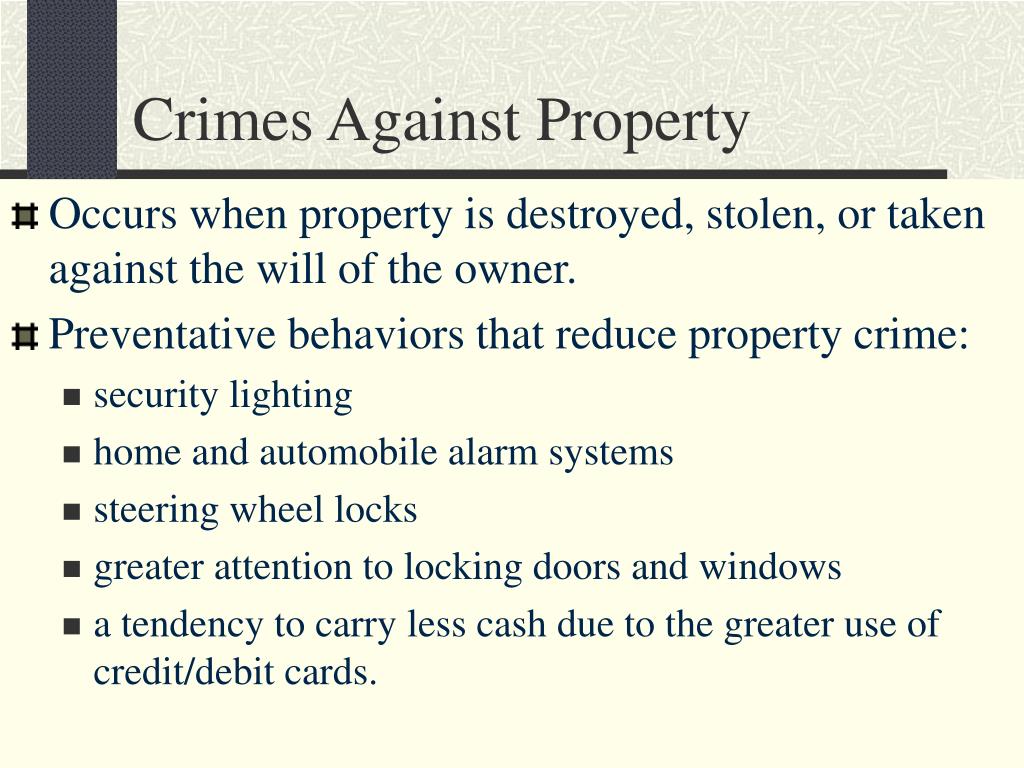
Crimes against property, also known as property crimes, encompass a broad spectrum of offenses that involve the unlawful taking, damaging, or destruction of another person’s possessions. These offenses are distinct from crimes against persons, which directly harm individuals. While the motivations behind property crimes can vary, ranging from financial necessity to malicious intent, their impact can be significant, causing financial loss, emotional distress, and a sense of insecurity for victims. Understanding the nuances of these crimes is crucial for individuals, businesses, and law enforcement alike, as it informs prevention strategies, legal responses, and the broader societal implications of economic security. This exploration delves into the various facets of property crimes, examining their types, motivations, legal ramifications, and the evolving landscape of their prevention and prosecution.

The Spectrum of Property Crimes
Property crimes are not a monolithic category but rather a collection of distinct offenses, each with its own elements and legal definitions. These offenses are generally categorized based on the nature of the act and the intent of the perpetrator.
Theft and Larceny: The Unlawful Taking
At the core of many property crimes lies the concept of theft or larceny, which is the unlawful taking and carrying away of personal property from another person’s possession with the intent to permanently deprive them of it. The value of the stolen property often dictates the severity of the charge, with grand larceny typically involving higher-value items and petty larceny encompassing less valuable goods.
Shoplifting: A Common Offense
Shoplifting is a prevalent form of larceny that occurs when an individual conceals merchandise within a retail establishment with the intent to steal it. Retailers often employ various security measures, including surveillance cameras, security tags, and trained loss prevention personnel, to deter and apprehend shoplifters. The economic impact of shoplifting on businesses can be substantial, contributing to higher prices for consumers and, in some cases, business closures.
Burglary: Unlawful Entry and Intent
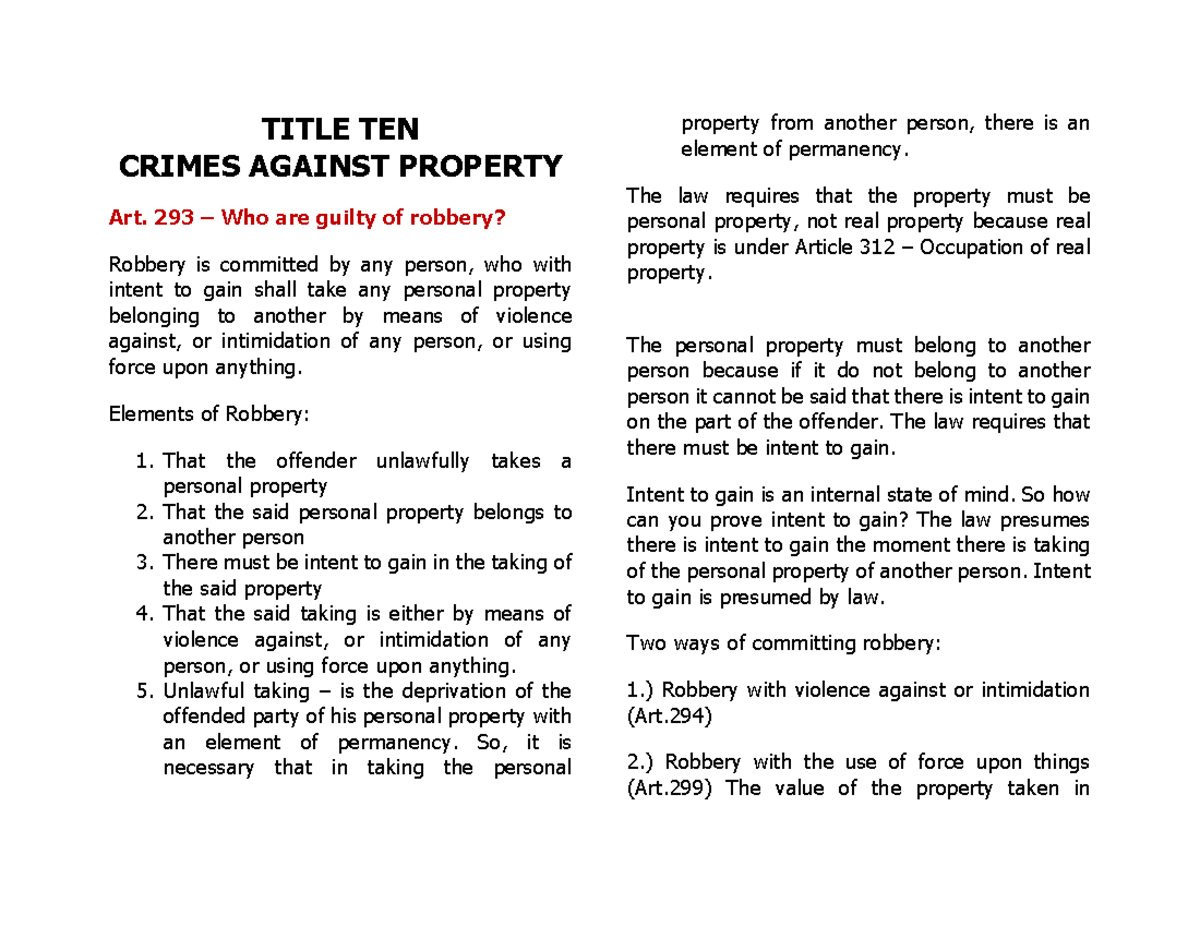
Burglary involves the unlawful entry into a building or structure with the intent to commit a crime therein, typically theft. The emphasis here is on the intent to commit a crime upon entry, even if the intended crime is not ultimately carried out. The presence of a dwelling or the commission of a felony during the burglary can elevate the charge to aggravated burglary, carrying more severe penalties. Modern burglary prevention often involves robust physical security measures like reinforced doors and windows, alarm systems, and motion detectors.
Robbery: Theft with Force or Threat of Force
Robbery distinguishes itself from simple theft by the use or threat of force or violence against a person during the commission of the theft. This element of personal intimidation makes robbery a more serious offense, often classified as a violent crime, despite its property-oriented objective. The psychological impact on victims of robbery can be profound, extending beyond financial loss.
Vandalism and Destruction of Property: Malicious Damage
Beyond the taking of property, crimes against property also include the willful or malicious destruction, damage, or defacement of another’s property. These acts, often referred to as vandalism, can range from graffiti and property defacement to more significant destruction of buildings, vehicles, or public infrastructure.
Graffiti and Vandalism of Public and Private Property
Graffiti, while sometimes seen as artistic expression, is legally considered vandalism when it is applied to property without the owner’s permission. This can include public buildings, private residences, and vehicles. The cost of cleaning and repairing vandalized property can be substantial, impacting both individuals and municipalities. Law enforcement efforts often focus on identifying and prosecuting individuals responsible for widespread graffiti or extensive property damage.
Arson: The Malicious Burning of Property
Arson is a particularly dangerous property crime involving the intentional and malicious burning of property. This can include buildings, vehicles, or even natural landscapes. Arson is often motivated by financial gain (insurance fraud), revenge, or a desire to conceal other crimes. The inherent danger of fire makes arson a grave offense, often carrying severe penalties due to the risk of injury and loss of life. Fire investigation techniques, including the analysis of accelerants and burn patterns, are critical in prosecuting arson cases.
Fraud and Deception: Exploiting Trust
A significant category of property crimes involves the use of deceit and misrepresentation to unlawfully obtain money or property. These offenses, collectively known as fraud, exploit trust and manipulate systems for illicit gain.
Forgery: Creating False Documents
Forgery involves the creation or alteration of a document with the intent to deceive or defraud. This can include falsifying signatures on checks, creating counterfeit currency, or altering official documents. The digital age has seen an increase in sophisticated forms of forgery, including digital document manipulation and identity theft.
Embezzlement: Breach of Trust
Embezzlement occurs when an individual entrusted with property or funds misappropriates them for their own use. This crime is often committed by employees, financial officers, or individuals in positions of fiduciary responsibility. The breach of trust is a central element of embezzlement, and it can lead to significant financial losses for individuals and organizations.
Identity Theft: Stealing Personal Information
Identity theft is a rapidly growing and highly damaging property crime. It involves the unlawful acquisition and use of another person’s identifying information, such as Social Security numbers, credit card numbers, or bank account details, to commit fraud or other crimes. The consequences for victims can be far-reaching, impacting their credit, finances, and reputation. Digital security measures and awareness are paramount in combating this pervasive threat.
The Economic and Societal Impact of Property Crimes
The repercussions of property crimes extend far beyond the immediate financial loss to the victim. They contribute to increased costs for businesses, which are often passed on to consumers through higher prices. Insurance premiums can also rise in areas with higher rates of property crime. Furthermore, property crimes can erode a sense of community safety and security, leading to increased fear and a decline in quality of life. The economic strain placed on law enforcement and the justice system to investigate, prosecute, and incarcerate offenders is also considerable. Addressing property crimes requires a multifaceted approach, encompassing effective law enforcement, community-based prevention programs, and public education on security measures and risk mitigation.
Evolving Trends in Property Crime and Digital Security
The digital revolution has significantly altered the landscape of property crime. While traditional forms of theft and destruction persist, new avenues for illicit acquisition and exploitation have emerged in the online realm.
Cybercrime and Digital Property Theft
Cybercrime encompasses a wide array of offenses committed using computers and the internet. This includes hacking into systems to steal data, online fraud schemes (like phishing and romance scams), ransomware attacks that extort money by holding data hostage, and the illicit trade of stolen digital goods. Protecting digital assets and personal information has become a critical aspect of personal and corporate security.
The Role of Technology in Prevention and Investigation
Conversely, technology also plays a vital role in combating property crimes. Advanced surveillance systems, including CCTV and smart home security devices, provide valuable evidence and act as deterrents. Forensic technology, such as digital forensics for cybercrimes and advanced ballistics for firearm-related property offenses, aids in investigations. Data analytics and artificial intelligence are increasingly being used by law enforcement to identify crime patterns, predict potential hotspots, and allocate resources more effectively. Secure online transaction platforms and robust cybersecurity measures are also essential in safeguarding against digital property crimes.
Digital Forensics and Evidence in Property Crimes
The investigation of many modern property crimes relies heavily on digital forensics. This field involves the recovery, analysis, and preservation of electronic data that can serve as evidence in legal proceedings. From tracing the origin of a phishing email to recovering deleted files from a suspect’s computer, digital forensics is indispensable in building cases related to identity theft, online fraud, and even traditional crimes that have a digital component. Maintaining the integrity of digital evidence is paramount for its admissibility in court.
Legal Frameworks and Consequences
The legal response to property crimes is designed to punish offenders, deter future criminal activity, and provide restitution to victims. Laws governing property crimes vary by jurisdiction, but they generally establish clear definitions, classifications of offenses, and corresponding penalties.
Classification of Property Crimes: Felonies vs. Misdemeanors
The severity of property crimes is often distinguished by their classification as either misdemeanors or felonies. Misdemeanors are typically less serious offenses, often involving lower monetary values or less significant damage, and are usually punishable by fines or shorter jail sentences. Felonies, on the other hand, are more serious crimes, such as grand larceny, burglary of a dwelling, or arson, and can result in lengthy prison sentences and substantial fines.
Sentencing and Restitution for Property Crime Victims
Sentencing for property crimes considers various factors, including the value of the stolen or damaged property, the offender’s criminal history, the presence of aggravating circumstances (like the use of a weapon or the victim’s vulnerability), and the specific laws of the jurisdiction. A key component of the legal process is restitution, where offenders are ordered to compensate victims for their financial losses. This can include the cost of stolen items, repairs to damaged property, and other quantifiable damages.
The Role of Law Enforcement and the Justice System
Law enforcement agencies are on the front lines of combating property crimes, from patrolling neighborhoods and responding to calls to investigating incidents and apprehending suspects. The justice system then takes over, with prosecutors bringing charges, defense attorneys representing the accused, and judges or juries determining guilt and imposing sentences. The efficiency and effectiveness of these systems are crucial in deterring crime and ensuring that justice is served for victims. Public trust in these institutions is vital for their success in maintaining order and protecting property rights.
In conclusion, crimes against property represent a diverse and pervasive threat to individuals and society. From the simple act of taking without permission to sophisticated digital deception, these offenses undermine economic security and personal well-being. As technology continues to evolve, so too will the methods and manifestations of property crime, necessitating constant adaptation in prevention, investigation, and legal responses. A comprehensive understanding of these crimes, coupled with robust security measures and a commitment to justice, is essential in mitigating their impact and fostering a safer environment for all.
aViewFromTheCave is a participant in the Amazon Services LLC Associates Program, an affiliate advertising program designed to provide a means for sites to earn advertising fees by advertising and linking to Amazon.com. Amazon, the Amazon logo, AmazonSupply, and the AmazonSupply logo are trademarks of Amazon.com, Inc. or its affiliates. As an Amazon Associate we earn affiliate commissions from qualifying purchases.