
DNA, the molecule of life, carries the genetic blueprint for all living organisms. This intricate structure, a double helix, is not a random arrangement of atoms but a precisely orchestrated code. At the heart of its stability and its ability to replicate lie the concept of complementary base pairing, which dictates how the two strands of DNA interact. Understanding complementary strands is fundamental to grasping how genetic information is stored, transmitted, and utilized, with profound implications for various technological advancements.
The Double Helix: A Foundation of Complementarity
The iconic double helix structure of DNA, elucidated by Watson and Crick, is a testament to the principle of complementarity. This structure is composed of two long strands that wind around each other. These strands are not identical; rather, they are antiparallel, meaning they run in opposite directions. However, their true partnership is forged through the specific pairing of their building blocks, known as nitrogenous bases.

Nucleotides: The Building Blocks of DNA
Each strand of DNA is a polymer made up of repeating units called nucleotides. A nucleotide consists of three components: a deoxyribose sugar, a phosphate group, and one of four nitrogenous bases. These bases are adenine (A), guanine (G), cytosine (C), and thymine (T). The sequence of these bases along a DNA strand constitutes the genetic code.
Base Pairing Rules: The Rosetta Stone of Genetics
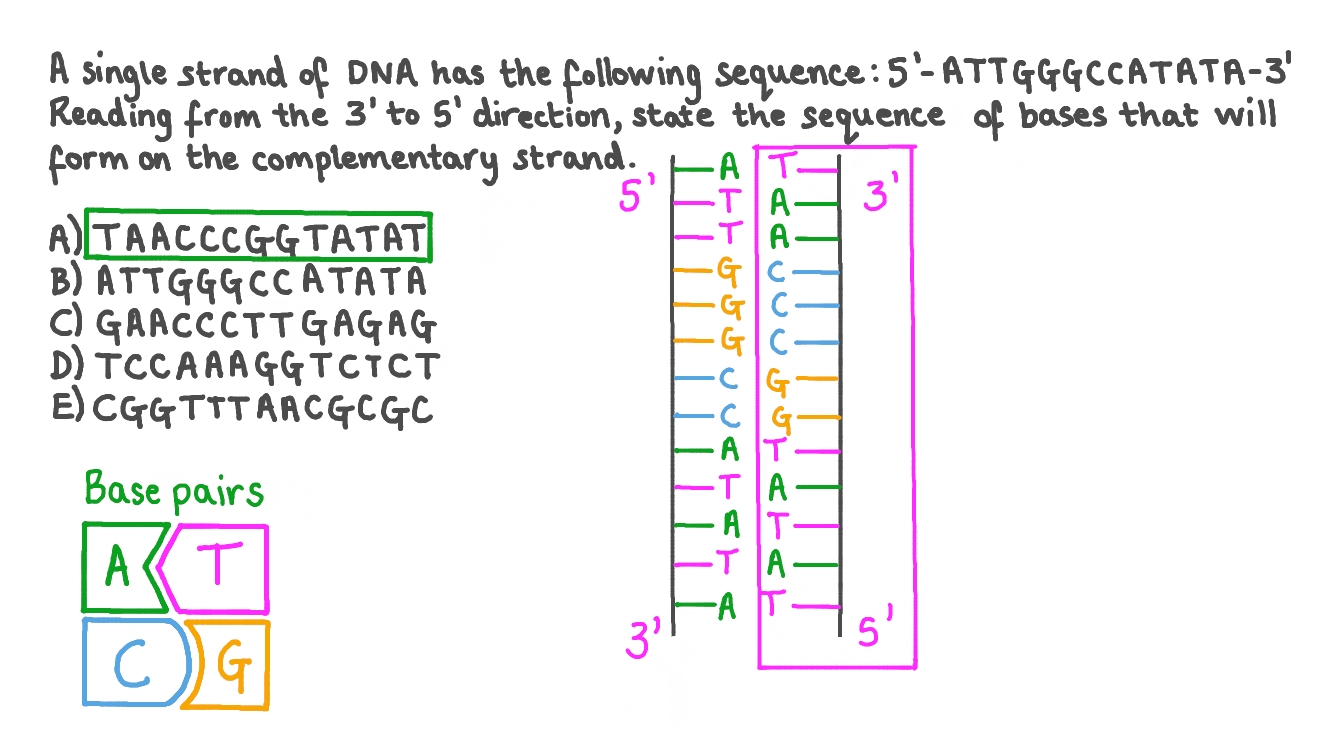
The magic of DNA’s structure lies in the specific and predictable way these bases interact between the two strands. This interaction is governed by strict base pairing rules, often referred to as Chargaff’s rules. Adenine (A) always pairs with thymine (T), and guanine (G) always pairs with cytosine (C). These pairings are facilitated by hydrogen bonds, which hold the two strands together.
-
Adenine (A) and Thymine (T): These bases form two hydrogen bonds. The purine base adenine is slightly larger than the pyrimidine base thymine, and this size difference, coupled with the specific arrangement of hydrogen-bonding sites, ensures a precise fit. This A-T pairing is crucial for maintaining the uniform width of the DNA double helix.
-
Guanine (G) and Cytosine (C): These bases form three hydrogen bonds. Guanine, like adenine, is a purine, and cytosine is a pyrimidine. The extra hydrogen bond between G and C makes this pairing slightly stronger than the A-T pairing. This difference in bond strength can have subtle but significant effects on DNA stability and dynamics.
This consistent and specific pairing is the essence of complementarity. If we know the sequence of bases on one strand, we can automatically deduce the sequence of bases on the complementary strand. For example, if one strand reads 5′-ATGC-3′, its complementary strand must read 3′-TACG-5′. This inherent symmetry and predictability are what enable DNA to accurately store and replicate genetic information.
The Functional Significance of Complementarity
The complementary nature of DNA strands is not merely an architectural feature; it is the very foundation upon which essential biological processes are built. Without this precise pairing, the integrity and transmission of genetic information would be impossible.
DNA Replication: Passing the Genetic Torch
Perhaps the most critical function enabled by complementary strands is DNA replication. When a cell divides, it must first duplicate its DNA to ensure that each daughter cell receives a complete set of genetic instructions. The process of replication hinges on the fact that the two strands of the double helix are complementary.
During replication, the DNA double helix unwinds, and the two strands separate. Each separated strand then serves as a template for the synthesis of a new, complementary strand. Enzymes, most notably DNA polymerase, move along each template strand, reading the sequence of bases and adding the corresponding complementary nucleotides to build the new strand. Because of the strict A-T and G-C pairing rules, the new strands are exact replicas of the original strands they are paired with. This semiconservative replication ensures that genetic information is passed down with remarkable accuracy from one generation of cells to the next. Any error in this complementary pairing during replication can lead to mutations, which are changes in the DNA sequence.
Transcription: Unlocking the Genetic Code for Protein Synthesis
Complementarity also plays a pivotal role in transcription, the first step in gene expression. Transcription is the process by which the genetic information encoded in DNA is transcribed into a messenger RNA (mRNA) molecule. This mRNA molecule then carries the genetic code out of the nucleus to the ribosomes, where proteins are synthesized.
In transcription, a portion of the DNA double helix unwinds, and one of the strands serves as a template for the synthesis of an RNA molecule. However, there’s a slight variation in base pairing in RNA. While adenine still pairs with thymine (in DNA) or uracil (in RNA), and guanine pairs with cytosine, RNA uses uracil (U) instead of thymine (T). So, during transcription, an A on the DNA template strand will pair with a U on the RNA strand, and a T on the DNA template strand will pair with an A on the RNA strand. Similarly, G and C continue to pair. The resulting mRNA molecule is therefore complementary to the DNA template strand, carrying a transcribed copy of the gene’s instructions.
DNA Repair Mechanisms: Maintaining Genetic Integrity
Even with the inherent accuracy of replication and transcription, occasional errors can occur in the DNA sequence. Cells have evolved sophisticated DNA repair mechanisms to detect and correct these errors, safeguarding the integrity of the genome. Many of these repair pathways rely on the presence of a complementary strand. If one strand is damaged or contains an incorrect base, the intact complementary strand can be used as a template to guide the repair process, ensuring that the correct sequence is restored. This redundancy provided by the complementary strands is a fundamental aspect of DNA’s resilience.
Technological Applications Driven by Complementarity
The understanding of DNA’s complementary strands has unlocked a vast array of technological applications, revolutionizing fields from medicine and diagnostics to forensics and biotechnology. These advancements are direct consequences of our ability to predict, manipulate, and utilize the specific base-pairing interactions.
Polymerase Chain Reaction (PCR): Amplifying Genetic Material
One of the most transformative technologies in molecular biology is the Polymerase Chain Reaction (PCR). PCR is a technique used to amplify (make many copies of) a specific segment of DNA. It relies on short synthetic DNA sequences called primers, which are designed to be complementary to the DNA sequences flanking the region of interest. These primers bind to the complementary strands of the target DNA, acting as starting points for DNA polymerase to synthesize new DNA strands. The ability to design primers that precisely bind to complementary sequences allows scientists to isolate and amplify even tiny amounts of DNA, a cornerstone of genetic research, diagnostics, and forensic analysis.
DNA Sequencing: Reading the Genetic Code
DNA sequencing technologies allow scientists to determine the exact order of nucleotides in a DNA molecule. Modern sequencing methods, such as next-generation sequencing (NGS), often involve fragmenting DNA and then determining the sequence of each fragment. The complementarity principle is implicitly used in some sequencing methodologies, where hybridization of labeled probes to complementary sequences is a key step. Furthermore, once a sequence is determined, its complementary sequence can be easily inferred, providing a complete picture of the DNA molecule. DNA sequencing has been instrumental in understanding genetic diseases, developing personalized medicine, and advancing our knowledge of evolution.
Gene Synthesis and Editing: Rewriting the Blueprint
The ability to synthesize DNA and to precisely edit existing DNA sequences are further testament to the power of understanding complementarity. Gene synthesis allows researchers to create custom DNA molecules with specific sequences, enabling the study of gene function and the development of novel biotechnologies. Technologies like CRISPR-Cas9, a revolutionary gene editing tool, exploit the principle of complementarity. CRISPR systems use a guide RNA molecule, which is complementary to the target DNA sequence, to direct an enzyme (Cas9) to a specific location in the genome. This allows for the precise cutting and modification of DNA, opening up possibilities for treating genetic disorders and engineering organisms for various purposes.
Genetic Diagnostics and Therapeutics: Precision Medicine
In the realm of healthcare, complementarity is at the forefront of genetic diagnostics and therapeutics. Diagnostic tests often rely on probes that are complementary to specific DNA sequences associated with diseases. For example, in genetic testing for inherited conditions, these probes can hybridize to mutated genes, allowing for their identification. Similarly, in the development of gene therapies, understanding complementary base pairing is crucial for designing therapeutic nucleic acids that can target and modulate specific genes. The precision offered by exploiting these molecular interactions is paving the way for truly personalized medicine, where treatments are tailored to an individual’s genetic makeup.
The Future of Complementarity in Technology
The foundational principle of complementary DNA strands continues to inspire and drive innovation across the technological landscape. As our understanding of molecular biology deepens, so too will our ability to harness this fundamental property for increasingly sophisticated applications.
Advanced Diagnostics and Biomarkers
The development of highly sensitive and specific diagnostic tools will undoubtedly leverage complementarity. We can anticipate the emergence of advanced biosensors that detect minute amounts of specific DNA or RNA sequences indicative of disease, environmental toxins, or pathogens. The ability to design probes with exquisite specificity for complementary target molecules will be key to achieving unprecedented diagnostic accuracy and early detection. This could revolutionize how we monitor health and respond to emerging threats.
Synthetic Biology and Bioengineering
Synthetic biology aims to design and construct novel biological parts, devices, and systems, or to re-design existing, natural biological systems for useful purposes. The ability to precisely synthesize DNA and to control gene expression relies heavily on the predictable nature of base pairing. Future advancements in synthetic biology may involve creating entirely new genetic circuits or engineering organisms with enhanced capabilities, all built upon the principles of DNA complementarity. This could lead to the development of bio-factories for producing pharmaceuticals, biofuels, or novel materials, as well as engineered organisms for environmental remediation.
Data Storage and Computation
Intriguingly, the inherent stability and information density of DNA are also being explored for unconventional applications such as data storage and computation. The sequence of bases on a DNA strand can be used to encode digital information. While still largely in the experimental stages, DNA data storage offers the potential for incredibly high-density and long-term archival of information. Furthermore, the molecular interactions governed by complementarity could potentially be harnessed for novel forms of computation, moving beyond the silicon-based paradigms.

Personalized and Preventative Medicine
The ongoing revolution in personalized medicine will continue to be powered by our understanding of DNA complementarity. As whole-genome sequencing becomes more routine, we will gain a deeper understanding of individual genetic predispositions to diseases. This knowledge, combined with the ability to design targeted therapeutic interventions that interact with specific DNA or RNA sequences, will allow for more precise and effective treatments, and crucially, for the development of personalized preventative strategies.
In conclusion, the concept of complementary strands of DNA is far more than a theoretical construct; it is a fundamental principle that underpins the very essence of life and serves as a bedrock for a rapidly evolving technological frontier. From the intricate dance of replication and transcription within our cells to the cutting-edge innovations shaping our future, complementarity remains a powerful testament to the elegance and utility of nature’s molecular design.
aViewFromTheCave is a participant in the Amazon Services LLC Associates Program, an affiliate advertising program designed to provide a means for sites to earn advertising fees by advertising and linking to Amazon.com. Amazon, the Amazon logo, AmazonSupply, and the AmazonSupply logo are trademarks of Amazon.com, Inc. or its affiliates. As an Amazon Associate we earn affiliate commissions from qualifying purchases.