
Adventitious breath sounds, often referred to as abnormal or extra sounds heard during auscultation, are critical indicators of underlying respiratory pathology. Traditionally, their detection and interpretation have relied on the keen ear of a trained clinician, a stethoscope, and a degree of subjective assessment. However, the landscape of respiratory diagnostics is rapidly evolving, driven by significant advancements in technology. This article delves into the realm of adventitious breath sounds, exploring them not merely as physiological phenomena, but as data points being revolutionized by technological innovation. We will examine how modern technology is enhancing our ability to detect, analyze, and even predict these crucial auditory signals, moving us towards more objective, precise, and accessible respiratory care.
The Evolving Landscape of Auscultation: From Stethoscope to Sensor Arrays
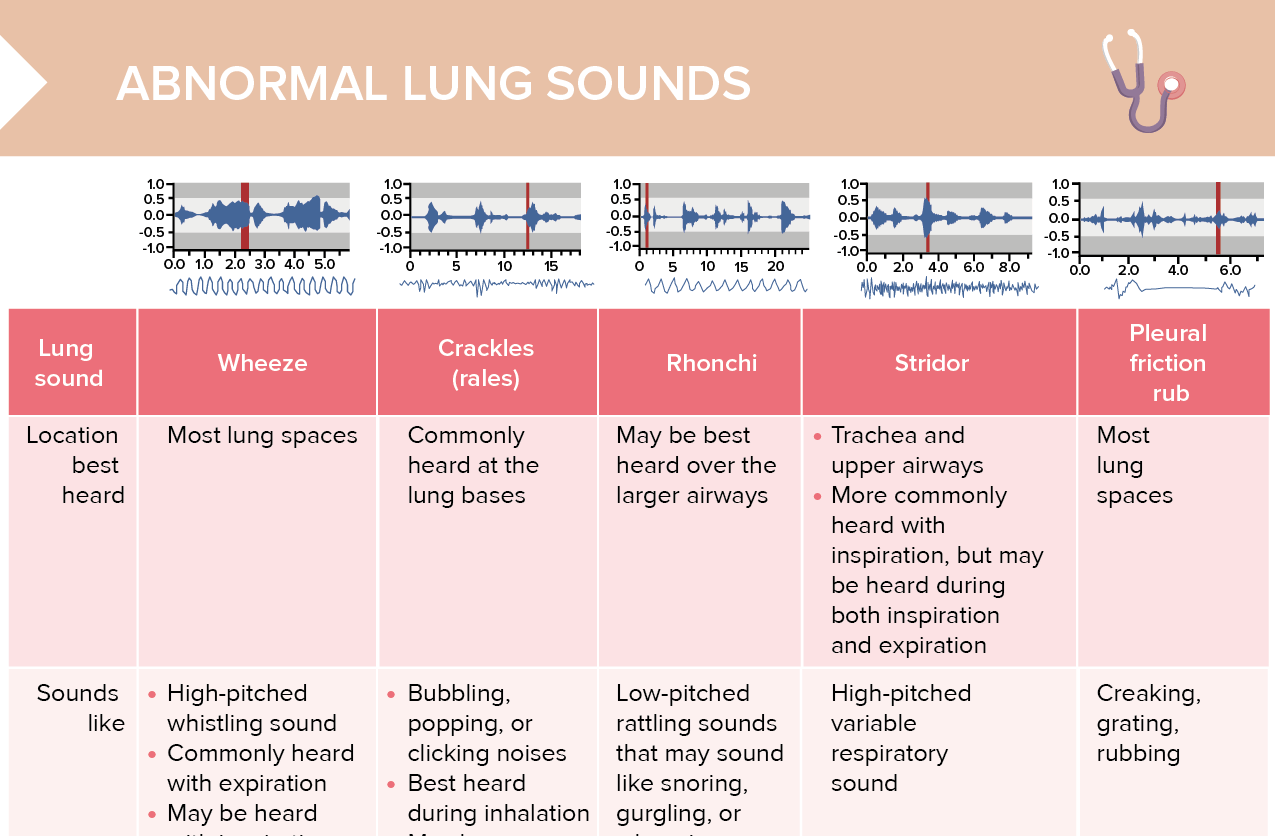
The humble stethoscope has been the cornerstone of respiratory assessment for centuries. Its role in identifying adventitious breath sounds – crepitations (rales), rhonchi, wheezes, and pleural rubs – is undeniable. However, the human ear, while remarkably sophisticated, has limitations in discerning subtle variations, quantifying sound intensity, and distinguishing between overlapping acoustic signatures. This is where technology is stepping in, not to replace the clinician, but to augment their capabilities.
Digital Stethoscopes and Enhanced Signal Acquisition
The advent of digital stethoscopes marks a significant leap forward from their acoustic predecessors. These devices electronically capture and amplify body sounds, offering a cleaner and more robust signal. More importantly, they enable the recording and playback of auscultatory data, allowing for a more thorough and objective review.
Amplification and Noise Reduction
Traditional acoustic stethoscopes can be susceptible to ambient noise, making it challenging to isolate faint adventitious sounds, especially in noisy environments like emergency rooms or busy clinics. Digital stethoscopes, equipped with sophisticated microphones and pre-amplifiers, can significantly amplify these sounds. Furthermore, many digital models incorporate active noise-cancellation technologies, filtering out extraneous environmental noise and allowing for a clearer focus on the patient’s internal respiratory acoustics. This improved signal clarity is crucial for identifying subtle adventitious sounds that might otherwise be missed, such as early-stage crackles indicative of interstitial lung disease or fine wheezes associated with bronchoconstriction.
Recording and Playback Capabilities
The ability to record and store auscultatory data is a paradigm shift. This feature allows clinicians to revisit sounds at a later time, compare findings from different examination points, or share recordings with colleagues for consultation. For teaching purposes, recorded adventitious sounds serve as invaluable auditory examples for medical students and trainees. In a research context, recorded data can be aggregated and analyzed, paving the way for new discoveries and diagnostic algorithms. The longevity of recorded data also facilitates longitudinal studies, tracking the progression or resolution of respiratory conditions over time by comparing serial auscultation recordings.
Wearable Sensors and Continuous Monitoring
Beyond stethoscopes, a new generation of wearable sensors is emerging, poised to transform how respiratory sounds are monitored. These non-invasive devices, often integrated into clothing or worn as patches, can continuously capture respiratory acoustics over extended periods. This move towards continuous monitoring offers an unprecedented view of respiratory patterns, capturing transient adventitious sounds that might not be present during a brief, episodic examination.
Real-time Data Streams and Alerts
Wearable respiratory sensors can transmit data in real-time to smartphones, tablets, or dedicated monitoring systems. This constant stream of information allows for immediate detection of changes in lung sounds. For patients with chronic respiratory conditions like COPD or asthma, this can mean early warning of exacerbations. The technology can be programmed to generate alerts when specific adventitious sound patterns, such as increasing wheezing or the onset of crackles, are detected. This proactive approach enables timely intervention, potentially preventing severe episodes and hospitalizations.
Data Aggregation for Trend Analysis
The continuous collection of respiratory sound data by wearables creates a rich dataset. This data can be aggregated over days, weeks, or even months, allowing for detailed trend analysis. Clinicians and researchers can identify patterns and correlations that might be invisible through sporadic auscultation. For instance, it might become evident that a patient’s wheezing consistently worsens at certain times of the day or in response to specific environmental triggers, providing valuable insights for personalized treatment plans. This granular data also holds immense potential for understanding the natural history of various respiratory diseases and for evaluating the effectiveness of therapeutic interventions.
The Rise of Artificial Intelligence in Adventitious Breath Sound Analysis
The sheer volume and complexity of acoustic data generated by modern auscultation technologies necessitate advanced analytical tools. Artificial intelligence (AI), particularly machine learning (ML) algorithms, is proving to be a transformative force in this domain, enabling more objective, accurate, and efficient interpretation of adventitious breath sounds.
Machine Learning for Sound Classification
Traditionally, classifying adventitious breath sounds relied on the clinician’s experience and interpretation of their subjective characteristics (e.g., pitch, duration, timing within the respiratory cycle). ML algorithms, however, can be trained on vast datasets of annotated respiratory sounds, learning to identify and classify different types of adventitious sounds with remarkable accuracy.
Deep Learning Models and Feature Extraction
Deep learning models, a subset of ML, are particularly adept at processing complex data like audio signals. These models can automatically learn relevant acoustic features from raw sound recordings, such as spectral patterns, temporal variations, and harmonic content, without explicit feature engineering. By analyzing these learned features, deep learning algorithms can distinguish between normal breath sounds and various adventitious sounds like crackles, wheezes, and rhonchi, often achieving performance levels comparable to or even exceeding human experts in specific tasks. This capability opens doors for automated screening and diagnostic support tools.
Algorithmic Differentiation of Sound Characteristics
The nuances between different types of adventitious sounds can be subtle. For example, distinguishing between fine and coarse crackles, or between inspiratory and expiratory wheezes, can be challenging even for experienced clinicians. AI algorithms can meticulously analyze the fine-grained acoustic characteristics of these sounds, such as their frequency range, duration, and the presence of discrete components, to provide a more objective classification. This algorithmic differentiation can lead to more precise diagnoses and targeted therapeutic approaches.
AI-Powered Diagnostic Support Systems
The integration of AI into respiratory diagnostics is moving beyond simple sound classification. AI-powered systems are being developed to act as intelligent diagnostic support tools, assisting clinicians in making more informed decisions.
Pattern Recognition for Disease Identification
AI algorithms can be trained to recognize specific patterns of adventitious breath sounds that are associated with particular respiratory diseases. For instance, a particular combination and sequence of crackles and wheezes might strongly suggest the presence of pneumonia, while persistent inspiratory wheezing could point towards upper airway obstruction. By analyzing complex acoustic signatures, these AI systems can help identify potential diagnoses or flag the need for further investigation, acting as a digital second opinion.
Predictive Analytics and Early Detection
One of the most promising applications of AI in respiratory health lies in predictive analytics. By analyzing longitudinal data from wearable sensors or recorded auscultations, AI can identify subtle changes in respiratory sound patterns that may precede the overt onset of symptoms or clinical deterioration. This early detection capability is crucial for proactive management of chronic respiratory diseases, allowing for interventions before a severe exacerbation occurs. For example, an AI system might detect an increase in fine crackles indicative of early pulmonary edema, prompting an earlier adjustment of diuretic medication for a patient with heart failure.
The Technological Ecosystem: Software, Data Management, and Integration
The effective utilization of advanced auscultation hardware and AI algorithms relies on a robust technological ecosystem encompassing specialized software, secure data management, and seamless integration into existing healthcare workflows.
Sophisticated Analysis Software Platforms
The raw acoustic data captured by digital stethoscopes and wearable sensors needs to be processed and analyzed. This is where specialized software platforms come into play. These platforms often integrate AI/ML algorithms for automated detection, classification, and quantification of breath sounds.
User Interfaces and Visualization Tools
Effective software platforms provide intuitive user interfaces that allow clinicians to easily upload, review, and analyze respiratory sound data. Visualization tools are critical for presenting complex acoustic information in an understandable format. This might include spectrograms that display the frequency content of sounds over time, or waveform displays that illustrate the amplitude variations. Such visualizations aid clinicians in understanding the nature of the detected sounds and in correlating them with the patient’s clinical presentation.
Customizable Reporting and Database Integration
The software should facilitate the generation of comprehensive reports that can be integrated into electronic health records (EHRs). Customizable reporting options allow clinicians to tailor the output to their specific needs and institutional requirements. Furthermore, seamless integration with hospital databases ensures that respiratory sound data is securely stored, easily accessible, and can be correlated with other patient information for a holistic view of their health status.
Big Data and Cloud Computing in Respiratory Acoustics
The vast amounts of data generated by continuous monitoring and large-scale studies necessitate scalable and efficient data management solutions. Big data technologies and cloud computing offer the infrastructure required to store, process, and analyze this information effectively.
Secure Storage and Accessibility
Cloud-based platforms provide a secure and scalable solution for storing large volumes of respiratory sound data. This ensures that the data is protected from loss or unauthorized access while remaining accessible to authorized personnel from any location. Robust data encryption and compliance with healthcare data privacy regulations (like HIPAA) are paramount in these systems.
Distributed Computing for Advanced Analytics
Processing complex AI models and large datasets often requires significant computational power. Cloud computing environments enable the use of distributed computing resources, allowing for faster training of ML models and quicker analysis of patient data. This distributed approach is essential for developing and deploying sophisticated AI-powered diagnostic tools at scale.
Future Directions and Technological Horizons
The intersection of adventitious breath sounds and technology is a rapidly advancing field. The current innovations are merely the prologue to what promises to be a more intelligent and predictive era of respiratory diagnostics.
Integration with Other Physiological Monitoring
The future likely holds a more integrated approach, where respiratory sound analysis is combined with data from other physiological monitors. Imagine a system that correlates changes in lung sounds with oxygen saturation, heart rate, and even subtle movements captured by wearable sensors. This multi-modal data fusion could provide a far more comprehensive understanding of a patient’s respiratory status and overall physiological well-being.
Personalized Respiratory Care through Acoustic Phenotyping
The ability of AI to identify subtle acoustic patterns opens up the possibility of “acoustic phenotyping.” This involves classifying patients into distinct subgroups based on their unique respiratory sound profiles, even within a seemingly similar disease category. This granular understanding could lead to highly personalized treatment strategies, tailoring interventions to the specific acoustic characteristics of an individual’s respiratory condition, thereby optimizing therapeutic efficacy and improving patient outcomes.

democratizing Access to Respiratory Diagnostics
The advancements in digital stethoscopes and AI-powered analysis software hold the potential to democratize access to advanced respiratory diagnostics. In regions with limited access to specialists, these technologies could empower primary care physicians and nurses to perform more sophisticated respiratory assessments. Mobile-based AI diagnostic tools could even bring expert-level analysis to remote or underserved communities, transforming global respiratory healthcare.
In conclusion, adventitious breath sounds, once solely within the purview of human auditory perception, are now being illuminated and understood through the powerful lens of technology. From sophisticated digital stethoscopes and continuous monitoring wearables to the sophisticated analytical capabilities of AI, technology is fundamentally reshaping how we detect, interpret, and act upon these vital respiratory cues. This evolution promises a future of more precise, proactive, and personalized respiratory care for all.
aViewFromTheCave is a participant in the Amazon Services LLC Associates Program, an affiliate advertising program designed to provide a means for sites to earn advertising fees by advertising and linking to Amazon.com. Amazon, the Amazon logo, AmazonSupply, and the AmazonSupply logo are trademarks of Amazon.com, Inc. or its affiliates. As an Amazon Associate we earn affiliate commissions from qualifying purchases.