
The world of DIY crafting has seen a meteoric rise in popularity, and at the heart of many of these creative endeavors lies slime. This amorphous, tactile, and endlessly entertaining substance has captured the imagination of creators of all ages. But for anyone venturing into the realm of slime making, a crucial question inevitably arises: “What exactly is slime activator?” Beyond its seemingly magical ability to transform liquid glue into a pliable polymer, slime activator is a fascinating intersection of everyday chemistry and accessible material science. Understanding its role unlocks not just the secrets of perfect slime but also a glimpse into broader technological applications of polymer chemistry.

The Fundamental Chemistry of Slime: Polymer Chains and Cross-Linking
At its core, slime making is an exercise in polymer science. Polymers are large molecules composed of repeating structural units, often called monomers. In the context of most common slimes, the primary polymer is polyvinyl acetate (PVA), which is the main ingredient found in white school glue. PVA exists as long, flexible chains of molecules. These chains, on their own, are capable of sliding past each other, giving the glue its liquid, viscous consistency.
Monomers and Polymerization: Building the Glue’s Foundation
The journey to slime begins with the production of PVA. This process, polymerization, involves linking together many small ethylene vinyl acetate (EVA) monomers to form the long PVA polymer chains. While the exact industrial processes for creating PVA are complex, for the home slime maker, the focus is on the pre-formed PVA in the glue. These long chains are the raw material, waiting for an external agent to alter their behavior.
The Role of Water: Solvation and Viscosity
Water plays a critical role in glue-based slime. It acts as a solvent, dispersing the PVA molecules and allowing them to move freely. This dispersion contributes to the viscosity of the glue. However, without an activator, simply mixing PVA glue with water will not result in slime. The polymer chains remain too independent, allowing the liquid to flow. The challenge, and the brilliance of slime activators, lies in finding a way to connect these independent chains.
Achieving Viscoelasticity: The Key to Slime’s Texture
The desired texture of slime, its characteristic stretchiness, squishiness, and ability to hold a shape for a short period before flowing, is known as viscoelasticity. This property arises from the controlled entanglement and interaction between polymer chains. Before activation, the chains are too dispersed. After activation, they become interconnected, creating a network that exhibits both elastic (spring-like) and viscous (fluid-like) behavior. The activator is the key agent that facilitates this transformation by creating physical or chemical bridges between the PVA polymer chains.
Understanding the “Activator”: Catalysts of Polymer Transformation
The term “slime activator” is a broad descriptor for substances that initiate the chemical reaction needed to transform liquid glue into slime. These activators work by forming cross-links between the PVA polymer chains. A cross-link is a bond that connects one polymer chain to another. The more cross-links created, the more rigid and less fluid the resulting material will be. The choice of activator significantly influences the final texture and properties of the slime.
Borax (Sodium Tetraborate): The Classic Activator
Borax, chemically known as sodium tetraborate (Na₂B₄O₇·10H₂O), is perhaps the most widely recognized and historically significant slime activator. When dissolved in water, borax dissociates into borate ions (B₄O₇²⁻). These borate ions then interact with the hydroxyl (-OH) groups on the PVA polymer chains. The borate ions act as bridges, forming hydrogen bonds and some covalent-like bonds between adjacent PVA chains. This creates a three-dimensional network, effectively “locking” the polymer chains together and preventing them from sliding past each other as freely as they did in the liquid glue.
How it works technologically:
The precise mechanism involves the borate ion reacting with the hydroxyl groups on adjacent PVA chains. This creates a temporary, but stable, cross-linked structure. The concentration of borax used is crucial; too little results in a sticky, non-slimey mixture, while too much can lead to brittle or rubbery slime that breaks easily. The water in the solution acts as the medium for this ionic interaction and also influences the flexibility of the resulting polymer network.
Contact Lens Solution (Containing Boric Acid and Sodium Borate): A Safer Alternative
For many DIY slime enthusiasts, especially those concerned about direct contact with borax powder, contact lens solutions have emerged as a popular and convenient activator. The effectiveness of these solutions lies in their inclusion of key chemical components: boric acid (H₃BO₃) and sodium borate (Na₂B₄O₇). When the contact lens solution is mixed with the glue, the boric acid and sodium borate work in a similar fashion to pure borax, producing borate ions that act as cross-linking agents for the PVA chains.
How it works technologically:
The synergy between boric acid and sodium borate in the solution is what facilitates the activation. Boric acid, when present in water, can also form borate ions. These ions then readily form cross-links with the PVA. The presence of buffering agents in contact lens solutions also helps to maintain a stable pH, which is conducive to the optimal formation of these cross-links. This controlled chemical environment makes contact lens solution a reliable activator, often yielding a smoother and stretchier slime compared to less precise applications of borax.

Baking Soda and Contact Lens Solution: A Two-Step Activation
Another common method for activating slime involves a combination of baking soda (sodium bicarbonate, NaHCO₃) and contact lens solution. This approach leverages a slight chemical modification before the primary cross-linking occurs. When baking soda is added to the glue mixture, it reacts with any residual acidity in the glue and, more importantly, can help to slightly alter the pH. This adjustment can sometimes enhance the effectiveness of the contact lens solution by ensuring the borate ions are in the most reactive form.
How it works technologically:
The baking soda acts as a pH buffer, potentially creating a more favorable environment for the borate ions from the contact lens solution to interact with the PVA. While not directly forming the cross-links itself, it indirectly aids the process initiated by the borate ions, leading to a more complete and consistent activation. This layered approach is a clever application of basic chemical principles to achieve a desired material outcome.
Other Activators and Emerging Technologies
Beyond these common household ingredients, a range of other substances can act as slime activators, each with slightly different properties. These include:
- Liquid Starch (containing sodium tetraborate): Many liquid starches are formulated with sodium tetraborate, functioning identically to borax solutions.
- Laundry Detergents (containing borates): Certain liquid laundry detergents contain borates, making them potent slime activators, though their use can be less predictable due to varying chemical compositions and potential for skin irritation.
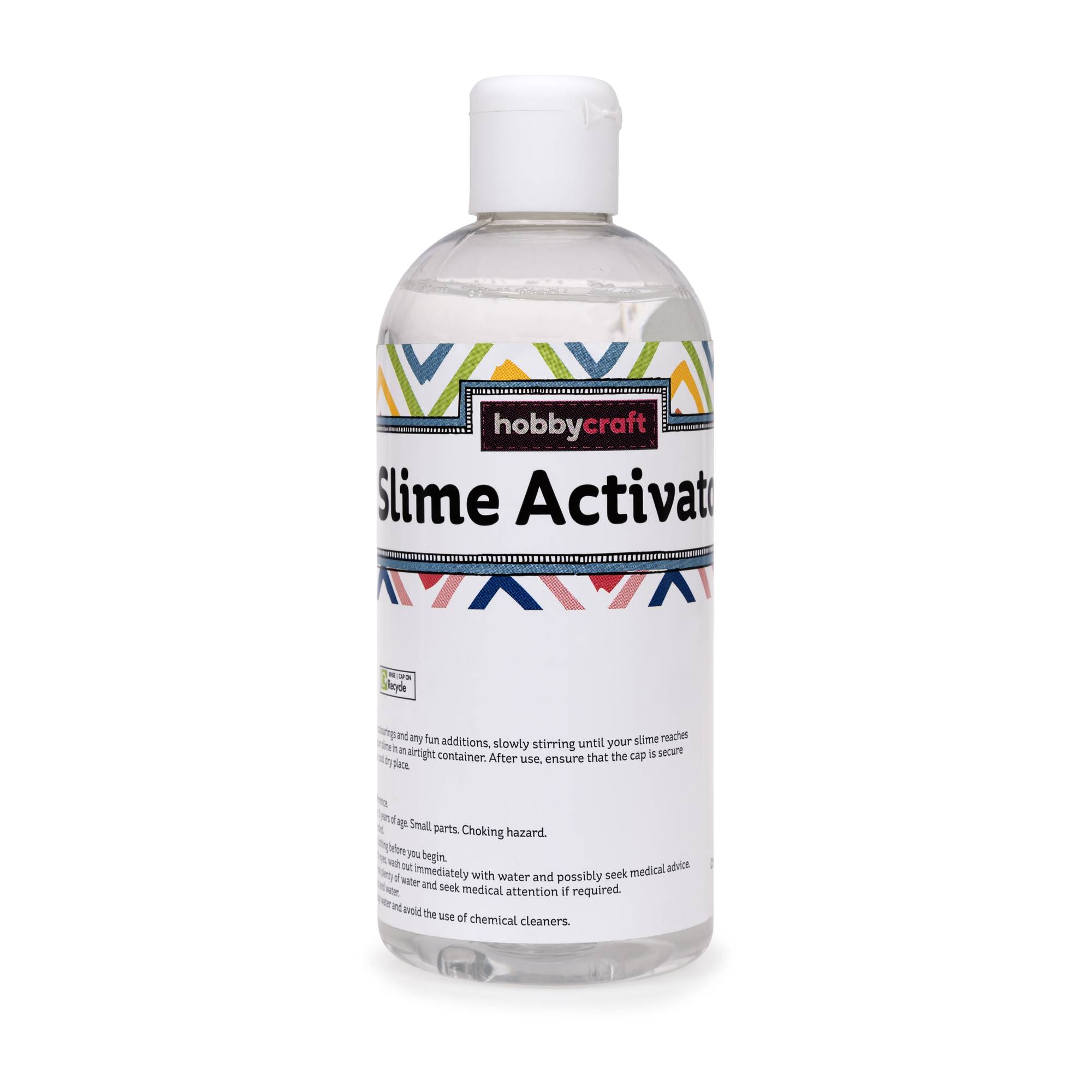
- Specialized Slime Activators: The crafting industry has also seen the development of commercially prepared “slime activators,” often based on solutions of boric acid and sodium borate, specifically formulated for optimal slime creation.
The ongoing exploration of different activating agents underscores the continuous innovation within the DIY and material science communities, seeking to refine and diversify the creation of tactile polymers.
The Science of Slime Texture: Controlling Cross-Linking Density
The consistency, stretchiness, and overall feel of slime are directly dictated by the degree of cross-linking achieved by the activator. This is where the precision of the chemical interaction becomes paramount, akin to fine-tuning material properties in industrial applications.
Viscosity vs. Elasticity: The Delicate Balance
A low density of cross-links results in a more fluid, sticky slime that flows readily – think of a more liquid glue. As the cross-linking density increases, the polymer chains become more interconnected, restricting their movement. This leads to a more elastic, rubbery, and less sticky slime. The goal of successful slime making is to find the “sweet spot” where there are enough cross-links to prevent the slime from being too liquid, but not so many that it becomes stiff and breaks easily.
Factors Influencing Cross-Linking Effectiveness
Several factors influence how effectively an activator works and the resulting slime texture:
- Concentration of Activator: As mentioned, the amount of activator is critical. Too little means insufficient cross-links; too much leads to over-cross-linking, making the slime rigid.
- Concentration of PVA: The amount of polyvinyl acetate in the glue also plays a role. Higher concentrations of PVA generally require a more robust activation process.
- Presence of Other Ingredients: Additives like glitter, food coloring, shaving cream (for fluffy slime), or lotions can affect the hydration of the PVA and the accessibility of polymer chains to the activator, thus influencing the final texture. For instance, shaving cream adds air bubbles, creating a less dense and stretchier slime.
- Temperature and Time: While less of a factor in immediate slime making, temperature can influence reaction rates. The time allowed for the activator to interact with the glue also contributes to the development of the cross-linked network.
Beyond Play: Applications of Polymer Cross-Linking
The principles at play in slime activation are foundational to numerous technological advancements in material science. The ability to control the cross-linking density of polymers is essential in the development of:
- Hydrogels: These water-swollen polymer networks are used in contact lenses, drug delivery systems, and absorbent materials.
- Elastomers: Natural and synthetic rubbers, like those used in tires and seals, are heavily cross-linked polymers that provide elasticity and durability.
- Adhesives and Coatings: The tackiness and strength of many glues and paints are a result of controlled polymer cross-linking.
- Biomaterials: Advanced medical devices and tissue engineering scaffolds often rely on biocompatible, precisely cross-linked polymers.
Understanding slime activators, therefore, is not just about mastering a fun craft; it’s an accessible entry point into appreciating the sophisticated science that underpins many modern technological materials. The squishy, stretchy delight of slime is a tangible demonstration of applied chemistry and material engineering, making it both an entertaining pastime and an educational tool.
aViewFromTheCave is a participant in the Amazon Services LLC Associates Program, an affiliate advertising program designed to provide a means for sites to earn advertising fees by advertising and linking to Amazon.com. Amazon, the Amazon logo, AmazonSupply, and the AmazonSupply logo are trademarks of Amazon.com, Inc. or its affiliates. As an Amazon Associate we earn affiliate commissions from qualifying purchases.