
The humble condom, a seemingly simple device, holds a profound place in human history as a tool for both contraception and disease prevention. Its journey from rudimentary protective coverings to sophisticated, high-tech barriers is a testament to continuous human ingenuity and the persistent drive to manage fertility and health. To pinpoint a single “invention year” for condoms is to oversimplify a complex, millennia-spanning technological evolution. Rather, the story of the condom is one of incremental innovation, material science breakthroughs, and evolving societal needs, firmly placing it within the realm of technological advancement. This exploration delves into the historical timeline of condom technology, tracing its origins through various materials and designs, and highlighting the pivotal moments that shaped its modern form.
Tracing the Antecedents: Early Forms and Materials
The concept of creating a barrier during intercourse for protection is far from modern, with evidence suggesting attempts dating back thousands of years. These early “condoms” were not what we recognize today, but they represent the nascent stages of protective technology, driven by needs ranging from ritualistic symbolism to basic disease avoidance and population control.
Ancient Innovations: Pre-History and the Dawn of Prevention
While a precise invention date remains elusive, archaeological and historical records offer tantalizing glimpses into early forms of barrier protection. Cave paintings in France, dating back an estimated 12,000 to 15,000 years, depict what some interpret as a man using a sheathed device during intercourse, though its exact purpose remains debated. These depictions, if correctly interpreted, signify a remarkably early conceptualization of external barriers.
More concrete evidence emerges from ancient civilizations. Egyptians, for instance, are believed to have used linen sheaths as early as 3000 BCE, primarily for decorative or ceremonial purposes, though protection from insect bites and disease cannot be entirely ruled out. The Romans and Greeks, known for their advanced medical knowledge, reportedly used animal bladders or intestines. These rudimentary devices, while crude by modern standards, represent a significant step in the application of available materials for a specific functional purpose. The innovation here lay not in sophisticated engineering, but in the repurposing of organic materials—animal guts, woven fabrics—to create a physical barrier. This early stage of “design thinking” was inherently technological, focusing on problem-solving with the resources at hand.
The Renaissance Era: Advancements in Design and Purpose
The 16th to 18th centuries saw a more deliberate development of protective sheaths, largely in response to the devastating spread of syphilis. Gabriel Falloppio, an Italian anatomist and physician, described in 1564 a linen sheath soaked in a chemical solution, designed to be fitted over the glans to prevent syphilis. This description is often cited as one of the first explicit references to a prophylactic device intended for disease prevention, marking a crucial shift in the intended technological application of these devices. Falloppio’s innovation involved not just a material (linen) but also a chemical treatment, suggesting a nascent understanding of antiseptic properties or perhaps just a belief in their efficacy, illustrating early attempts at combining material science with medical application.
The term “condom” itself is thought to have emerged around this period, though its etymology is debated. By the 17th century, condoms made from animal intestines (often lamb or goat caecum or bladder) became more widespread, particularly among the aristocracy. These were reusable, often tied with ribbons, and stored in decorative boxes, indicating a degree of care and perceived value. The technology of the time involved careful preparation and thinning of the animal membranes, a specialized craft that enabled the creation of a more flexible and robust barrier. This period saw the transition from purely conceptual or rudimentary use to more standardized, albeit still artisanal, production, driven by a growing public health concern and the desire for effective prophylaxis.
The Dawn of Modern Condoms: Rubber’s Revolutionary Impact
The true technological leap for condoms, transforming them from an artisanal curiosity to a mass-producible commodity, came with the advent of rubber technology in the 19th century. This was not just a material change; it was a manufacturing revolution.
Charles Goodyear and the Vulcanization Breakthrough
The year 1839 marks a pivotal moment in material science that would indirectly revolutionize the condom industry: Charles Goodyear’s discovery of vulcanization. This process, which involves heating rubber with sulfur, transformed natural rubber from a sticky, brittle, and unstable material into an elastic, durable, and resilient substance. While Goodyear himself didn’t invent the rubber condom, his invention laid the fundamental technological groundwork for its creation. Vulcanized rubber was waterproof, stretchable, and could withstand significant stress, making it an ideal material for protective barriers.
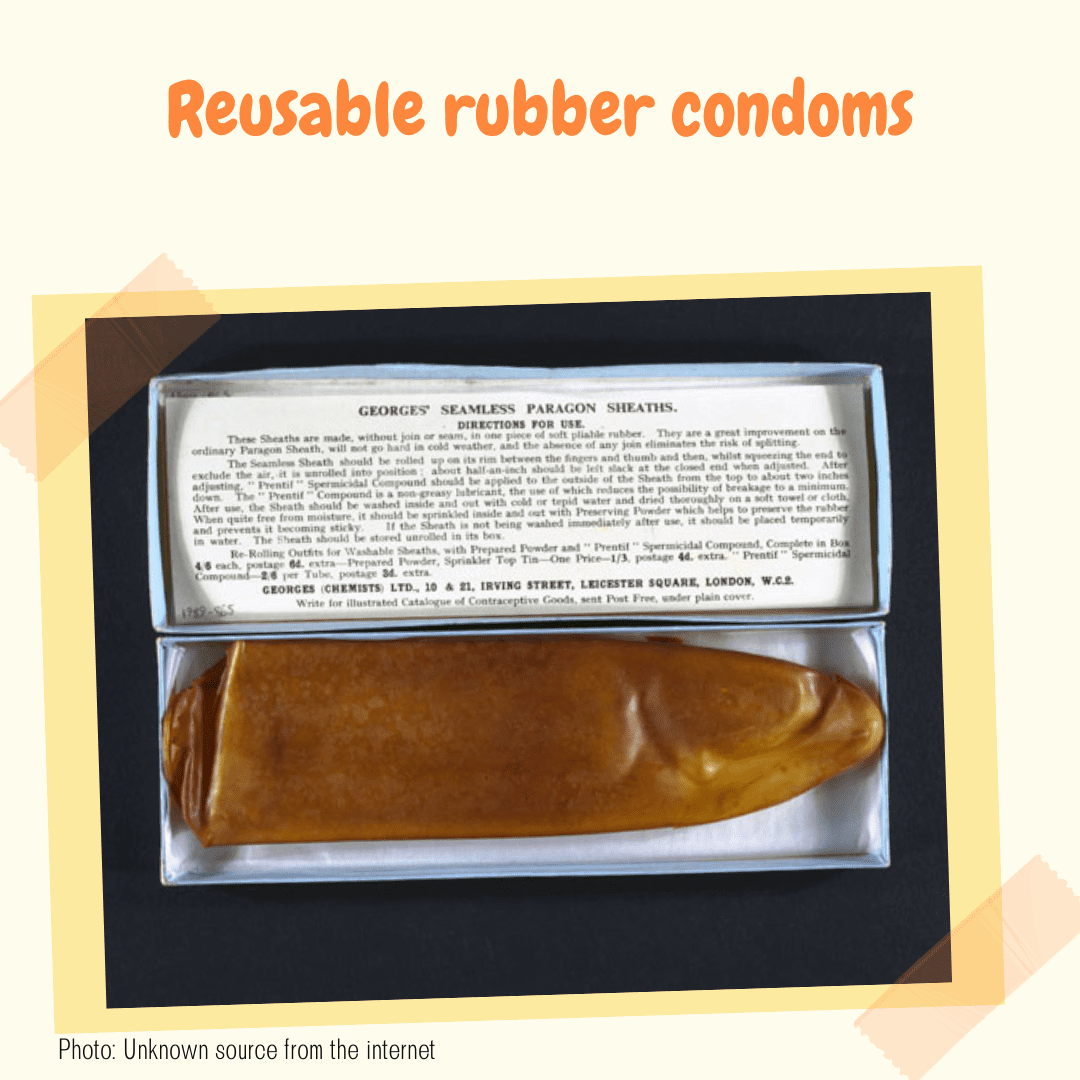
The first commercially produced rubber condoms appeared shortly after vulcanization became widespread, specifically in 1855. This date can be considered the birth year of the modern condom in terms of its material science and industrial potential. These early rubber condoms were thick, seam-bound, and initially quite expensive. However, their superior protective qualities, durability, and eventual reusability (though not always hygienic) made them a significant improvement over their animal membrane predecessors. The technology involved not just the material itself, but also the molding and curing processes necessary to shape the vulcanized rubber into a consistent, functional sheath.
Mass Production and Accessibility: A New Era
Following the initial introduction of rubber condoms, manufacturing techniques rapidly advanced. By the late 19th and early 20th centuries, factories began mass-producing seamless rubber condoms using dipping techniques, dramatically reducing costs and increasing availability. This era also saw the integration of testing protocols, albeit rudimentary, to ensure product integrity. The ability to produce large quantities of reliable, affordable condoms had profound societal impacts, making contraception and disease prevention more accessible to a broader population.
This transition from handcrafted items to industrially manufactured goods marks a critical technological maturation. It moved from a niche, high-cost item to a standardized product. The challenges of consistency, quality control, and scale became central to the manufacturing process, reflecting the typical trajectory of any successful technological innovation. The development of specialized machinery for dipping, drying, and packaging was itself a significant engineering feat, further solidifying the condom’s place as a product of industrial technology.

Latex’s Ascendancy: A Leap in Safety and Comfort
Despite the advancements brought by rubber, it still had limitations. The next major technological evolution came with latex, offering a superior alternative that further refined the condom’s performance and user experience.
The Material Science Revolution: From Rubber to Latex
The discovery of how to process latex, a natural rubber fluid, into thin, strong, and flexible films marked the next major technological leap. Latex condoms were introduced in the 1920s. Unlike earlier rubber condoms that were made from a treated solid rubber, latex condoms were produced by dipping molds into liquid latex, which then dried to form a seamless, much thinner, and more elastic barrier. This innovation eliminated the need for seams, which had been a weak point in earlier rubber designs, and allowed for greater sensitivity.
The shift to latex was a significant material science triumph. Latex offers superior strength, elasticity, and impermeability compared to vulcanized rubber, especially when considering the extremely thin walls required for condoms. Furthermore, latex products typically have a longer shelf life and are less prone to degradation than early rubber formulations. This improvement wasn’t just about a new material; it was about the process of working with that material—developing techniques for consistent dipping, ensuring uniform thickness, and refining the curing process to maximize strength and flexibility while minimizing allergic reactions for most users.
Enhancements in Manufacturing and User Experience
The introduction of latex led to an explosion of innovation in condom design and manufacturing. Lubricants, spermicides, various textures, shapes, and sizes became possible due to the versatility of latex. Electronic testing, specifically air inflation and water leakage tests, became standard practice in factories to ensure the integrity of every single condom produced. This commitment to quality control, driven by health and safety regulations, is a hallmark of modern medical device technology.
These advancements signify a shift from merely preventing pregnancy and disease to enhancing the user experience. The development of advanced lubricants, reservoir tips, contoured shapes, and even different scents and flavors reflects a user-centric design approach, typical of sophisticated consumer technology. The ongoing research into thinner, stronger, and more comfortable latex formulations, or even non-latex alternatives for allergy sufferers, continues to push the boundaries of what is possible within condom technology.
Contemporary Condom Technology: Beyond Basic Prevention
The evolution of the condom is far from over. Today, technological advancements continue to refine its effectiveness, comfort, and appeal, demonstrating its enduring relevance in public health and personal wellness.
Smart Condoms and Future Innovations
The 21st century has brought forth concepts like “smart condoms,” integrating microelectronics and sensors to track performance, detect STIs, or even enhance pleasure. While many of these are still in developmental stages or niche markets, they represent the convergence of traditional barrier methods with cutting-edge digital technology and bio-sensing capabilities. Projects like the Bill & Melinda Gates Foundation’s “Grand Challenges in Global Health” have spurred innovation in ultra-thin, highly sensitive, and even self-applying condom designs, exploring new polymers and manufacturing techniques that promise to revolutionize the user experience and effectiveness.
These futuristic designs highlight the ongoing R&D in materials science (e.g., graphene, hydrogels), micro-engineering, and user interface design. They move beyond the simple barrier concept towards integrated health monitoring and enhanced functionality, showcasing the condom’s potential as a multi-functional tech gadget. The development of non-latex materials like polyurethane and polyisoprene has also provided alternatives for those with latex allergies, offering similar levels of protection and sensitivity, demonstrating ongoing material innovation.
The Ongoing Evolution of Design and Materials
The constant drive for improvement in condom technology mirrors the progress seen in other medical devices and consumer electronics. Manufacturers continuously explore new coatings, lubricants, and packaging designs to improve shelf life, ease of use, and overall appeal. Research into biodegradable materials also points to future sustainable options, addressing environmental concerns alongside health needs. The technological journey of the condom is thus an unending quest for optimization—stronger, thinner, more comfortable, more user-friendly, and increasingly intelligent.
The iterative design process, rigorous testing, and continuous material science research demonstrate that the condom, despite its long history, remains a vibrant field of technological innovation. From addressing the nuances of male anatomy to incorporating elements of sexual wellness, the ongoing development reflects a sophisticated blend of engineering, chemistry, and human factors design.

Conclusion
To ask “what year was condoms invented” is to seek a singular point in a long continuum of human ingenuity. While the modern rubber condom emerged around 1855 and the latex condom around the 1920s, the underlying concept of barrier protection stretches back millennia. The condom’s journey, from primitive animal membranes and linen sheaths to sophisticated latex, polyurethane, and potentially “smart” devices, is a compelling narrative of technological evolution. It showcases how material science, engineering, and manufacturing advancements have consistently met evolving human needs for health, fertility management, and pleasure. Far from being a static invention, the condom stands as a dynamic technological artifact, continually refined and reimagined, embodying humanity’s enduring quest for innovative solutions to fundamental challenges. Its story is a testament to the power of persistent technological development, transforming a simple idea into a cornerstone of global public health.
aViewFromTheCave is a participant in the Amazon Services LLC Associates Program, an affiliate advertising program designed to provide a means for sites to earn advertising fees by advertising and linking to Amazon.com. Amazon, the Amazon logo, AmazonSupply, and the AmazonSupply logo are trademarks of Amazon.com, Inc. or its affiliates. As an Amazon Associate we earn affiliate commissions from qualifying purchases.