
The invention of gunpowder, a transformative chemical compound, stands as one of China’s most significant technological contributions to the world. Its genesis in ancient China was not initially driven by the apocalyptic visions of warfare that it would later inspire, but rather by a complex interplay of alchemical pursuits, medicinal aspirations, and the burgeoning understanding of chemical reactions. This fascinating technological evolution, from its earliest experimental stages to its eventual widespread application, laid the groundwork for revolutionary advancements in various fields, most notably in pyrotechnics and, subsequently, military technology.
The Alchemical Origins and Early Experiments
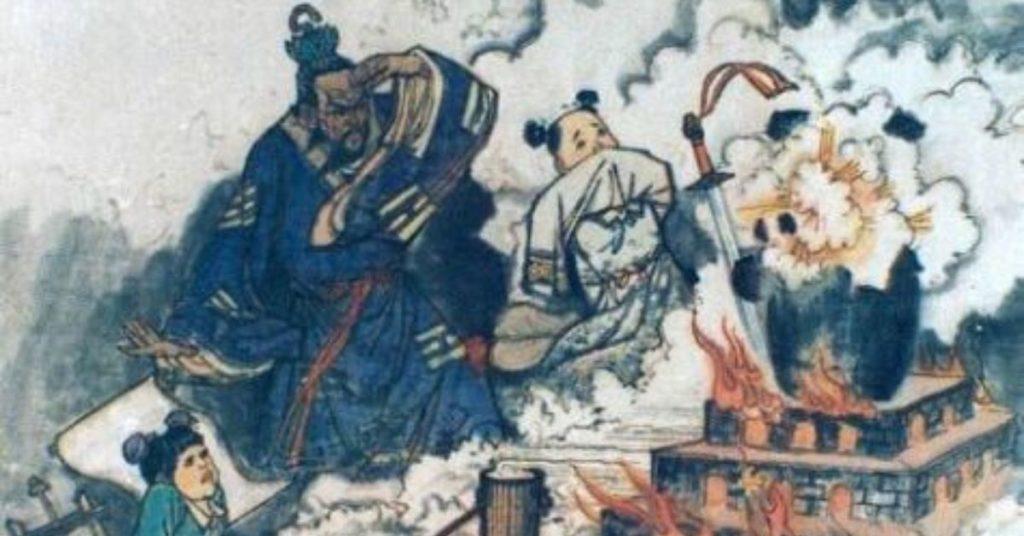
The story of gunpowder’s invention is deeply intertwined with the Taoist pursuit of immortality and the alchemists’ quest for elixirs. Ancient Chinese alchemists, often seeking substances that could prolong life or grant supernatural powers, experimented with a wide array of minerals and organic materials. Among these, saltpeter (potassium nitrate) emerged as a key ingredient, recognized for its fiery properties.

The Accidental Discovery and Saltpeter’s Role
Early alchemists, in their meticulous yet often haphazard experiments, likely stumbled upon the explosive potential of saltpeter when combined with other substances. Historical texts from the Tang Dynasty (618-907 CE) and the Five Dynasties period (907-960 CE) offer tantalizing glimpses into these early explorations. While precise recipes were often guarded secrets, the combination of sulfur and charcoal with saltpeter gradually became a recognized formula. The precise proportions and processing techniques were crucial for achieving controlled combustion and, eventually, explosive force. This wasn’t a single “eureka” moment but rather a process of iterative refinement and discovery, driven by an empirical understanding of how these components reacted under heat.
Early Applications: Fire and Medicine
Before its potent destructive capabilities were fully harnessed, gunpowder’s properties were explored for more benign, yet still impactful, purposes. The primary characteristic that would have been immediately evident was its ability to produce intense heat and flames. This led to its early application in creating fire-starting devices. Imagine the early stages of technological application: a potent, easily ignitable substance that could create a significant burst of fire. This was a considerable advancement over friction-based methods or simple torches.
Furthermore, the connection to alchemy’s medicinal aims cannot be overstated. Some theories suggest that early alchemists may have believed that substances producing intense heat or even fire could purify the body or have therapeutic effects. While these medicinal applications were largely misguided and potentially dangerous, they were a genuine driving force behind the experimentation that ultimately led to gunpowder. The development of effective fire-starting mechanisms, even for non-combative purposes, represented a significant technological step forward in controlling and utilizing chemical energy.
Pyrotechnics: The Art of Fire and Spectacle
The transition from accidental discovery and nascent medicinal curiosity to the deliberate engineering of fiery displays marks a crucial phase in gunpowder’s technological evolution. Ancient China quickly recognized the spectacular potential of this new substance, leading to the development of a sophisticated pyrotechnic tradition that continues to influence the world today. This focus on visual and auditory sensory experiences represented a distinct technological application, showcasing a mastery of chemical reactions for entertainment and ceremonial purposes.

Fireworks and Their Ceremonial Significance
The invention of fireworks is intrinsically linked to gunpowder. The ability to create controlled bursts of light, color, and sound transformed celebrations, religious ceremonies, and imperial events. Chinese artisans, with their keen eye for aesthetics and their growing understanding of chemical compounds, began to experiment with additives that produced different colors and effects. Metal salts, when heated, release characteristic wavelengths of light, and the precise manipulation of these elements within gunpowder mixtures allowed for a dazzling array of visual spectacles. This wasn’t just about making things explode; it was about engineering predictable and beautiful chemical reactions for specific aesthetic outcomes. The development of different types of fireworks, from simple rockets to elaborate aerial displays, demonstrates a sophisticated understanding of projectile motion, timed ignition, and chemical composition.
Signaling and Communication Technologies
Beyond entertainment, gunpowder’s rapid combustion and the resulting visual and auditory signals also found practical applications in communication. Rockets, propelled by gunpowder, could be launched to signal over long distances, especially in military contexts or during emergencies. The distinct sound of firecrackers could also serve as an alarm or a marker. These early forms of signaling technology, powered by gunpowder, represented a significant leap in human communication capabilities, allowing for rapid dissemination of information across larger areas than ever before. This demonstrated a clear understanding of how to harness the energy of gunpowder for a specific, non-destructive purpose: transmitting information.
The Dawn of Military Applications
While initially developed for pyrotechnics and perhaps even flawed medicinal pursuits, the inherent power of gunpowder could not remain solely within the realm of spectacle. As China’s military technologies advanced, the potential of this explosive compound for offensive and defensive purposes became increasingly apparent. This marked a significant and indeed world-altering shift in the application of this technology, moving from controlled spectacle to destructive force.
Early Incendiary Devices
The earliest military uses of gunpowder likely involved incendiary devices. These were not necessarily projectiles designed to explode upon impact but rather weapons designed to spread fire. Incendiary arrows, for instance, tipped with packets of gunpowder, could be launched to ignite enemy structures or ships. Similarly, rudimentary bombs or grenades, filled with gunpowder and fragments, could be thrown to cause widespread damage through blast and shrapnel. The technological innovation here lay in the packaging and delivery of the explosive material, aiming to maximize its incendiary or disruptive effect upon reaching a target.
The Evolution of Gunpowder Weapons
The true revolutionary impact of gunpowder on warfare began with the development of projectile weapons. The concept of using an explosive charge to propel a projectile from a tube—the fundamental principle of firearms—emerged in China. Early examples include hand cannons, where gunpowder was ignited in a chamber at the rear of a metal tube, propelling a projectile forward. This represented a monumental leap in military technology, moving from simple tools and projectiles to complex, engineered weaponry capable of delivering force at a distance with unprecedented power.
This evolution involved significant metallurgical advancements to create barrels that could withstand the immense pressures generated by gunpowder explosions. It also necessitated advancements in projectile design and the precise control of gunpowder formulations to ensure reliable ignition and consistent propulsion. The development of various types of cannons, siege weapons, and early firearms showcased a sophisticated understanding of ballistics, material science, and chemical engineering, fundamentally altering the nature of combat and ushering in the age of gunpowder warfare. The technological lineage from these early Chinese innovations can be traced through centuries of continuous development in artillery and small arms, a testament to the foundational impact of this ancient Chinese technology.
aViewFromTheCave is a participant in the Amazon Services LLC Associates Program, an affiliate advertising program designed to provide a means for sites to earn advertising fees by advertising and linking to Amazon.com. Amazon, the Amazon logo, AmazonSupply, and the AmazonSupply logo are trademarks of Amazon.com, Inc. or its affiliates. As an Amazon Associate we earn affiliate commissions from qualifying purchases.