
The International Space Station (ISS) is a marvel of modern engineering, a football-field-sized laboratory hurtling through the thermosphere at 17,500 miles per hour. For many, catching a glimpse of this “moving star” is a bucket-list experience. However, knowing exactly what time the space station will be visible tonight requires more than just luck; it requires a sophisticated ecosystem of tracking technology, orbital mechanics data, and user-friendly software.
In the digital age, spotting the ISS has transitioned from a niche hobby for astronomers to an accessible activity for anyone with a smartphone. This guide explores the technology that allows us to predict orbital passes with millisecond precision and the tools you can use to ensure you never miss a sighting.
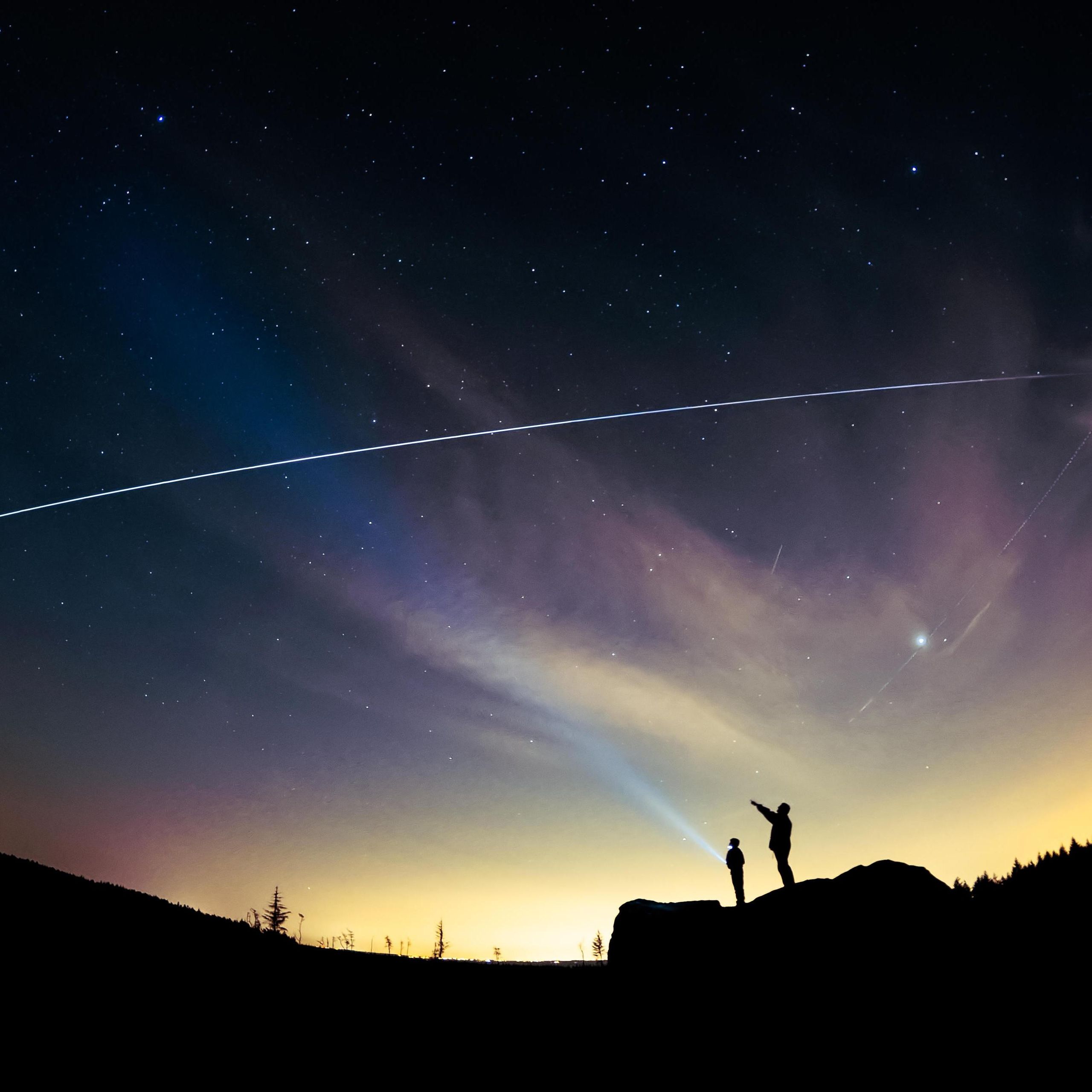
The Digital Infrastructure Behind ISS Tracking
To answer the question of when the ISS will be visible, we must first understand the backend data that tracks its position. The space station doesn’t follow a simple, static path. Its orbit is subject to atmospheric drag, gravitational perturbations from the Earth’s uneven mass, and occasional “re-boost” maneuvers performed by docked spacecraft.
Understanding Two-Line Element Sets (TLEs)
At the heart of every tracking app and website is a data format known as a Two-Line Element Set (TLE). Developed by NORAD and currently maintained by the U.S. Space Command, a TLE is a standard mathematical representation of an object’s orbit at a specific point in time.
Software developers use these TLEs as the input for SGP4 (Simplified General Perturbations) algorithms. By processing this data, tracking platforms can propagate the station’s position into the future. When you open an app to see “what time the space station is visible,” the software is performing complex calculus in the background—factoring in your GPS coordinates, the curvature of the Earth, and the angle of the sun—to determine if the ISS will be illuminated against a dark sky in your specific location.
The Role of Geospatial APIs in Real-Time Tracking
Most consumer-facing tools don’t process raw TLE data locally. Instead, they rely on robust Application Programming Interfaces (APIs). These APIs, such as those provided by NASA’s “Spot the Station” or private entities like N2YO, serve as a bridge. They take the raw orbital data, process it on powerful servers, and deliver a clean JSON or XML response to your device.
This API-driven architecture allows for real-time notifications. When the ISS is ten minutes away from your horizon, a push notification is triggered not by a human observer, but by a geofenced script that cross-references your phone’s location with the station’s projected ground track. This synergy of orbital mechanics and cloud computing is what makes modern skywatching possible.
Top-Tier Apps and Software for Spotting the Station
For the casual observer, the most efficient way to determine sighting times is through dedicated software. These tools take the technical data mentioned above and translate it into intuitive maps and countdown timers.
NASA’s “Spot The Station” and the Mobile Ecosystem
NASA’s official “Spot the Station” website and mobile app remain the gold standard for accuracy. The tech behind this platform focuses on three critical variables: Max Height (the elevation above the horizon), Approach (where it first appears), and Departure (where it disappears).
The mobile app leverages the hardware within your smartphone—specifically the magnetometer and gyroscope—to provide an Augmented Reality (AR) view. By holding your phone up to the sky, the software overlays a digital path onto your camera feed, showing exactly where the ISS will emerge from the horizon. This integration of AR tech removes the guesswork often associated with compass headings and degrees of elevation.
Third-Party Power Users: Stellarium and Heavens-Above
While NASA provides the basics, third-party software like Stellarium (an open-source planetarium) and Heavens-Above offers deeper technical insights.
Stellarium’s desktop and mobile versions use a highly detailed 3D engine to simulate the night sky from any point on Earth. For tech enthusiasts, this software allows for “sensor view” simulations. If you are planning to photograph the ISS, you can input your camera’s sensor size and lens focal length. The software will then show you exactly how large the ISS will appear in your frame during tonight’s pass.

Heavens-Above, on the other hand, is the preferred tool for those who want to see the “Ground Track.” This is a 2D map projection showing the path the station is flying over the Earth’s surface. It is particularly useful for understanding why a pass might be visible in one city but obscured by the Earth’s shadow just a few hundred miles away.
Optical Tech and Hardware: Enhancing the Viewing Experience
Once the software tells you the time, the next step in the tech chain is the hardware used to observe it. While the ISS is visible to the naked eye as a bright, steady white light, advanced hardware can reveal its structural details, such as solar arrays and docking modules.
Smart Telescopes and Automated GoTo Mounts
Traditional telescopes often struggle with the ISS because it moves too quickly for manual tracking. However, the rise of “Smart Telescopes” (like those from Unistellar or Vaonis) has changed the game. These devices use Computer Vision and plate-solving technology to identify their orientation in the sky.
Advanced hobbyists use “GoTo” mounts equipped with specialized satellite-tracking software. Unlike standard mounts that follow the slow rotation of the stars, these mounts are programmed to accelerate and decelerate to match the ISS’s variable angular velocity. By syncing the mount with the latest TLE data via a USB or Wi-Fi connection, the telescope can automatically lock onto the station as it rises, keeping it centered in the eyepiece for the duration of the pass.
Astrophotography: Capturing the ISS with Modern Sensors
Capturing a clear image of the ISS requires high-speed digital sensors. Because the station moves so fast, a standard long-exposure photograph will only result in a bright streak of light. To see detail, tech-savvy photographers use “lucky imaging” techniques.
This involves using a high-frame-rate CMOS camera (often used for planetary imaging) to record a video file at 60 to 100 frames per second. By using a very short exposure time (typically 1/1000th of a second or faster) and high ISO settings, photographers can “freeze” the motion. Afterward, software like PIPP (Planetary Imaging Pre-Processor) is used to scan thousands of frames, identify the ones where the station is sharpest and least affected by atmospheric turbulence, and crop them into a stabilized sequence.
The Future Tech of Orbital Observation
The technology used to track the ISS is currently laying the groundwork for a much busier sky. As we move toward the late 2020s, the ISS will be joined (and eventually replaced) by a variety of commercial space stations.
Axiom Space and the Next Generation of Orbital Labs
Axiom Space is currently developing modules that will initially attach to the ISS before detaching to become a standalone commercial station. From a tracking perspective, this creates a fascinating technical challenge. Software developers will need to update tracking algorithms to account for multiple large, bright objects in similar orbits.
Furthermore, the “Starlink effect”—the massive increase in low-earth orbit satellites—has led to the development of better light-pollution and satellite-filtering software. For those asking “what time will the space station be visible,” future apps will likely use machine learning to distinguish the ISS from the thousands of other satellites and debris pieces, ensuring that users are looking at the correct object.
Integration with Wearable Tech
We are also seeing the migration of tracking tech to wearables. Smartwatches can now provide haptic feedback—a vibration on the wrist—when the ISS is about to pass overhead. Some developers are even experimenting with integration into Heads-Up Displays (HUDs) for smart glasses. Imagine walking outside and having a digital arrow projected onto your glasses, pointing directly to the ISS in real-time. This is no longer science fiction; the data streams exist, and the hardware is catching up.

Conclusion: Making the Most of Tonight’s Pass
Determining what time the space station will be visible tonight is a testament to how far consumer technology has come. What once required a deep knowledge of astronomy and manual slide-rule calculations is now handled by cloud-based APIs and AR-enabled smartphones.
To get the best experience, start by downloading a reputable tracking app and enabling notifications. Look for passes with an elevation of at least 40 degrees; these “high passes” bring the station closer to your zenith, resulting in a brighter appearance and less atmospheric interference. Whether you are viewing it with the naked eye or through a computer-controlled telescope, the ISS serves as a glowing reminder of what human ingenuity and technological collaboration can achieve. As the station nears the end of its operational life, there has never been a better time to use the tools at your disposal to look up and witness this feat of technology orbiting overhead.
aViewFromTheCave is a participant in the Amazon Services LLC Associates Program, an affiliate advertising program designed to provide a means for sites to earn advertising fees by advertising and linking to Amazon.com. Amazon, the Amazon logo, AmazonSupply, and the AmazonSupply logo are trademarks of Amazon.com, Inc. or its affiliates. As an Amazon Associate we earn affiliate commissions from qualifying purchases.