
The question “what the price is” is deceptively simple, yet it underpins an entire universe of financial decision-making, economic theory, and individual wealth management. Beyond the sticker shock at a retail checkout or the fluctuating figures on a stock ticker, understanding the true nature of price, its determinants, and its implications is fundamental to navigating the modern financial landscape. This exploration delves into the multifaceted world of pricing, focusing not just on the numbers themselves, but on the intricate dance of forces that bring them into existence and the strategic considerations that guide their management. Whether you’re a seasoned investor, a burgeoning entrepreneur, or an individual seeking to optimize your personal finances, grasping “what the price is” is paramount to making informed decisions that foster financial well-being and prosperity.
The Fundamental Drivers of Price
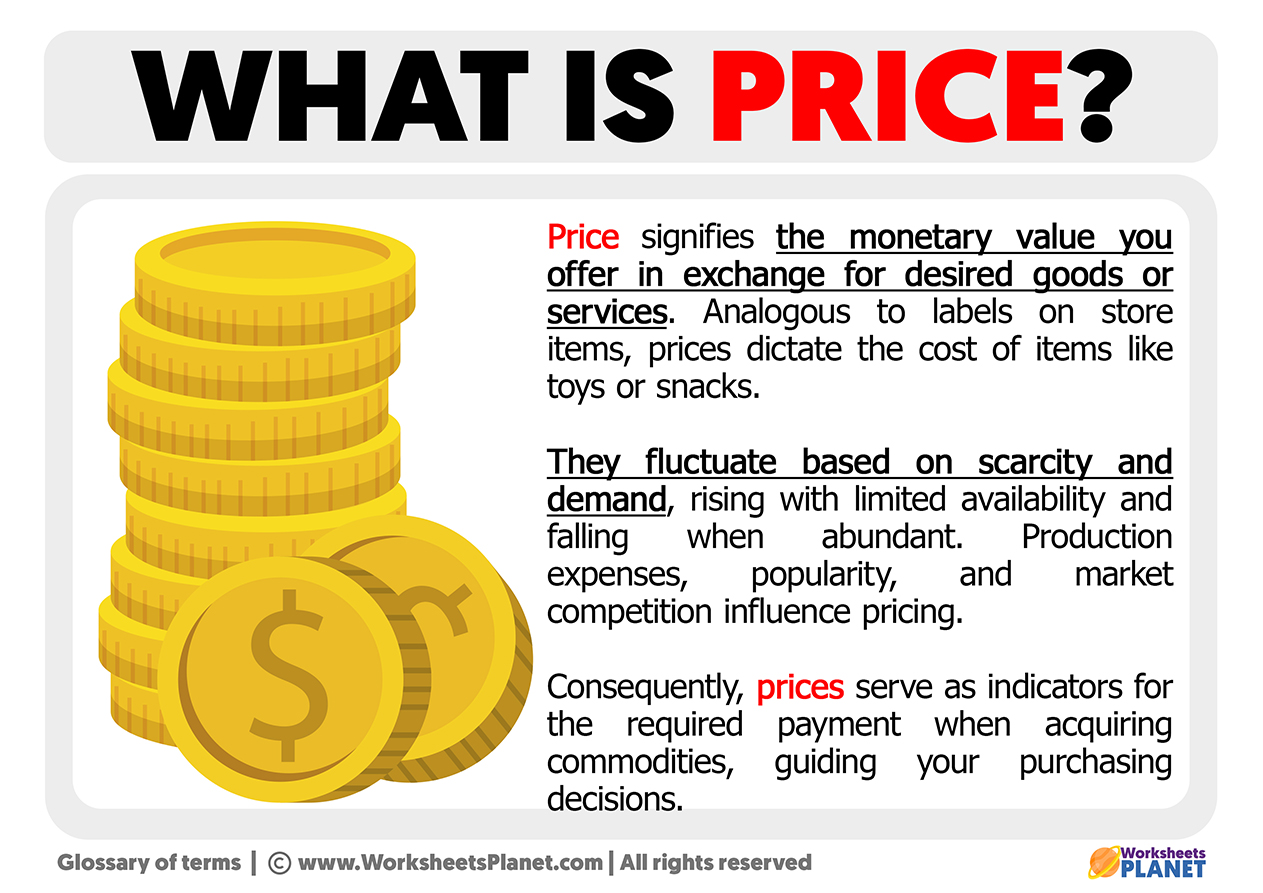
At its core, price is a manifestation of value exchange. It’s the numerical representation of what a seller is willing to accept and what a buyer is willing to pay for a good, service, or asset. However, this simple definition belies a complex interplay of factors that shape every price tag we encounter.
Supply and Demand: The Timeless Equilibrium
The bedrock of price determination in most market economies is the principle of supply and demand. Supply refers to the quantity of a good or service that producers are willing and able to offer at various price points. Demand, conversely, represents the quantity that consumers are willing and able to purchase at those same price points.
The Supply Curve’s Ascent
As the price of a product increases, producers are typically incentivized to supply more of it, as higher prices can lead to greater profit margins. This relationship is often visualized as an upward-sloping supply curve. Factors influencing supply include the cost of production (labor, raw materials, energy), technological advancements that can increase efficiency, government regulations and subsidies, and the number of sellers in the market. A decrease in production costs or an increase in the number of producers will generally shift the supply curve to the right, leading to lower equilibrium prices, all else being equal. Conversely, disruptions to supply chains, increased input costs, or natural disasters can shift the curve leftward, driving prices up.
The Demand Curve’s Descent
On the other side of the equation, as the price of a good or service decreases, consumers are generally inclined to buy more of it, seeking greater value or affordability. This is represented by a downward-sloping demand curve. Key determinants of demand include consumer income, tastes and preferences, the prices of related goods (substitutes and complements), consumer expectations about future prices, and the size and demographics of the population. A rise in consumer income, for instance, might increase demand for normal goods, shifting the demand curve to the right and potentially leading to higher prices. Conversely, a decrease in consumer income or a shift in preferences away from a product can decrease demand, pushing prices lower.
The Dance Towards Equilibrium
The equilibrium price is the point where the quantity supplied equals the quantity demanded. At this price, the market is said to clear, with no surplus or shortage of the good or service. However, markets are rarely static. Fluctuations in supply and demand, driven by the factors mentioned above, constantly push prices towards this equilibrium point, creating the dynamic pricing we observe daily. Understanding these forces is crucial for businesses to set competitive prices and for consumers to make judicious purchasing decisions.
The Role of Production Costs and Profit Margins
Beyond the external forces of supply and demand, the internal economics of production play a pivotal role in setting a baseline for prices. The cost of bringing a product or service to market is a fundamental consideration for any business.
Deconstructing the Cost Structure
Production costs can be broadly categorized into fixed costs and variable costs. Fixed costs are those that do not change with the level of output, such as rent for a factory, salaries of administrative staff, or depreciation of machinery. Variable costs, on the other hand, fluctuate directly with production volume; these include raw materials, direct labor, and packaging. The total cost of production is the sum of fixed and variable costs. Businesses must ensure that their selling price covers these total costs to avoid operating at a loss.
The Strategic Imperative of Profit
Profit is the ultimate goal of most commercial enterprises. It represents the revenue remaining after all costs have been deducted. Businesses strategically set prices not just to cover costs but to achieve a desired profit margin, which is the percentage of the selling price that constitutes profit. This margin is influenced by a multitude of factors, including the company’s overall financial goals, its competitive position, the perceived value of its offerings, and the elasticity of demand. High-demand, low-competition markets often allow for higher profit margins, while fiercely competitive or price-sensitive markets necessitate narrower margins. Understanding and managing production costs effectively is therefore indispensable for sustainable profitability and for determining a viable selling price.
Pricing Strategies in a Competitive Landscape
In today’s interconnected global economy, few businesses operate in a vacuum. Competition is a pervasive force that profoundly influences pricing decisions. Businesses must not only understand their own costs and market dynamics but also how their pricing stacks up against rivals.
Competitive Pricing and Market Positioning
The presence of competitors compels businesses to consider their pricing in relation to others. This can manifest in several strategic approaches, each with its own implications for market share and profitability.
Price Leadership and Followership
In some industries, a dominant player may emerge as a price leader, setting the benchmark for pricing that other smaller firms tend to follow. This can create a relatively stable pricing environment. Conversely, in highly fragmented markets, companies might engage in price followership, reacting to the pricing moves of their competitors. This can lead to price wars if not managed carefully.
Value-Based vs. Cost-Plus Pricing
A fundamental strategic choice lies between value-based pricing and cost-plus pricing. Cost-plus pricing simply adds a predetermined markup percentage to the cost of production. While straightforward, it doesn’t necessarily reflect what customers are willing to pay. Value-based pricing, on the other hand, sets prices based on the perceived value of a product or service to the customer. This often allows for higher prices if the product offers significant benefits or unique features that customers highly desire. The challenge here lies in accurately assessing and communicating that perceived value.
Penetration Pricing and Skimming
When introducing a new product, businesses may opt for penetration pricing, setting a low initial price to quickly gain market share and deter competitors. Once established, the price can be gradually increased. Alternatively, price skimming involves setting a high initial price for a new, innovative product to capture early adopters and maximize profits from those willing to pay a premium. As the market matures and competition emerges, the price is then lowered. The choice between these strategies depends heavily on the product’s nature, the target market, and the competitive environment.
The Influence of Market Structure
The structure of the market in which a business operates significantly shapes its pricing power. Different market structures present distinct challenges and opportunities for pricing.
Perfect Competition: The Price Taker’s Dilemma
In a perfectly competitive market, characterized by numerous small firms selling identical products, no single firm has any influence over the market price. These firms are price takers, accepting the prevailing market price as determined by the collective forces of supply and demand. Their only pricing decision is to produce at a level where their marginal cost equals the market price to maximize profits.
Monopolistic Competition: Differentiated Offerings
Monopolistic competition features a larger number of firms selling differentiated products. While there is competition, each firm has a degree of pricing power due to the unique characteristics of its offering (branding, quality, service). Firms can charge a slightly higher price than their marginal cost without losing all their customers. Pricing strategies here focus on highlighting product differentiation to justify price points.
Oligopoly: Strategic Interdependence
Oligopolies are dominated by a few large firms. Pricing in an oligopoly is highly strategic and interdependent. Firms must consider how their pricing decisions will affect their rivals, and how rivals might retaliate. This can lead to price rigidity, collusion (though often illegal), or intense price competition.
Monopoly: The Ultimate Pricing Power
A monopoly exists when a single firm is the sole provider of a product or service with no close substitutes. In this scenario, the monopolist has significant pricing power and can set prices to maximize profits, typically at a higher level than in more competitive markets. However, even monopolies are subject to the constraints of consumer demand; excessively high prices can lead to a significant reduction in the quantity demanded.
The Psychology of Pricing and Consumer Behavior
Beyond the economic fundamentals and strategic considerations, pricing is also an exercise in psychology. How a price is presented, its perceived fairness, and its relationship to other prices can significantly influence consumer decisions.
Perceived Value and Anchoring Effects
Consumers don’t always make rational, purely economic calculations. Their perception of value is often subjective and influenced by psychological biases.
The Power of the Anchor
The anchoring effect suggests that the first piece of information encountered, the “anchor,” has a disproportionate influence on subsequent judgments. In pricing, this is often seen with the presentation of original prices crossed out alongside sale prices. The original, higher price acts as an anchor, making the sale price appear more attractive, even if the actual discount is modest. Similarly, displaying a premium option alongside a standard one can make the standard option seem more reasonably priced by comparison.
Decoy Pricing and Bundle Strategies
Decoy pricing involves introducing a third, less attractive option that is strategically designed to make one of the other options appear more appealing. For example, a small popcorn for $3, a large for $7, and a medium for $6.50. The medium option, the decoy, makes the large popcorn seem like a much better deal. Bundle pricing, where multiple items are sold together at a discounted price compared to buying them individually, also leverages psychological appeal by creating a perception of greater value and convenience.
Price as a Signal: Quality and Exclusivity
The price of a product or service often serves as a heuristic, a mental shortcut, for consumers to infer quality or exclusivity.
High Price, High Quality (Often)
For many goods, particularly those where quality is difficult to assess before purchase (e.g., wine, luxury goods, professional services), consumers tend to associate higher prices with higher quality. This is not always accurate, but it’s a common perception that businesses can leverage. A premium price can signal superior craftsmanship, rare ingredients, or exceptional service.
The Allure of Scarcity and Exclusivity
Conversely, prices that reflect exclusivity or scarcity can also drive demand among certain consumer segments. Limited edition items, VIP access, or products associated with a particular status symbol often command higher prices, not just due to production costs but because the high price itself contributes to their desirability. This creates a feedback loop where the price reinforces the perception of value and exclusivity. Understanding these psychological dimensions allows businesses to craft pricing strategies that resonate with consumer perceptions and ultimately drive sales and build brand loyalty.
aViewFromTheCave is a participant in the Amazon Services LLC Associates Program, an affiliate advertising program designed to provide a means for sites to earn advertising fees by advertising and linking to Amazon.com. Amazon, the Amazon logo, AmazonSupply, and the AmazonSupply logo are trademarks of Amazon.com, Inc. or its affiliates. As an Amazon Associate we earn affiliate commissions from qualifying purchases.