
When homeowners or property investors ask, “What size HVAC unit do I need?” they are often looking for a technical answer involving square footage and BTUs. However, from a personal finance and asset management perspective, this question is actually a complex inquiry into capital allocation, operational efficiency, and long-term return on investment (ROI). An HVAC system is typically one of the most significant financial outlays a property owner will make, second only to the purchase of the property itself or a major structural renovation.
Choosing the right size is not merely about comfort; it is about protecting your cash flow and maximizing the value of your real estate asset. In this guide, we will analyze the financial implications of HVAC sizing, treating your home climate system as a high-stakes investment.
The Economics of Sizing: Initial Investment vs. Operational Costs
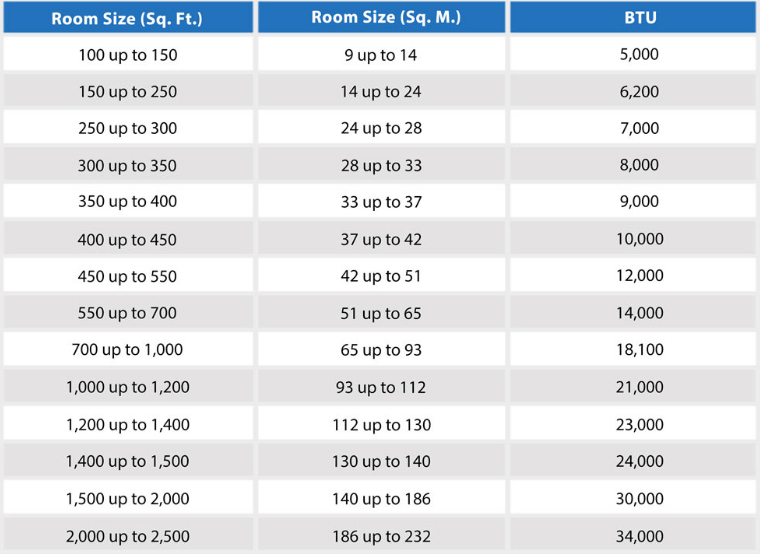
In the world of personal finance, every major purchase should be viewed through the lens of a cost-benefit analysis. When it comes to HVAC units, “size” refers to the cooling and heating capacity, usually measured in tons or BTUs (British Thermal Units). From a budgetary standpoint, there is a delicate balance between the initial capital expenditure (CapEx) and the ongoing operational expenses (OpEx).
Understanding Upfront Capital Expenditure (CapEx)
The price of an HVAC unit scales with its capacity. A 5-ton unit is significantly more expensive than a 2-ton unit. For a budget-conscious homeowner, it might be tempting to opt for a smaller, cheaper unit to save on immediate costs. Conversely, some may fall into the “bigger is better” trap, assuming that over-investing in capacity will yield better results.
Both extremes represent poor financial planning. Over-sizing your unit leads to “lazy capital”—money spent on capacity that your home will never actually utilize. Under-sizing, on the other hand, creates a “deferred cost” scenario where the system must work twice as hard, leading to premature failure and higher repair costs.
Avoiding the Pitfalls of Under-Sizing and Over-Sizing
From a financial perspective, an oversized unit is an efficiency nightmare. These units engage in “short-cycling,” where they turn on, cool the house rapidly, and then shut off before completing a full dehumidification cycle. This constant starting and stopping consumes massive amounts of electricity—the most expensive part of a motor’s operation is the startup—and wears down the components.
An undersized unit is equally detrimental to your net worth. Because the unit cannot reach the desired temperature, it runs indefinitely. This results in skyrocketing utility bills and a significantly shortened lifespan for the equipment. In financial terms, you are accelerating the depreciation of a multi-thousand-dollar asset.
Energy Efficiency as a Personal Finance Strategy
In modern financial planning, reducing recurring monthly expenses is just as important as increasing income. Your HVAC system accounts for roughly 40% to 50% of your home’s total energy consumption. Therefore, selecting the correct size is a direct play in managing your monthly cash flow.
SEER Ratings and Your Monthly Cash Flow
The efficiency of an HVAC unit is measured by its Seasonal Energy Efficiency Ratio (SEER). While a higher SEER rating often comes with a higher price tag, it functions much like a high-yield investment. By calculating the “payback period”—the time it takes for the monthly energy savings to cover the additional upfront cost of a high-efficiency unit—you can make an informed decision.
For example, if a 16-SEER unit costs $1,500 more than a 14-SEER unit but saves you $30 per month on electricity, your payback period is 50 months (just over four years). Given that most units last 15 to 20 years, the remaining 11 to 16 years represent pure profit in the form of avoided expenses.
Tax Credits and Rebates: Maximizing Government Incentives
A savvy financial move when sizing and selecting an HVAC unit is to leverage government incentives. Programs such as the Inflation Reduction Act (IRA) in the United States offer significant tax credits for installing energy-efficient systems that meet specific sizing and efficiency criteria.
By aligning your purchase with these credits, you can effectively lower your net investment. In many cases, these credits make it financially more viable to purchase a more expensive, correctly sized high-efficiency unit than a cheaper, less efficient one. This is a classic example of using “other people’s money” (via tax offsets) to increase the value of your personal holdings.

Maintenance and Longevity: Protecting Your Home Asset
An HVAC system is a depreciating asset, but the rate of that depreciation is within your control. The sizing of the unit dictates how much stress the system undergoes daily, which in turn determines its lifespan.
Depreciation and the Lifespan of the Unit
In business finance, depreciation is the process of allocating the cost of a tangible asset over its useful life. If you spend $10,000 on an HVAC system and it lasts 20 years, your “annual cost” is $500. If poor sizing causes it to fail in 10 years, your annual cost doubles to $1,000.
Correct sizing ensures that the system operates within its intended parameters. When a system is sized perfectly for the square footage and thermal envelope of a building, it undergoes less mechanical stress. This preserves the internal components, such as the compressor and the blower motor, extending the “useful life” of the asset and delaying the next major capital outlay.
Replacement Cycles and Sinking Funds
For homeowners, the eventual replacement of an HVAC unit is a “known unknown”—you know it will happen, you just don’t know exactly when. Financial experts recommend establishing a “sinking fund” for home maintenance.
By knowing the correct size and current market rate for your required HVAC unit, you can calculate exactly how much you need to save each month to pay for the next unit in cash. If a replacement costs $8,000 and you expect it to last 15 years, saving roughly $45 a month ensures that when the unit finally fails, it is a managed financial event rather than a fiscal crisis.
Using Financial Tools for Accurate Estimation
To determine exactly what size unit you need, you must move beyond simple “rules of thumb” and utilize professional-grade estimation tools. In the financial world, this is equivalent to performing “due diligence” before a major investment.
Load Calculation as an ROI Metric
The industry standard for sizing is the Manual J Load Calculation. This is a comprehensive evaluation that takes into account square footage, insulation quality, window types, local climate, and even the orientation of the house relative to the sun.
While a professional load calculation might cost a few hundred dollars, it should be viewed as an insurance policy. Spending $300 to ensure you don’t spend an extra $2,000 on an oversized unit (or $500 a year in excess energy costs) is a high-ROI activity. It provides the data necessary to ensure that your capital is being deployed as efficiently as possible.
Property Value Appreciation through Modern Systems
Finally, consider the impact of a correctly sized, modern HVAC system on your property’s resale value. In a competitive real estate market, a home with a brand-new, high-efficiency, and correctly sized climate control system is a major selling point.
Buyers today are increasingly focused on “total cost of ownership.” If you can provide documentation showing that your HVAC system was professionally sized and carries a high SEER rating, you are essentially proving to the buyer that their future monthly expenses will be lower. This can lead to a higher asking price and a faster sale, providing a final boost to your overall return on the investment.
Conclusion
Determining “what size HVAC unit I need” is a fundamental exercise in personal finance. It requires an understanding of capital investment, an analysis of recurring operational costs, and a strategic view of long-term asset management. By avoiding the pitfalls of improper sizing and focusing on efficiency and longevity, you turn a necessary household expense into a strategic financial move.
Remember: you aren’t just buying a piece of hardware; you are managing a 20-year energy budget. Approach your HVAC sizing with the same rigor you would use for a stock portfolio or a business venture, and your bank account will thank you for years to come.
aViewFromTheCave is a participant in the Amazon Services LLC Associates Program, an affiliate advertising program designed to provide a means for sites to earn advertising fees by advertising and linking to Amazon.com. Amazon, the Amazon logo, AmazonSupply, and the AmazonSupply logo are trademarks of Amazon.com, Inc. or its affiliates. As an Amazon Associate we earn affiliate commissions from qualifying purchases.