
In common parlance, purgatory is often defined as a state of suffering inhabited by the souls of sinners who are expiating their sins before going to heaven. In the world of personal finance, a strikingly similar phenomenon exists. This “financial purgatory” is a state of economic limbo where an individual is neither bankrupt nor truly thriving. It is characterized by the feeling of running on a treadmill: you are working hard, earning a respectable income, and paying your bills, yet your net worth remains stagnant, and your long-term goals feel just as distant today as they did five years ago.
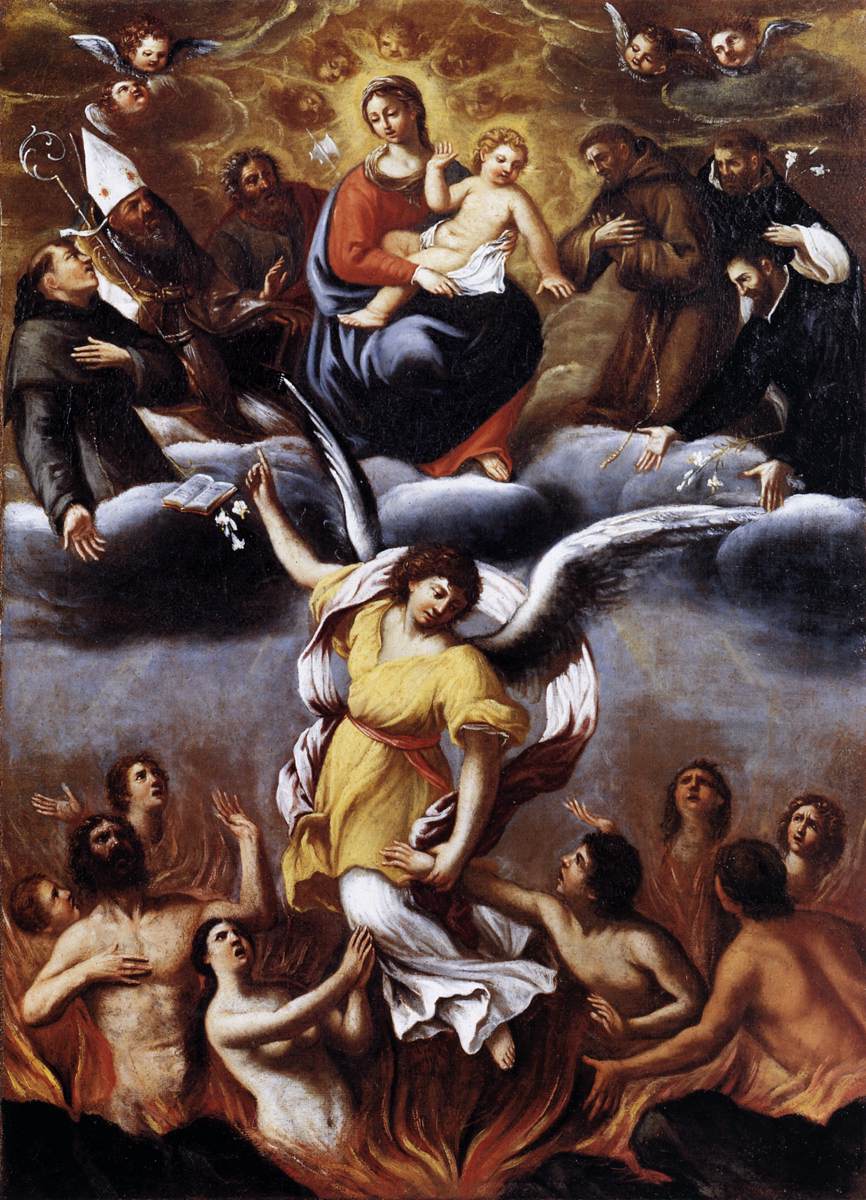
Understanding the “religions” or ideologies that govern our financial behavior is essential to escaping this state of limbo. Just as spiritual beliefs dictate a path toward a higher state of being, our financial philosophies dictate whether we remain stuck in a cycle of mediocrity or ascend toward true fiscal independence.
Defining the Concept: What is Financial Purgatory?
Financial purgatory is a psychological and economic trap that affects millions of middle-to-upper-class professionals. Unlike the “hell” of total insolvency or the “heaven” of absolute financial freedom, purgatory is a comfortable, yet dangerous, middle ground.
The Debt Cycle Trap
The most common hallmark of financial purgatory is the “revolving door” of consumer debt. Many individuals in this state do not have a “debt problem” in the traditional sense; they aren’t being hounded by collection agencies. Instead, they manage their debt efficiently. They use credit card rewards to pay for travel, they have a manageable car note, and their mortgage is current.
However, the “cleansing” never ends. Every time a balance is paid off, a new necessity or “deserved” luxury takes its place. This creates a ceiling on wealth accumulation. When 20% to 30% of monthly take-home pay is dedicated to servicing interest on depreciating assets, the individual remains in a state of perpetual payment. In this niche of personal finance, we recognize that interest paid is the price of impatience, while interest earned is the reward for discipline. To exit purgatory, one must stop being a source of revenue for banks and start becoming a collector of dividends.
The Stagnant Middle-Class Plateau
Another facet of this limbo is the plateau of “lifestyle maintenance.” This occurs when an individual’s income increases, but their cost of living rises in perfect lockstep—a phenomenon known as lifestyle creep.
People in the stagnant middle-class plateau often believe they are doing well because they can afford “nice things.” However, if they were to stop working tomorrow, their lifestyle would collapse within three to six months. They are “high-income poor.” Their wealth is tied entirely to their labor, with no capital working on their behalf. This state of existence is the definition of financial purgatory: you are safe for the moment, but you are not free.
The Religions of Money: Cultivating a Mindset for Financial Redemption
To move from a state of limbo to a state of growth, one must often adopt a new “financial religion.” These are sets of core beliefs and practices that guide every monetary decision. In the modern economic landscape, two primary movements have emerged as the most effective “pathways” out of purgatory.
The Minimalism Movement: Finding Clarity in Less
The “Religion of Minimalism” isn’t just about owning fewer shirts; it is a profound financial strategy aimed at maximizing the gap between income and expenses. By aggressively questioning the utility of every purchase, minimalists reduce their “burn rate.”
In the context of escaping financial purgatory, minimalism serves as the initial purgation. It strips away the unnecessary expenses that act as anchors on a portfolio. When you stop spending money to impress people you don’t particularly like, you suddenly find the capital necessary to fund your escape. This mindset shifts the focus from “what can I buy?” to “what can I own that produces value?”
The FIRE Movement: Radical Savings and Early Retirement
The “Financial Independence, Retire Early” (FIRE) movement is perhaps the most disciplined financial religion of the 21st century. It operates on a simple, yet radical, dogma: maximize your savings rate (often to 50% or 70% of income) and invest the surplus into low-cost index funds until your passive income exceeds your living expenses.
For those in financial purgatory, FIRE offers a structured roadmap. It moves the goalposts from “having a good job” to “having enough assets.” By adopting the FIRE philosophy, individuals stop viewing their salary as a spending limit and start viewing it as a tool for purchasing their time back from the market.
Strategic Investments: Moving from Limbo to Growth
Once the mindset is corrected and the debt cycle is broken, the next step is the strategic deployment of capital. You cannot save your way to true wealth; you must invest your way there. Financial purgatory is often maintained by a “cash-heavy” strategy where fear of market volatility keeps money in low-yield savings accounts, where inflation slowly erodes its purchasing power.

Asset Allocation and Risk Management
The transition from limbo to growth requires a sophisticated understanding of asset allocation. A common mistake for those stuck in the middle is being “too safe.” They keep 80% of their net worth in their primary residence and a savings account. While this feels secure, it lacks the growth engine required to outpace the cost of living.
A professional approach involves diversifying across multiple asset classes: equities for growth, bonds for stability, and perhaps real estate or private equity for diversification. The goal is to create a “weather-proof” portfolio. In this stage, the investor learns that risk is not something to be avoided, but something to be managed. By understanding their own risk tolerance and time horizon, they can move their capital from the “purgatory” of 1% interest rates to the “growth engine” of the global markets.
Passive Income Streams: The Bridge to Freedom
The ultimate exit strategy from financial purgatory is the creation of passive income. This is the “heaven” of the financial world—a state where your money works harder than you do.
This might include:
- Dividend-paying stocks: Reinvesting dividends to leverage the power of compounding.
- Rental Properties: Using leverage (mortgages) to acquire assets that produce monthly cash flow.
- Digital Assets: Creating or investing in software, e-books, or online businesses that generate revenue with minimal ongoing labor.
When your passive income covers your “survival” expenses (housing, food, utilities), you have officially exited purgatory. You are no longer forced to work; you work because you choose to.
Identifying and Overcoming “Purgatory” Behaviors
Even with a solid plan, certain behavioral traps can pull an investor back into the state of limbo. These are the “vices” of the financial world that must be identified and purged.
Lifestyle Creep: The Invisible Enemy
Lifestyle creep is the most insidious threat to financial progress. It is the tendency to increase spending as income increases. That $10,000 promotion feels like a massive win, but if it immediately goes toward a higher lease payment for a luxury SUV, your net wealth position has not changed. In fact, it may have worsened due to increased insurance and maintenance costs.
To combat this, successful wealth-builders practice “reverse budgeting.” They decide on their investment goals first and treat their savings like a mandatory bill. Only after the “future self” is paid do they look at what is left for lifestyle enhancements.
Analysis Paralysis: When Over-Thinking Costs You Profits
In the tech-driven world of modern finance, we are overwhelmed with data. “Financial Purgatory” is often populated by people who spend years “researching” the perfect investment without ever pulling the trigger. They wait for the “market crash” that never comes, or they try to find the “next Bitcoin” while ignoring the steady 8-10% returns of the S&P 500.
In the niche of wealth management, we emphasize that “time in the market beats timing the market.” Overcoming analysis paralysis means accepting that a good plan executed today is better than a perfect plan executed five years from now.
Building a Roadmap to Financial Heaven
The journey out of financial purgatory is not a sprint; it is a calculated migration. It requires a combination of high-level strategy and daily discipline.
Goal Setting and Accountability
You cannot reach a destination you haven’t defined. Escaping purgatory requires specific, measurable, achievable, relevant, and time-bound (SMART) goals. Instead of saying “I want to be rich,” one must say, “I want to have a net worth of $1.2 million and a passive income of $4,000 a month by age 50.”
Accountability is the second half of this equation. Whether it’s through a financial advisor, a mastermind group, or a simple spreadsheet shared with a spouse, tracking progress is essential. When you see the numbers move, the psychological “pain” of saving transforms into the “pleasure” of winning.

The Role of Continuous Education
The final key to maintaining a state of financial grace is education. The rules of money change—tax laws shift, new investment vehicles emerge, and global economies evolve. Those who remain in financial purgatory often rely on “old” advice (e.g., “just put your money in a CD”).
True wealth-builders are perpetual students of the game. They read quarterly reports, listen to economic podcasts, and understand the macro-forces (like inflation and interest rate cycles) that affect their purchasing power. By staying informed, they ensure that once they escape financial purgatory, they never fall back into its stagnant embrace.
In conclusion, financial purgatory is a state of mind as much as it is a state of the bank account. By identifying the “religions” or mindsets that hold us back, breaking the cycles of debt and lifestyle creep, and aggressively pursuing a strategy of diversified investment, anyone can move from the limbo of “just getting by” to the freedom of true financial independence. The path is narrow and requires sacrifice, but the destination—a life of choice and security—is well worth the journey.
aViewFromTheCave is a participant in the Amazon Services LLC Associates Program, an affiliate advertising program designed to provide a means for sites to earn advertising fees by advertising and linking to Amazon.com. Amazon, the Amazon logo, AmazonSupply, and the AmazonSupply logo are trademarks of Amazon.com, Inc. or its affiliates. As an Amazon Associate we earn affiliate commissions from qualifying purchases.