
The history of Egypt is often viewed through a bifurcated lens: the era of the majestic Pharaohs and the subsequent Islamic Golden Age. However, the transitional period between these two epochs—spanning roughly from the arrival of Alexander the Great in 332 BCE to the Arab conquest in 641 CE—is one of the most complex religious transformations in human history. To answer the question of what religion Egypt practiced before Islam, we must look beyond traditional dusty archives. Today, the answer is being reconstructed through cutting-edge technology, AI-driven linguistics, and bio-technological breakthroughs.
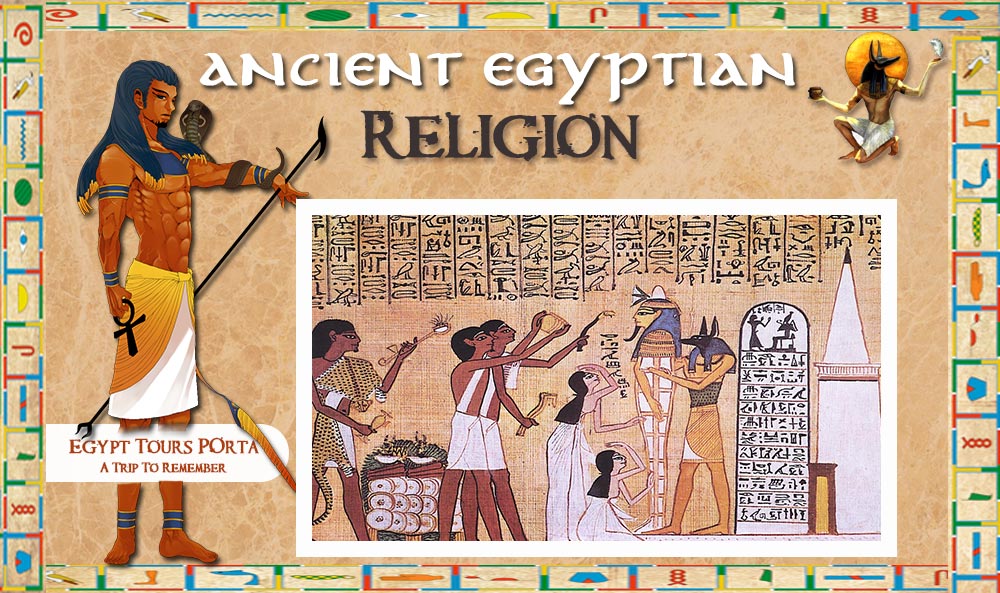
For centuries, the period of Coptic Christianity and Greco-Roman polytheism was shrouded in mystery. Now, digital archaeology and advanced software tools are providing a granular look at how a nation of sun-worshippers became a bastion of Christendom before finally embracing Islam.
The Virtual Excavation: AI and the Transition from Polytheism to Coptic Christianity
Before the Islamic conquest, Egypt was not a religious monolith; it was a melting pot of shifting beliefs. The primary religion immediately preceding Islam was Coptic Christianity, which had evolved from a mix of Greek philosophy and native Egyptian traditions. To map this transition, archaeologists are turning to remote sensing and Artificial Intelligence.
LiDAR and Satellite Imagery: Peering through the Sand
One of the greatest challenges in identifying pre-Islamic religious sites is the physical layering of history. Many Coptic churches were built directly atop or within Pharaonic temples. Using Light Detection and Ranging (LiDAR) and high-resolution satellite imagery, researchers can now “see” through layers of sediment and modern urban sprawl.
Algorithmic processing of these images allows software to identify the specific rectangular footprints of early Christian basilicas versus the massive, pylon-gated structures of the earlier polytheistic temples. These tech-driven surveys have revealed a dense network of monastic settlements in the Nitrian Desert that were previously invisible to the naked eye, proving that by the 4th century, Egypt had become a global center for Christian monasticism.
Reconstructing Temple Life via Neural Networks
How did a priest of Isis transition into a Coptic monk? Neural networks are now being used to create predictive models of social migration. By inputting data points from thousands of ostraca (pottery shards used for writing), AI tools can simulate the demographic shifts in specific regions like Oxyrhynchus. These simulations show a gradual “digital fade” of traditional Egyptian names toward biblical ones, providing a roadmap of how quickly Christianity superseded the old gods in the two centuries leading up to the Islamic era.
Deciphering the Sacred: Machine Learning and Ancient Manuscripts
The “religion of Egypt” was not just a set of beliefs but a complex linguistic landscape. Before Islam, the dominant liturgical language was Coptic—the final stage of the ancient Egyptian language, written using the Greek alphabet.
Natural Language Processing (NLP) for Coptic and Demotic Texts
The sheer volume of unread Coptic papyri is staggering. For a human scholar, translating a single damaged manuscript can take months. However, advancements in Natural Language Processing (NLP) and Optical Character Recognition (OCR) specifically designed for non-Latin scripts are revolutionizing this field.
Projects like “Coptic SCRIPTORIUM” utilize digital humanities tools to provide open-source, machine-readable corpora of Coptic texts. These NLP tools allow researchers to search for religious keywords across thousands of documents simultaneously. By analyzing the frequency of terms like “Logos” or “Theotokos” in texts from the 5th century, software can track the theological nuances of the Egyptian church, illustrating a highly organized religious hierarchy that existed long before the first mosque was built on Egyptian soil.
Digitizing the Nag Hammadi Library
Technology has also breathed new life into the “lost” religions of Egypt, such as Gnosticism. The Nag Hammadi Library, a collection of Gnostic texts found in 1945, has been undergoing multi-spectral imaging. This technology captures wavelengths of light outside the human spectrum, revealing ink that has faded to the point of invisibility. This digital recovery has allowed scholars to understand that even within the “Christian” era of Egypt, there was a vibrant tech-aided recovery of “heretical” beliefs that competed for the hearts of the Egyptian people before the Islamic period.

Bio-Tech and Ancestry: The Genomics of Religious Shift
A common question regarding Egypt’s religious history is whether the people themselves changed through migration or if only their ideas did. Modern paleogenomics and bio-technological tools are providing the answers.
Paleogenomics: Mapping the DNA of Roman-Era Egyptians
In a landmark study, scientists at the Max Planck Institute for the Science of Human History used high-throughput DNA sequencing on mummies from the Pre-Islamic and Roman periods. The technological ability to extract and sequence ancient DNA (aDNA) has shown that the Egyptian population remained remarkably stable during the transition from polytheism to Christianity.
This data suggests that the religious shift was a cultural and technological transmission rather than a result of mass migration or displacement. The “Tech” of the human genome proves that the ancestors of today’s Egyptians were the same individuals who built the Coptic cathedrals and, before that, the temples of Kom Ombo and Philae.
Digital Forensics in Mummification Evolution
Interestingly, mummification—a staple of the ancient religion—did not stop immediately with the rise of Christianity. Digital X-ray and CT scanning of “Roman-period” mummies show a fascinating hybrid of religious technology. These scans reveal bodies wrapped in traditional linen but decorated with painted portraits (the Fayum portraits) that reflect a more Romanized, and eventually Christian, aesthetic. This bio-digital forensic evidence shows that the “religion of Egypt” was a spectrum, where old funerary technologies were repurposed for new theological frameworks.
VR and AR: Immersive Education on Egypt’s Pre-Islamic Heritage
As we define what Egypt was before Islam, the challenge is often one of visualization. How do you explain a world that was half-Pharaonic and half-Byzantine? Virtual Reality (VR) and Augmented Reality (AR) are the tools currently bridging this gap.
Building Digital Museums for Lost Coptic Cathedrals
Many of the architectural wonders of pre-Islamic Egypt were dismantled or repurposed. However, using “BIM” (Building Information Modeling) software, architects and historians are creating 1:1 digital twins of lost structures like the Great Cathedral of Alexandria. Users can wear a VR headset and walk through a 5th-century Egyptian liturgy. This immersive tech provides a sensory answer to the question of religion, showing the incense-filled, icon-rich environment that characterized Egyptian life for the 600 years preceding Islam.
The Ethics of Digital Preservation and Cyber-Archeology
With the rise of “Cyber-Archeology,” the preservation of Egypt’s pre-Islamic Coptic sites has moved to the cloud. Platforms like “Open Heritage” use 3D laser scanning to create permanent digital records of monasteries that are currently threatened by environmental degradation. This tech ensures that even if the physical sites vanish, the evidence of Egypt’s Christian and Polytheistic past remains accessible for algorithmic analysis by future generations.
The Future of Digital History: Blockchain and Artifact Integrity
As we continue to explore Egypt’s religious identity, the integrity of our data is paramount. The religious history of Egypt is a sensitive topic, and the “Money” and “Tech” of the antiquities trade often lead to the forgery of pre-Islamic artifacts.
Smart Contracts for Cultural Heritage
To combat the flow of forged Coptic icons and Roman-era manuscripts, some tech-forward museums are implementing blockchain technology. By creating a “Digital Passport” for an artifact using Non-Fungible Tokens (NFTs) or decentralized ledgers, the provenance of a 4th-century papyrus can be tracked with 100% certainty. This ensures that the history we are writing about Egypt’s religion is based on authentic, verified data.
Conclusion: A Tech-Enabled Window into the Past
To ask what religion Egypt was before Islam is to invite a multi-layered answer. Through the lens of 21st-century technology, we see that it was a land of incredible spiritual fluidity. It was a place where AI now finds hidden churches, where NLP decodes ancient Christian prayers, and where DNA sequencing connects the modern citizen to the ancient worshipper.
Before Islam, Egypt was a vibrant, Coptic Christian society that still carried the echoes of its Pharaonic ancestors. Today, thanks to software, satellites, and sequencing, that world is no longer lost—it is being rendered in high definition, allowing us to witness the complex evolution of faith through the power of technology.
aViewFromTheCave is a participant in the Amazon Services LLC Associates Program, an affiliate advertising program designed to provide a means for sites to earn advertising fees by advertising and linking to Amazon.com. Amazon, the Amazon logo, AmazonSupply, and the AmazonSupply logo are trademarks of Amazon.com, Inc. or its affiliates. As an Amazon Associate we earn affiliate commissions from qualifying purchases.