
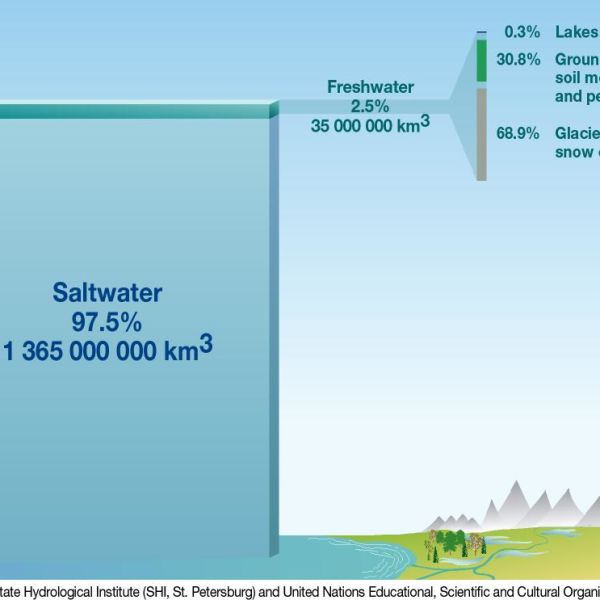
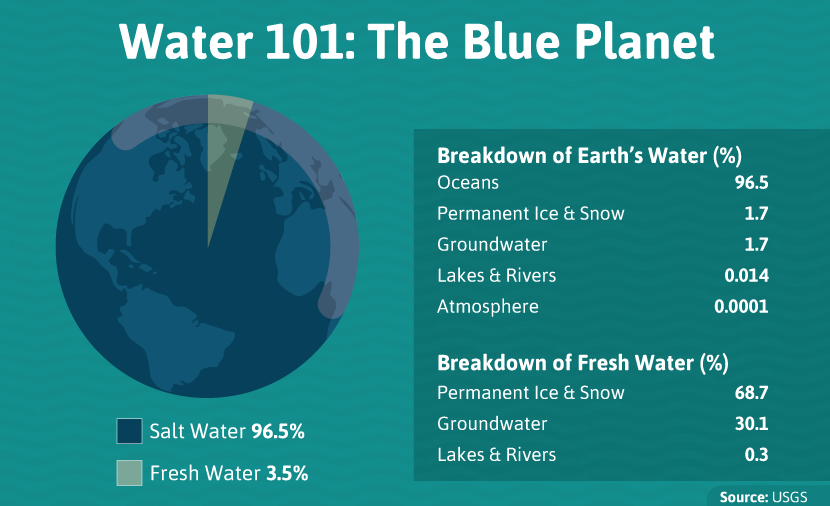
While the Earth is often referred to as the “Blue Planet,” the reality for investors and economists is far more stark. Approximately 97% of the planet’s water is saline, held in our vast oceans. Of the remaining 3%, a staggering 2.5% is freshwater. However, even this tiny fraction is not entirely accessible; much of it is locked in glaciers, ice caps, and deep underground aquifers. In total, less than 1% of the world’s freshwater is available for human use, ecosystem maintenance, and—most crucially for the global economy—industrial and agricultural production.

In the world of finance, scarcity dictates value. As the global population surges and climate volatility increases, the 2.5% of freshwater on Earth is transitioning from a basic human right to one of the most strategic assets of the 21st century. This article explores the economic implications of freshwater scarcity, the emergence of “Blue Gold” as a financial instrument, and how investors are positioning themselves for a water-stressed future.
Understanding the Scarcity: The Economics of the 2.5%
The fundamental principle of economics is the allocation of scarce resources. When we look at the percentage of Earth’s water that is freshwater, we are looking at a supply-side constraint that is virtually fixed. Unlike fiat currency, we cannot simply print more freshwater. This fixed supply, pitted against an exploding demand from emerging markets and industrial expansion, creates a massive economic imbalance.
The Disconnect Between Supply and Economic Demand
Global water demand is projected to increase by 20% to 30% by 2050. Currently, agriculture accounts for roughly 70% of global freshwater withdrawals, while industry takes another 20%. As nations transition from agrarian to industrial economies, the “value-per-drop” becomes a critical metric. For a country’s GDP to grow, it requires water for energy production, semiconductor manufacturing, and textile processing. When the 2.5% supply is squeezed, the cost of doing business rises exponentially, leading to what economists call “water inflation.”
Freshwater as a Finite Commodity
Unlike gold or oil, which can be substituted or found in new deposits, freshwater has no substitute in the biological or industrial processes of life. In financial terms, this makes freshwater a “perfectly inelastic” good. In regions like California, Australia, and the Middle East, the realization that water is a finite commodity has led to the development of sophisticated water markets where rights are traded similarly to land or mineral rights.
Investing in Water: Assets, Equities, and the Future of Liquidity
For the savvy investor, the “water story” is not just about environmentalism; it is about infrastructure, technology, and risk management. As the percentage of available freshwater dwindles relative to demand, the capital required to manage, clean, and transport that water represents a multi-trillion-dollar opportunity.
Water Rights and Futures Contracts
In a landmark move for the financial industry, the Nasdaq Veles California Water Index (NQH2O) was launched to track the spot price of water rights. This paved the way for the trading of water futures on the Chicago Mercantile Exchange (CME). These financial instruments allow farmers to hedge against price spikes during droughts and offer speculators a way to bet on the increasing value of liquid assets. While controversial, these markets provide the “price discovery” necessary for efficient resource allocation in a world where freshwater is no longer a free utility.
Infrastructure and Utility Stocks
The aging infrastructure in developed nations and the total lack of it in developing ones creates a massive pipeline for investment. Companies specializing in desalination, smart metering, and leak detection are becoming darlings of the industrial sector. Investing in regulated water utilities offers a defensive play, providing steady dividends and lower volatility, as the demand for water remains constant regardless of economic cycles.
ESG and Impact Investing in Water
Environmental, Social, and Governance (ESG) criteria have moved from the fringe to the mainstream of Wall Street. Freshwater management is a core pillar of the “E” in ESG. Institutional investors are increasingly scrutinizing the “water footprint” of the companies in their portfolios. Firms that demonstrate superior water efficiency are seeing lower costs of capital and higher valuations, as they are deemed lower-risk in a future where water may be rationed or heavily taxed.
The Financial Risks of Water Scarcity for Corporations
The 2.5% of Earth’s water that is fresh is not evenly distributed. This geographic disparity creates significant systemic risk for global supply chains. For a business, water scarcity is not just an environmental concern; it is a direct threat to the balance sheet.
Operational Risks and Supply Chain Disruptions
Consider the semiconductor industry, which requires massive amounts of ultra-pure freshwater for wafer fabrication. A single drought in Taiwan or Arizona can halt production, leading to billions of dollars in lost revenue and plummeting stock prices. Similarly, the beverage and apparel industries are highly susceptible to “stranded assets”—factories that can no longer operate because the local water table has dropped too low to sustain production.
Regulatory and Reputational Costs
As water becomes scarcer, governments are increasingly likely to prioritize residential use over industrial use. This leads to regulatory risk, where companies may face sudden hikes in water tariffs or total bans on usage during peak periods. Furthermore, companies that “compete” with local communities for freshwater face immense reputational damage, which can lead to consumer boycotts and the erosion of brand equity, directly impacting long-term shareholder value.
Side Hustles and Small-Scale Opportunities in the Blue Economy
You don’t need to be a hedge fund manager to capitalize on the shifting economics of freshwater. The “Blue Economy” is creating a variety of niche markets for entrepreneurs and side-hustlers who understand the value of a liter of clean water.
Niche Consulting and Water Management Services
Small businesses and homeowners are increasingly looking for ways to reduce their utility bills. This has birthed a new niche for water-efficiency consultants. These professionals audit properties, install greywater systems, and design xeriscapes (low-water landscaping). As water rates rise in urban centers, the ROI on these services becomes undeniable, creating a lucrative side hustle for those with technical or environmental expertise.
Technological Arbitrage in Water Conservation
The rise of IoT (Internet of Things) has enabled the creation of low-cost water monitoring tools. Entrepreneurs are finding success by white-labeling smart-leak detectors or developing apps that help small-scale farmers optimize irrigation schedules. By leveraging technology to save a resource that is becoming more expensive, these small-scale ventures are engaging in a form of “resource arbitrage”—buying (or saving) water at today’s prices to reap tomorrow’s profits.
Strategic Asset Allocation for a Water-Stressed Future
As we look at the data—that only 2.5% of the Earth’s water is freshwater—the logical conclusion for any long-term investor is that water must be a component of a diversified portfolio. Whether through direct equity, ETFs, or index-linked products, the “Blue Gold” trend is set to accelerate.
Building a Resilient Portfolio
To capitalize on this trend, investors should consider a tiered approach:
- Core Holdings: Regulated utilities that provide stable, long-term returns.
- Growth Play: Water technology companies (desalination, filtration, and AI-driven management).
- Speculative/Hedging: Water futures or land with high-quality senior water rights.
Conclusion: The New Bottom Line
The percentage of Earth’s water that is freshwater is a fixed physical reality that will define the economic reality of the coming decades. In the past, water was an “externality”—something that didn’t appear on a corporate balance sheet. Today, it is a primary driver of risk and reward. As the gap between the 2.5% supply and the global demand continues to widen, the financial world is waking up to a simple truth: liquidity is no longer just a financial term—it is a literal requirement for wealth.
By understanding the economics of freshwater today, investors and businesses can navigate the challenges of a thirsty planet, turning a global crisis into a blueprint for sustainable financial growth.
aViewFromTheCave is a participant in the Amazon Services LLC Associates Program, an affiliate advertising program designed to provide a means for sites to earn advertising fees by advertising and linking to Amazon.com. Amazon, the Amazon logo, AmazonSupply, and the AmazonSupply logo are trademarks of Amazon.com, Inc. or its affiliates. As an Amazon Associate we earn affiliate commissions from qualifying purchases.