
The film September 5 offers a visceral, behind-the-scenes look at one of the most harrowing moments in broadcast history: the 1972 Munich Olympics hostage crisis. However, beneath its narrative of tragedy and journalistic ethics lies a profound exploration of technology. While audiences view the film as a historical drama, for those in the tech and media sectors, it serves as a masterclass in the evolution of broadcasting infrastructure. It depicts the exact moment when sports broadcasting technology was forced to pivot into the realm of live, global breaking news, laying the groundwork for the 20-fret digital news cycle we navigate today.

The Technological Crucible of 1972 Munich: Birth of the Live Feed
At its core, September 5 focuses on the ABC Sports control room. In 1972, the technology used to broadcast the Olympics was the pinnacle of human engineering, yet it was remarkably fragile compared to modern standards. The film highlights how the “tech stack” of the early 70s—consisting of bulky cameras, physical tape reels, and primitive microwave links—was pushed to its absolute limit.
The Control Room as a Technical Nerve Center
The movie meticulously recreates the high-pressure environment of a 1970s broadcast center. Before the era of streamlined software-defined networking (SDN), control rooms were physical puzzles of hardware. Engineers had to manually patch video signals through massive switchboards. The film illustrates how the technical crew had to rewire their entire operation on the fly to switch from broadcasting gymnastics and track-and-field to a live terrorist negotiation. This transition represents the first major instance of “media convergence,” where hardware designed for entertainment was repurposed for high-stakes information dissemination.
From Sports Replays to Live News Tracking
One of the most significant technological leaps featured in the context of the film is the use of the “slow-motion disc recorder.” Originally designed to provide instant replays of athletic feats, this technology became a vital tool for surveillance and identification during the crisis. The ability to “loop” and “freeze” live video in 1972 was a breakthrough; today, we see its lineage in the sophisticated video analytics and AI-driven pattern recognition used by modern news organizations to verify footage in real-time.
Bridging the Gap: Analog Systems to Modern Digital Workflows
The movie September 5 provides a necessary “vantage point” to look at how far media technology has traveled. The shift from the analog equipment seen in the film to today’s digital, cloud-based workflows represents one of the most significant industrial shifts in history.
Microwave Links and the Dawn of Global Connectivity
In the film, the struggle for a clear signal is a recurring technical hurdle. In 1972, international broadcasting relied heavily on microwave towers and a very limited number of orbiting satellites. If a signal dropped, the world went dark. Today, the tech industry has replaced these fragile links with fiber-optic backbones and Low Earth Orbit (LEO) satellite constellations like Starlink. The movie reminds us that the “seamless” connectivity we take for granted was once a high-stakes engineering gamble involving thousands of miles of physical cables and precisely aimed radio dishes.
The Shift from Tape to Instantaneous Digital Feeds
A major plot point in many historical media films, including September 5, is the physical transport of film or tape. In 1972, “instant” was a relative term. Much of the footage still had to be physically processed or manually queued. Contrast this with the modern “Tech” landscape where 5G-enabled cameras stream 4K video directly to the cloud for immediate AI-assisted editing. The evolution from the physical magnetism of 2-inch Quadruplex tape to the non-volatile memory of modern servers has reduced the latency of global news from hours to milliseconds.
The Role of AI and Automation in Modern Crisis Reporting
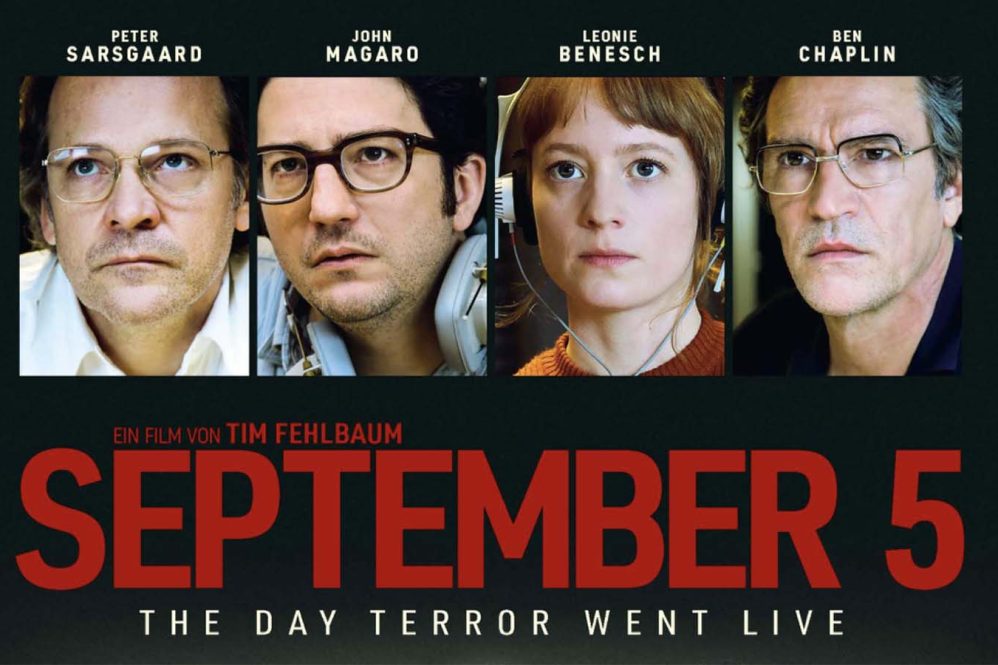
If the events of September 5 occurred today, the technological response would be unrecognizable to the engineers of 1972. The film highlights the human exhaustion of monitoring dozens of monitors; today, that burden is increasingly shared with Artificial Intelligence.
Real-Time Data Processing and Pattern Recognition
In the film, the ABC team has to manually identify individuals appearing on balconies through grainy lenses. In a modern technological context, AI algorithms would be performing facial recognition, gait analysis, and object detection in real-time. Modern newsrooms utilize “automated ingest” systems that can scan thousands of social media uploads simultaneously, using metadata and computer vision to geolocate footage—a far cry from the manual phone calls and physical scouting depicted in the movie.
Ethical Guardrails in the Age of Automated News
September 5 deals heavily with the ethics of what to show and when. In the 1970s, this was a manual decision made by a director hitting a physical switch. Today, the technology itself often incorporates ethical guardrails. High-end broadcasting software now includes “profanity delays” and automated “blurring” features for sensitive content, though the rise of AI-generated deepfakes has added a new layer of technical complexity. Tech companies are now developing “Content Credentials” (using C2PA standards) to cryptographically sign footage, ensuring that the images seen by the public are authentic and untampered—a technical solution to the verification problems faced by the crew in Munich.
Future Frontiers: Virtual Production and Remote Operations
The movie underscores the necessity of having a massive technical crew on-site. However, the current trajectory of media technology is moving toward “REMI” (Remote Integration Model) and virtual production, which would have fundamentally changed the dynamic of the 1972 coverage.
The Rise of Cloud-Based Control Rooms
The heavy racks of equipment seen in the film are being replaced by virtualized instances in AWS or Azure. Modern technicians can operate a global broadcast from a laptop anywhere in the world. This decentralization of the “control room” means that a crisis in one location no longer requires a massive physical footprint, reducing the risk to media personnel and allowing for a more agile technical response.
Low-Latency Streaming and Global Connectivity
The technical tension in September 5 is driven by the limits of the “broadcast window.” Today’s tech stack prioritizes “ultra-low latency.” With the integration of WebRTC and specialized streaming protocols, the delay between an event happening and a viewer seeing it on their mobile device has been nearly eliminated. This allows for interactive journalism and real-time data overlays that provide viewers with a layer of technical context (such as maps, biographies, and historical data) that the 1972 team could only dream of providing.
Lessons for Today’s Tech Stack in High-Stakes Media
Ultimately, September 5 is a film that resonates with IT professionals, broadcast engineers, and software developers because it highlights the importance of “resilience” in technical systems. It shows what happens when the “worst-case scenario” tests the architecture of a system.
Redundancy and Fail-Safe Systems
The film shows how a single technical failure could jeopardize a global broadcast. This has led to the modern tech standard of “N+1” redundancy. In today’s broadcasting world, every primary system has a secondary and tertiary backup, often running on different power grids or network providers. The movie serves as a historical reminder of why the tech industry is so obsessed with uptime and failover protocols.

Human-Centric UI in High-Pressure Environments
One of the most subtle tech lessons in September 5 is the design of the control room. The physical knobs, sliders, and levers were designed for tactile feedback under pressure. As we move toward touchscreen interfaces and voice-activated AI in professional settings, the film reminds us of the importance of User Interface (UI) design. In a crisis, the “technology” must not get in the way of the operator. The movie highlights the need for intuitive, responsive tools that can be operated when adrenaline is high and cognitive load is at its peak.
In conclusion, September 5 is more than a historical recount; it is a document of the “Big Bang” of live media technology. It captures the moment the world realized that cameras and satellites were not just for games, but were the most powerful tools in the global information arsenal. As we look toward a future of AI-driven news, 8K streaming, and decentralized broadcasting, the film serves as a vital benchmark for how far our technological capabilities have advanced since those fateful days in Munich.
aViewFromTheCave is a participant in the Amazon Services LLC Associates Program, an affiliate advertising program designed to provide a means for sites to earn advertising fees by advertising and linking to Amazon.com. Amazon, the Amazon logo, AmazonSupply, and the AmazonSupply logo are trademarks of Amazon.com, Inc. or its affiliates. As an Amazon Associate we earn affiliate commissions from qualifying purchases.