
In the realm of biological engineering, the Australian box jellyfish (Chironex fleckeri) stands as a marvel of evolutionary precision. Often cited as the most venomous creature on the planet, its reputation in the natural world is one of sheer, lethal efficiency. However, for the technology sector—spanning from soft robotics and nanotechnology to sensor fusion and cybersecurity—the box jellyfish is far more than a maritime hazard. It represents a sophisticated blueprint for decentralized processing and high-speed mechanical delivery systems.
As we push the boundaries of what is possible in micro-engineering and artificial intelligence, the “most venomous jellyfish” provides a masterclass in how to manage complex data and execute rapid-fire physical responses without a centralized command structure. This article explores the intersection of marine biology and cutting-edge technology, examining how the mechanisms of the Chironex fleckeri are being decoded to fuel the next generation of tech innovations.
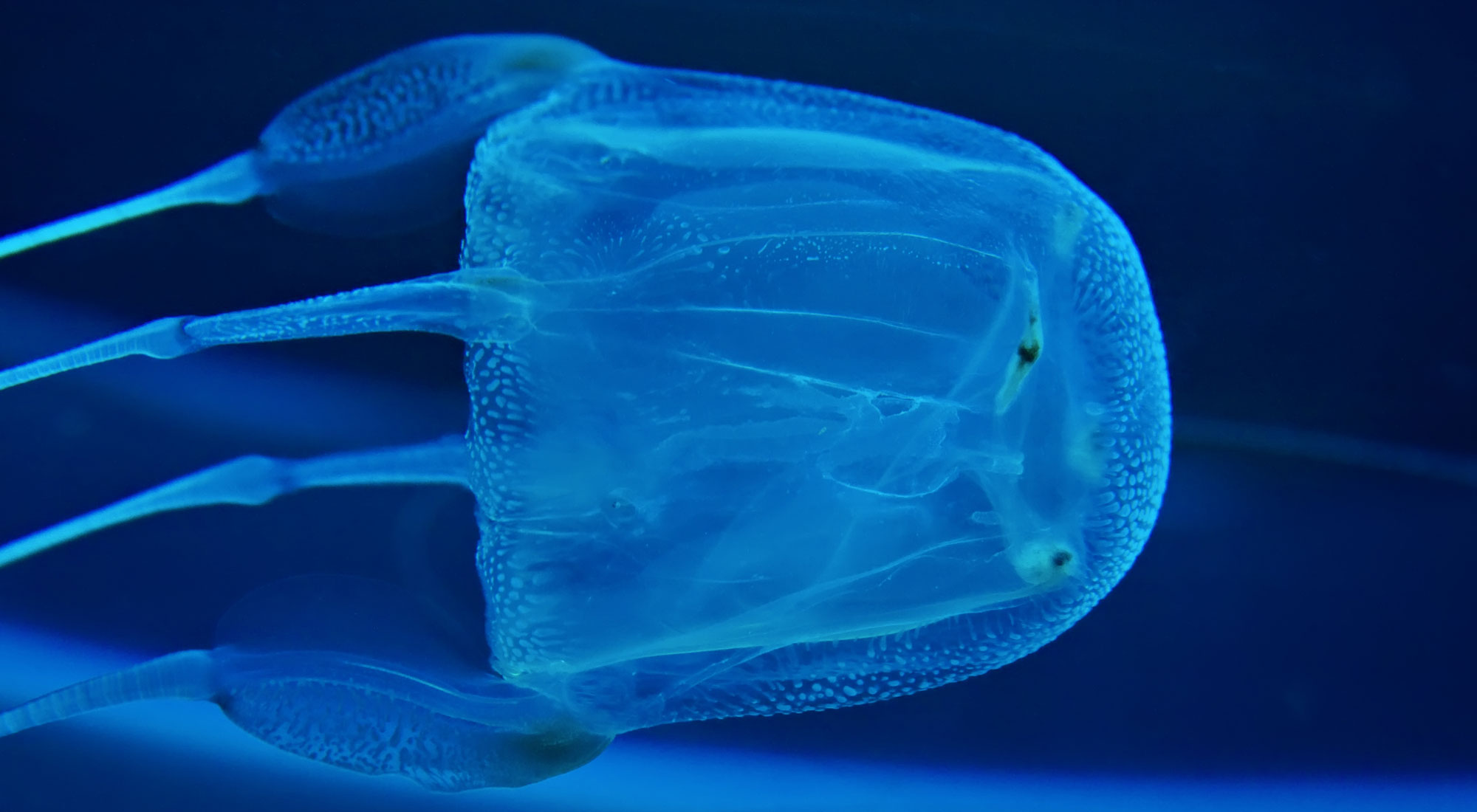
The Mechanics of the Nematocyst: Revolutionizing Micro-Injection Tech
The primary reason the box jellyfish is classified as the most venomous is its delivery system. Each tentacle contains millions of microscopic “nematocysts”—essentially spring-loaded needles that fire venom into prey. To a hardware engineer, the nematocyst is the ultimate example of a Micro-Electro-Mechanical System (MEMS) occurring in nature.
Achieving 5 Million G-Force: The Ultimate Mechanical Trigger
The acceleration of a box jellyfish sting is one of the fastest movements in the known biological world. When triggered, the nematocyst pressure builds to approximately 150 atmospheres before the “needle” is ejected at an acceleration of over 5 million Gs. For context, this is roughly 10,000 times the acceleration of a bullet.
Tech researchers in the field of ballistics and micro-actuators are studying this rapid pressure release to develop new types of “instant-on” propulsion systems. By understanding how the jellyfish stores potential energy within a collagen-based capsule and releases it via a chemical-osmotic trigger, engineers can design micro-thrusters for nano-satellites that require zero moving parts and near-instantaneous activation.
Applications in Transdermal Drug Delivery Systems
In the biotech and med-tech sectors, the “venomous” aspect of the jellyfish is being repurposed for healing. Current hypodermic needles are invasive and often painful, but the jellyfish’s delivery mechanism offers a path toward painless, high-speed drug delivery.
Startups are currently prototyping “micro-needle patches” that mimic the nematocyst’s structure. These devices use arrays of microscopic spikes that penetrate only the outermost layer of the skin, delivering vaccines or insulin at a molecular level. By replicating the jellyfish’s ability to pierce tough surfaces with minimal force, tech companies are creating a new category of “wearable pharmacy” gadgets that could automate healthcare for millions.
Sensory Fusion and Decentralized AI: Lessons from the Rhopalia
Most people assume that because a jellyfish lacks a brain, it is a primitive organism. However, the box jellyfish possesses 24 eyes and a complex sensory system known as “rhopalia.” This structure is a prime area of study for developers of autonomous vehicles and distributed AI networks.
Managing 24 Visual Inputs Without a Central Brain
The box jellyfish does not have a central processing unit (CPU). Instead, its 24 eyes are divided into four sensory clusters. These eyes range from simple light-detecting pits to sophisticated lenses capable of forming images. The tech challenge here is “sensor fusion”—how to take disparate data points and turn them into actionable movement.
In modern robotics, “centralized” processing is often a bottleneck. A self-driving car must send all its camera, LIDAR, and radar data to a central computer to make a decision. The box jellyfish, conversely, uses a distributed neural network. Each rhopalium processes its own data and communicates directly with the motor muscles. This is the biological equivalent of “Edge Computing,” where data is processed at the source rather than in a distant cloud or central server, reducing latency and increasing survival rates.
The Shift Toward Edge Computing and Distributed Sensor Networks
Inspired by the box jellyfish’s decentralized architecture, software architects are moving toward “swarm intelligence” models. In high-stakes environments like automated warehouses or drone swarms, having each unit—or even each sensor on a unit—process its own environment leads to faster reaction times.
By mimicking the box jellyfish’s sensory clusters, tech firms are developing “Smart Sensors” that don’t just collect data but interpret it on-site. This prevents system-wide crashes; if one “eye” or sensor is compromised, the rest of the network continues to function based on the localized inputs of the remaining nodes.
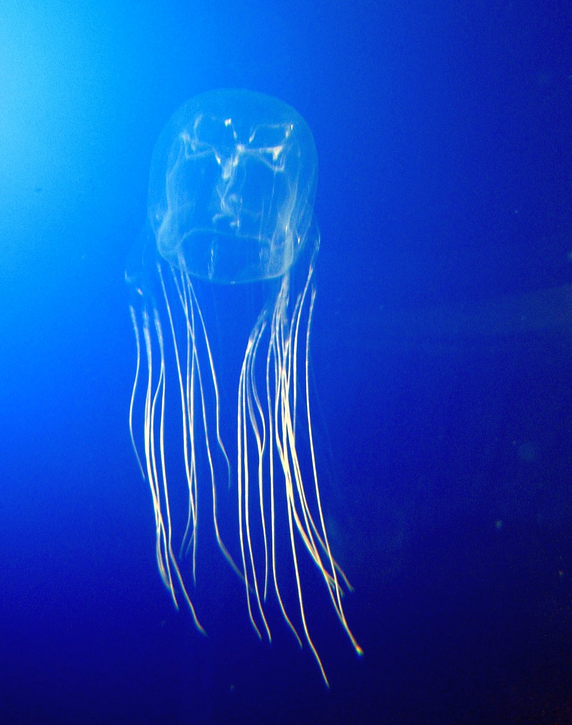
Soft Robotics and the Future of Underwater Exploration
The title of “most venomous” implies a need for stealth and fluid movement. The box jellyfish is not a passive drifter; it is an active hunter capable of swimming at speeds of up to four knots. This combination of a soft, gelatinous body and high-performance propulsion is the “holy grail” for marine technology.
Mimicking Gelatinous Locomotion for Energy-Efficient Drones
Traditional underwater drones (ROVs) are bulky, metallic, and use noisy propellers that disturb the very environments they are trying to study. Soft robotics—a sub-field of tech that uses flexible, compliant materials—looks to the jellyfish as its primary muse.
Engineers have developed “Jelly-bots” that use synthetic polymers and ionic actuators to expand and contract, mimicking the jellyfish’s bell. This method of propulsion is incredibly energy-efficient. Because the “propeller” is the body itself, these drones can operate for months on a single battery charge, making them ideal for long-term climate monitoring and deep-sea telecommunications cable inspection.
Material Science: Transitioning from Rigid to Flexible Hardware
The “lethality” of the box jellyfish is protected by a body that is 95% water, yet capable of surviving extreme pressures. This has sparked a revolution in materials science, specifically in the development of “self-healing” polymers.
Tech companies are looking for ways to create hardware that can withstand the harsh conditions of the ocean floor without the need for heavy, expensive titanium housing. By using hydrogels and flexible circuits inspired by the jellyfish’s tissue, the next generation of sensors will be “squishy” rather than rigid, allowing them to be deployed in coral reefs or narrow underwater crevices where traditional tech would break or get stuck.
Bio-Informed Cybersecurity: The Passive Defense Model
While “venom” is a biological toxin, in the tech world, it can be viewed as a highly effective “active defense” mechanism. The box jellyfish doesn’t hunt humans; it uses its venom as a defensive perimeter and a tool for subduing prey. This “passive-aggressive” survival strategy is being studied by digital security experts.
The ‘Sting’ as a Reactive Firewall Mechanism
In cybersecurity, the goal is usually to build a wall (firewall) and hope no one gets in. However, modern “Deception Technology” takes a page from the box jellyfish’s book. Instead of a simple wall, security firms are creating “honey-networks” that act like tentacles.
When a hacker touches a specific part of the network, the system “stings” back—not with a toxin, but with a trace-back script or a “tar trap” that slows the hacker’s computer to a crawl while alerting authorities. This mimics the box jellyfish’s ability to remain nearly invisible (it is transparent) until the moment of contact, at which point it delivers an overwhelming response.
Resilience Through Redundancy
The box jellyfish is famously difficult to kill because it lacks a “kill switch” like a heart or a brain. Its vital functions are spread throughout its body. In the tech industry, this is known as “High Availability” or “Fault Tolerance.”
Cloud infrastructure providers like AWS and Google Cloud are increasingly moving toward this “jellyfish model.” By distributing data across thousands of global nodes, they ensure that even if a major data center (a “tentacle”) is cut off, the organism (the internet) continues to pulse and function. The “venomous” strength of the jellyfish lies in its resilience, a quality that is currently the top priority for global financial systems and power grids.
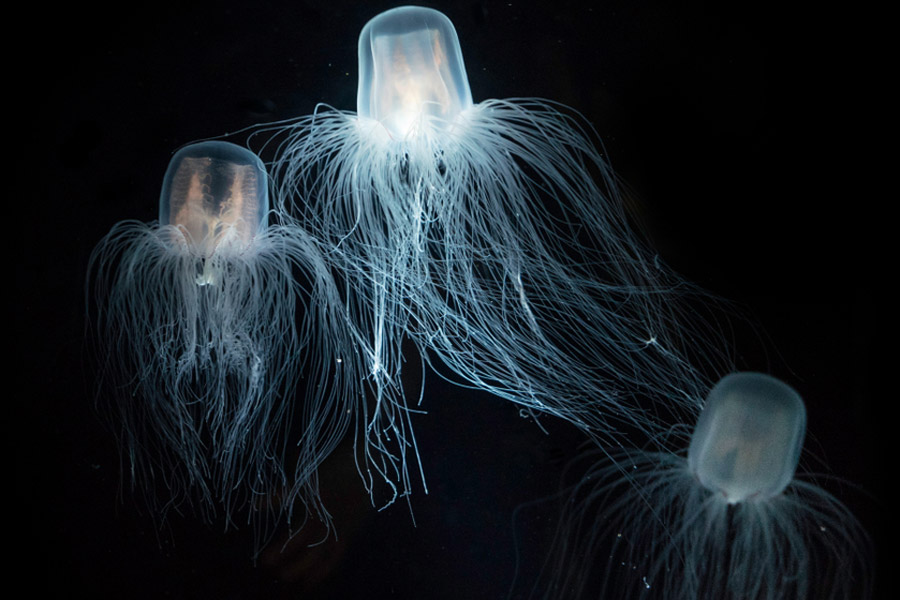
Conclusion: The Silicon Tentacles of Tomorrow
The question of “what is the most venomous jellyfish” leads us directly to the Chironex fleckeri, but for the tech professional, that is only the beginning of the story. The box jellyfish represents the peak of natural optimization—a system that is energy-efficient, decentralized, and equipped with the fastest mechanical triggers on earth.
As we move deeper into the decades of AI, robotics, and nanotechnology, we are finding that the most “high-tech” solutions often involve looking backward at millions of years of evolution. By translating the lethal efficiency of the box jellyfish into code, carbon fiber, and silicon, we are not just building better machines; we are building a more resilient and responsive digital world. The future of technology is not just in the chips we design, but in the biological masterpieces we have finally learned to decode.
aViewFromTheCave is a participant in the Amazon Services LLC Associates Program, an affiliate advertising program designed to provide a means for sites to earn advertising fees by advertising and linking to Amazon.com. Amazon, the Amazon logo, AmazonSupply, and the AmazonSupply logo are trademarks of Amazon.com, Inc. or its affiliates. As an Amazon Associate we earn affiliate commissions from qualifying purchases.