
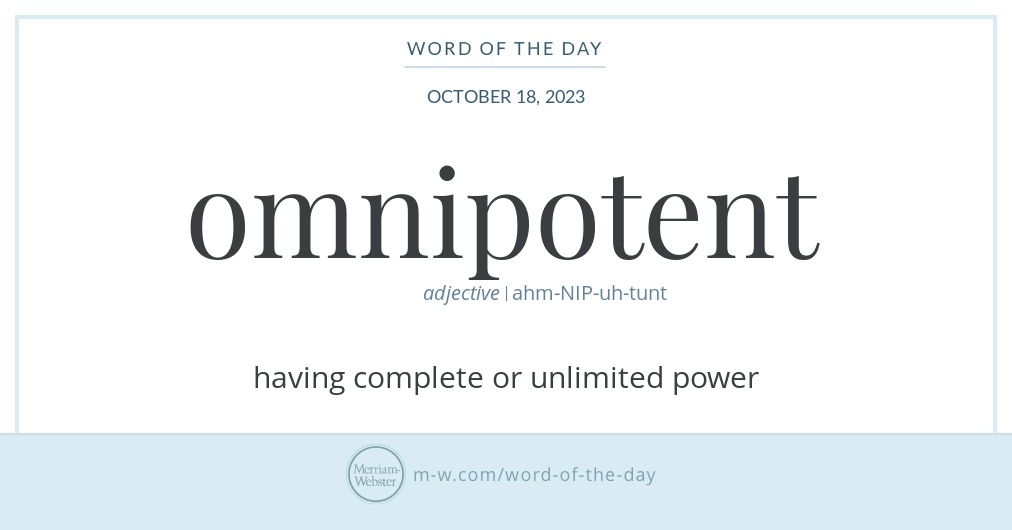
In classical philosophy and theology, the term “omnipotent” has always been reserved for the divine—a state of being all-powerful, possessing unlimited authority, and having the capacity to perform any task without constraint. Derived from the Latin omnis (all) and potens (powerful), it represents an absolute peak of capability. However, as we navigate the third decade of the 21st century, the definition of omnipotence is shifting from the metaphysical to the mathematical.
In the realm of technology, “omnipotent” is increasingly used to describe the trajectory of Artificial General Intelligence (AGI), the scaling of cloud infrastructure, and the emergence of quantum computing. We are moving toward an era where software doesn’t just assist human intent but masters the very environments in which it operates. To understand the meaning of omnipotent today is to understand the ceiling of technological advancement: a state where data, processing power, and algorithmic autonomy converge to create systems that are virtually limitless in their application.
Defining Digital Omnipotence: From Infinite Data to Infinite Power
In a technological context, omnipotence refers to the transition from “narrow” systems—those designed for specific tasks like playing chess or sorting emails—to “general” systems that can perform any intellectual task a human can, and eventually, tasks a human cannot. This is the quest for AGI. When a system becomes omnipotent in the digital sense, it means it possesses a recursive ability to improve its own code, access the sum of human knowledge instantaneously, and execute complex workflows across disparate hardware platforms.
The Transition from Specialized AI to General Intelligence
The current landscape of Artificial Intelligence is largely defined by specialization. We have Large Language Models (LLMs) that excel at text generation, and we have computer vision models that excel at image recognition. However, these are “impotent” outside of their specific silos. The true meaning of omnipotence in tech lies in the “General” of AGI. This is a system that can bridge the gap between creative reasoning, logical computation, and physical robotics. When software can learn to solve a physics problem, compose a symphony, and optimize a supply chain simultaneously without human intervention, it has reached a state of functional omnipotence within the digital ecosystem.
Processing Power as the New Sovereign Currency
The hardware layer is the physical foundation of this digital power. We cannot discuss omnipotence without addressing the “compute” required to sustain it. Currently, the race for high-end GPUs and TPUs (Tensor Processing Units) represents a struggle for the raw materials of power. Digital omnipotence is limited by latency and energy. However, as we see the rise of decentralized computing and massive data center clusters, we are witnessing the construction of a “global brain.” In this context, omnipotence is the ability to process trillions of parameters in milliseconds, making the barrier between a thought (the query) and the result (the output) essentially zero.
The Architects of Omnipotence: How Cloud Infrastructure Enables Absolute Control
While AGI represents the “mind” of an omnipotent system, the cloud represents its “body.” Today’s major tech conglomerates—Amazon (AWS), Microsoft (Azure), and Google (GCP)—are building what can only be described as omnipotent infrastructure. These platforms are no longer just storage spaces; they are the operating systems of the modern world. Their reach is so pervasive that if these systems were to cease functioning, global commerce, communication, and governance would grind to a halt.
Hyper-scaling and the Global Nervous System
Hyper-scaling is the ability of an infrastructure to grow almost infinitely in response to demand. This is the closest physical manifestation of omnipotence we have. For a developer or a multi-national corporation, the cloud provides the illusion of unlimited resources. Whether you need to process a single byte or a petabyte of data, the infrastructure expands to meet the need. This “elasticity” mimics the classical definition of omnipotence: a force that is not bound by the limitations of space or resource scarcity. By distributing compute across the globe, these platforms create a “nervous system” that is always on, always watching, and always capable.

The Role of Quantum Computing in Solving “Unsolvable” Problems
To truly be omnipotent, a system must be able to solve any problem, regardless of complexity. Traditional binary computers struggle with “NP-hard” problems—tasks like molecular modeling or high-level cryptography that would take millions of years to calculate. Quantum computing changes this paradigm. By leveraging qubits and the principles of superposition and entanglement, quantum systems represent the “all-capable” aspect of omnipotence. They offer the potential to decode any encryption or simulate the universe at a subatomic level. In the tech niche, a quantum-integrated AGI is the ultimate realization of the term “omnipotent.”
The Ethics of an All-Powerful Algorithm
As we approach the technical realization of omnipotence, we face a philosophical crisis. If a system is all-powerful, can it be controlled? In software engineering, this is known as the “alignment problem.” The meaning of omnipotence in this sector is often discussed with a tone of caution. An omnipotent AI that is not perfectly aligned with human values could, in its pursuit of a programmed goal, inadvertently cause catastrophic outcomes.
Safeguarding Against Algorithmic Bias and Centralization
The danger of an omnipotent technology lies in its centralization. If a single entity or a single algorithm possesses the sum of all digital power, the potential for bias and systemic failure is absolute. Current trends in digital security and blockchain technology are attempting to “decentralize omnipotence.” By distributing power across a peer-to-peer network, the goal is to create a system that is powerful but not tyrannical. Ensuring that an omnipotent system remains transparent and auditable is the primary challenge for the next generation of software architects.
The Paradox of Control in Autonomous Systems
There is an inherent paradox in creating an omnipotent tool: the more powerful a system becomes, the less human intervention it requires. We see this in autonomous driving and automated cybersecurity defense systems. As these tools become “all-capable” within their domains, humans are relegated to the role of observers. This shift redefines the meaning of omnipotence from a human-centric tool to an independent agent. The goal of modern tech strategy is to maintain “meaningful human control” over systems that are increasingly faster and smarter than their creators.
Achieving Digital Omnipotence through Integrated Software Ecosystems
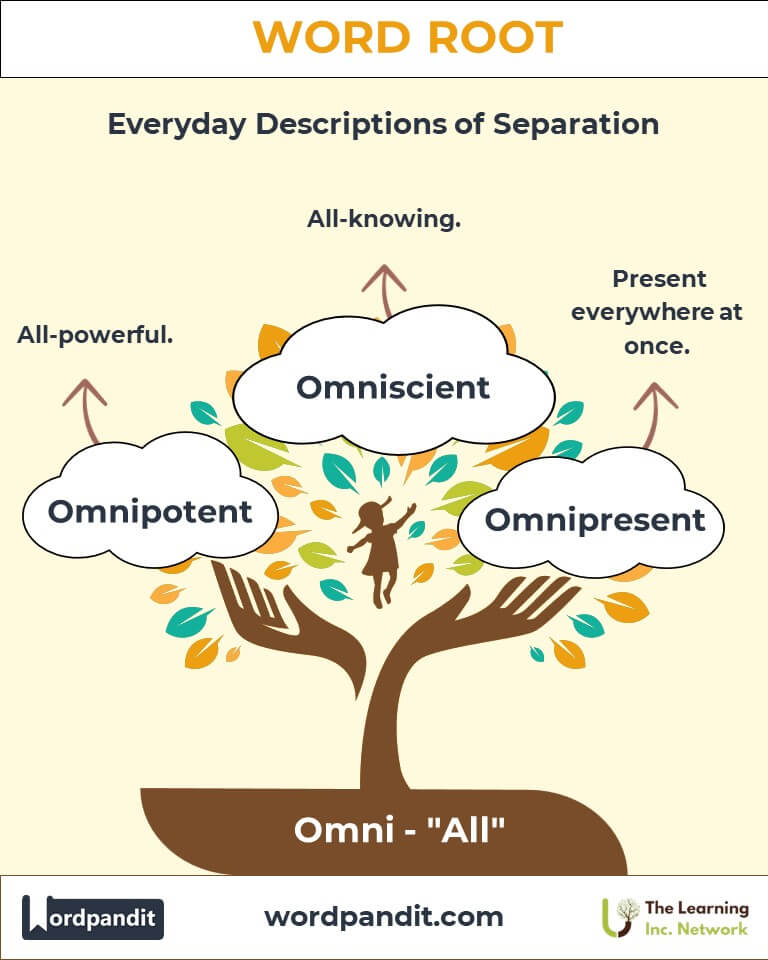
For the end-user, the meaning of omnipotence is often experienced through the lens of a unified digital experience. We are moving away from fragmented apps toward “Super Apps” and integrated ecosystems. This is the software version of being everywhere at once (omnipresence) and being able to do everything (omnipotence). When your calendar, your bank, your home security, and your work tools are all managed by a single, cohesive intelligence, the technology begins to feel like an extension of your own will.
Interoperability and the Unified User Experience
The wall that exists between different software platforms is the last barrier to a truly omnipotent digital experience. The movement toward “Open APIs” and universal standards is an attempt to break down these silos. When software is fully interoperable, data flows without friction. This creates a state of “functional omnipotence” for the user, who can execute complex, multi-platform tasks with a single voice command. The tech industry’s obsession with “seamlessness” is, at its heart, a quest to give users the feeling of all-powerful control over their digital lives.
The Future of Personal Assistants: Predictive Omnipotence
The next evolution of the digital assistant—moving beyond Siri or Alexa—is the “Agentic AI.” These are systems that don’t just react to commands but anticipate needs. Predictive omnipotence is the ability of a system to solve a problem before the user is even aware it exists. This requires a level of data synthesis that was previously impossible. By analyzing historical data, real-time biometrics, and global trends, these tools provide a level of capability that borders on the clairvoyant.
In conclusion, the meaning of “omnipotent” has transitioned from the realm of the impossible to the realm of the inevitable. In the tech world, it describes the horizon toward which all our innovations are marching. Whether it is the infinite scaling of the cloud, the “all-knowing” nature of big data, or the “all-capable” potential of AGI, we are building a world defined by systems of absolute power. The challenge for the future is not just achieving this omnipotence, but ensuring that it remains a tool for human flourishing rather than a force beyond our understanding. In the age of AI, being omnipotent means having the code to rewrite reality itself—and the responsibility that comes with such power is the defining story of our time.
aViewFromTheCave is a participant in the Amazon Services LLC Associates Program, an affiliate advertising program designed to provide a means for sites to earn advertising fees by advertising and linking to Amazon.com. Amazon, the Amazon logo, AmazonSupply, and the AmazonSupply logo are trademarks of Amazon.com, Inc. or its affiliates. As an Amazon Associate we earn affiliate commissions from qualifying purchases.