
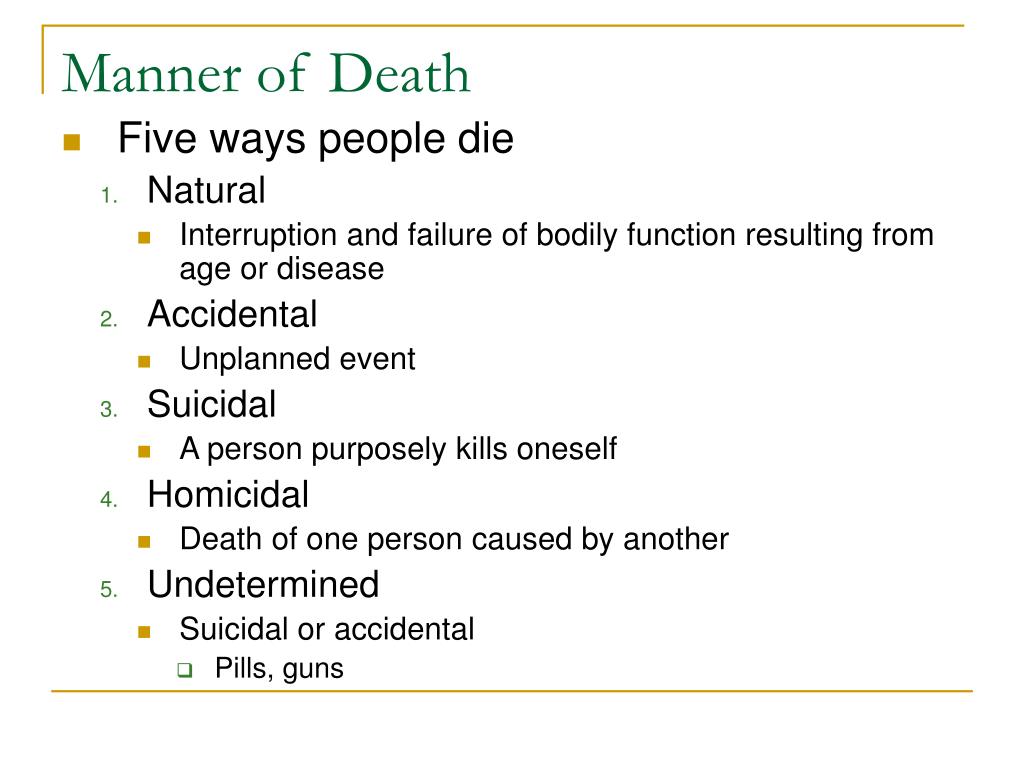
In the traditional sense, the “manner of death” is a legal classification used by medical examiners and coroners to categorize how a death occurred. The five standard categories—natural, accident, suicide, homicide, and undetermined—have historically relied on physical autopsies and toxicology reports. However, in our hyper-connected era, the physical body is only half of the story. The digital shadow we leave behind—stored in the cloud, encrypted in our smartphones, and logged by our wearable devices—has created a new frontier for forensic science.
Today, determining the manner of death is increasingly a technological pursuit. Digital forensics, artificial intelligence, and Internet of Things (IoT) data are now the primary tools used to reconstruct the final moments of a life. By analyzing digital “biopsies,” investigators can distinguish between an accidental fall and a physical altercation, or between a natural cardiac event and a programmed medical device failure. This article explores the technological landscape of death investigation, focusing on the software, gadgets, and digital security protocols that define modern forensic inquiry.

The Digital Autopsy: Software and Tools in Forensic Data Extraction
When a physical investigation reaches a stalemate, the “digital autopsy” begins. This process involves the systematic extraction and analysis of data from electronic devices to provide context to the manner of death. Unlike physical evidence, digital evidence is volatile and requires specialized software to ensure it remains admissible in court.
Mobile Forensics and the Extraction of Volatile Data
The smartphone is arguably the most significant piece of evidence in a modern death investigation. Tools like Cellebrite UFED and Magnet Forensics allow investigators to bypass encryption and pull “deleted” messages, location history, and app usage logs. In cases where the manner of death is suspected to be suicide, forensic software can uncover a history of search queries or draft messages that provide the necessary “intent” for classification. Conversely, in homicide investigations, GPS pings and cell tower triangulation provide a digital map of the movements of both the victim and potential suspects, often contradicting physical testimony.
Cloud Artifacts and Synchronization
Modern investigations are no longer limited to the hardware found at a scene. Cloud forensics involves the extraction of data from services like iCloud, Google Drive, and Dropbox. When a device is destroyed—intentionally or accidentally—investigators use tools like Oxygen Forensics to pull synchronized data from the cloud. This data often includes “heartbeat” logs from health apps or automated photo backups that capture the environment leading up to the moment of death. The ability to reconstruct a timeline via cloud synchronization is often the deciding factor in moving a case from “undetermined” to a specific classification.
IoT and the “Silent Witness”
The Internet of Things (IoT) has introduced a new layer of complexity to determining the manner of death. Smart home devices, such as Amazon Echo or Google Home, may record ambient noise or voice commands during a critical incident. Wearable tech, specifically smartwatches and fitness trackers, provides a continuous stream of physiological data. If a person dies of what appears to be natural causes, but their heart rate monitor shows a sudden, violent spike inconsistent with a cardiac event, investigators may pivot to an accidental or homicidal inquiry. The integration of this “living data” into the forensic process is transforming how we define the moments leading up to a biological shutdown.
AI and Predictive Analytics: Determining Intent and Pattern
As the volume of digital data grows, human investigators are often overwhelmed by the sheer scale of information. This is where Artificial Intelligence (AI) and machine learning (ML) become indispensable. In the context of determining the manner of death, AI tools are used to identify patterns that the human eye might miss, particularly when distinguishing between self-inflicted harm and external foul play.
Sentiment Analysis and Behavioral Biometrics
One of the most challenging aspects of a death investigation is determining psychological state, which is crucial for a “suicide” classification. AI-driven sentiment analysis tools can process years of social media posts, emails, and private messages to detect “linguistic markers” of depression or suicidal ideation. Beyond text, behavioral biometrics—such as changes in typing rhythm, sleep patterns (logged via phone movement), and social withdrawal—can be mapped by AI to create a “behavioral baseline.” A sharp deviation from this baseline can provide scientific weight to a determination of intent.
Visual AI and Post-Mortem Reconstruction
AI is also being used to process visual data. Computer vision algorithms can analyze CCTV footage or personal video recordings to reconstruct 3D models of a scene. In cases of “accidental” falls from heights, AI simulations can account for wind speed, body weight, and trajectory to determine if the fall was consistent with an accident or if an external force was applied. This marriage of physics-based AI and digital imagery provides a level of certainty that was previously impossible.

Pattern Recognition in Toxicology and Pathology
In the lab, AI assists pathologists by scanning tissue samples at a resolution and speed far beyond human capability. In “natural” or “accidental” deaths involving complex drug interactions, machine learning models can cross-reference vast databases of chemical compounds to identify rare toxins or subtle physiological changes. By automating the identification of anomalies in the body’s “data,” AI helps narrow down the manner of death with high statistical confidence.
Cyber-Sovereignty and Digital Sabotage: A New Manner of Death
As technology becomes more integrated into the human body, a new, darker category of investigation has emerged: digital homicide. The “manner of death” can now be influenced by code, hacking, and the failure of digital infrastructure.
Medical Device Hacking (Medjacking)
The rise of connected medical devices—such as pacemakers, insulin pumps, and neurostimulators—has introduced the risk of “cyber-physical” attacks. A sophisticated actor could theoretically alter the dosage of a pump or the rhythm of a pacemaker remotely. In such cases, the manner of death might appear to be “natural” (a heart attack or hypoglycemic shock) upon a standard medical examination. However, a digital forensic audit of the device’s firmware might reveal unauthorized access or programmed malfunctions. This necessitates a shift in how coroners approach deaths involving high-tech medical implants.
Critical Infrastructure and Vehicular Forensics
The manner of death in automotive accidents is also being redefined by tech. Modern vehicles are essentially computers on wheels, equipped with Event Data Recorders (EDRs) and Advanced Driver Assistance Systems (ADAS). If a self-driving car is involved in a fatal crash, the investigation must determine if the manner of death was an “accident” caused by human error, a software bug, or even a malicious hack of the vehicle’s Control Area Network (CAN bus). The “death” of the machine and the death of the passenger are now inextricably linked, requiring automotive forensic experts to work alongside medical examiners.
Digital Security and the Preservation of Truth
The integrity of a death investigation relies on the security of the digital chain of custody. If a suspect can remotely wipe a victim’s phone via a “Find My Device” feature, the manner of death may remain “undetermined” forever. Digital security protocols, such as Faraday bags to block signals and write-blockers to prevent data alteration, are now standard equipment at every scene. The battle between encryption and forensics is a constant tug-of-war that dictates whether the truth behind a death can ever be fully accessed.
The Ethical and Legal Frontiers of Digital Death Data
As we rely more on technology to explain the manner of death, we encounter significant ethical and legal challenges. The right to “digital remains” and the privacy of the deceased are at the center of intense debate within the tech and legal sectors.
Post-Mortem Privacy and Data Access
Who has the right to access the digital footprint of the deceased? While tech companies like Apple have historically fought to maintain user encryption even after death, new “Digital Legacy” features allow users to designate heirs who can access their data. From a forensic standpoint, this access is vital for determining the manner of death. However, it also raises questions about the privacy of the deceased. If an investigation into an “accidental” death reveals private data unrelated to the incident, where does the boundary lie?
The Risk of Algorithmic Bias in Investigations
While AI offers incredible insights, it is not immune to bias. If the algorithms used to determine “intent” or “behavioral patterns” are trained on biased datasets, they may lead investigators toward a specific manner of death—such as suicide or homicide—based on faulty correlations. Ensuring the transparency of the “black box” algorithms used in forensic tech is essential for maintaining the integrity of the judicial system and ensuring that the classification of death is based on objective data rather than algorithmic assumptions.
Conclusion: The Synthesis of Biology and Bitrate
Determining the manner of death is no longer a task confined to the morgue. It is a process that takes place in the server room, the coding environment, and the digital forensic lab. As our lives become increasingly digitized, the evidence of our passing—and the explanation for it—will continue to shift from the physical to the virtual.
The integration of mobile forensics, AI-driven behavioral analysis, and IoT data has provided investigators with a “digital pulse” that persists long after the biological one has stopped. While this technological evolution offers unprecedented clarity in solving complex cases, it also demands a new level of digital literacy from the professionals tasked with answering the ultimate question: what was the manner of death? In the future, the most important witness to our end may not be a person, but the technology we carried with us until the very last second.
aViewFromTheCave is a participant in the Amazon Services LLC Associates Program, an affiliate advertising program designed to provide a means for sites to earn advertising fees by advertising and linking to Amazon.com. Amazon, the Amazon logo, AmazonSupply, and the AmazonSupply logo are trademarks of Amazon.com, Inc. or its affiliates. As an Amazon Associate we earn affiliate commissions from qualifying purchases.