
In the rapidly evolving landscape of 3D modeling, computer-aided design (CAD), and spatial computing, the most complex architectural wonders and high-fidelity video game environments are built upon the simplest of foundations. To the uninitiated, the question “What is the base of a triangular prism?” might sound like a remnant of a middle-school geometry quiz. However, for the software engineer, the technical illustrator, or the digital architect, understanding the base of a triangular prism is essential for mastering the nuances of 3D rendering, mesh topology, and structural simulations.
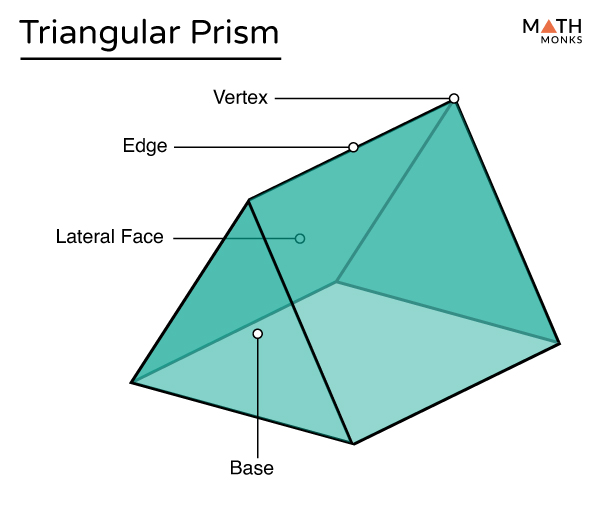
In technical terms, a triangular prism is a polyhedron made of two triangular bases and three rectangular sides. Within a digital workspace, identifying the base is not just about identifying a face; it is about establishing a coordinate system, defining extrusion vectors, and ensuring the structural integrity of a digital twin.
Understanding the Geometry: The Blueprint of Digital 3D Models
Before diving into how high-end software utilizes these shapes, we must define the geometric parameters from a technical perspective. In a 3D coordinate system—typically defined by X, Y, and Z axes—the “base” of a triangular prism refers to the two congruent, parallel triangular faces that give the prism its name.
Defining the Base in a Three-Dimensional Workspace
In most CAD software like AutoCAD or SolidWorks, the “base” is considered the starting profile. When a designer begins a project, they often start in a 2D sketch mode. If you draw a triangle on the XY plane and “extrude” it along the Z-axis, that original triangle becomes the base.
Unlike a pyramid, where the base is a single polygon and the sides meet at a point (apex), a triangular prism has two bases. These bases are always identical in shape and size, and they are connected by three lateral faces which are rectangles. In a tech-centric environment, the distance between these two bases is referred to as the “length” or “height” of the prism, depending on its orientation in the global coordinate system.
Why Triangulation Matters in Mesh Processing
In the world of 3D rendering and GPU (Graphics Processing Unit) acceleration, triangles are the gold standard. Every complex 3D character or vehicle you see in a modern video game is composed of a “mesh” of thousands or millions of triangles.
The triangular prism is one of the simplest “primitives” used to understand volume. Because triangles are inherently planar—meaning all three points will always lie on the same flat surface—they are incredibly stable for computer calculations. When a software engine calculates light reflections or physics collisions on the base of a triangular prism, it does so with far greater speed and accuracy than it would with more complex polygons. This efficiency is why the “base” of these shapes remains a fundamental unit in digital construction.
Implementing Triangular Prisms in Modern CAD Software
For professionals in the tech industry, specifically those working in mechanical engineering or industrial design, the triangular prism is a frequent component in “Parametric Modeling.” This is a method where design intent is captured using constants and variables.
Extrusion Tools: Turning 2D Triangles into 3D Prisms
In software such as Blender, Rhino, or Fusion 360, the creation of a triangular prism begins with the “Extrude” command. The process is a perfect illustration of geometric theory applied to technology:
- The Sketch: The user defines the base (the triangle) by placing three vertices (points) and connecting them with edges.
- The Vector: The user specifies the depth.
- The Generation: The software replicates the base at the specified distance and automatically generates the rectangular lateral faces to bridge the gap.
Understanding which face is the “base” is crucial during this process. If a designer misidentifies the base, the “Normal Map” (the direction the surface is facing) might be inverted, leading to “backface culling” issues where the object appears invisible or glitchy in a real-time rendering engine like Unreal Engine 5.
Parametric Design and Base Orientation
In advanced tech workflows, the base of the prism is rarely static. Parametric design allows the base to be “driven” by data. For instance, if you are designing a cooling fin for a high-performance server, the surface area of the triangular base might be tied to a thermal calculation. If the heat output of the server increases, the software can automatically expand the dimensions of the triangular base to increase the prism’s surface area, thereby improving heat dissipation. Here, the “base” is not just a shape; it is a variable in a complex technological equation.

The Role of Prismatic Bases in Architectural Tech and Game Engines
As we move from static design to interactive environments, the triangular prism takes on a new role in “collision detection” and “spatial partitioning.”
Unity and Unreal Engine: Primitive Objects and Collision Boxes
In game development, calculating the exact physics of a high-poly mesh is computationally expensive. To save processing power, developers use “collision primitives.” A triangular prism is often used as a simplified bounding box for objects like roof sections, wedges, or ramp components.
The “base” of the prism is typically aligned with the floor or a wall. By identifying the base, the physics engine can calculate the “slope” or “incline” of the lateral faces. When a player character walks on the rectangular side of a triangular prism, the engine uses the angle relative to the base to determine if the character should slide down or be able to climb.
Structural Integrity in Digital Twins
The rise of “Digital Twins”—digital replicas of physical buildings or machines—has placed a renewed focus on the geometric accuracy of primitives. In civil engineering tech, triangular prisms are the fundamental shapes of trusses and support beams.
When a structural analysis software like SAP2000 processes a bridge design, it identifies the triangular bases of the structural components to calculate load distribution. The base is where the “joints” or “nodes” are typically located. If the software incorrectly identifies the base, the entire simulation of how the bridge handles weight or wind resistance would be flawed. In this context, the geometry of the prism is the bridge between theoretical math and safe, real-world technology.
Future Trends: Spatial Computing and the Evolution of Primitive Shapes
As we look toward the future of technology, specifically Augmented Reality (AR) and Virtual Reality (VR), the way we interact with shapes like the triangular prism is changing.
The Shift from Polygons to Neural Radiance Fields (NeRFs)
We are currently seeing a transition in tech from “Vector-based” geometry to “Voxel-based” or even “AI-driven” geometry. Traditional modeling asks, “Where is the base of this prism?” so it can draw lines between points. However, new technologies like Neural Radiance Fields (NeRFs) use AI to determine shape and volume based on photos.
Even in this advanced AI-driven world, the concept of the “base” remains relevant for “Retopology.” After an AI generates a 3D scan of an object, a human designer (or a secondary AI) must convert that “blob” back into clean geometric shapes. Identifying the triangular base allows the software to simplify the complex cloud of data into a manageable, editable format that can be used in manufacturing or digital displays.
Optimization and Geometry in Mobile Tech
As high-end 3D experiences move to mobile devices and standalone VR headsets (like the Meta Quest or Apple Vision Pro), optimization is the primary challenge. The triangular prism is the ultimate “low-poly” hero. By using shapes with clearly defined bases and minimal vertices, developers can create immersive worlds that don’t overheat the device’s processor.
Mastering the use of the prism’s base allows for “instancing”—a technique where the GPU draws the same base once and replicates it thousands of times in different orientations to create complex patterns, like the scales on a dragon or the shingles on a roof, without taxing the system’s memory.

Conclusion
The question “What is the base of a triangular prism?” serves as an entry point into the sophisticated world of modern technology and digital design. While the answer—the two parallel triangular faces—is simple, its applications are incredibly diverse. From the “Extrude” commands in CAD software to the collision logic in world-class game engines, the triangular prism is a foundational block of our digital reality.
As we continue to push the boundaries of what is possible in 3D space, from AI-generated environments to structural digital twins, the importance of these geometric fundamentals only grows. Technology does not move away from basic geometry; it builds upon it. By understanding the base of the triangular prism, designers and engineers ensure that their digital creations are optimized, stable, and ready for the future of spatial computing.
aViewFromTheCave is a participant in the Amazon Services LLC Associates Program, an affiliate advertising program designed to provide a means for sites to earn advertising fees by advertising and linking to Amazon.com. Amazon, the Amazon logo, AmazonSupply, and the AmazonSupply logo are trademarks of Amazon.com, Inc. or its affiliates. As an Amazon Associate we earn affiliate commissions from qualifying purchases.