
Planning for the future is a cornerstone of sound financial management, particularly for those who have dedicated their lives to military service. One of the most critical, yet frequently misunderstood, components of a military retirement package is the Survivor Benefit Plan (SBP). As a financial tool, the SBP serves as an insurance-like annuity that ensures a retiree’s beneficiaries continue to receive a portion of their retirement income after the retiree passes away.
Without this plan, military retired pay typically ends abruptly upon the death of the veteran, potentially leaving a surviving spouse or dependent children in a precarious financial position. This guide delves into the mechanics, costs, and strategic considerations of the Survivor Benefit Plan to help families make informed decisions regarding their long-term financial legacy.
What is the Survivor Benefit Plan and How Does it Function?
At its core, the Survivor Benefit Plan is a Department of Defense program designed to provide a monthly annuity to eligible survivors of military retirees. It was established by Congress in 1972 to replace the previous, less effective programs and to provide a safety net that aligns more closely with social security and private-sector pension protections.
The Core Mechanics of the Annuity
The SBP is not a life insurance policy in the traditional sense; rather, it is an equity-based annuity. When a service member retires, they are given the option to “buy into” this plan using a portion of their gross retired pay. In the event of the retiree’s death, the plan pays out a monthly benefit to the designated beneficiary. This benefit is typically calculated as 55% of the “base amount” selected by the retiree.
Unlike many commercial financial products, the SBP is backed by the federal government, ensuring that the benefit is guaranteed for the lifetime of the survivor. Furthermore, the payouts are adjusted annually for inflation, mirroring the Cost-of-Living Adjustments (COLA) applied to military retired pay itself.
Eligibility and Enrollment Timeline
Eligibility for the SBP generally extends to all members of the Uniformed Services who are entitled to retired pay. This includes the Army, Navy, Air Force, Marine Corps, Coast Guard, and the commissioned corps of the Public Health Service and NOAA.
The decision to participate in the SBP is typically made at the time of retirement. It is important to note that for married service members, the law assumes a “full coverage” election for the spouse unless the spouse provides written, notarized concurrence to waive or reduce that coverage. This legal safeguard ensures that the financial security of the household is a joint decision, reflecting the shared sacrifices of military life.
Calculating the Costs and Payouts
Understanding the “Money” aspect of the SBP requires a deep dive into how premiums are structured and how the ultimate payout affects a family’s bottom line. Because the SBP is subsidized by the government, the actuarial value is often higher than what one might find in the private sector.
Determining the Base Amount
The “base amount” is the dollar figure used to calculate both the monthly premium and the eventual survivor annuity. A retiree can choose any amount from a minimum of $300 up to their full monthly retired pay.
If a retiree chooses their full retired pay as the base amount, the survivor will receive 55% of that total. If they choose a lower base amount, the survivor receives 55% of that lower figure. Selecting the appropriate base amount is a balancing act between the desire for a high survivor income and the need for a higher take-home pay during the retiree’s lifetime.
Premium Calculations and Tax Advantages
For most retirees, the cost of SBP coverage is approximately 6.5% of the selected gross base amount. For example, if a retiree has a base amount of $2,000, the monthly premium would be roughly $130.
A significant financial advantage of the SBP is its tax treatment. Premiums are deducted from gross retired pay before federal income taxes are calculated. This “pre-tax” status reduces the retiree’s taxable income, effectively lowering the out-of-pocket cost of the plan. In professional financial planning terms, this creates a tax-efficient vehicle for wealth transfer that commercial life insurance policies—which are typically paid for with after-tax dollars—cannot easily replicate.
Choosing the Right Beneficiary Categories

The SBP offers several categories of coverage, allowing retirees to tailor the plan to their specific family dynamics. Each category has different rules and financial implications.
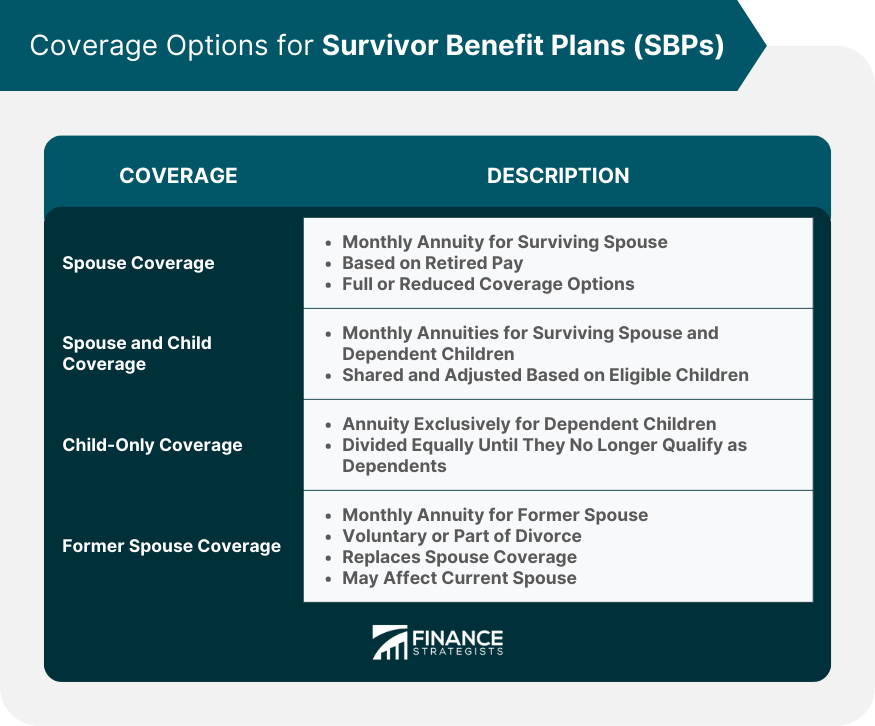
Spouse and Child Coverage
The most common election is “Spouse Only” coverage. Under this category, the annuity is paid to the surviving spouse for their lifetime. However, if the spouse remarries before the age of 55, the benefit is suspended (though it can be reinstated if that marriage ends in death or divorce).
“Spouse and Child” coverage provides the annuity to the spouse first. If the spouse dies or becomes ineligible, the benefit is then divided equally among eligible children. To be eligible, children must be unmarried and under age 18 (or under 22 if enrolled in full-time schooling). This category provides an extra layer of protection for younger families at a very marginal increase in cost.
Former Spouse and Insurable Interest Options
The SBP also allows for the protection of a former spouse, which is often a requirement in divorce settlements or court orders. This ensures that the financial commitments made during a previous marriage are honored.
For retirees who are single and have no dependent children, there is the “Insurable Interest” option. This allows the retiree to name a person with a legitimate financial interest in their life—such as a business partner or a sibling—as the beneficiary. This category is significantly more expensive than spouse coverage, often costing 10% of retired pay plus an additional percentage based on the age difference between the retiree and the beneficiary.
The Strategic Role of SBP in Modern Wealth Management
When viewing the SBP through the lens of personal finance and investing, it is important to compare it against other assets. Is the SBP a better investment than a life insurance policy or a diversified stock portfolio?
Inflation Protection and the COLA Advantage
One of the strongest arguments for the SBP is its built-in inflation protection. Because the annuity increases with COLA, it maintains its purchasing power over decades. If a survivor lives for 30 years after the retiree’s death, a fixed-benefit life insurance policy might lose half its value to inflation, whereas the SBP will have increased in value every year. This “inflation-adjusted” feature is incredibly difficult and expensive to purchase in the private annuity market.
SBP vs. Commercial Life Insurance: The Great Debate
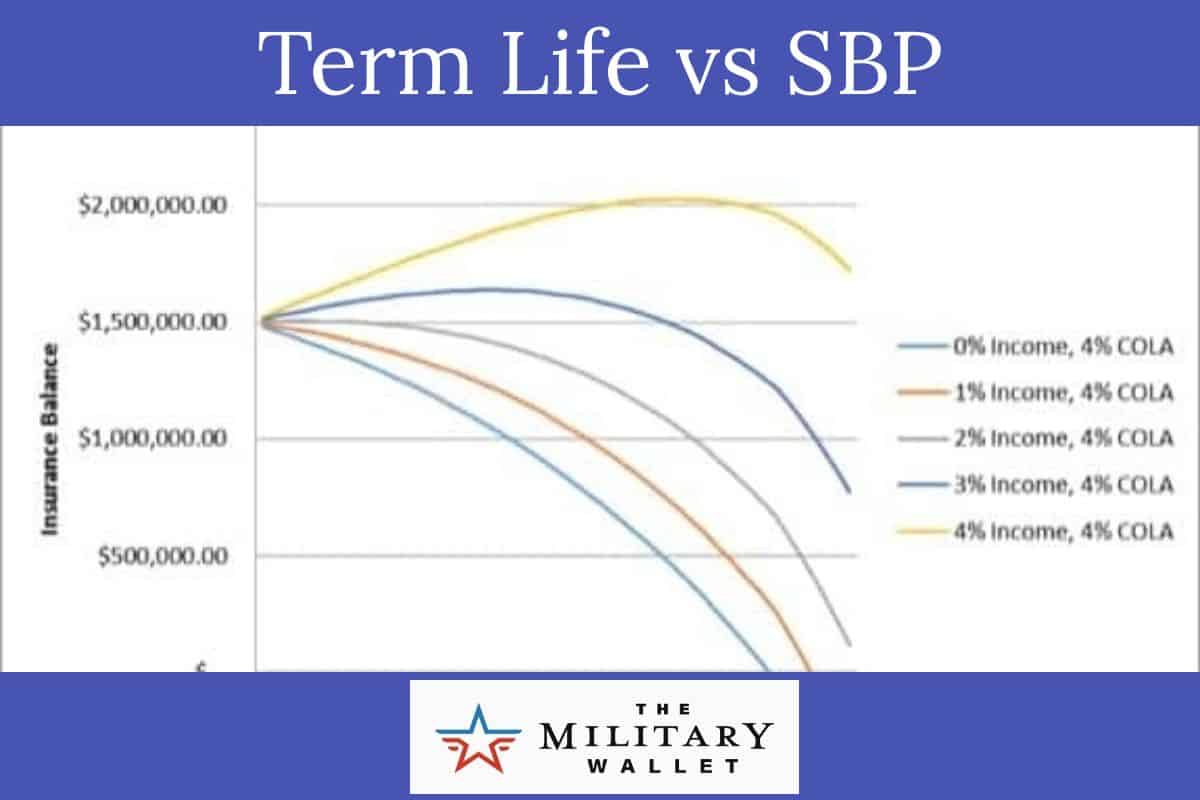
Many financial advisors suggest “pension maximization” strategies, where a retiree declines the SBP and uses the 6.5% savings to buy a private life insurance policy. While this can work for some, it carries risks.
- Insurability: SBP requires no medical exam. A retiree with health issues might find life insurance premiums prohibitively expensive or be denied coverage entirely.
- Market Volatility: Unlike an investment portfolio, the SBP is not subject to market downturns.
- Longevity Risk: Life insurance provides a lump sum that must be managed. If the beneficiary lives a long time, they may outlive the money. The SBP, as a lifetime annuity, eliminates this “longevity risk.”
Long-Term Considerations and Making the Election
The decision to enroll in the SBP is generally permanent, which is why it requires such careful consideration during the transition from active duty to civilian life.
The Irrevocability of the Decision
Once a retiree elects SBP coverage, they generally cannot cancel it except during a very narrow “disenrollment window” between the 24th and 36th month after retirement. Even then, the spouse must consent to the cancellation. This permanence is designed to prevent retirees from making impulsive financial decisions that could leave their families vulnerable later in life.
Special Rules: The “Paid-Up” Provision and DIC Offsets
A vital financial detail for long-term planning is the “Paid-Up” rule. Retirees who have paid SBP premiums for 30 years and have reached age 70 are no longer required to pay premiums, yet their coverage remains in full effect. This effectively increases the retiree’s cash flow in later years.
Additionally, families should be aware of the recent legislative changes regarding Dependency and Indemnity Compensation (DIC). Historically, there was a “widow’s tax” where SBP payouts were reduced by the amount of DIC received from the VA. As of 2023, this offset has been fully eliminated, allowing surviving spouses to receive both benefits in full—a major victory for the financial stability of military families.
Conclusion
The Survivor Benefit Plan is more than just a line item on a retirement worksheet; it is a foundational pillar of a military family’s financial security. By providing a government-backed, inflation-adjusted, and tax-advantaged annuity, it offers a level of certainty that is rare in the volatile world of personal finance.
While the 6.5% premium may seem like a significant deduction from monthly retired pay, the peace of mind and long-term protection it provides for spouses and children often outweigh the costs. As with any major financial decision, service members should consult with financial planners and use the various SBP calculators provided by the Department of Defense to determine the exact impact on their unique financial situation. In the end, the SBP ensures that the legacy of service translates into a legacy of security for those left behind.
aViewFromTheCave is a participant in the Amazon Services LLC Associates Program, an affiliate advertising program designed to provide a means for sites to earn advertising fees by advertising and linking to Amazon.com. Amazon, the Amazon logo, AmazonSupply, and the AmazonSupply logo are trademarks of Amazon.com, Inc. or its affiliates. As an Amazon Associate we earn affiliate commissions from qualifying purchases.