
In the rapidly evolving landscape of telecommunications, the term “carrier” has undergone a significant transformation. Historically, a carrier was defined by the physical infrastructure it owned—the massive cell towers, fiber-optic backbones, and radio frequency licenses required to transmit data. However, the rise of the Mobile Virtual Network Operator (MVNO) model has decoupled the service from the hardware. Straight Talk stands as one of the most prominent examples of this technological shift. To understand what Straight Talk is from a technical perspective, one must look beyond the retail packaging and examine the sophisticated network virtualization and infrastructure sharing that powers its mobile services.
Understanding the MVNO Architecture: How Straight Talk Operates
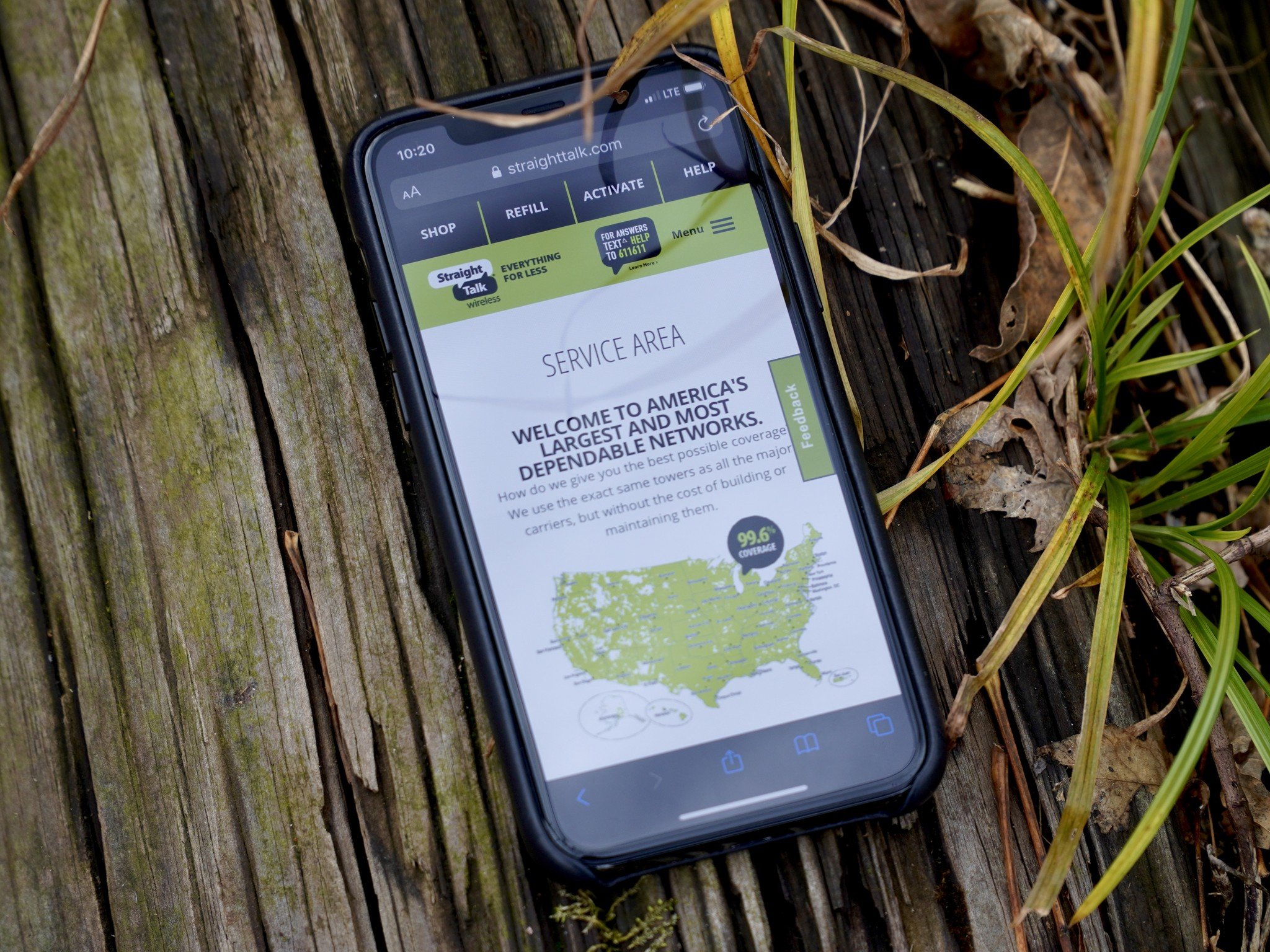
At its core, Straight Talk is a Mobile Virtual Network Operator (MVNO). Unlike “The Big Three” (Verizon, AT&T, and T-Mobile), Straight Talk does not own the wireless network infrastructure it utilizes. Instead, it operates through a strategic wholesale agreement with underlying carriers. In late 2021, Verizon Communications completed its acquisition of TracFone Wireless, Inc., the parent company of Straight Talk, effectively making Straight Talk a brand within the Verizon ecosystem while maintaining its unique operational model.
The Backend: Leveraging Major Carrier Infrastructure
The technology behind Straight Talk relies on “network slicing” and wholesale bandwidth purchasing. From a technical standpoint, when a Straight Talk user initiates a call or requests data, the signal is transmitted via the same cell towers used by Verizon customers. The MVNO architecture acts as a software layer on top of the physical hardware. This layer manages authentication, billing, and data routing, while the heavy lifting of radio frequency (RF) transmission is handled by the primary carrier’s towers. This allows for a leaner operational footprint, focusing resources on digital service delivery rather than tower maintenance.
Frequency Bands and Network Compatibility
A critical technical aspect of Straight Talk is its multi-network history. Before the Verizon acquisition, Straight Talk offered SIM cards compatible with GSM (Global System for Mobile Communications) and CDMA (Code Division Multiple Access) networks. Today, the focus has shifted toward a unified LTE and 5G standard. To ensure seamless connectivity, Straight Talk devices must support specific frequency bands. For a high-performance experience on the Verizon-owned infrastructure, devices typically utilize bands such as 2, 4, 5, 13, 48 (CBRS), and 66 for LTE, as well as n260 and n261 for 5G Ultra Wideband. This technical synchronization ensures that Straight Talk users experience the same geographical footprint as flagship carrier subscribers.
Network Coverage and the Evolution of Connectivity Standards
As we move deeper into the 5G era, the technical capabilities of Straight Talk have expanded to include high-speed data protocols that were once exclusive to premium postpaid plans. The transition from 4G LTE to 5G represents a fundamental shift in how data is packetized and transmitted across the network.
The Transition to 5G and Ultra-Wideband
Straight Talk has integrated 5G NR (New Radio) technology into its service offerings. This involves two primary tiers of 5G: Sub-6 GHz and mmWave (Millimeter Wave). Sub-6 GHz 5G provides the broad coverage necessary for rural and suburban areas, offering speeds slightly higher than 4G but with significantly lower latency. On the other hand, mmWave—often marketed as “Ultra Wideband”—utilizes extremely high-frequency bands to deliver gigabit speeds in dense urban environments. By utilizing Verizon’s 5G stack, Straight Talk enables compatible devices to leverage “Beamforming” and “Massive MIMO” (Multiple Input, Multiple Output) technologies, which focus the cellular signal directly toward the user’s device rather than broadcasting it in all directions, thereby increasing spectral efficiency.
Signal Prioritization and Data Throttling Mechanics
One technical nuance of the MVNO model is Quality of Service (QoS) prioritization. On a congested cell tower, the network’s Radio Access Network (RAN) must decide which packets to prioritize. Traditionally, MVNO traffic is flagged with a lower “Data Priority” (QCI—Quality of Service Class Identifier) compared to premium postpaid traffic. During peak usage times, a Straight Talk user might experience “deprioritization,” where data speeds are temporarily reduced to ensure the stability of the primary network. Understanding this technical hierarchy is essential for users who rely on high-bandwidth applications like 4K streaming or real-time mobile gaming, as it defines the upper limits of the service’s performance during periods of high network load.
Hardware Compatibility and the SIM/eSIM Ecosystem
The versatility of Straight Talk is largely due to its “Bring Your Own Device” (BYOD) protocol. This requires a sophisticated understanding of hardware interoperability and the digital identifiers that allow a device to communicate with the network.
Bring Your Own Device (BYOD) Integration
For a device to function on the Straight Talk network, it must be “carrier-unlocked” and possess the necessary radio hardware to support the host carrier’s frequencies. The technical gateway for this connection is the APN (Access Point Name) settings. The APN is a set of configurations that tells the mobile device the path to the gateway between the carrier’s network and the public internet. For Straight Talk, configuring the correct APN—often involving settings like VZWINTERNET—is crucial for enabling MMS (Multimedia Messaging Service) and high-speed data. This digital handshake ensures that the network recognizes the device as a legitimate subscriber and allocates the appropriate resources.
The Rise of eSIM Technology in Modern Handsets
We are currently witnessing a technical shift from physical nano-SIM cards to eSIM (embedded SIM) technology. Straight Talk has adapted to this trend by supporting eSIM provisioning for modern smartphones like the iPhone 14 and newer, as well as the latest Samsung Galaxy devices. Unlike a physical card, an eSIM is a small chip soldered onto the device’s motherboard. The “SIM” is actually a software profile downloaded over the air (OTA). This allows for rapid activation and the ability to host multiple lines on a single device. The technical advantage of eSIM for Straight Talk users is the elimination of physical shipping and the ability to switch or activate service almost instantaneously via a digital portal or QR code.
Digital Security and Mobile Management Tools
In an era of increasing cyber threats, the technology securing a mobile carrier is just as important as the signal strength. Straight Talk utilizes several layers of digital security to protect user accounts and data integrity.
Account Security and Two-Factor Authentication (2FA)
The primary vulnerability in mobile tech is “SIM swapping,” a form of identity theft where a bad actor convinces a carrier to port a victim’s phone number to a new device. To combat this, Straight Talk has implemented enhanced security protocols, including Port-Out PINs and multi-factor authentication. Technically, this adds an encrypted layer to the account management process. When a user attempts to make changes to their service, the system requires a unique, time-sensitive token that is independent of the primary account password, ensuring that the digital identity associated with the MDN (Mobile Directory Number) remains secure.
App-Based Management and Cloud Integration
The modern Straight Talk experience is anchored by its mobile application, which serves as a digital control center. This app utilizes API (Application Programming Interface) integrations to provide real-time data on usage, balance, and network status. Instead of relying on legacy USSD codes (like *611#), the app communicates directly with Straight Talk’s cloud-based billing and provisioning servers. This digital-first approach allows for automated “Auto-Refill” features and real-time troubleshooting, where the system can remotely “ping” a device to reset its connection to the local tower, solving common connectivity issues through software automation rather than manual tech support.

The Future of the Carrier: Virtualization and Beyond
As we look toward the future of Straight Talk, the integration of AI-driven network management and the potential for Satellite-to-Cell technology loom on the horizon. With the backing of Verizon’s technical resources, Straight Talk is positioned to benefit from “C-Band” expansions, which offer a “sweet spot” of coverage and speed.
Furthermore, the industry is moving toward Open RAN (Radio Access Network) architectures, which will allow for even more flexibility in how MVNOs like Straight Talk manage their traffic. By virtualizing more of the network core, providers can offer specialized “micro-services”—such as optimized data lanes for work-from-home applications or enhanced security filters for family plans—entirely through software updates.
In conclusion, Straight Talk is far more than a “discount” mobile service; it is a sophisticated implementation of modern wireless technology. By leveraging the physical infrastructure of major carriers through a virtualized business model, it provides a high-tech bridge between complex hardware and the end-user. Whether through the deployment of 5G Ultra Wideband, the transition to eSIM, or the implementation of robust digital security protocols, Straight Talk represents the cutting edge of how telecommunications services are delivered in the 21st century.
aViewFromTheCave is a participant in the Amazon Services LLC Associates Program, an affiliate advertising program designed to provide a means for sites to earn advertising fees by advertising and linking to Amazon.com. Amazon, the Amazon logo, AmazonSupply, and the AmazonSupply logo are trademarks of Amazon.com, Inc. or its affiliates. As an Amazon Associate we earn affiliate commissions from qualifying purchases.