
In the rapidly evolving landscape of software engineering, few platforms have achieved the status of “indispensable.” Since its inception in 2008, Stack Overflow has grown from a simple question-and-answer site into the world’s largest and most trusted community for developers to learn, share their programming knowledge, and build their careers. For anyone who has ever written a line of code, whether a seasoned systems architect or a student tackling their first “Hello World” program, Stack Overflow is more than just a website—it is the digital backbone of the global coding community.

At its core, Stack Overflow is a technical knowledge-sharing platform. However, its influence extends far deeper, shaping how software is written, how bugs are fixed, and how technical documentation is perceived in the 21st century.
The Architecture of Knowledge: How Stack Overflow Works
To understand what Stack Overflow is, one must first understand its unique mechanics. Unlike traditional forums or social media platforms, Stack Overflow was designed with a specific goal: to reduce the noise and maximize the signal. It treats technical knowledge as a collaborative wiki, governed by a sophisticated system of peer review and gamification.
The Q&A Mechanics and Tagging System
The primary unit of Stack Overflow is the Question. A user posts a specific technical problem, and other users provide answers. What sets this apart from a standard message board is the tagging system. Every question is categorized using specific technical tags (e.g., python, javascript, docker, reactjs). These tags allow the platform to route questions to subject matter experts, ensuring that a query about memory management in C++ is seen by people who actually understand low-level programming rather than general web developers.
Reputation, Badges, and Gamification
Stack Overflow pioneered the use of gamification in the technical sphere. Users earn “Reputation” points when their questions or answers are upvoted by peers. This isn’t just a vanity metric; reputation unlocks privileges within the site, such as the ability to vote, comment, and eventually moderate content.
This system creates a self-sustaining ecosystem where the most helpful contributors are elevated. Badges—awarded for specific achievements like “Great Answer” or “Enthusiast”—further incentivize high-quality contributions. This meritocratic approach ensures that the most accurate and efficient solutions rise to the top of the page, saving developers hours of trial and error.
A Pillar of the Global Software Ecosystem
Stack Overflow does not exist in a vacuum. It is a critical component of the modern developer’s workflow, often referred to as the “third half” of the Integrated Development Environment (IDE). Its impact on the efficiency of the tech industry is immeasurable.
Bridging the Gap Between Documentation and Implementation
Official documentation for a programming language or an API is often dense and theoretical. While it tells you what a function does, it rarely explains how that function behaves in a specific, messy, real-world scenario. Stack Overflow bridges this gap. It provides the “how-to” and the “why-not” that official manuals often miss. It is a repository of edge cases, rare bugs, and creative workarounds that reflect the lived experience of millions of programmers.
The “Stack Overflow Effect” on Developer Productivity
Before Stack Overflow, developers relied on fragmented forums, mailing lists, or physical books. Solving a niche bug could take days of searching. Today, a well-phrased query on Stack Overflow (or a search engine indexed by it) usually yields a solution in seconds. This democratization of technical knowledge has lowered the barrier to entry for programming and accelerated the pace of software innovation globally. Companies are able to ship products faster because their engineers spend less time reinventing the wheel and more time solving unique business problems.

Navigating the Community: Norms, Etiquette, and Quality Control
While Stack Overflow is a goldmine of information, it is also known for its rigorous—and sometimes intimidating—standards. The platform maintains its high quality through strict community norms designed to prevent the site from becoming cluttered with low-effort content.
The Importance of the Minimum Viable Example (MVE)
One of the most critical concepts on Stack Overflow is the “Minimal, Reproducible Example.” The community expects users to provide a small snippet of code that demonstrates the problem clearly. This technical rigor ensures that answers are not just guesses, but verified solutions. For a beginner, learning how to ask a question on Stack Overflow is a rite of passage that teaches the fundamental skill of debugging: isolating the problem.
Managing Subjectivity and Quality Control
Stack Overflow explicitly avoids “subjective” questions. You won’t find threads asking “What is the best programming language?” because there is no single objective answer. The platform focuses on questions that have a definitive, factual solution. This focus is maintained by a legion of volunteer moderators and high-reputation users who “close” questions that are duplicates, off-topic, or too broad. While this can sometimes feel unwelcoming to newcomers, it is the primary reason why the site remains a reliable technical reference rather than a chaotic chat room.
The Next Frontier: Stack Overflow in the Age of Artificial Intelligence
The rise of Large Language Models (LLMs) like ChatGPT and GitHub Copilot has presented both a challenge and an opportunity for Stack Overflow. As AI tools become better at generating code, the role of a community-driven Q&A site is evolving.
Introducing OverflowAI
In response to the AI revolution, the platform launched OverflowAI. This suite of features integrates generative AI directly into the Stack Overflow ecosystem. Rather than replacing the community, OverflowAI seeks to augment it. It can summarize complex threads, help users draft better questions, and provide instant, AI-generated answers that are backed by the millions of human-verified solutions already on the site. This ensures that the speed of AI is tempered by the accuracy of peer-reviewed data.
The Synergy of Human Verification and LLMs
The tech industry is currently grappling with “AI hallucinations”—instances where AI provides confident but incorrect code. Stack Overflow remains the ultimate “ground truth.” AI models are trained on Stack Overflow data, meaning the platform’s community is actually the source of the AI’s knowledge. As software continues to grow in complexity, the need for a human-in-the-loop system to verify and validate AI-generated code has never been higher. Stack Overflow is positioning itself as the validation layer for the AI-assisted coding era.
Why Stack Overflow Remains Irreplaceable
Despite the emergence of new tools and platforms, Stack Overflow remains the “public square” of the tech world. Its value lies not just in its code snippets, but in its status as a living archive of computing history.
Data Integrity and Peer Review
The “voting” mechanism on Stack Overflow acts as a continuous audit. If a solution that worked in 2012 is no longer valid in 2024 due to a version update, the community will comment, downvote, or provide a new “Update for Version X” answer. This temporal relevance is something static documentation and even some AI models struggle to maintain. The collective intelligence of the community ensures that the knowledge base evolves alongside the technology it describes.
A Living Archive of Computing History
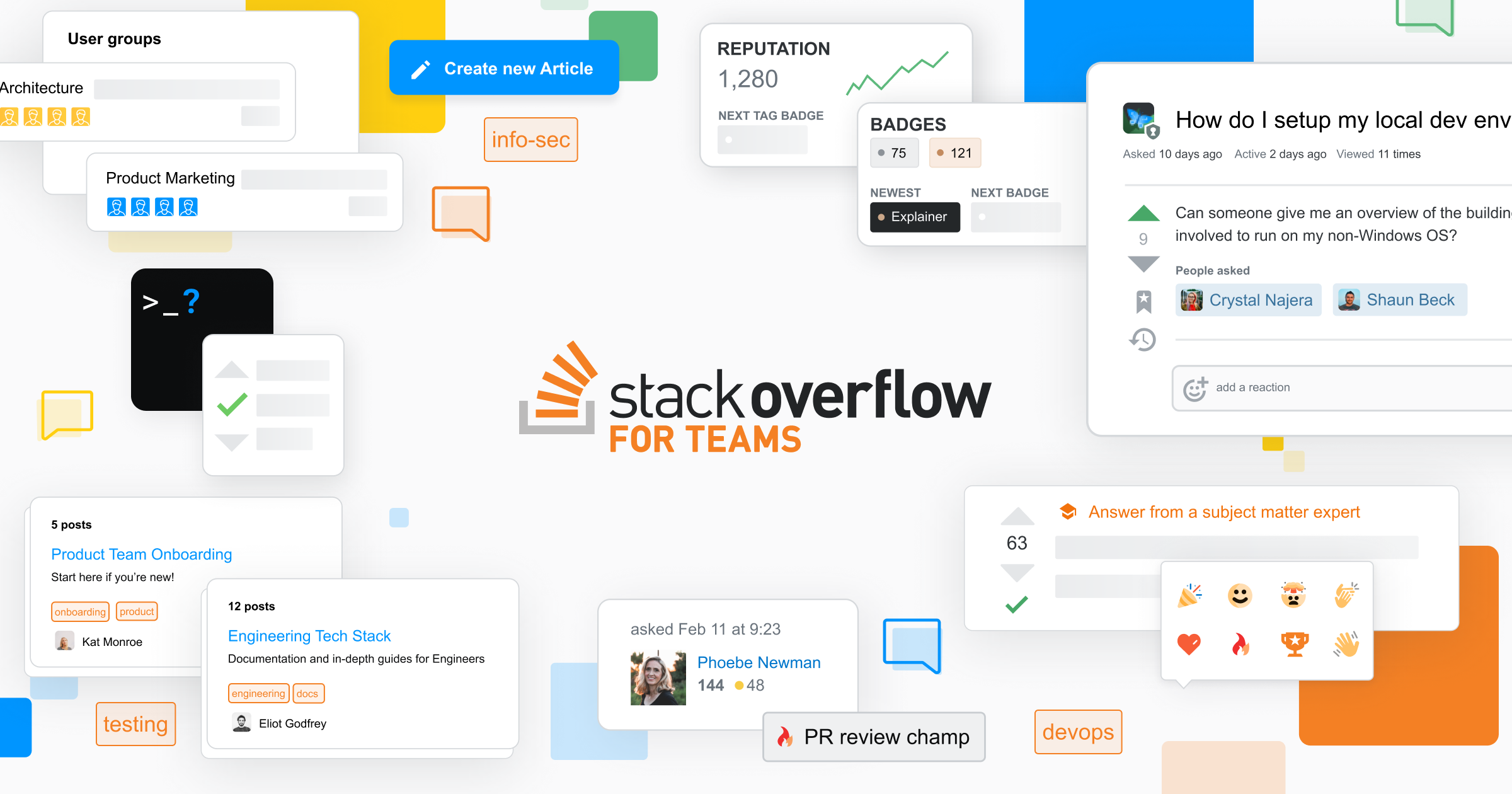
Stack Overflow contains over 50 million questions and answers. It documents the rise and fall of technologies—from the dominance of jQuery to the explosion of Machine Learning and Rust. For tech companies, “Stack Overflow for Teams” offers a private version of this ecosystem, allowing internal engineering departments to capture their proprietary knowledge in the same intuitive format.
In conclusion, Stack Overflow is more than a utility; it is a cultural institution within the technology sector. It represents a global commitment to the idea that knowledge should be free, accessible, and rigorously verified. As we move deeper into an era defined by artificial intelligence and increasingly complex software systems, Stack Overflow’s role as a trusted, human-centric repository of technical truth is more vital than ever. It is the place where the world’s developers go to find answers, and in doing so, they collectively build the future of technology.
aViewFromTheCave is a participant in the Amazon Services LLC Associates Program, an affiliate advertising program designed to provide a means for sites to earn advertising fees by advertising and linking to Amazon.com. Amazon, the Amazon logo, AmazonSupply, and the AmazonSupply logo are trademarks of Amazon.com, Inc. or its affiliates. As an Amazon Associate we earn affiliate commissions from qualifying purchases.