
In the landscape of 20th-century music, few genres represent the power of financial ingenuity as starkly as Skiffle. While music historians often view Skiffle as a precursor to the British Invasion and the birth of rock-and-roll icons like The Beatles, a financial analysis reveals a more fascinating narrative. Skiffle was the ultimate “lean startup” of the creative world—a movement born not out of luxury, but out of the necessity to circumvent high barriers to entry. By leveraging low-cost household assets and prioritizing high-volume, low-overhead performance, Skiffle artists created a blueprint for modern side hustles and digital entrepreneurship.
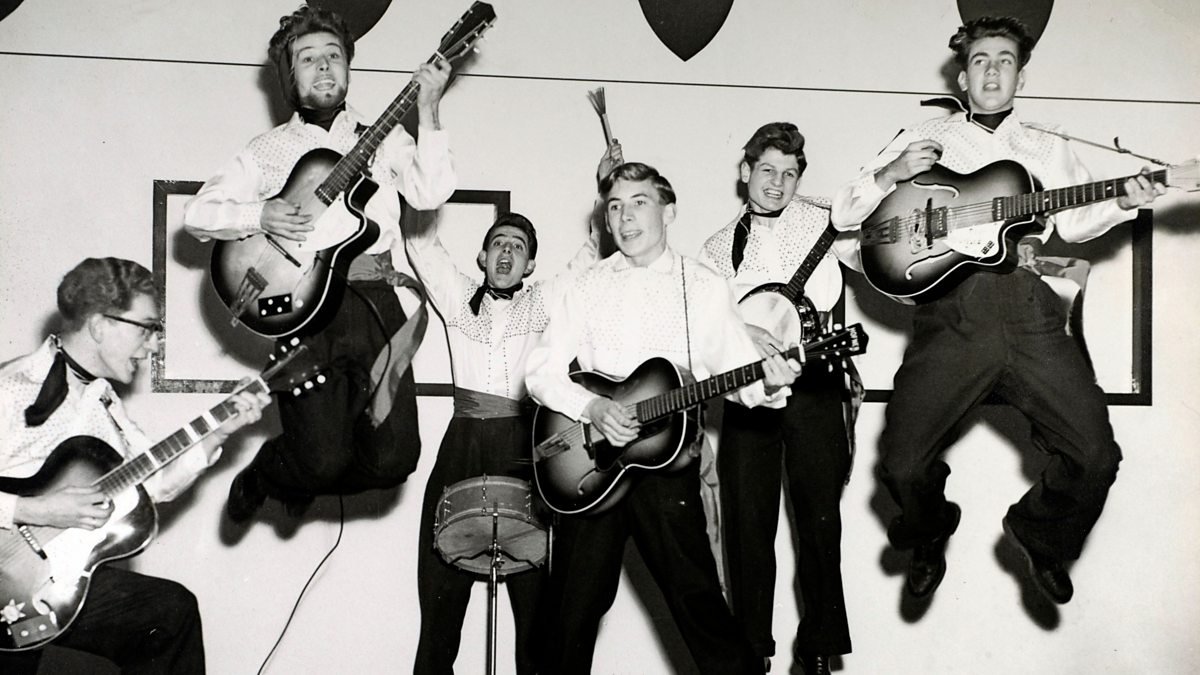
To understand what Skiffle music is, one must look past the tea-chest basses and washboards to see a radical shift in the economic accessibility of art. It was a movement that democratized the means of production long before the advent of the digital home studio.
The Financial Barriers to Entry in Post-War Britain
In the late 1940s and early 1950s, the British music scene was dominated by high-end jazz ensembles and classical orchestras. From a business perspective, the “startup costs” for a professional musician were astronomical. A high-quality guitar, a set of drums, or a brass instrument could cost the equivalent of several months’ salary for a working-class teenager. Furthermore, formal musical education was a gated asset, accessible primarily to those with the disposable income to afford private tuition.
Bootstrapping with Household Assets
Skiffle revolutionized this landscape by utilizing “found equipment.” The core philosophy of Skiffle was the minimization of capital expenditure (CAPEX). Instead of purchasing an expensive upright bass, a Skiffle band would use a tea chest, a broom handle, and a length of string. Instead of a professional percussion kit, they used a laundry washboard played with thimbles.
This approach transformed everyday household items into productive assets. By reducing the cost of equipment to near zero, Skiffle allowed thousands of young people to enter the “entertainment market” without the need for traditional financing or savings. In modern financial terms, this is the equivalent of a content creator starting a multi-million dollar YouTube channel using only a five-year-old smartphone and free editing software.
The Affordability of the “Three-Chord” Business Model
Beyond the hardware, Skiffle lowered the “intellectual capital” requirements for entry. The genre was built on simple structures—mostly three chords derived from American folk, blues, and jazz. This reduced the time-to-market for new performers. While a classical violinist might require a decade of “research and development” (practice) before generating revenue, a Skiffle group could form, rehearse, and begin busking or performing in local coffee bars within weeks. This rapid deployment allowed for a massive influx of participants, creating a highly competitive and vibrant marketplace of ideas.
Scalability and the Transition from Hobby to Career
What began as a low-cost hobby quickly evolved into a scalable business model. The mid-1950s saw Skiffle transition from the streets and coffee bars of Soho to the top of the commercial charts. This shift was led by figures like Lonnie Donegan, whose 1955 recording of “Rock Island Line” became a massive international hit.
Turning a Performance Side Hustle into a Commercial Success
Donegan’s success proved that the Skiffle model was not just sustainable but highly profitable. His recordings required minimal studio time because the arrangements were simple and the “tech stack” was rudimentary. This resulted in incredibly high profit margins. For record labels, Skiffle represented a low-risk, high-reward investment. The production costs were a fraction of those required for a full swing band, yet the consumer demand among the burgeoning “teenager” demographic was massive.
As the genre gained popularity, the “Skiffle craze” created an entire secondary economy. Music shops that previously struggled to sell high-end instruments began moving thousands of budget-friendly acoustic guitars. This period marked the beginning of the mass-market musical instrument industry, as manufacturers realized there was more money to be made in volume sales to hobbyists than in bespoke sales to professionals.
Intellectual Property and the Folk-Jazz Revenue Stream
Interestingly, Skiffle relied heavily on “public domain” or folk material. From a financial management perspective, this was a brilliant move. By rearranging traditional songs, artists could often claim publishing royalties on new arrangements without paying heavy licensing fees to original composers (many of whom were unknown or deceased). This allowed Skiffle artists to maximize their share of the intellectual property (IP) revenue stream, further fueling the growth of the movement.

The Long-Term ROI: Skiffle as the Seed Capital for the British Invasion
The true financial legacy of Skiffle is not found in the sales of washboards, but in the human capital it developed. Skiffle served as the primary training ground for the generation of musicians who would eventually dominate the global music industry in the 1960s.
Investment in Human Capital and Skill Acquisition
The most famous example is, of course, The Quarrymen—a Skiffle group formed by John Lennon. Had the financial barriers to entry remained high, it is unlikely that Lennon, McCartney, and Harrison would have had the means to experiment with music in their early teens. Skiffle provided a low-stakes environment to develop essential business and performance skills: stage presence, audience engagement, and collaborative songwriting.
This period can be viewed as an unofficial “incubation phase.” The skills acquired during the Skiffle years were the foundational assets that these musicians eventually leveraged to secure major recording contracts with EMI and other global conglomerates. The return on investment (ROI) for the “tea-chest bass” years was, quite literally, billions of dollars in future record sales, touring revenue, and publishing rights.
From Tea Chests to Fender Stratocasters: Reinvesting Profits
As Skiffle groups matured and began to generate consistent income, they followed a classic business trajectory: reinvestment. The “lean” tools of the 1950s were traded in for the “high-tech” tools of the 1960s—electric guitars, amplifiers, and professional drum kits. The revenue generated from Skiffle gigs funded the purchase of the equipment that would eventually define the sound of Rock and Roll. This transition represents a perfect case study in how a low-overhead side hustle can provide the bridge to a capital-intensive professional enterprise.
Modern Financial Lessons from the Skiffle Movement
The story of Skiffle music is more than a footnote in cultural history; it is a timeless lesson in financial agility and market disruption. Today’s entrepreneurs and creators can draw several parallels between the Skiffle craze and the current digital economy.
Low-Overhead Entrepreneurship in the Digital Age
In the 1950s, the “disruptive technology” was a washboard. Today, it is generative AI, cloud computing, and social media. The core principle remains the same: the most successful ventures often start by identifying ways to bypass traditional gatekeepers and high costs. Whether it is a dropshipping business, a newsletter, or a podcast, the modern “Skiffle” approach involves using readily available tools to create value without waiting for institutional permission or massive venture capital.
Monetizing Authenticity and Niche Communities
Skiffle succeeded because it was authentic and community-driven. It didn’t try to mimic the polished, expensive production of American jazz; it embraced its own raw, “homemade” aesthetic. In today’s market, consumers often favor authenticity over high-production gloss. Brands and creators who lean into a “transparent” or “DIY” identity often find they can build more loyal (and profitable) communities with lower marketing spends.
By understanding Skiffle as a financial phenomenon, we see that it was the first time that “the masses” owned the means of musical production. It proved that market dominance isn’t always about who has the most capital—it’s about who can innovate most effectively within their means.

Conclusion: The Perpetual Value of the Skiffle Mindset
“What is Skiffle music?” It is, fundamentally, the sound of economic liberation. It represents the moment when the financial cost of creativity plummeted, allowing a generation of working-class entrepreneurs to build a global industry from the contents of their kitchens.
For the modern investor or business professional, the legacy of Skiffle is a reminder to look for value in unconventional places. The next billion-dollar industry might not start in a laboratory or a boardroom; it might start in a garage, a coffee bar, or on a smartphone, powered by the same “bootstrap” spirit that once turned a tea chest into a bass and a hobby into a revolution. Skiffle taught the world that you don’t need a fortune to make a legacy—you just need the right rhythm and the courage to start with what you have.
aViewFromTheCave is a participant in the Amazon Services LLC Associates Program, an affiliate advertising program designed to provide a means for sites to earn advertising fees by advertising and linking to Amazon.com. Amazon, the Amazon logo, AmazonSupply, and the AmazonSupply logo are trademarks of Amazon.com, Inc. or its affiliates. As an Amazon Associate we earn affiliate commissions from qualifying purchases.