
In the realm of mathematics, the question “What is the sin of 1?” is deceptively simple. To a student, it is a value on a calculator—approximately 0.84147. However, in the high-stakes world of modern technology, software engineering, and digital signal processing, the “sin of 1” represents much more than a numerical output. It is a fundamental benchmark for computational precision, hardware efficiency, and the underlying logic that powers everything from the smartphone in your pocket to the complex simulations used in aerospace engineering.
As we transition deeper into the age of Artificial Intelligence (AI) and high-performance computing (HPC), understanding how technology interprets and processes basic trigonometric functions is essential. Whether it is measured in radians or degrees, the way a computer calculates the sine of a single unit reveals the intricate balance between hardware limitations and software ingenuity.

The Computational Logic Behind Calculating Sin(1)
At its core, a computer does not “know” trigonometry. Unlike a human who might visualize a unit circle, a CPU or GPU relies on binary logic and power series to approximate transcendental functions. When a developer types math.sin(1) in Python or std::sin(1) in C++, a complex sequence of low-level operations is triggered to provide a result that is both accurate and fast.
Floating-Point Arithmetic and the IEEE 754 Standard
The primary challenge in calculating the sin of 1 is the limitation of digital storage. In most modern systems, numbers are represented using the IEEE 754 standard for floating-point arithmetic. Because the sine of 1 (in radians) is an irrational number, it cannot be represented with perfect precision in a binary system.
Tech platforms must decide between 32-bit (single precision) and 64-bit (double precision) formats. A 32-bit system might round the value earlier, which could lead to “floating-point drift” in complex simulations. For developers working on financial software or physical modeling, the way a system handles the infinitesimal decimals of sin(1) can be the difference between a successful launch and a catastrophic software bug.
The CORDIC Algorithm vs. Taylor Series
How does a chip actually find the value? Most modern processors use an algorithm called CORDIC (Coordinate Rotation Digital Computer). Developed in the late 1950s, CORDIC allows for the calculation of trigonometric functions using only simple addition, subtraction, and bit-shifting. This is highly efficient for hardware because it avoids the need for heavy multiplication operations.
Alternatively, some high-level software libraries use Taylor Series expansions. This involves representing the sine function as an infinite sum of polynomials. While more mathematically “elegant,” it is computationally expensive. Tech stacks must constantly optimize which method to use based on the available hardware—whether it is an ARM-based mobile chip or a massive NVIDIA GPU.
Applications in Software Development and Data Science
The value of sin(1) isn’t just a theoretical exercise; it is a foundational component of many digital tools we use daily. In the world of software development and data science, trigonometric functions serve as the building blocks for periodicity and wave-like patterns.
Digital Signal Processing (DSP) and Media
Every time you stream a video or listen to a digital audio file, your device is performing millions of trigonometric calculations. Sine waves are the fundamental components of sound and light. Digital Signal Processing (DSP) uses functions like sin(x) to compress audio, filter noise out of phone calls, and encode video data.
In this context, calculating the sine of 1 radian (which is roughly 57.3 degrees) is a common operation in Phase-Locked Loops (PLLs)—circuits that are vital for synchronizing communication between devices. If the tech stack fails to calculate these values with high precision, the result is “jitter” or data loss in high-speed internet connections.
Machine Learning and Positional Encoding
In the burgeoning field of AI, particularly in Natural Language Processing (NLP), the sine function has found a new, critical role. Large Language Models (LLMs), such as those based on the Transformer architecture, use “Positional Encoding” to understand the order of words in a sentence.
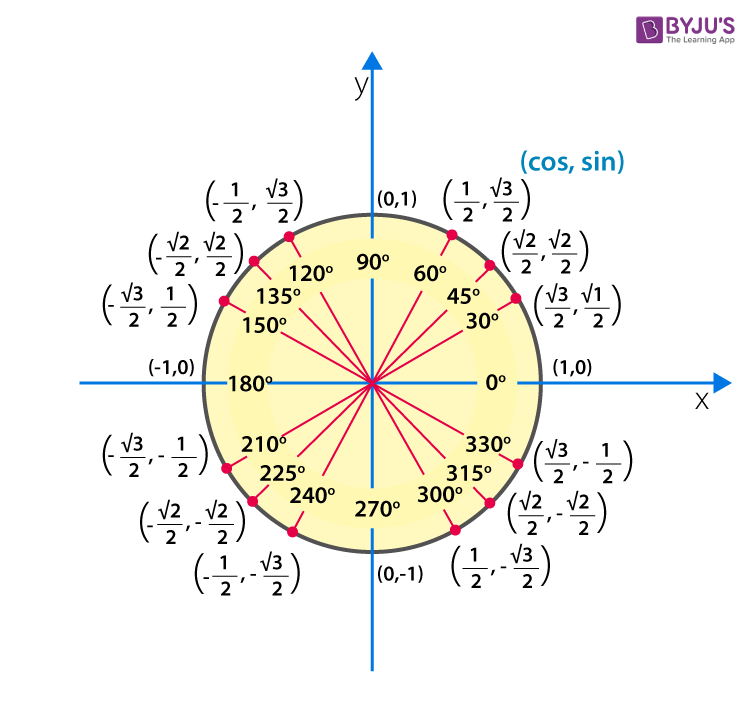
Since transformers process all words in a sequence simultaneously, they need a way to track “where” a word is. Engineers use sine and cosine functions of varying frequencies to create a unique signature for each position. In this high-tech application, the precision of trigonometric outputs directly impacts the model’s ability to maintain context and coherence in long-form text generation.
From Graphics Engines to Real-Time Simulations
In the tech sector, one of the most visible applications of trigonometry is in computer graphics and game development. When you see a character move fluidly across a screen or light reflecting off a digital water surface, you are seeing trigonometry in action.
Rendering Curved Surfaces and Shaders
Modern GPUs (Graphics Processing Units) are designed to handle billions of trigonometric calculations per second. In game engines like Unreal Engine 5 or Unity, the “sin of 1” might be used within a “shader”—a small program that tells the computer how to render light and shadow.
Because sine functions describe smooth, oscillating curves, they are used to simulate natural phenomena such as the sway of trees in the wind, the undulation of ocean waves, or the flicker of a candle. To maintain a high frame rate (such as 60 or 120 FPS), the hardware must be able to calculate these sine values with near-instantaneous speed, often sacrificing a tiny bit of precision for the sake of real-time performance.
Game Physics and Oscillatory Motion
Beyond visuals, the physics engines of modern software rely on these functions to calculate forces. If a game developer is coding a pendulum or a spring-based trap, the sine function determines the object’s displacement over time. Here, the “1” in sin(1) might represent one second of elapsed time or one unit of angular momentum. Technical accuracy ensures that the physics feel “real” to the user, preventing “glitching” where objects might clip through walls or behave erratically.
The Future of Mathematical Computing: AI and Quantum Shifts
As we look toward the future of technology, the way we calculate basic constants like the sin of 1 is undergoing a paradigm shift. We are moving away from traditional numerical approximation and toward more “intelligent” and specialized computing methods.
Symbolic Computation and AI-Driven Math
Emerging AI tools are now capable of “Symbolic Computation.” Unlike a traditional calculator that gives you 0.84147, symbolic engines (like those found in WolframAlpha or specialized AI agents) treat sin(1) as an exact mathematical object. This allows for error-free algebraic manipulation before any decimal rounding occurs. As AI becomes more integrated into engineering workflows, the reliance on raw numerical crunching is being augmented by these “smarter” mathematical models that understand the properties of the function itself.
The Promise of Quantum Computing
Quantum computing represents the next frontier for mathematical precision. While classical computers struggle with certain complex trigonometric optimizations, quantum bits (qubits) can exist in states that naturally map to trigonometric spheres (the Bloch sphere).
Quantum algorithms, such as the Quantum Fourier Transform (QFT), could theoretically perform calculations involving sine and cosine functions at speeds that are orders of magnitude faster than current supercomputers. This would revolutionize fields like cryptography and material science, where the precise calculation of wave functions—essentially complex versions of our sin(1) problem—is the key to unlocking new technological breakthroughs.

Conclusion: Why the Sin of 1 Matters in Tech
The question “What is the sin of 1?” serves as a gateway to understanding the incredible complexity of the modern tech stack. What appears to be a simple math problem is actually a testament to decades of innovation in hardware design, software optimization, and algorithmic theory.
For the technologist, sin(1) is a reminder that we live in a world built on approximations. From the CORDIC algorithms in our processors to the positional encodings in our AI models, our ability to accurately and efficiently process these values is what allows us to build stable, immersive, and intelligent digital environments. As we push the boundaries of what is possible with GPU acceleration and quantum mechanics, the fundamental importance of these mathematical building blocks remains unchanged. In every pixel, every sound wave, and every line of code, the sine of 1 is there—quietly powering the digital world.