
In the world of clinical medicine, Sick Sinus Syndrome refers to a collection of heart rhythm problems caused by a malfunctioning sinus node—the heart’s natural pacemaker. When we transpose this concept into the realm of high-scale technology, “Sick Sinus Syndrome” becomes a powerful metaphor for the failure of the “heartbeat” mechanisms that keep distributed systems, cloud infrastructures, and hardware components in sync.
In modern computing, timing is everything. Whether it is a CPU coordinating billions of cycles per second or a global database ensuring that a transaction in Tokyo doesn’t conflict with one in New York, the “sinus node” of tech—the system clock and timing signals—is the silent governor of stability. When these timing mechanisms falter, we witness a digital version of the syndrome: irregular rhythms, unpredictable pauses, and catastrophic system failure.

The Heartbeat of Technology: Defining System Rhythms
To understand how a digital system “gets sick,” we must first understand its healthy pulse. Every piece of hardware and every layer of software relies on a fundamental rhythm to execute instructions and move data.
The Role of the System Clock
At the hardware level, the system clock is the primary pacemaker. It generates a continuous stream of electrical pulses that synchronize the internal operations of a computer. Just as the biological sinus node tells the heart when to contract, the crystal oscillator on a motherboard tells the CPU when to execute the next instruction. In high-performance computing, any deviation in this rhythm—known as “clock jitter”—can lead to processing errors or data corruption. If the clock slows down unexpectedly (bradycardia in medical terms), system throughput collapses. If it becomes erratic, the entire machine may cease to function.
Oscillators and Timing Signals
Beyond the single machine, timing signals govern network communication. Modern Ethernet and fiber optic standards rely on precise timing to distinguish between bits of data. When we scale this up to distributed systems—thousands of servers working as one—the “sinus node” becomes a distributed service like the Network Time Protocol (NTP) or the Precision Time Protocol (PTP). These protocols ensure that every server “beats” at the same time. A healthy digital sinus node allows for seamless coordination; a “sick” one leads to the digital equivalent of an arrhythmia.
Diagnosing “Sick Sinus Syndrome” in Distributed Systems
In complex software ecosystems, diagnosing a timing failure is often more difficult than fixing a code bug. When the “pacemaker” of a distributed system begins to fail, the symptoms are often intermittent and confusing.
Latency Spikes and Irregular Pacing
One of the first signs of a digital timing ailment is irregular latency. In a healthy system, requests move from Point A to Point B with a predictable “pulse.” However, when a system suffers from internal synchronization issues, we see “hiccups.” These are moments where the system appears to stop for a few milliseconds before racing to catch up. In software engineering, this is often caused by Garbage Collection (GC) pauses or thread contention, but at the architectural level, it is a failure of the system to maintain its rhythmic flow. These irregular intervals are the hallmarks of a system whose “sinus node” can no longer maintain a steady state.
The Silent Failure: When the Heartbeat Signal Drops
Many distributed systems use a “heartbeat” mechanism to monitor the health of various nodes. A central controller expects a signal from every worker node every few seconds. If the signal is missed, the controller assumes the node is dead and begins a costly failover process. “Sick Sinus Syndrome” occurs here when the heartbeat isn’t actually dead, but merely “arrhythmic.” A slow network or a congested CPU might cause a node to miss a beat, leading the system to believe it has failed when it hasn’t. This results in “flapping”—a state where nodes are constantly being kicked out and brought back into the cluster, creating a chaotic and unstable environment.
Cascading Failures: The Impact of Synchronization Drift
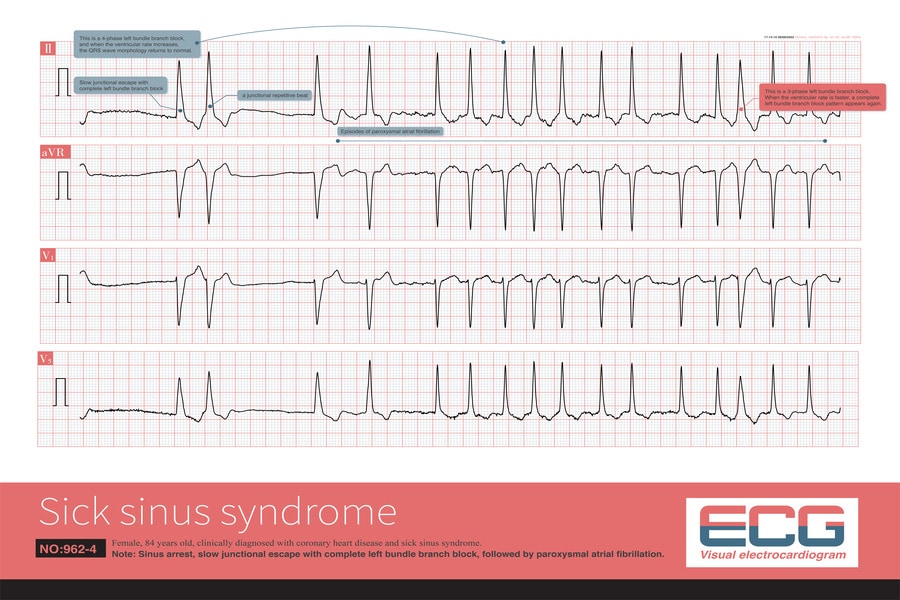
When the timing mechanism of a system remains “sick” for too long, the issues move from minor performance glitches to catastrophic integrity failures. This is where the digital pulse becomes a liability.
Database Inconsistency and “Split-Brain” Scenarios
The most dangerous consequence of timing failure is “Clock Drift.” In a distributed database, the order of events is determined by timestamps. If Server A’s clock is even a few milliseconds ahead of Server B’s, the system might record an “Effect” before its “Cause.” This leads to data corruption that is notoriously difficult to repair.
Even worse is the “Split-Brain” scenario. This occurs when a timing failure causes two parts of a system to lose track of each other. Both parts believe the other has died and both attempt to take control of the “pacemaker” duties. In a financial system, this could mean two different servers both thinking they have the authority to process the same million-dollar transaction, leading to double-spending or lost records.
Security Vulnerabilities in Timing Attacks
A “sick” or predictable sinus node isn’t just a stability risk; it is a security risk. Timing attacks are a class of side-channel attacks where an adversary analyzes the time it takes for a system to respond to various inputs. If a system’s internal rhythms are inconsistent or can be manipulated, hackers can deduce cryptographic keys or bypass authentication measures. A healthy system maintains a “constant-time” execution for sensitive operations to mask its internal pulse; a system with timing “syndromes” leaves its pulse exposed for exploitation.
Treatment and Recovery: Engineering Resilient “Sinus Nodes”
Just as a patient with Sick Sinus Syndrome might receive a pacemaker, a compromised technical architecture requires specialized “treatments” to restore its rhythm and ensure long-term viability.
Implementing Redundant Clock Sources (NTP and PTP)
The first line of defense is redundancy. Critical infrastructure should never rely on a single source of truth for time. High-frequency trading platforms and telecommunications networks often use atomic clocks or GPS-linked time servers to provide a “Stratum 0” heartbeat. By using multiple time sources, a system can “vote” on the correct time. If one clock starts to drift or act erratically (exhibiting “sick” behavior), the system can ignore it and remain synchronized with the healthy majority.
Circuit Breakers and Health Check Patterns
In software architecture, the “Circuit Breaker” pattern acts as an emergency intervention. When a service begins to exhibit irregular response times—the digital arrhythmia—the circuit breaker trips, stopping all traffic to that service. This prevents the “sickness” from spreading to the rest of the ecosystem. Similarly, advanced health checks move beyond simple “Are you alive?” pings. They measure the quality of the rhythm, analyzing variance and jitter to preemptively “quarantine” a node before it causes a system-wide stroke.
The Future of Autonomous System Monitoring
As we move toward more complex AI-driven infrastructures, the way we manage the “digital sinus node” is evolving. We are entering an era where systems can self-diagnose and self-heal their timing issues.

AI-Driven Diagnostics for Real-Time Pulse Correction
The next generation of DevOps tools uses machine learning to monitor system rhythms. These AI “cardiologists” analyze trillions of data points to identify the subtle patterns that precede a total timing failure. Instead of waiting for a system to crash, these tools can dynamically adjust resource allocation, throttle traffic, or recalibrate clock offsets in real-time. By treating “Sick Sinus Syndrome” at the first sign of a skipped beat, organizations can maintain 99.999% uptime in an increasingly volatile digital landscape.
In conclusion, while “Sick Sinus Syndrome” originates in the halls of medicine, its lessons are vital for the architects of the digital age. A system is only as strong as its ability to maintain a consistent, reliable pulse. By understanding the mechanics of timing, diagnosing the signs of rhythmic decay, and implementing robust technological “pacemakers,” we ensure that our digital world remains stable, secure, and resilient against the chaos of the irregular.
aViewFromTheCave is a participant in the Amazon Services LLC Associates Program, an affiliate advertising program designed to provide a means for sites to earn advertising fees by advertising and linking to Amazon.com. Amazon, the Amazon logo, AmazonSupply, and the AmazonSupply logo are trademarks of Amazon.com, Inc. or its affiliates. As an Amazon Associate we earn affiliate commissions from qualifying purchases.