
In the vast landscape of modern technology, there are certain fundamental processes that occur behind the scenes, often unnoticed by the end-user, yet absolutely essential to the operation of everything from a smartphone to a sophisticated artificial intelligence model. One such process is “rectification.” While the term may sound academic or overly technical, it is the cornerstone of how we manipulate energy and data to suit our digital needs.
In its most basic sense, rectification refers to the process of converting something from a fluctuating or multidirectional state into a unidirectional or “straightened” state. In the tech niche, this concept manifests in three primary pillars: electrical engineering, computer vision, and machine learning. Understanding rectification is not just about understanding a circuit; it is about understanding how the digital world achieves stability, clarity, and intelligence.
1. The Foundation of Hardware: Electrical Rectification
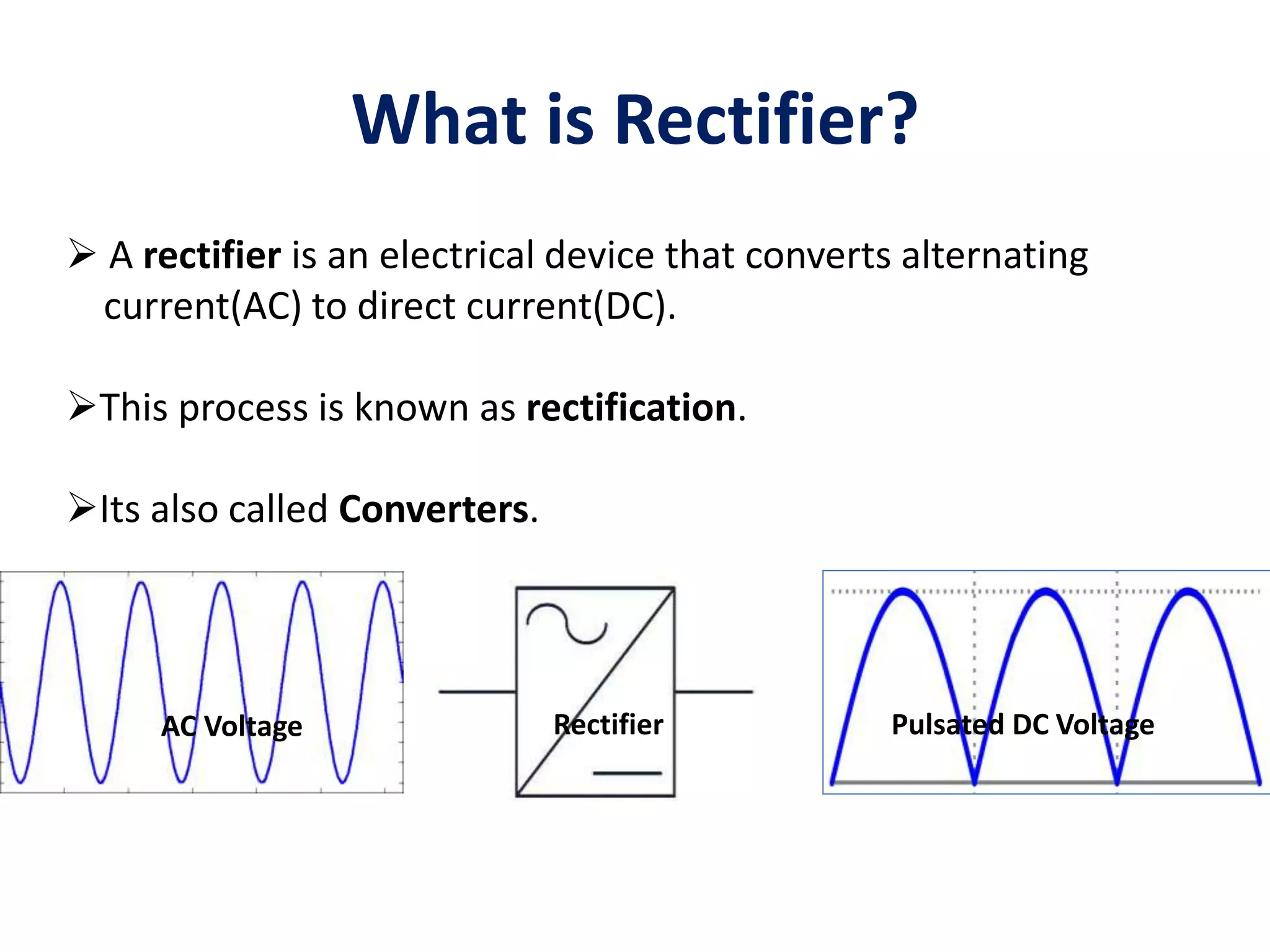
At the hardware level, rectification is the process of converting Alternating Current (AC), which periodically reverses direction, into Direct Current (DC), which flows in a single, steady direction. This is perhaps the most critical application of rectification because almost all modern electronic devices—laptops, servers, routers, and mobile devices—run on DC power, whereas the electricity delivered by national grids is AC.
The Mechanism of the Semiconductor Diode
The hero of electrical rectification is the diode. A diode acts as a one-way valve for electricity. In a silicon-based semiconductor, the diode allows current to pass when it is forward-biased and blocks it when it is reverse-biased. By arranging these diodes in specific configurations, engineers can “rectify” the swinging waves of AC into a more usable format.
Half-Wave vs. Full-Wave Rectification
In simpler circuits, a single diode might be used for half-wave rectification. This process effectively blocks the negative half of the AC cycle, letting only the positive pulses through. However, this is inefficient as it wastes half the available energy. To solve this, tech hardware utilizes “Full-Wave Rectification,” often through a Bridge Rectifier. This setup uses four diodes to redirect the negative portion of the AC wave so that it flows in the same direction as the positive portion. The result is a much smoother power supply that, when paired with capacitors for filtering, provides the steady voltage required by sensitive microchips.
Implications for Power Management and Green Tech
As we move toward a more sustainable tech ecosystem, rectification plays a vital role in power efficiency. Modern “Switch-Mode Power Supplies” (SMPS) use high-frequency rectification to minimize energy loss. Improving the efficiency of these rectifiers is key to extending the battery life of wearables and reducing the massive energy footprint of global data centers.
2. Geometric Precision: Rectification in Computer Vision
As we move from the physical hardware to the software and sensors that perceive the world, rectification takes on a geometric meaning. In the fields of robotics, autonomous driving, and augmented reality (AR), “Image Rectification” is a crucial step in how machines interpret visual data.
Stereoscopic Vision and Epipolar Geometry
Humans perceive depth because we have two eyes seeing the world from slightly different angles. To replicate this in technology, we use stereo camera setups. However, raw images from two different cameras are rarely aligned perfectly due to lens imperfections or mechanical mounting differences.
Image rectification is the transformation process that projects two or more images onto a common image plane. This “straightens” the images so that corresponding points between the two views lie on the same horizontal lines (epipolar lines). Once the images are rectified, the computer can calculate “disparity” much faster, allowing an autonomous vehicle to instantly determine how far away a pedestrian or an obstacle is.
Lens Distortion Correction
Almost every digital lens, especially the wide-angle lenses used in action cameras and security drones, suffers from some degree of radial distortion. This makes straight lines appear curved (the “fisheye” effect). Digital rectification involves using mathematical algorithms to remap pixels and “un-distort” the image. For professional photography and architectural mapping, this process ensures that the digital representation of an object maintains the integrity of its real-world proportions.
Rectification in Geographic Information Systems (GIS)
In satellite imagery and aerial mapping, “Orthorectification” is the gold standard. This process removes the effects of image perspective (tilt) and relief (terrain) to create a planimetrically correct image. Without this tech-driven rectification, digital maps like Google Earth would be riddled with misalignments, making precise navigation and urban planning impossible.

3. The Engine of AI: Rectified Linear Units (ReLU)
Perhaps the most modern and “trendy” application of rectification lies within the architecture of Artificial Intelligence. If you have interacted with a Large Language Model (LLM) or an image generation tool recently, you have benefited from a mathematical function known as the Rectified Linear Unit, or ReLU.
The Role of Activation Functions
In a neural network, “neurons” receive input data, process it, and pass it to the next layer. But how does a machine decide which information is important enough to pass along? This is the job of the activation function. In the early days of AI, scientists used complex, “S-shaped” curves (Sigmoids). However, these were computationally expensive and led to the “vanishing gradient problem,” where the AI stopped learning because the mathematical signals became too small.
How ReLU Simplified Machine Learning
The ReLU function introduced a revolutionary form of rectification. Its logic is elegantly simple: $f(x) = max(0, x)$. In plain English, if the input is negative, the output is zero. If the input is positive, the output is exactly that value.
By “rectifying” the input—throwing away the negative values—ReLU allows the neural network to become “sparse.” Not every neuron needs to fire at the same time. This mimics the efficiency of the human brain and allows deep learning models to be trained significantly faster and with much greater complexity.
Variants and the Future of AI Rectification
While standard ReLU is the industry standard, tech researchers have developed variants like “Leaky ReLU” or “Parametric ReLU” to handle specific data edge cases. These advancements in rectification logic are what enable modern AI to recognize faces in milliseconds or translate languages with human-like nuance.
4. Digital Integrity: Data and Signal Rectification
Beyond power and pixels, rectification is a concept used to ensure the purity and accuracy of digital signals. In a world saturated with electromagnetic interference and “noisy” data, the ability to rectify a signal is essential for digital security and communication.
Signal Conditioning in IoT
Internet of Things (IoT) devices often operate in environments with high levels of electronic noise. Signal rectification is used to extract clean data from messy analog sensors. By rectifying and filtering signals, tech developers ensure that a smart thermostat or an industrial vibration sensor provides accurate readings rather than being confused by background static.
Data Rectification and Cleansing
In the realm of Big Data and Digital Security, “rectification” often refers to the process of identifying and correcting inconsistencies within a dataset. When data is ingested from various sources, it is often “crooked”—formats are inconsistent, and errors are present. Data rectification tools use automated algorithms to “straighten” this data, ensuring it conforms to a standard schema. This is a vital step in cybersecurity, where rectifying logs allows security analysts to spot anomalies that might indicate a breach.
Error Correction in Wireless Communication
Our modern wireless world (5G, Wi-Fi 6) relies on the rectification of transmitted waves. When a signal is sent through the air, it bounces off buildings and degrades. The receivers use complex digital signal processing—a form of mathematical rectification—to reconstruct the original “straight” signal from the distorted waves received by the antenna.

Conclusion: The Invisible Architect of the Digital Age
Rectification is more than just a niche technical term; it is a fundamental principle that spans the entire spectrum of technology. Whether it is a physical diode converting electricity to power our gadgets, a geometric algorithm helping a self-driving car see the road, or a mathematical function enabling an AI to think, rectification is about bringing order to chaos.
As we look toward the future, the importance of these processes will only grow. In the quest for more efficient green energy, we will need more advanced power rectifiers. In the evolution of the Metaverse and AR, image rectification will need to become even more seamless and low-latency. And as AI models grow to trillions of parameters, the efficiency of “rectified” learning will remain the heartbeat of innovation.
By understanding what rectification is, we gain a deeper appreciation for the intricate layers of “straightening” and “refining” that allow our complex digital world to function with such remarkable stability and intelligence. Whether you are an engineer, a developer, or a tech enthusiast, recognizing the power of rectification is key to understanding the mechanics of the modern era.
aViewFromTheCave is a participant in the Amazon Services LLC Associates Program, an affiliate advertising program designed to provide a means for sites to earn advertising fees by advertising and linking to Amazon.com. Amazon, the Amazon logo, AmazonSupply, and the AmazonSupply logo are trademarks of Amazon.com, Inc. or its affiliates. As an Amazon Associate we earn affiliate commissions from qualifying purchases.