
In the world of personal finance, we often talk about diversifying portfolios, maximizing 401(k) contributions, or finding the next high-growth tech stock. However, one of the most consistent and high-yield investments isn’t found on Wall Street; it is found within the walls of your own home. When homeowners and property investors discuss energy efficiency, the term “R-value” is frequently used. But for the financially savvy, R-value is more than a construction specification—it is a metric of thermal resistance that directly correlates to monthly cash flow, property valuation, and long-term wealth preservation.
Understanding what R-value is and how it functions is essential for anyone looking to optimize their personal balance sheet. By viewing insulation through the lens of a financial tool, you can transform a mundane home maintenance task into a strategic move that pays dividends for decades.
Understanding the Economics of R-Value
To manage your money effectively, you must understand the “leaks” in your budget. In a physical sense, heat transfer is the primary culprit behind fluctuating utility bills. This is where the R-value comes into play as a critical financial variable.
Defining R-Value as a Financial Metric
Technically, R-value measures the capacity of an insulating material to resist heat flow. The “R” stands for resistance. The higher the R-value, the greater the insulating power. From a financial perspective, R-value is the “moat” around your castle, protecting your liquid capital from being evaporated by external temperatures.
When you invest in insulation with a high R-value, you are essentially purchasing a hedge against energy inflation. As the costs of natural gas, electricity, and heating oil rise, the “yield” on your insulation investment increases. Unlike a savings account with a fixed interest rate, the “earnings” from a high R-value material are measured in the expenses you don’t have to pay.
The Cost-to-Performance Ratio
Not all insulation is created equal, and from a business finance perspective, it is vital to analyze the cost-to-performance ratio. Different materials—such as fiberglass batts, blown-in cellulose, or spray foam—offer different R-values per inch.
For instance, spray foam often provides a higher R-value in a thinner profile compared to fiberglass. While the upfront capital expenditure (CapEx) for spray foam is higher, the “internal rate of return” (IRR) can be significantly more attractive due to its superior air-sealing properties. As an investor in your own property, you must weigh the initial cost of the material against the projected monthly savings to determine the payback period.
Insulation as a High-Yield Investment
Many people view home improvements as “sunk costs.” However, upgrading your home’s R-value should be categorized as a high-yield investment. In many climates, the ROI of a well-executed insulation project can outperform traditional market benchmarks.
Lowering Utility Overhead for Long-Term Wealth
In personal finance, “lifestyle creep” is often cited as a wealth killer. High utility bills are a form of mandatory lifestyle creep—unproductive expenses that do nothing to build your net worth. By increasing the R-value in your attic and crawl spaces, you can slash heating and cooling costs by 15% to 50%, depending on your starting point.
Consider the compounding effect of these savings. If a $2,500 insulation upgrade saves you $100 per month, you have a 48% annual return on your investment in the first year alone. If you take that $100 monthly saving and redirect it into a low-cost index fund, the long-term impact on your retirement corpus is staggering. Over 20 years, that “insulation dividend” could grow into tens of thousands of dollars.
HVAC Longevity and Maintenance Savings
The financial benefits of R-value extend beyond the monthly bill. A home with poor R-value forces the HVAC (Heating, Ventilation, and Air Conditioning) system to work overtime to maintain a consistent temperature. This leads to premature mechanical failure and frequent repair costs.
By maintaining a high R-value, you reduce the “wear and tear” on your home’s most expensive appliance. This extends the replacement cycle of your HVAC unit from, perhaps, 12 years to 18 years. In the world of business finance, this is known as optimizing asset lifecycles. Delaying a $10,000 HVAC replacement by six years provides a massive boost to your net worth by keeping that capital in your pocket for longer.
Boosting Property Value and Real Estate Equity
For those who view their home as an asset in a larger real estate portfolio, R-value is a key driver of “forced appreciation.” In the modern real estate market, energy efficiency is no longer a luxury—it is a core demand of the savvy buyer.
Energy Efficiency as a Selling Point
When it comes time to liquidate your asset (sell your home), a high R-value serves as a powerful marketing tool. Prospective buyers are increasingly focused on “Total Cost of Ownership” (TCO). A home with documented high-performance insulation and low utility history is significantly more attractive than a comparable “drafty” home.
Studies in real estate finance suggest that “green-certified” or energy-efficient homes can command a premium of 2% to 5% over standard homes. On a $400,000 property, that equates to an additional $8,000 to $20,000 in equity. Investing in R-value is, therefore, a strategic way to build equity that is often tax-exempt upon the sale of a primary residence.
Tax Credits and Financial Incentives
The government often subsidizes the cost of increasing your home’s R-value through tax credits and rebates. In the United States, legislation like the Inflation Reduction Act provides substantial tax credits for weatherization and insulation.
These incentives act as a “discount” on your investment, lowering your cost basis and accelerating your break-even point. From a personal finance standpoint, utilizing these credits is a “no-brainer.” It is essentially the government offering to pay for a portion of your home’s value-add, while you keep 100% of the future energy savings.
Strategic Spending: Choosing the Right R-Value for Maximum ROI
In investing, more is not always better. There is a point where the cost of additional R-value exceeds the financial benefit it provides. This is the concept of diminishing returns, and it is crucial for managing your home improvement budget.
Avoiding the Diminishing Returns Trap
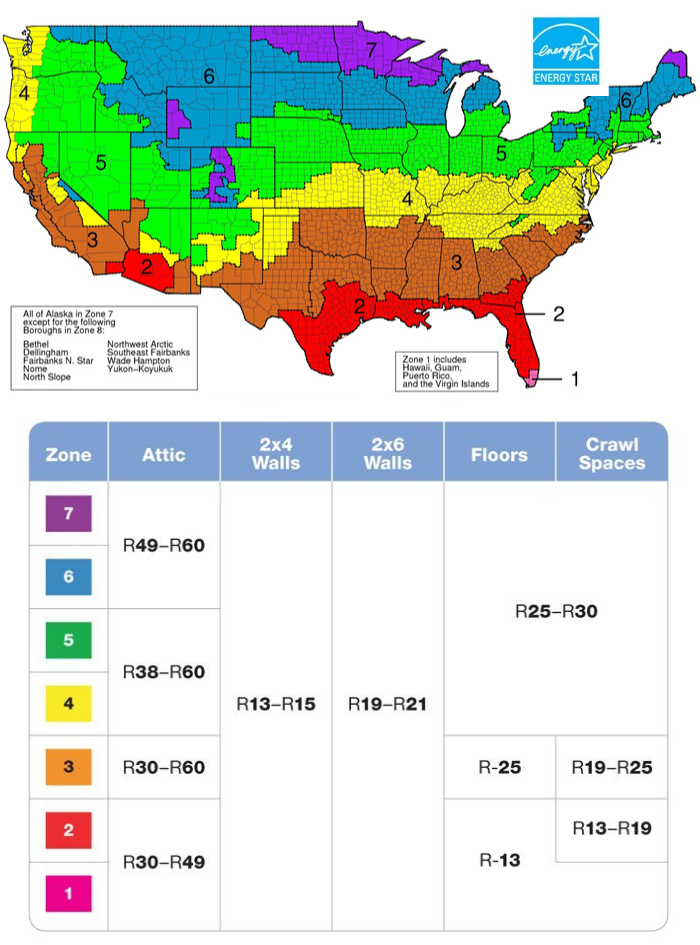
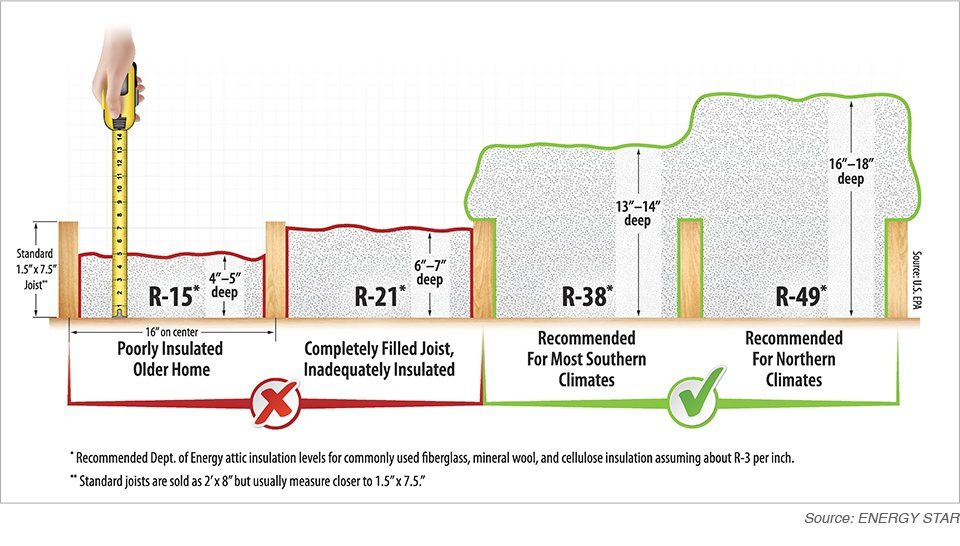
The first “units” of R-value you add to a home provide the greatest financial return. For example, moving from an uninsulated attic (R-0) to a standard level (R-30) will result in a massive drop in energy costs. However, moving from R-30 to R-60 provides a smaller incremental saving.
A smart financial manager analyzes the “marginal utility” of each additional inch of insulation. In most cases, it is better to reach the Department of Energy’s recommended R-value for your specific zone rather than spending excessively to go beyond it. Your goal is to find the “sweet spot” where your capital is working most efficiently.
Regional Climate and Budget Allocation
Your geographical location dictates your “investment strategy” for R-value. If you live in a mild climate, a lower R-value may be sufficient, allowing you to allocate your capital toward other investments like solar panels or high-efficiency windows. Conversely, if you live in a region with extreme winters or sweltering summers, “over-investing” in R-value is a defensive financial play that protects you from seasonal price spikes in energy.
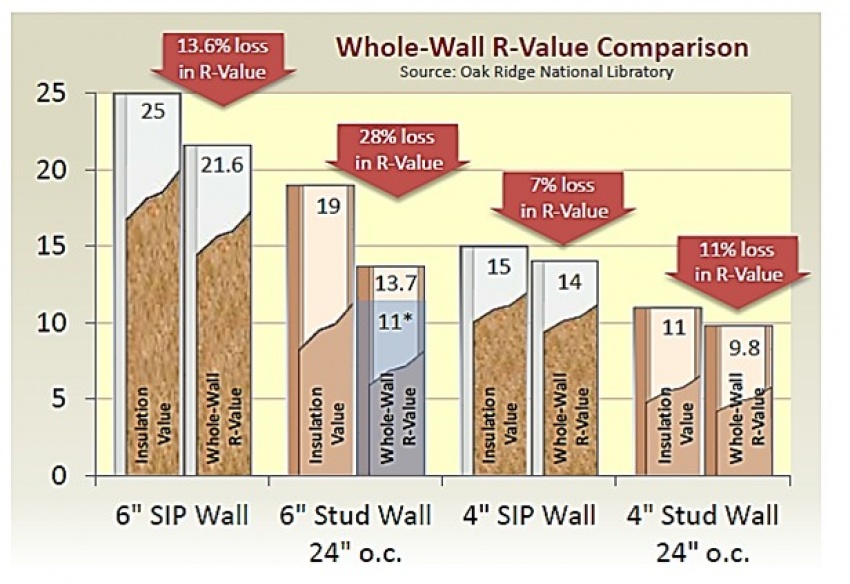
Properly allocating your budget requires an energy audit. An auditor can identify exactly where your home is losing money, ensuring that you don’t spend money on R-value in the walls when the “leak” is actually in the basement.
The Long-Term Wealth Impact of Home Efficiency
When we summarize the concept of R-value through the lens of money, it becomes clear that insulation is a foundational pillar of a sound financial plan. It is a rare investment that offers immediate cash flow, increases the value of your primary asset, reduces maintenance liabilities, and provides tax-advantaged growth.
In an era of economic uncertainty and volatile energy markets, the R-value of your home acts as a buffer. It provides a level of predictability in your monthly expenses that few other investments can match. By treating your home’s thermal envelope as a financial instrument, you are not just making your living space more comfortable—you are building a more resilient and profitable financial future.
Whether you are a first-time homeowner looking to minimize expenses or a seasoned real estate investor seeking to maximize NOI (Net Operating Income), the R-value of your properties should be a top priority. Stop looking at insulation as “fluff” in the attic, and start seeing it for what it truly is: a silent, steady engine of wealth creation.
aViewFromTheCave is a participant in the Amazon Services LLC Associates Program, an affiliate advertising program designed to provide a means for sites to earn advertising fees by advertising and linking to Amazon.com. Amazon, the Amazon logo, AmazonSupply, and the AmazonSupply logo are trademarks of Amazon.com, Inc. or its affiliates. As an Amazon Associate we earn affiliate commissions from qualifying purchases.