
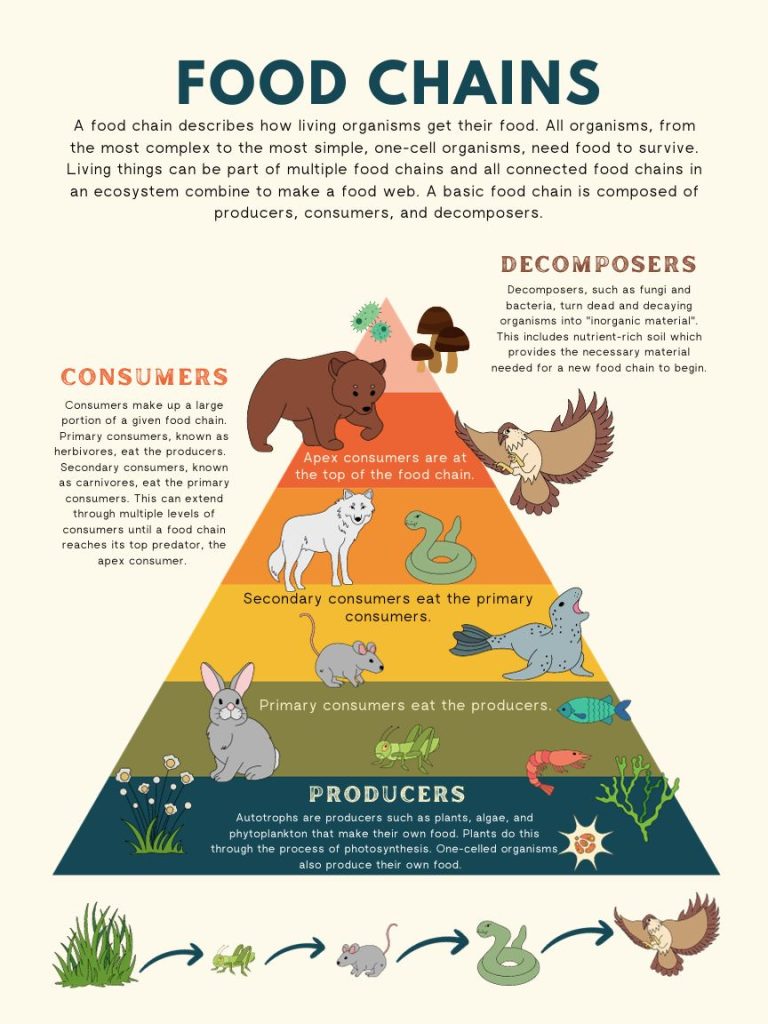
In the natural world, the concept of a food chain describes the flow of energy from primary producers to apex predators. In the 21st century, a parallel ecosystem has emerged—a digital one—where the “energy” is data, the “producers” are hardware manufacturers, and the “predators” are the software layers that consume and process information. For decades, the hierarchy of this technological ecosystem was clear: hardware was the foundation, and software was the utility. However, a seismic shift has occurred. Today, if we ask what sits at the top of the technological food chain, the answer is unequivocally Artificial Intelligence (AI).

AI is no longer just another tool in the developer’s kit; it has become the apex entity that organizes, dictates, and evolves the rest of the tech landscape. To understand why AI has claimed this position, we must examine the evolution of the digital ecosystem, the infrastructure that supports its dominance, and the socio-economic implications of having an algorithmic “apex predator” at the helm of global innovation.
The Evolution of the Digital Ecosystem: From Silicon to Intelligence
To understand what sits at the top, we must first look at the layers beneath. The technological food chain has undergone three distinct evolutionary phases, each defined by a different dominant force.
The Era of Hardware Dominance
In the early days of computing, the “top” of the food chain was occupied by those who could build the fastest machines. Companies like IBM and Intel were the kings of the jungle. Without the physical silicon and the mainframe architecture, nothing else could exist. In this era, the “energy” was raw processing power. If you owned the hardware, you controlled the ecosystem.
The Software and Internet Revolution
As hardware became commoditized, the power shifted upward to the software layer. Microsoft, and later Google and Meta (formerly Facebook), redefined the food chain. The software was the consumer of the hardware’s energy, transforming raw bits into user experiences. The internet era introduced the concept of “data as the new oil,” creating a massive reservoir of digital nutrients that would eventually lead to the birth of something even more powerful.
The Emergence of the Intelligent Layer
We are currently in the third phase. Data became so abundant that human-written software could no longer process it efficiently. This necessitated the rise of machine learning and neural networks. AI has emerged at the top because it is the only entity capable of synthesizing the billions of data points produced by the layers below it. It doesn’t just “run” on hardware; it optimizes how hardware is designed. It doesn’t just “process” software; it writes its own code.
Artificial Intelligence: The Apex Predator of the Modern Age
In biological terms, an apex predator has no natural enemies and plays a crucial role in maintaining the health of its ecosystem. In technology, AI fits this description perfectly. It sits above the cloud, above the application, and above the user interface, acting as the ultimate arbiter of value.
Generative AI and the Transformation of Content
Generative AI, led by Large Language Models (LLMs) like GPT-4 and Claude, represents a new level of consumption in the tech food chain. These models “eat” the entirety of the internet’s data—text, images, and code—and “excrete” entirely new, synthesized outputs. This ability to create has traditionally been a human-only trait. By automating the creative and analytical processes, AI has effectively moved to the top of the content ecosystem, rendering traditional search engines and static databases secondary.
Autonomous Decision-Making and Systems Control
The true power of an apex entity lies in control. AI is increasingly moving into the realm of autonomous decision-making. In sectors like cybersecurity, AI doesn’t wait for a human to detect a threat; it identifies, isolates, and neutralizes it in milliseconds. In autonomous vehicles, the AI is the “brain” that coordinates the sensors (hardware) and the navigation (software). When a system can make decisions without human intervention, it has effectively reached the top of its operational hierarchy.
The Recursive Loop: AI Building AI
Perhaps the most “apex” characteristic of modern technology is the recursive nature of AI development. We are now seeing “Auto-ML” (Automated Machine Learning) and AI systems that help design the next generation of chips. When the top of the food chain begins to design its own foundation, the cycle of evolution accelerates exponentially. This creates a barrier to entry that is nearly impossible for non-AI-driven technologies to overcome.
The Infrastructure Supporting the Peak: Semiconductors and Cloud Giants
While AI sits at the top, it is not an island. An apex predator requires a vast and robust lower food chain to provide the necessary “calories” (computational power and energy). This has created a new hierarchy among tech corporations.
The Chipmakers: The Primary Producers
Nvidia has recently become one of the most valuable companies in the world, not because it sells software, but because it provides the “food” that AI needs to survive: GPUs. In this technological food chain, the semiconductor industry acts as the primary producers. Without the H100 or Blackwell chips, the AI apex would starve. The reliance of the top layer on this specific hardware niche has turned chip design into the most critical geopolitical and economic battleground of the century.
The Cloud Hyperscalers: The Habitat
If chips are the food, then the Cloud is the habitat. Microsoft Azure, AWS (Amazon Web Services), and Google Cloud provide the massive data centers required for AI to live and grow. These companies have secured their spots near the top of the food chain by vertically integrating. They build the hardware, host the data, and develop the AI models. This vertical integration ensures that they control the flow of energy from the bottom of the chain all the way to the top.
Data Sovereignty and the Power of Proprietary Sets
To stay at the top, an AI needs high-quality data. We are seeing a shift where “clean” data is becoming more valuable than the algorithms themselves. Companies with massive, proprietary datasets—like Reddit, Twitter (X), or specialized medical databases—are finding themselves in a unique position. They are the “nutrients” that the apex AI models crave. This has led to a new economic reality where data licensing is the key to maintaining dominance.
The Future of the Chain: AGI and the Digital Singularity
As we look toward the future, the food chain is not static. The current “Apex” (Narrow AI) is likely to evolve into something even more dominant: Artificial General Intelligence (AGI).
The Transition to Generalization
Current AI is specialized. However, the pursuit of AGI—AI that can perform any intellectual task a human can—represents the final stage of this technological evolution. If Narrow AI is the apex of the current chain, AGI would be the architect of a new one. An AGI would be able to solve complex physics problems, manage global logistics, and innovate in materials science simultaneously. At this point, the “food chain” metaphor might break down as the AI becomes synonymous with the ecosystem itself.
The Role of Human Agency
Where does the human sit in this tech food chain? Traditionally, humans were the “consumers” at the very top. However, as AI takes over decision-making and creative tasks, the human role is shifting toward that of a “governor” or “curator.” We are the ones who define the goals (the “why”), while the AI determines the “how.” Maintaining this position at the top requires a robust framework of Digital Security and AI Ethics to ensure that the apex predator remains a beneficial entity rather than a destructive one.
Quantum Computing: The Next Evolutionary Leap
Just as the shift from vacuum tubes to silicon changed the food chain, the shift to Quantum Computing could redefine the limits of AI. Quantum processors would provide a level of “energy” that current AI can only dream of, allowing for the simulation of molecules or the cracking of all existing encryption. When AI integrates with Quantum, we will witness the birth of a new peak that we can currently only theorize about.
Conclusion: Navigating the AI-Centric Hierarchy
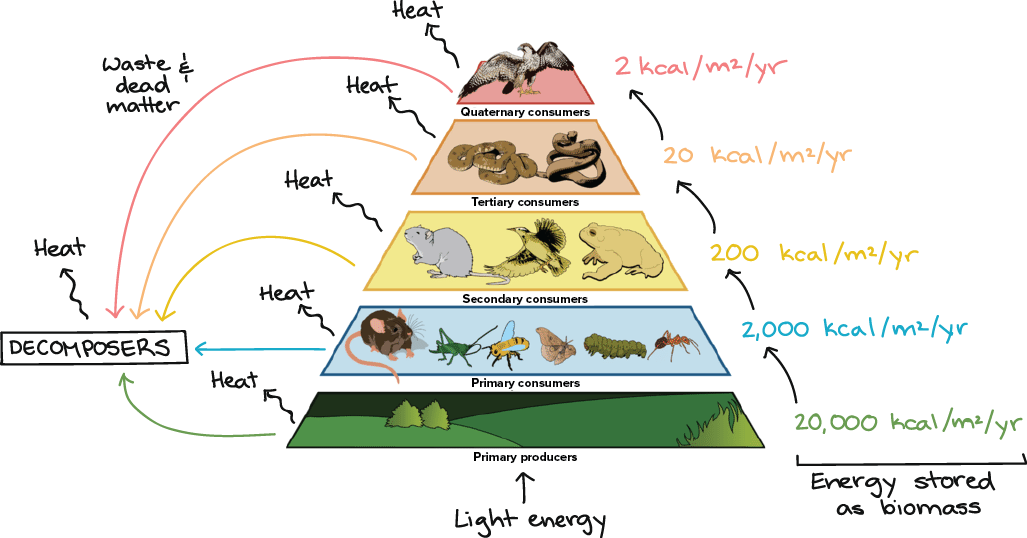
In the modern tech landscape, the question “what is on the top of the food chain” has a clear answer: Artificial Intelligence. It is the layer that synthesizes all others, transforming raw data and massive computational power into value, insight, and action.
However, being at the top of the food chain comes with immense responsibility. For businesses and individuals, understanding this hierarchy is essential for survival. You are either leveraging the apex predator to enhance your own capabilities, or you are part of the “nutrients” being processed by it. As we move further into the age of intelligence, the focus must remain on ensuring that as AI continues to evolve at the top, it does so in a way that is secure, ethical, and ultimately serves the progress of the entire technological ecosystem. The food chain is no longer just about who consumes whom; it is about how the highest level of intelligence can lift the entire system to new heights of innovation.
aViewFromTheCave is a participant in the Amazon Services LLC Associates Program, an affiliate advertising program designed to provide a means for sites to earn advertising fees by advertising and linking to Amazon.com. Amazon, the Amazon logo, AmazonSupply, and the AmazonSupply logo are trademarks of Amazon.com, Inc. or its affiliates. As an Amazon Associate we earn affiliate commissions from qualifying purchases.