
In the world of high-stakes marketing and corporate identity, we often discuss “perception as reality.” We spend billions of dollars ensuring that the public sees a specific version of a company—a version that is clean, approachable, and distinct. However, much like the biology of the Arctic’s apex predator, the reality of a brand is often vastly different from its surface appearance.
Ask anyone what color a polar bear is, and they will instinctively answer “white.” Scientifically, however, they would be wrong. A polar bear’s fur is translucent and hollow, and its skin is pitch black. The “whiteness” we see is an optical illusion created by the scattering of light—a phenomenon known as luminescence.
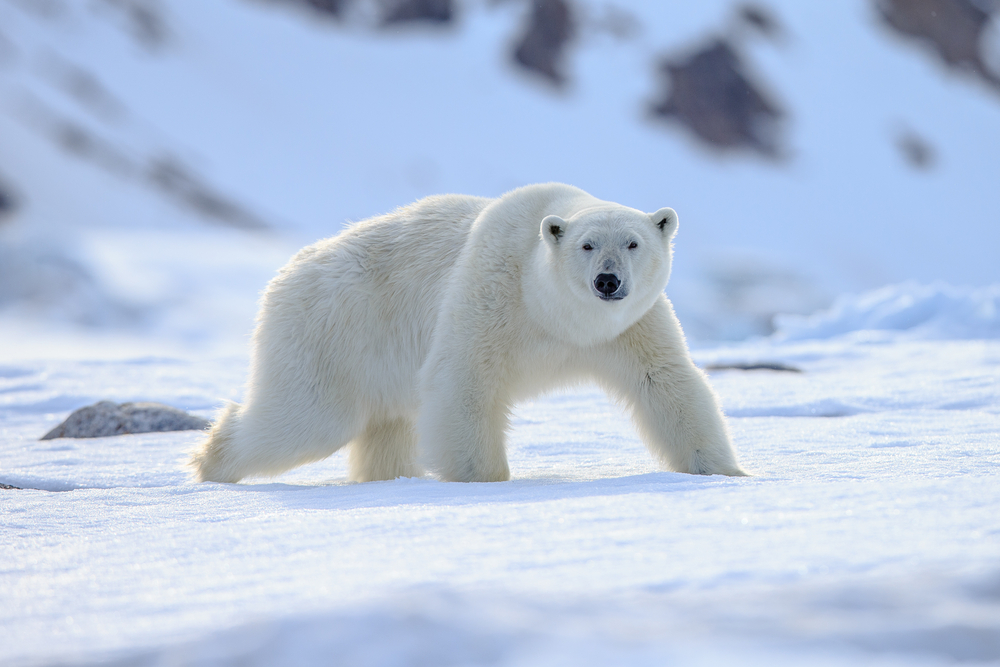
In brand strategy, this is a profound metaphor. The “white” is the brand’s image (what the public perceives), the “translucent fur” is the marketing and communication layer (the medium through which we see the brand), and the “black skin” is the core identity (the foundational reality of the company). To build a brand that survives in a harsh, competitive climate, one must understand how to manage these three layers.
The Optical Illusion of Branding: Perception vs. Reality
The most successful brands in the world operate on the principle of the polar bear’s coat. They do not merely “exist” in a color; they project an image that is a result of their environment and their internal structure. When a consumer looks at a brand like Apple or Patagonia, they aren’t just seeing a product; they are seeing a reflection of their own values and the brand’s strategic positioning.
The Translucent Fur: Why Transparency is Your Best Asset
A polar bear’s hair is not white; it is clear. Each hair fiber acts as a fiber-optic tube, channeling sunlight down to the skin to provide warmth. In branding, “transparency” should function the same way. Modern consumers are increasingly skeptical of “solid” brands—those that present a thick, opaque wall of PR-speak.
Instead, the most resilient brands utilize a “translucent” strategy. They allow enough light into their processes, supply chains, and corporate culture so that the consumer feels they are seeing the “truth.” However, like the bear’s fur, this transparency is channeled. It isn’t about showing everything in a messy, disorganized way; it’s about structuring your transparency so that it reflects the most desirable image back to the market. When a brand is transparent, it builds trust, but more importantly, it creates the “shimmer” of authenticity that competitors find impossible to replicate.
The Black Skin Beneath: The Core Identity of Your Brand
Underneath the shimmering white facade, the polar bear is black. This dark skin is essential for absorbing heat and ensuring survival in sub-zero temperatures. In the business world, your “black skin” is your core identity—your infrastructure, your mission statement, and your actual product quality.
Many brands fail because they focus entirely on the “white fur” (the advertising) while neglecting the “black skin” (the foundation). If a brand projects an image of luxury but has a foundation of poor customer service and low-quality materials, the illusion will eventually shatter. The core identity must be heat-absorbent; it must be able to take the “heat” of market volatility, scandals, or economic downturns. A brand with a weak core cannot sustain a beautiful exterior for long.
Adaptation in a Monochromatic Market
The Arctic is a monochromatic landscape of white, blue, and grey. To survive, the polar bear has evolved to be both invisible and iconic. For a brand, the “market” is often just as crowded and uniform. Whether you are in Fintech, SaaS, or Consumer Goods, the sea of sameness is your biggest threat.
Camouflage vs. Distinction
In branding, there is a constant tension between fitting in (to gain credibility) and standing out (to gain market share). The polar bear uses its perceived color to blend into the ice while hunting, but it remains the most recognizable silhouette in its environment.
A brand strategy must balance these two needs. You must “camouflage” your brand enough so that it feels like a legitimate solution within its category. For example, a new banking app must look and feel like a secure financial tool (using familiar blue or green palettes and clean typography). However, it must have a point of “distinction” that makes it the apex predator of that niche. If your brand is just “another white bear on the ice,” you will starve. You need to identify the “refraction”—the unique way your brand handles the light—to ensure you are seen by the right audience at the right time.

Thermal Retention: Keeping Your Brand Value Warm
The primary purpose of a polar bear’s unique coloring and fur structure is the retention of heat. In brand strategy, “heat” is equivalent to brand equity and customer loyalty. How does your brand stay “warm” when the market turns cold?
High-equity brands maintain warmth through consistent storytelling. They don’t just sell a product; they sell a feeling of belonging or a solution to a deep-seated pain point. When a brand loses its “thermal retention,” it becomes a commodity. Once you are a commodity, you are forced to compete on price alone. By focusing on the structural integrity of your brand—the way your values (skin) interact with your messaging (fur)—you create a self-sustaining ecosystem that keeps your brand relevant even during “economic winters.”
The Architecture of Perception: Designing for the Eye
Branding is not an accident of nature; it is an architectural feat. Just as the microscopic structure of a bear’s fur determines its color, the micro-interactions of your brand determine its reputation. Every tweet, every customer service email, and every pixel on your website acts as a light-scattering particle.
Refraction as a Marketing Tool
Refraction occurs when light changes direction as it passes through a medium. In marketing, your “medium” is your chosen channels—social media, television, influencers, or print. A professional brand strategist knows how to “refract” the core message so it looks appropriate for the medium.
A message that looks “white” (clean and professional) on LinkedIn might need to refract into something “colorful” (engaging and trendy) on TikTok. The core identity (the black skin) remains the same, but the way the light hits the audience changes. The mistake many brands make is trying to use the same “angle of light” for every platform, resulting in a blurred and confusing brand image.
Consistency Across Ecosystems
One of the most remarkable things about the polar bear is that it looks white whether it is under the blinding sun or the dim light of the aurora borealis. This is “environmental consistency.”
Your brand must maintain its perceived identity across all ecosystems. If your corporate identity feels like a high-end tech firm on your website but looks like a disorganized startup on your billing statements, you have a “pigment” problem. Consistency is the glue that holds the optical illusion of branding together. Without it, the consumer starts to see the “black skin” in a way that feels unintentional and jarring, leading to a loss of prestige.
Rebranding the Invisible: Evolution and Authenticity
The polar bear is currently facing an existential threat: climate change. As the ice melts, its “white” camouflage becomes a liability against the brown and green of the encroaching tundra. This is a literal “rebranding” forced by the environment. Companies face similar shifts when technology or social values change.
When the Environment Changes: Brand Evolution
When a market shifts, a brand cannot simply change its “fur.” It must adapt its entire biology. We see this in the automotive industry’s shift toward electric vehicles. Brands that were defined by the “roar” of an engine (their old core identity) are having to find a new “skin.”
The lesson from the polar bear here is that adaptation must be functional, not just aesthetic. If a bear’s fur turned brown but it didn’t change its hunting habits, it would still fail. Similarly, if a brand changes its logo (the fur) but doesn’t change its business model (the skin), the market will see through the ruse. Evolution requires a holistic realignment of what the brand is (the black skin) and how it appears (the white fur).

Authenticity in the Age of Scrutiny
In the digital age, everyone has a “thermal camera.” Consumers can see right through the translucent fur to the black skin beneath. This means that the gap between brand promise and brand delivery has never been smaller.
Authenticity isn’t about being perfect; it’s about the alignment between the layers. A polar bear is authentic because its fur and skin work together to achieve a single goal: survival in the cold. A brand is authentic when its marketing (the white) is a direct, functional result of its core values (the black). When those two things are in alignment, the brand doesn’t have to “try” to be perceived a certain way—it happens naturally as a result of its design.
In conclusion, the question “What is the color of a polar bear?” reminds us that branding is a complex interplay of physics, biology, and environment. To build a world-class brand, you must stop worrying about the “paint” and start focusing on the “structure.” Build a core that is strong and absorbent. Create a communication layer that is transparent and light-guiding. If you balance these elements correctly, your brand will not just survive the Arctic of the modern marketplace—it will rule it.
aViewFromTheCave is a participant in the Amazon Services LLC Associates Program, an affiliate advertising program designed to provide a means for sites to earn advertising fees by advertising and linking to Amazon.com. Amazon, the Amazon logo, AmazonSupply, and the AmazonSupply logo are trademarks of Amazon.com, Inc. or its affiliates. As an Amazon Associate we earn affiliate commissions from qualifying purchases.