
Sound engineering is the technical discipline of capturing, manipulating, mixing, and reproducing sound through the use of sophisticated electronic and digital tools. While often associated primarily with the music industry, sound engineering is a vast technological field that underpins everything from cinematic experiences and live broadcasts to video game development and telecommunications. At its core, sound engineering is the bridge between the physical laws of acoustics and the digital precision of modern computing.
In the digital age, the role of a sound engineer has evolved from a purely mechanical operator into a high-level technologist. Understanding sound engineering today requires a deep dive into the hardware, software, and emerging AI tools that define how we perceive audio in a hyper-connected world.
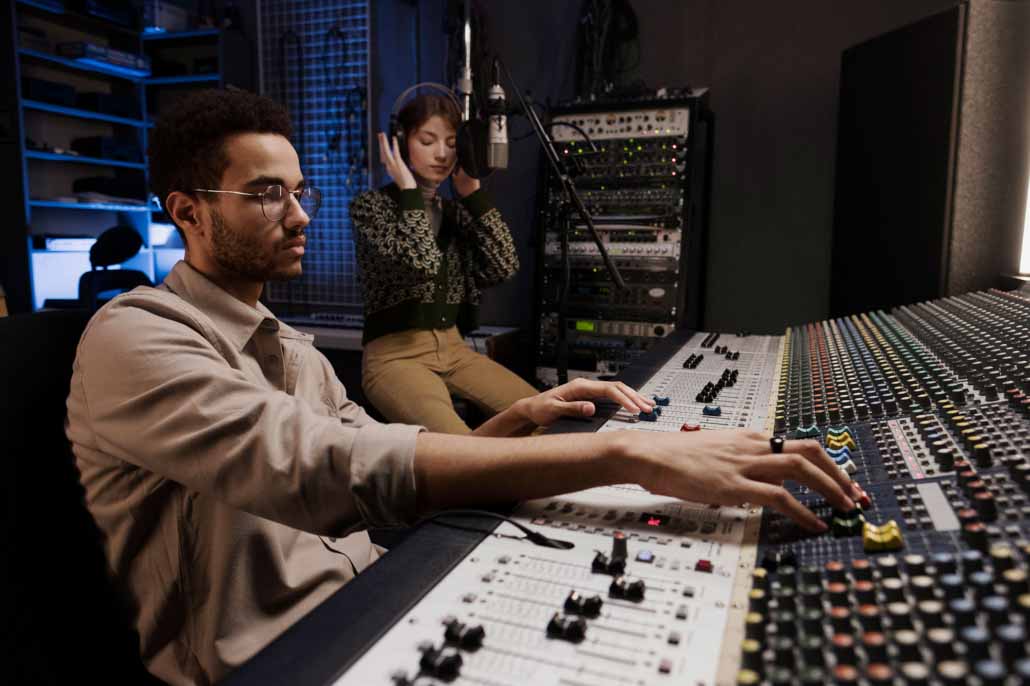
The Core Technological Foundations of Sound Engineering
The transition from analog to digital has fundamentally reshaped sound engineering. Where engineers once relied solely on physical tape reels and massive hardware consoles, the modern landscape is dominated by sophisticated software environments and high-speed data processing.
Digital Audio Workstations (DAWs): The Hub of Modern Production
The Digital Audio Workstation, or DAW, is the central nervous system of any sound engineering setup. Software suites such as Avid Pro Tools, Ableton Live, and Logic Pro serve as the primary interface for recording and editing. These platforms are marvels of software engineering, capable of handling hundreds of simultaneous tracks of high-resolution audio with near-zero latency. A sound engineer must master the architecture of these programs, understanding how to manage CPU resources, buffer sizes, and data throughput to maintain a seamless creative workflow.
Signal Processing and the Power of VST Plugins
Sound manipulation is achieved through signal processing. In the tech niche, this refers to Virtual Studio Technology (VST) and other plugin formats that emulate or exceed the capabilities of traditional outboard gear. Digital Signal Processing (DSP) allows engineers to apply equalization (EQ), dynamic range compression, and spatial effects like convolution reverb. These tools rely on complex mathematical algorithms to alter audio waveforms in real-time. For instance, a modern digital compressor analyzes incoming amplitude peaks at a millisecond level to provide surgical control over a sound’s volume, a feat that requires immense computational precision.
Hardware Integration: From Analog Circuitry to Digital Interfaces
Despite the “in-the-box” software revolution, the hardware interface remains a critical tech component. The Audio Interface acts as the gatekeeper, housing the Analog-to-Digital (A/D) and Digital-to-Analog (D/A) converters. The quality of these converters determines the fidelity of the digital representation of sound. High-end interfaces utilize advanced clocking technology to prevent “jitter”—timing errors that can degrade audio quality. Sound engineering requires a technical understanding of impedance, gain staging, and signal flow to ensure that the physical world of sound is accurately translated into the binary world of data.
Essential Tools and Gadgets in the Sound Engineer’s Arsenal
Beyond the computer, sound engineering relies on a specialized ecosystem of gadgets and hardware designed for high-performance audio capture and monitoring.
Transducers and Microphones: Capturing the Physical Wave
A microphone is essentially a transducer—a device that converts one form of energy (sound pressure) into another (electrical voltage). Sound engineers must understand the physics behind different microphone technologies. Condenser microphones use a capacitor plate system to capture high-frequency detail, while dynamic microphones utilize electromagnetic induction for durability and high-volume handling. The “tech” of a microphone also includes its polar patterns and frequency response curves, which engineers use to “color” the sound before it even reaches the software.
Monitoring Systems: The Importance of High-Fidelity Output
To make accurate technical decisions, sound engineers require transparent monitoring. This includes Studio Monitors (speakers) and high-impedance headphones designed for a “flat” frequency response. Unlike consumer speakers that boost bass or treble for enjoyment, professional monitoring tech is designed for accuracy. Advanced calibration software, such as Sonarworks SoundID, is often used to analyze the acoustics of a room and apply a corrective EQ curve to the monitors, ensuring that the engineer hears a true representation of the audio file.
DSP and Hardware Accelerators
As audio projects become more complex, they often exceed the processing power of a standard computer CPU. This has led to the rise of DSP accelerators—dedicated hardware units, like those from Universal Audio (UAD), that offload the heavy lifting of audio processing to external processors. This allows engineers to run incredibly complex, high-fidelity emulations of vintage hardware without crashing their main system. It represents a significant trend in audio tech: the decentralization of processing power to maintain system stability.
The Impact of AI and Emerging Tech on Sound Engineering

The most significant shift in sound engineering over the last five years has been the integration of Artificial Intelligence and Machine Learning. These technologies are not replacing engineers but are providing them with powerful new ways to solve old problems.
AI-Driven Mixing and Mastering Tools
AI is revolutionizing the “utility” side of sound engineering. Software like iZotope Ozone or Neutron uses machine learning algorithms to “listen” to a track and suggest an initial mix or master. These tools analyze millions of data points from professional recordings to identify frequency imbalances or masking issues. For a sound engineer, this tech acts as an intelligent assistant, handling tedious tasks like noise reduction (removing hum or clicks) and spectral repair, allowing the human engineer to focus on the creative aspects of the soundscape.
Spatial Audio and Immersive Sound Technology
We are moving away from traditional stereo (two-channel) audio toward immersive, object-based formats like Dolby Atmos. This is a massive leap in audio technology. In a spatial audio environment, sounds are not just panned left or right; they are treated as “objects” with specific coordinates in a 3D space. Sound engineers today must understand how to “render” audio for multi-speaker arrays or binaural (headphone) environments. This involves a sophisticated understanding of psychoacoustics—how the human brain perceives the direction and distance of sound.
Cloud Collaboration and Remote Engineering
The “tech” of sound engineering now extends into the cloud. Platforms like Audiomovers or Source-Connect allow engineers to stream high-definition, lossless audio in real-time across the globe with minimal latency. This enables a recording session in London to be mixed by an engineer in Los Angeles and monitored by a producer in Tokyo simultaneously. The technology behind this involves optimized data compression and high-speed networking protocols specifically tuned for time-sensitive audio data.
Specializations and Career Pathways in the Tech-Driven Audio Space
Sound engineering is not a monolithic field; it branches into several highly technical specializations, each requiring mastery of different software and hardware ecosystems.
Live Sound Reinforcement and Networked Audio
Live sound engineering has moved far beyond simple PA systems. Modern concerts use “Networked Audio,” where hundreds of channels of audio are sent over standard Ethernet cables using protocols like Dante (Digital Audio Network Through Ethernet). This allows for incredible flexibility and scale. A live sound engineer is essentially a network administrator, managing IP addresses and data bandwidth to ensure that the audio reaches the speakers without a millisecond of delay or a single packet loss.
Game Audio and Procedural Sound Design
One of the most tech-heavy branches of sound engineering is game audio. Unlike a movie, where the sound is linear, game audio is interactive. Sound engineers in this field use “middleware” like Wwise or FMOD to integrate sound into game engines (like Unreal or Unity). They design “procedural” soundscapes where the audio changes based on the player’s actions. This requires knowledge of basic coding, logic gates, and how sound assets interact with the game’s physics engine.
Post-Production for Film and Streaming Media
In the world of film, sound engineering is divided into dialogue editing, ADR (Automated Dialogue Replacement), and Foley. The technology here focuses on “Audio-to-Video” synchronization. Engineers use specialized tools to clean up on-set recordings, often using AI to separate human voices from background traffic or wind noise. The final stage, the “Dubbing Stage,” involves mixing massive amounts of data into formats suitable for everything from IMAX theaters to smartphone speakers.
The Future of Sound Engineering Technology
As we look toward the future, sound engineering will continue to converge with other high-tech industries, particularly in the realms of Virtual Reality (VR) and hardware miniaturization.
The Convergence of Audio and Virtual Reality (VR)
As VR and AR (Augmented Reality) become more mainstream, sound engineering will play a pivotal role in “presence”—the feeling of actually being in a virtual space. This requires “Ambisonics,” a full-sphere surround sound format. Future sound engineers will need to be experts in 360-degree audio capture and real-time head-tracking technology, ensuring that as a user turns their head in a virtual world, the soundscape shifts with absolute precision.

Sustainable Hardware and Software Optimization
Finally, the future of audio tech is leaning toward sustainability and efficiency. This includes the development of more power-efficient Class-D amplifiers and software that is better optimized for ARM-based processors (like Apple’s M-series chips). As the environmental impact of data centers grows, the sound engineering industry is also looking at ways to make cloud-based processing and storage more energy-efficient.
In conclusion, sound engineering is a dynamic and deeply technical field. It is no longer just about “having a good ear.” To succeed as a modern sound engineer, one must be a technologist, a software power-user, and a hardware specialist. From the mathematics of digital signal processing to the networking requirements of live events, sound engineering remains at the absolute cutting edge of technological innovation.
aViewFromTheCave is a participant in the Amazon Services LLC Associates Program, an affiliate advertising program designed to provide a means for sites to earn advertising fees by advertising and linking to Amazon.com. Amazon, the Amazon logo, AmazonSupply, and the AmazonSupply logo are trademarks of Amazon.com, Inc. or its affiliates. As an Amazon Associate we earn affiliate commissions from qualifying purchases.