
For decades, the concept of “Santa’s telephone number” was a simple seasonal novelty—a landline connected to a tape recorder or a dedicated volunteer. However, in the modern era, the infrastructure required to support millions of simultaneous inquiries from children around the globe has transformed into a sophisticated showcase of telecommunications, Artificial Intelligence (AI), and cloud computing. What appears to be a magical connection to the North Pole is actually a complex deployment of Voice over IP (VoIP), Interactive Voice Response (IVR) systems, and robust data security protocols.
As we move further into the digital age, the technology facilitating these seasonal interactions provides a unique case study in how legacy concepts can be scaled using cutting-edge tech stacks. This article explores the technical evolution of Santa’s hotline, the AI powering modern interactions, and the critical security measures that protect young users in an increasingly connected world.
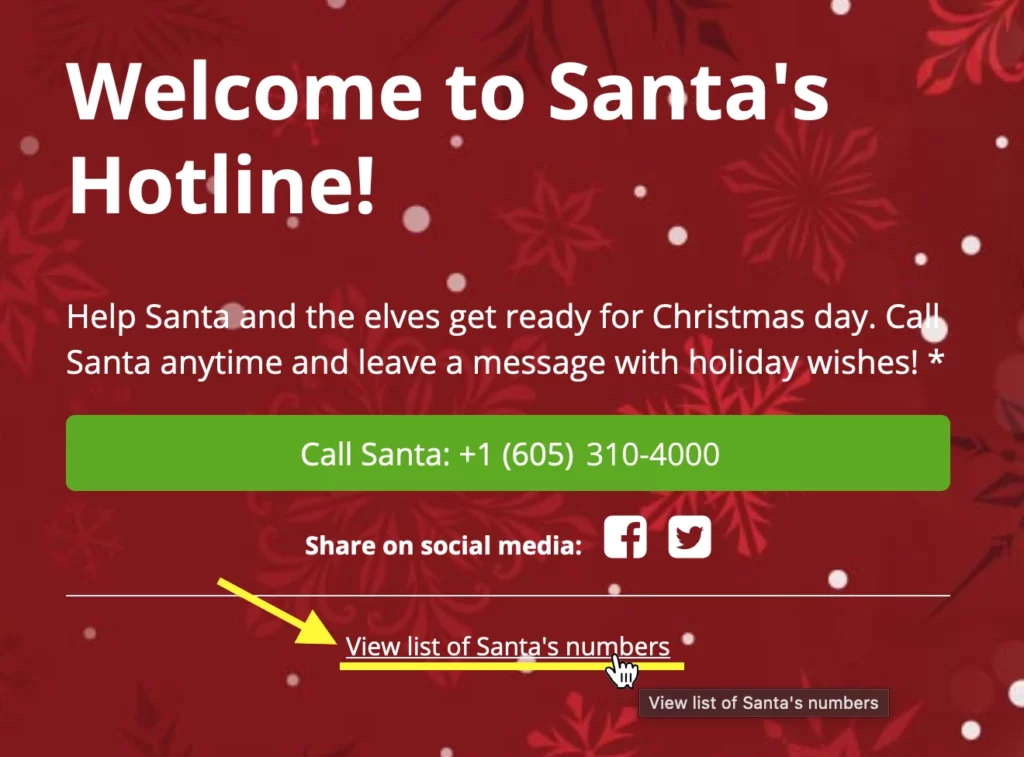
The Evolution of Seasonal Communication: From Analog to Cloud-Scale VoIP
The tradition of calling Santa Claus has its roots in a famous 1955 typographical error in a Sears Roebuck advertisement, which accidentally directed children to the Continental Air Defense Command (CONAD) center. While that era relied on manual switchboards and human operators, today’s “Santa numbers” utilize massive cloud-based infrastructures to handle the surge in traffic that occurs every December.
The Transition to Voice over IP (VoIP) and SIP Trunking
In the past, a local “Santa line” would quickly become overwhelmed by busy signals. Modern iterations utilize VoIP and Session Initiation Protocol (SIP) trunking to manage thousands of concurrent calls. By routing calls over the internet rather than traditional copper lines, providers can dynamically scale their capacity. Services like Twilio or AWS Connect allow developers to spin up virtual phone numbers that can handle global traffic spikes without the need for physical hardware. This elasticity is essential; the traffic volume for a popular Santa hotline on Christmas Eve can be 500% higher than on an average December day.
The Role of Cloud Infrastructure and Load Balancing
To ensure that every child reaches the “North Pole” without latency or dropped calls, developers employ sophisticated load balancing. By distributing incoming traffic across multiple geographic servers, the system ensures that no single node becomes a bottleneck. Cloud providers offer “serverless” architectures where the code to play a greeting or record a message only runs when a call is active, optimizing resource usage and ensuring high availability even under extreme demand.
Interactive Voice Response (IVR) and AI: How Modern Santa Hotlines Function
The experience of calling Santa has evolved from a one-way recorded message to a two-way interactive session. This is made possible through Advanced Interactive Voice Response (IVR) systems and Natural Language Processing (NLP), the same technologies that power corporate customer service bots and virtual assistants like Alexa or Siri.
Natural Language Processing (NLP) in Holiday Interactions
Modern Santa hotlines often utilize NLP to “understand” what a child is saying. When a child mentions a specific toy or lists their accomplishments for the year, the system uses speech-to-text engines to parse the audio. Once the intent is identified, the system triggers specific responses from a database of pre-recorded audio files or, increasingly, generates speech in real-time. This creates a personalized experience where the “Santa” persona can acknowledge specific details provided by the caller, bridging the gap between a static recording and a live conversation.
Latency Management and Edge Computing
One of the primary technical challenges in AI-driven voice applications is latency—the delay between a user speaking and the AI responding. To maintain the “magic” of a real-time conversation, developers utilize edge computing. by processing voice data at the “edge” of the network (closer to the user’s physical location), the system minimizes the time it takes for data to travel to a central server and back. This ensures that Santa’s responses are snappy and natural, preventing the “uncanny valley” effect that occurs with delayed digital communication.
Dynamic Content Integration
Beyond simple conversation, some high-tech Santa numbers integrate external data APIs. For example, a system might use the caller’s area code to look up local weather data or time zones. If it’s snowing in the caller’s city, the AI-driven Santa can mention the weather, significantly enhancing the immersive quality of the interaction. This requires seamless integration between the telephony layer and third-party data providers via RESTful APIs.

Security and Privacy in Children’s Digital Interactions
When technology interfaces with children, the stakes for data privacy and security are exceptionally high. Creating a “Santa’s telephone number” requires more than just functional code; it requires a rigorous adherence to international privacy standards, most notably the Children’s Online Privacy Protection Act (COPPA) in the United States and the GDPR-K in Europe.
Navigating COPPA Compliance in Voice Tech
COPPA imposes strict requirements on operators of services directed at children under 13. For a tech provider offering a Santa hotline, this means they cannot collect “personally identifiable information” (PII) without verifiable parental consent. From a technical standpoint, this often involves “privacy by design”—building systems that automatically strip metadata from voice recordings and ensure that no audio is stored longer than necessary for the immediate interaction. Many modern services opt for a “zero-retention” policy, where voice data is processed in volatile memory (RAM) and never written to a permanent disk.
Data Encryption and Anonymization
To protect the integrity of the communication, end-to-end encryption is often employed. While traditional phone calls are not always encrypted, app-based “calls” to Santa use Secure Real-time Transport Protocol (SRTP) to ensure that hackers cannot intercept the audio stream. Furthermore, any analytics gathered to improve the service (such as call duration or common keywords) are strictly anonymized. Technicians use “salting” and “hashing” techniques to ensure that even if a database were breached, the data could not be traced back to a specific household or child.
The Future of the Virtual North Pole: Generative AI and Extended Reality (XR)
The horizon for seasonal tech is moving toward even more immersive and intelligent systems. As Generative AI (GenAI) matures, the “Santa’s number” of the future will likely transcend traditional voice calls entirely.
Real-Time Generative Avatars
We are approaching a point where Large Language Models (LLMs) can power Santa’s dialogue in a completely unscripted manner. Unlike the branched logic of traditional IVR, a GenAI-powered Santa can answer any question, from “How do the reindeer fly?” to “What is the physics of a sleigh?” When combined with real-time voice synthesis that carries emotional inflection, the technology becomes nearly indistinguishable from a human operator. Tech companies are currently experimenting with low-latency LLM wrappers that allow these conversations to happen in real-time over a standard phone or data connection.
Integrating IoT and the Smart Home Ecosystem
The concept of a “telephone number” is expanding to include the broader Internet of Things (IoT). In a modern smart home, “calling Santa” might involve an integrated experience where the lights in the living room flicker (simulating a sleigh overhead) or a smart chimney sensor “detects” movement. This level of integration requires sophisticated middleware that can bridge the gap between a voice service and home automation protocols like Matter or Zigbee.
Extended Reality (XR) and Video Telephony
While audio remains the most accessible medium, 5G technology is enabling high-definition video calls to the North Pole. Using Augmented Reality (AR), a child can see Santa sitting in their own living room through a smartphone screen. These “Video Santa” services require massive bandwidth and sophisticated computer vision to map the environment in real-time, ensuring that the digital Santa interacts correctly with the physical furniture and lighting of the user’s home.

Conclusion
The question “What is Santa’s telephone number?” no longer points to a single physical phone in an office; it points to a vast, invisible network of servers, algorithms, and security protocols. What was once a simple holiday tradition has become a annual proving ground for telecommunications reliability, AI sophistication, and data privacy excellence.
As we look forward, the tech behind the North Pole will continue to mirror the trends of the broader industry—moving toward more personalized, secure, and AI-integrated experiences. For the developers and engineers behind these services, the goal remains the same: using the most advanced technology available to create a seamless, magical experience that scales to meet the world’s imagination. Through the clever application of VoIP, NLP, and cloud-native architecture, the “magic” of the North Pole is kept alive by the very real power of modern technology.
aViewFromTheCave is a participant in the Amazon Services LLC Associates Program, an affiliate advertising program designed to provide a means for sites to earn advertising fees by advertising and linking to Amazon.com. Amazon, the Amazon logo, AmazonSupply, and the AmazonSupply logo are trademarks of Amazon.com, Inc. or its affiliates. As an Amazon Associate we earn affiliate commissions from qualifying purchases.