
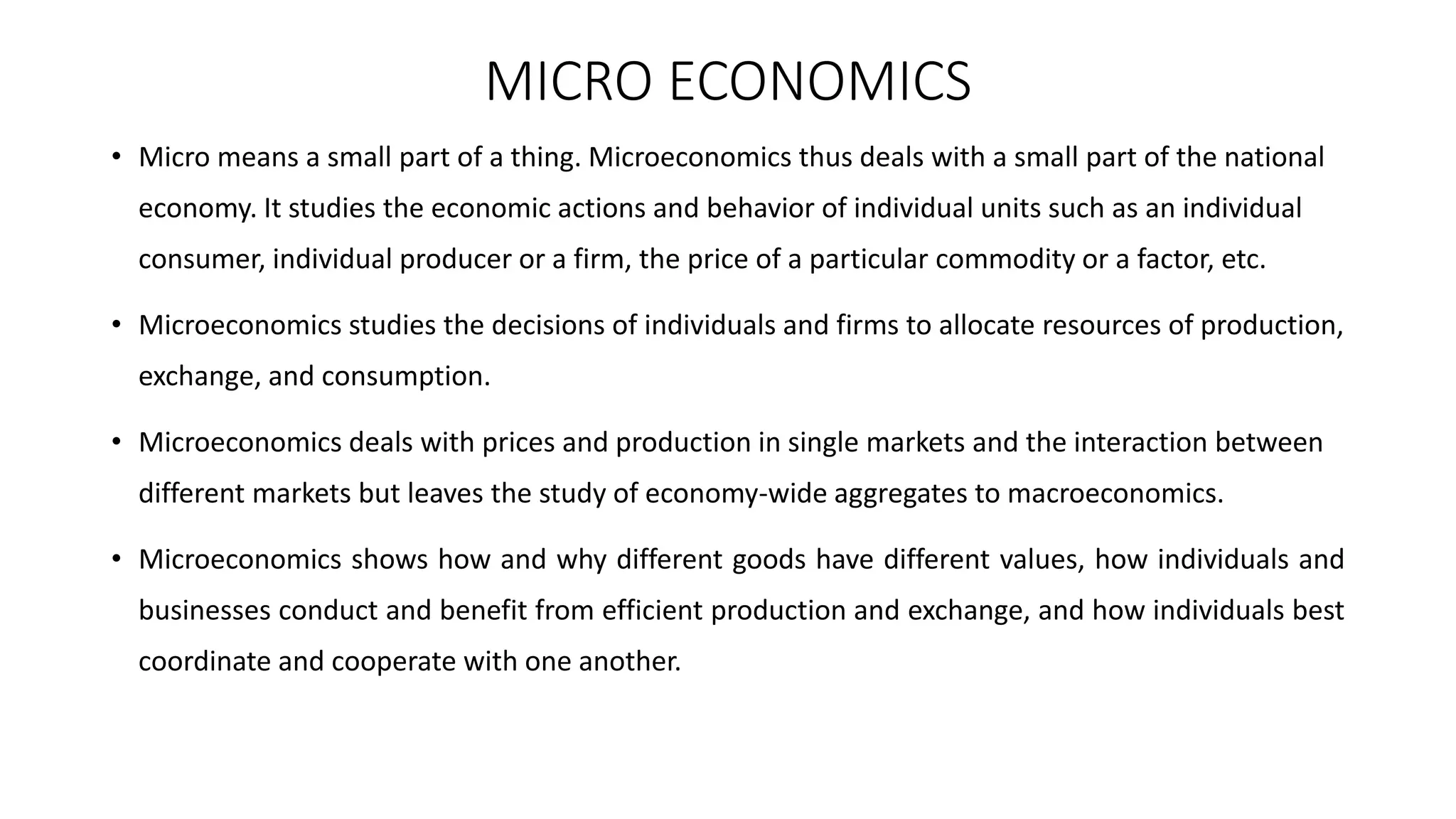
Microeconomics is often described as the study of the “small picture,” but its implications for the global economy and individual wealth are massive. While macroeconomics focuses on national debt, GDP, and inflation rates, microeconomics zooms in on the building blocks of the economy: individuals, households, and firms. It seeks to understand how these actors make decisions, how they respond to incentives, and how their interactions in the marketplace determine the prices of goods and services. For anyone looking to master their personal finances or scale a business, a firm grasp of microeconomic principles is not just academic—it is a competitive necessity.

By analyzing the mechanics of supply and demand, the nuances of consumer behavior, and the complexities of market structures, microeconomics provides the toolkit necessary to navigate the financial world. Whether you are an investor trying to predict a stock’s performance or a consumer trying to optimize a household budget, understanding microeconomics allows you to see the “why” behind the “what” in the financial news.
The Foundation of Individual Choice and Resource Allocation
At the heart of microeconomics lies the reality of scarcity. Every individual, no matter how wealthy, faces a limit on the resources available to them—whether that resource is time, money, or energy. Microeconomics is the study of how we choose to allocate these scarce resources among competing alternatives.
Scarcity and the Economic Problem
The “economic problem” refers to the fundamental gap between limited resources and theoretically limitless wants. In the context of money and finance, scarcity dictates that every dollar spent on a luxury item is a dollar that cannot be invested in the stock market or saved for retirement. Microeconomics examines the trade-offs we make every day. It assumes that individuals are “rational actors” who attempt to maximize their “utility”—a term economists use to describe the satisfaction or value derived from consuming a good or service. By understanding that resources are finite, we can begin to evaluate our financial choices through a more critical lens.
Opportunity Cost: The Price of Every Decision
One of the most vital concepts in the Money niche is “opportunity cost.” This is the value of the next best alternative that you give up when making a choice. For instance, if you decide to spend $1,000 on a new smartphone, the opportunity cost isn’t just the $1,000; it is the potential interest and growth that $1,000 could have earned if placed in a high-yield savings account or an index fund. In business finance, opportunity cost helps leaders decide whether to reinvest profits into R&D or pay out dividends to shareholders. By calculating opportunity cost, individuals can move beyond the “sticker price” of a decision and see its true long-term financial impact.
The Mechanics of Supply and Demand
The interaction between supply and demand is the most recognizable element of microeconomics. It is the invisible hand that sets the price of everything from a gallon of milk to a share of Apple stock. Understanding how these two forces interact is essential for any investor or entrepreneur.
Consumer Theory and the Law of Demand
The Law of Demand states that, all else being equal, as the price of a product decreases, the quantity demanded increases. Microeconomists use “Consumer Theory” to explain this behavior. Consumers face a budget constraint and must choose a combination of goods that provides the highest utility. Factors such as income levels, personal preferences, and the price of related goods (substitutes and complements) influence demand. For example, if the price of coffee rises significantly, a consumer might switch to tea (a substitute), causing the demand for coffee to drop. For an investor, tracking these shifts in consumer behavior is key to identifying which industries are poised for growth.
Producer Theory and the Law of Supply
On the other side of the transaction is the producer. The Law of Supply suggests that as the price of a good or service increases, the quantity that suppliers are willing to produce also increases, as higher prices offer higher profit margins. Producer theory examines how firms decide how much to produce based on their costs of production—such as labor, raw materials, and technology. If a company can lower its production costs through innovation, it can supply more at a lower price, gaining a larger market share. Understanding the “supply side” helps investors evaluate the efficiency and scalability of a business.
Finding the Market Equilibrium
Equilibrium occurs at the intersection of the supply and demand curves. This is the price point where the quantity demanded by consumers exactly matches the quantity supplied by producers. In a free market, prices naturally gravitate toward this point. If the price is too high (a surplus), producers will lower prices to clear inventory. If the price is too low (a shortage), competition among buyers will bid the price up. In the world of finance, equilibrium is a dynamic state; shifts in technology, government policy, or consumer trends constantly move the needle, creating new opportunities for profit and risk.

Market Structures and Competitive Dynamics
Not all markets are created equal. The way a market is structured significantly impacts the pricing power of firms and the choices available to consumers. For anyone involved in business finance or equity research, identifying the market structure is a prerequisite for success.
Perfect Competition vs. Monopolies
In a state of “Perfect Competition,” there are many small firms selling identical products. No single firm has the power to influence prices, and profit margins are typically thin. This is great for consumers but challenging for business owners. At the opposite end of the spectrum is a “Monopoly,” where a single firm dominates the entire market. Monopolies have significant “price-setting” power because there are no close substitutes. While pure monopolies are rare and often regulated, “natural monopolies” can exist in industries like utilities where the cost of entry is prohibitively high. From an investment standpoint, companies that possess “moats” or monopoly-like characteristics are often the most lucrative long-term holdings.
Oligopolies and Monopolistic Competition
Most modern businesses operate somewhere in the middle. “Monopolistic Competition” occurs when many firms sell products that are similar but not identical (think of clothing brands or restaurants). Here, branding and marketing are the primary tools used to create perceived value. An “Oligopoly” exists when a few large firms dominate an industry, such as the airline or telecommunications sectors. In an oligopoly, the actions of one firm directly affect the others, often leading to strategic “game theory” scenarios where companies must predict their competitors’ moves regarding pricing and innovation.
Why Microeconomics Matters for Your Money
The true value of microeconomics lies in its practical application to personal and business finance. It provides a framework for making smarter, data-driven financial decisions.
Informed Personal Finance Decisions
Microeconomics teaches us about marginal utility—the idea that the satisfaction gained from consuming one more unit of a good diminishes over time. For the average person, this concept is a powerful tool for budgeting. Does that third streaming subscription really provide as much value as the first? Probably not. By applying marginal analysis to spending habits, individuals can optimize their cash flow, ensuring that every dollar spent is providing the maximum possible utility. Furthermore, understanding interest rates through the lens of supply and demand for credit helps individuals time their loans and mortgages more effectively.
Strategic Business Planning and Pricing
For entrepreneurs, microeconomics is the ultimate guide to pricing strategy. By understanding “Price Elasticity of Demand”—how sensitive consumers are to changes in price—a business can determine whether a price hike will increase total revenue or drive customers away. If you are selling a “necessity” with low elasticity (like insulin), you have more pricing power than if you are selling a “luxury” with high elasticity (like designer handbags). Additionally, microeconomic analysis of cost structures (fixed vs. variable costs) allows businesses to find their “break-even point,” ensuring that the venture is financially viable from the outset.
The Role of Elasticity and Market Externalities
To round out our understanding of microeconomics, we must look at the factors that can disrupt the standard supply-and-demand model. These factors often represent both the greatest risks and the greatest opportunities in the financial markets.
Price Elasticity: How Sensitive is the Market?
Elasticity measures the responsiveness of one variable to changes in another. In finance, we focus heavily on Price Elasticity of Demand. If a 10% increase in price leads to a 20% drop in demand, the product is “elastic.” If a 10% price increase only leads to a 2% drop in demand, it is “inelastic.” Investors look for companies with “inelastic” products because these businesses can pass on increased costs (due to inflation) to the consumer without losing sales volume. This “pricing power” is a hallmark of high-quality stocks and resilient business models.
Market Failures and Public Policy
Sometimes, the market fails to allocate resources efficiently. This is known as a “market failure.” Common causes include “externalities”—when a transaction affects a third party who was not involved in the deal (like pollution from a factory). Another cause is “asymmetric information,” where one party has more or better information than the other (a common issue in the insurance and used car markets). Governments often intervene in these cases through taxes, subsidies, or regulations. For the savvy investor, staying ahead of public policy shifts—such as new carbon taxes or healthcare regulations—is essential, as these microeconomic interventions can overnight change the profitability of entire sectors.
By viewing the world through a microeconomic lens, we gain a deeper appreciation for the intricate dance of the marketplace. Whether you are managing a household budget, running a startup, or building a diversified investment portfolio, these principles serve as a compass, guiding you toward more rational, profitable, and informed financial outcomes.
aViewFromTheCave is a participant in the Amazon Services LLC Associates Program, an affiliate advertising program designed to provide a means for sites to earn advertising fees by advertising and linking to Amazon.com. Amazon, the Amazon logo, AmazonSupply, and the AmazonSupply logo are trademarks of Amazon.com, Inc. or its affiliates. As an Amazon Associate we earn affiliate commissions from qualifying purchases.